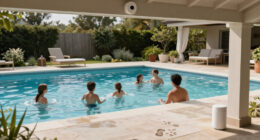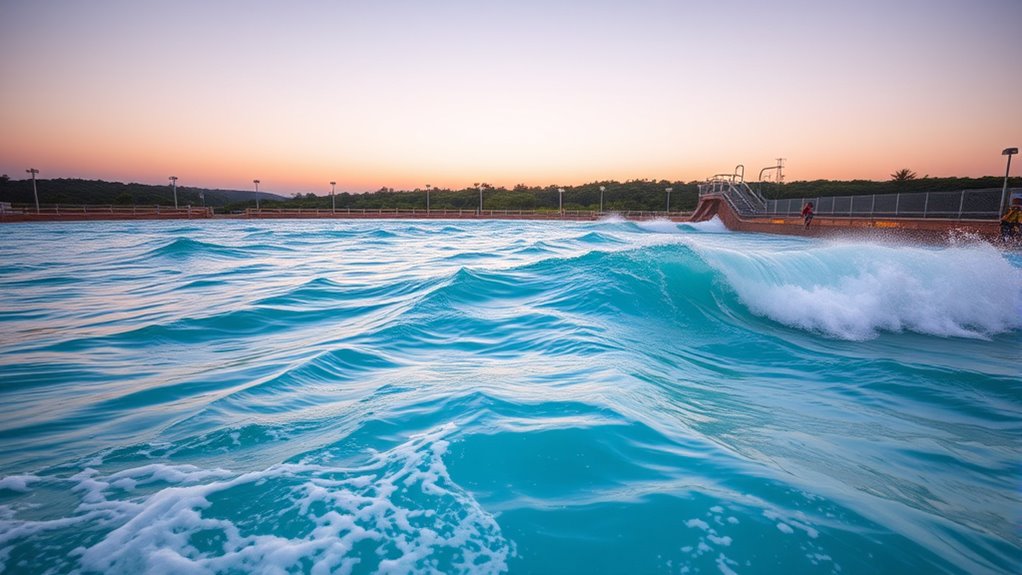

Wave pools generate waves using pneumatic or hydraulic systems, each offering different wave styles and power. They come in various sizes and depths to suit beginners or experienced surfers, with safety features like barriers, fencing, and trained staff. Smaller pools provide gentle waves, while larger ones create powerful surf conditions. To understand how these systems work and guarantee a safe experience, explore further into their design and safety measures.

Get pool and patio gear delivered free with Prime
- Fast, free delivery on millions of items
- Prime Video, Amazon Music and more included
- Member-only deals all year
Key Takeaways
- Wave pools generate waves using pneumatic, hydraulic, or hybrid systems, each with distinct mechanisms and maintenance needs.
- Depths range from shallow beginner zones (~0.5 m) to deep surfing areas (~2.5 m), accommodating various skill levels.
- Safety features include barriers, fencing, signage, and qualified lifeguards, complying with ASTM standards to prevent accidents.
- Modular designs and varying pool sizes cater to different audiences, from casual swimmers to professional surfers.
- Industry best practices emphasize regular safety inspections and hazard mitigation to ensure a secure environment.
As an affiliate, we earn on qualifying purchases.
Different Methods of Wave Generation in Pool Designs
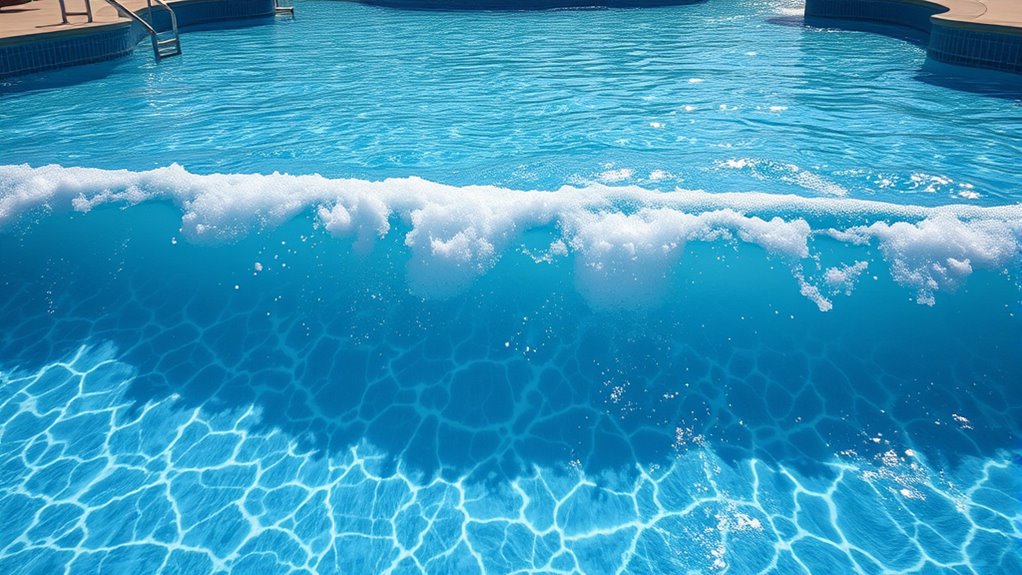
There are several methods designers use to generate waves in pools, each with unique advantages. Pneumatic systems use high-powered air pumps to push air into a chamber, forcing water down and creating waves. They have fewer moving parts, which means less maintenance, and the equipment isn’t in direct contact with water, reducing corrosion. These systems are efficient for seasonal use, providing consistent waves with minimal downtime. Additionally, some systems combine both pneumatic and hydraulic technologies to optimize wave quality and energy efficiency. Hydraulic systems rely on mechanical means like waving walls or water tanks that dump water to generate waves. They can produce large, powerful waves suitable for surfing but require more complex maintenance due to moving parts and water contact. This combination approach allows for customizable wave patterns and better resource management, adapting to different pool needs and user experiences. Each method offers distinct benefits, allowing designers to tailor wave generation to specific pool experiences and operational needs.
As an affiliate, we earn on qualifying purchases.
Key Features of Wave Pool Dimensions and Layouts
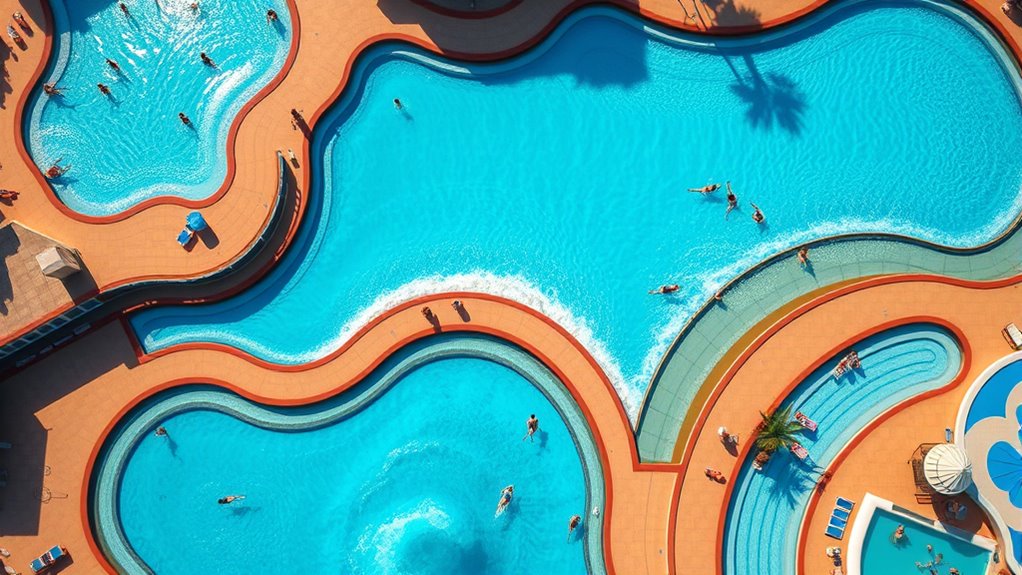
Wave pool dimensions and layouts are tailored to suit different facility sizes and user experiences. Smaller pools, around 150m², serve casual guests, while larger ones, exceeding 5,000m², accommodate thrill-seekers and large crowds. Modular designs like Wavegarden Cove range from 8,000m² to 20,000m², with flexible shapes such as 100×100 m or 160×160 m. Floating surf pools require at least 150 m by 50 m to generate deep, powerful waves. Pool depths vary from shallow areas of 0.5 to 1.2 meters for beginners to 2.5 meters for advanced surfers. Layouts often feature rectangular or lagoon shapes, with zones for different skill levels and safety walkways around 2 meters wide. Equipment placement, like pump rooms, is typically adjacent but separate from the pool space. Wave pool sizes can be customized to meet specific recreational or competitive needs.
As an affiliate, we earn on qualifying purchases.
Ensuring Safety in Wave Pool Environments
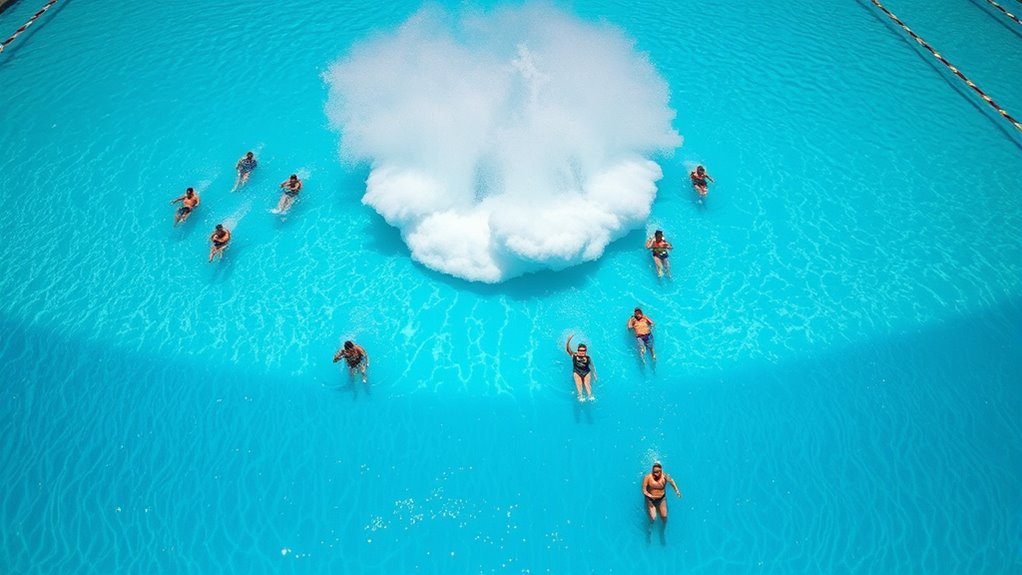
Ensuring safety in wave pool environments requires careful planning and strict adherence to established standards. You should install physical safety barriers and fencing from wave-generating machinery to the zero-depth entry point, preventing access to hazardous areas. Fencing must meet ASTM standards, be no closer than 18 inches from the pool edge, and feature secure gates with clear signage and latch mechanisms. Barriers help keep patrons away from machinery and elevated ledges. You must staff the pool with qualified lifeguards covering all zones, with emergency shut-off switches in accessible, clearly labeled locations. Requiring children under 48 inches to wear PFDs, along with posting signage, enhances safety. Additionally, regular safety inspections according to industry safety protocols are essential to identify and mitigate potential hazards. Finally, conforming to ASTM guidelines ensures consistent safety practices, helping prevent accidents and injuries in your wave pool. Additionally, recent industry standards provide a clear framework for manufacturing, operation, and maintenance, further enhancing overall safety and quality.
wave pool fencing ASTM standards
As an affiliate, we earn on qualifying purchases.
As an affiliate, we earn on qualifying purchases.
Frequently Asked Questions
How Energy-Efficient Are Different Wave Generation Systems?
You’ll find that Wavegarden Cove systems are markedly more energy-efficient than pneumatic wave generators, using about ten times less energy for similar output. While producing 280 waves per hour, Wavegarden consumes around 455 kWh, compared to over 4,300 kWh for pneumatic systems. This efficiency reduces operational costs, peak power demands, and environmental impact, making Wavegarden’s mechanical paddles a smarter, greener choice for maintaining consistent, high-quality waves with less energy.
Can Wave Pools Simulate Natural Ocean Wave Patterns Accurately?
Sure, wave pools can mimic ocean waves—if you ignore the ocean’s messy complexity. You might think they capture the full dance of swell formation, but in reality, they struggle with dissipation, diffraction, and wave interactions. While digital twins and AI improve accuracy, they can’t perfectly replicate the unpredictable chaos of the sea. So, if you’re after true ocean authenticity, wave pools still have a long way to go.
What Maintenance Is Required for Wave Pool Systems?
You need to regularly inspect and maintain wave pool systems, including pumps, compressors, and wave control equipment. Check oil levels, tighten nuts, and ensure all mechanical parts move smoothly. Clean or replace filters frequently to keep water flow ideal. Conduct daily inspections of wave generators, record maintenance activities, and promptly address any malfunctions. Routine cleaning of pool surfaces and water testing are essential to ensure safety, water quality, and compliance.
How Do Wave Pools Accommodate Different Skill Levels Safely?
You’re stepping into a carefully choreographed dance where safety takes the lead. Wave pools create zones that act like different terrains—gentle waves for beginners and fierce ones for pros. You’re guided through skill verification, safety briefings, and supervised practice, ensuring you’re on the right stage. Lifeguards stand ready like vigilant guardians, while progressive programs help you advance safely, turning a thrilling experience into a confident ride.
Are There Environmental Impacts Associated With Wave Pool Operations?
Yes, wave pool operations impact the environment. You should know they require significant energy for wave generation and water circulation, which can increase carbon footprints. Construction activities, like earth removal and heavy machinery use, disturb local ecosystems and habitats. Additionally, high water consumption and land use can threaten biodiversity and water resources, especially during climate stress. However, many facilities are adopting sustainable practices like water recycling and renewable energy to reduce these impacts.
Conclusion
Now that you understand how wave pools work, you can appreciate their design and safety features. Did you know that some wave pools generate over 1,000 waves per hour, creating a constant, thrilling environment? With proper layout and safety measures, you can enjoy the excitement while staying safe. Whether you’re riding small waves or tackling larger ones, knowing the mechanics helps you make the most of your experience. plunge in confidently and have fun!
Fall Picks
fall essentials
As an affiliate, we earn on qualifying purchases.