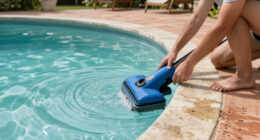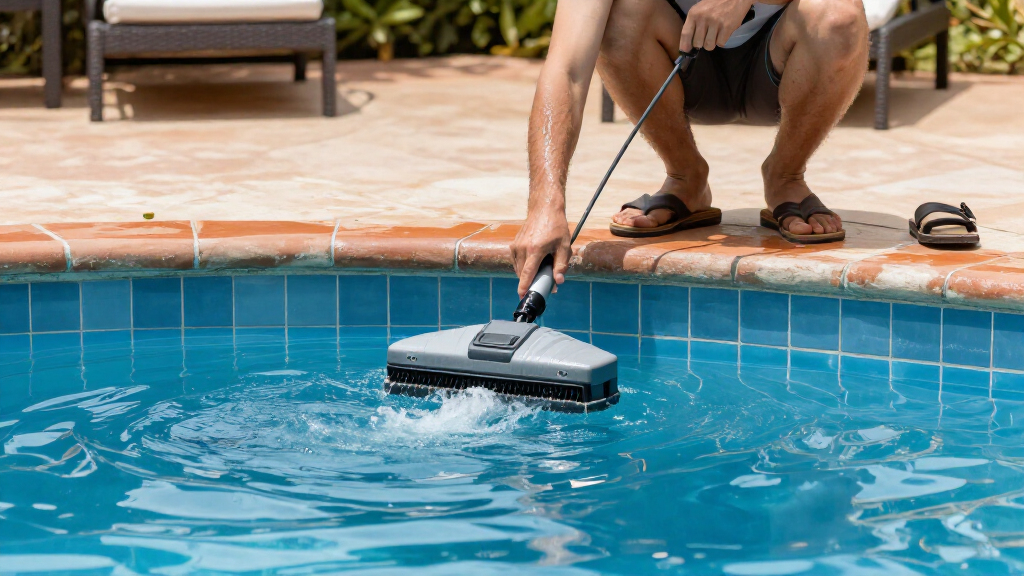
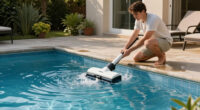
Set up an automatic pool cleaner by checking that it matches your pool and equipment, preparing the pool, connecting the cleaner, and confirming that it moves and collects debris. This guide is for pool owners who are installing a suction-side, pressure-side, or robotic cleaner for the first time. Allow 30-60 minutes for setup, then give the cleaner the run time recommended in its manual for an initial cleaning cycle.

Get pool and patio gear delivered free with Prime
- Fast, free delivery on millions of items
- Prime Video, Amazon Music and more included
- Member-only deals all year

Dolphin Nautilus CC Plus Robotic Pool Cleaner
- ✔ Pool type: In-ground
- ✔ Maximum pool length: 40 ft
- ✔ Cleaning time: About 2 hours

WYBOT C1 Cordless Robotic Pool Vacuum for Inground Pools
- ✔ Pool type: In-ground
- ✔ Maximum pool size: 1,618 sq. ft.
- ✔ Maximum depth: 9.86 ft.

Dolphin Nautilus CC Robotic Pool Cleaner
- ✔ Pool type: Above-ground and in-ground
- ✔ Maximum pool length: 33 ft
- ✔ Power source: Corded electric
Difficulty: Beginner | Time: 30-60 minutes for setup; 2-3 hours for an initial cleaning cycle
What You’ll Need
Tools & Materials:
- Automatic pool cleaner and its manual
- Pool pump and filter, if using a suction-side or pressure-side cleaner
- GFCI-protected outlet for a robotic cleaner, if required by its manual
- Pool brush or skimmer net
- Clean, level area beside the pool for inspection and setup
Knowledge:
- Basic ability to identify the pool’s skimmer, return jets, pump, and filter
- Ability to turn off pool equipment and follow the cleaner’s electrical and plumbing instructions
Check the cleaner manual and pool equipment labels before connecting anything. Models differ in hose routing, valve settings, pressure limits, and power requirements. Do not use a cleaner with a damaged cable, hose, plug, or body. Keep electrical connections and the power supply away from standing water, and follow local electrical rules.
Dolphin Nautilus CC Plus Robotic Pool Cleaner
For a buyer with an in-ground pool that exceeds the Nautilus CC’s 33-foot limit, the Nautilus CC Plus is the clearest step up in this lineup: it is specified for pools up to 40 feet and retains wall climbing, an active scrubbing brush, and a top-load filter basket. Its roughly two-hour cleaning cycle and plug-and-play setup also keep the routine simple compared with the cordless WYBOT, which needs a four-hour charge between uses.The tradeoff is that the Plus remains a corded cleaner, so the cord affects placement and needs attention during use. Its description is specific to in-ground pools, and the supplied details call for regular filter cleaning and dry storage. We would choose it over the standard Nautilus CC when the larger stated pool capacity matters; buyers who prioritize waterline and step coverage or avoiding a cord should look at the WYBOT C1 instead.
Pros:
- Specified for in-ground pools up to 40 feet
- Climbs walls and uses an active scrubbing brush
- Top-load filter basket is easy to access
- Plug-and-play setup with an approximately two-hour cycle
Cons:
- Cord can limit placement and requires management
- Needs regular filter cleaning and dry storage
- Does not list the WYBOT’s waterline and step coverage
Best for: Owners of in-ground pools up to 40 feet who want wall climbing, active brushing, and a simple corded cleaning routine.
Not ideal for: Buyers with pools beyond the stated 40-foot capacity, those wanting cordless operation, or anyone prioritizing stated waterline and step coverage.
Bottom line: We rank the CC Plus first for its larger stated in-ground pool capacity and straightforward cleaning routine, provided a cord works for your setup.
“We rank the CC Plus first for its larger stated in-ground pool capacity and straightforward cleaning routine, provided a cord works for your setup.”
WYBOT C1 Cordless Robotic Pool Vacuum for Inground Pools
The WYBOT C1 is the only cordless option here, and its appeal is the combination of movement without a power cord and stated 4-in-1 coverage: floor, walls, waterline, and steps. App control and a triple-motor system with gyroscope navigation add a different kind of convenience from the two plug-and-play Dolphins. Its stated 160-minute runtime may suit a longer cleaning session, though the maker also specifies a four-hour charging time.That broader coverage comes with more routine management. We need to plan around battery charging, rinse the unit with fresh water after use, and handle the added battery weight. The product is listed for inground pools up to 1,618 square feet and depths up to 9.86 feet, so those limits deserve a close check. Compared with the CC Plus, it avoids cord placement and lists more surfaces, but the Dolphin’s roughly two-hour cycle may be simpler for buyers who prefer plug-and-play operation over app and battery upkeep.
Pros:
- Cordless design avoids managing a power cord in the pool
- Lists floor, wall, waterline, and step coverage
- Stated runtime of up to 160 minutes
- App control with scheduling and firmware updates
Cons:
- Four-hour charging time requires planning between uses
- Requires fresh-water rinsing after each use
- Pool depth is limited to 9.86 feet
Best for: In-ground pool owners who want cord-free movement and stated cleaning coverage across floors, walls, waterlines, and steps.
Not ideal for: Buyers who prefer a corded plug-and-play routine, do not want charging and rinsing tasks, or have pools deeper than 9.86 feet.
Bottom line: We recommend the WYBOT C1 when cordless movement and broader listed surface coverage matter more than avoiding charging and post-use rinsing.
“We recommend the WYBOT C1 when cordless movement and broader listed surface coverage matter more than avoiding charging and post-use rinsing.”
Dolphin Nautilus CC Robotic Pool Cleaner
The standard Nautilus CC makes sense when the pool fits its stated limit of 33 feet and the buyer wants a simpler robotic cleaner. Like the CC Plus, it climbs walls, scrubs pool surfaces with an active brush, and offers a top-load filter basket that is easy to reach. The two-hour cycle and plug-and-play setup suit owners who do not need the Plus model’s stated 40-foot in-ground capacity or the WYBOT’s cordless, four-surface coverage.Its main constraint is straightforward: pool length tops out at 33 feet, and the cord affects where the cleaner can operate. The supplied description includes both above-ground and in-ground pools, which gives it a different fit from the in-ground-specific CC Plus and WYBOT. Plastic components call for care around harsh chemicals and extreme temperatures. Choose the CC for a compatible pool and a basic corded routine; look to the CC Plus for a longer in-ground pool, or the WYBOT if eliminating the cord is your priority.
Pros:
- Designed for above-ground and in-ground pools
- Climbs walls and scrubs surfaces with an active brush
- Top-load filter basket is easy to access
- Plug-and-play setup with a two-hour cycle
Cons:
- Limited to pools up to 33 feet long
- Cord can restrict placement and needs management
- Plastic components need care around harsh chemicals and extreme temperatures
Best for: Owners of above-ground or in-ground pools up to 33 feet who want wall climbing and a straightforward corded setup.
Not ideal for: Owners of pools longer than 33 feet, anyone seeking cordless movement, or buyers who need stated waterline and step cleaning.
Bottom line: We see the Nautilus CC as the straightforward choice for a compatible pool up to 33 feet, while the CC Plus or WYBOT better fits larger or cord-free needs.
“We see the Nautilus CC as the straightforward choice for a compatible pool up to 33 feet, while the CC Plus or WYBOT better fits larger or cord-free needs.”
As an Amazon Associate we earn from qualifying purchases.
Before You Start
Identify your cleaner type before setup. A suction-side cleaner connects to a designated suction port or skimmer and uses the pool pump. A pressure-side cleaner connects to a return line and may need a booster pump or a dedicated fitting. A robotic cleaner runs independently of the pool’s circulation system and uses its specified power supply. Do not connect a cleaner to a port or setting that its manual does not list.
Remove toys, large branches, and loose items from the pool. If the pool has a heavy layer of leaves or fine dust, skim or brush out the excess first; a full debris load can clog the cleaner or fill its basket quickly. Check that the water level is within the pool and cleaner manufacturers’ recommended ranges.
Step-by-Step Instructions
Step 1: Check compatibility and inspect the cleaner
Read the cleaner manual and confirm that the model suits your pool surface, shape, depth, and circulation system. Check each hose section, fitting, wheel, brush, filter basket, cable, and power connection for wear or damage. For a robotic cleaner, confirm that the power supply and extension cable, if included, are the approved parts for that model.
Tip:Some cleaners are not approved for every surface or pool shape. A mismatch can reduce cleaning coverage or damage the pool finish.
Check: The manual lists your pool type and the equipment you have, and all parts are intact and ready to assemble.
Step 2: Prepare the pool and filter
Skim out large debris, empty the skimmer and pump baskets, and check the filter. Clean or backwash it only as directed for your filter type. Set the pool’s valves and pump controls to the positions specified by the cleaner manual. Turn off the pump before changing suction or return connections.
Tip:Do not run the pump with a closed valve or a blocked basket. If you are unsure which valve controls the cleaner port, stop and check the pool equipment labels or manual.
Check: The baskets are clear, the filter is in operating condition, and the pump is off while you prepare the connection.
Step 3: Assemble and connect the cleaner
Join the hose sections or fittings in the order shown in the manual. For a suction-side cleaner, connect the hose to the specified suction port or skimmer adapter. For a pressure-side cleaner, attach the hose and cleaner to the correct return fitting. For a robotic cleaner, place the power supply at the required distance from the pool and connect the cable as instructed. Keep the cable and hose free of knots and sharp bends.
Tip:Do not improvise adapters or force a fitting into place. A loose suction connection can admit air; an incorrect pressure fitting can affect flow or damage equipment.
Check: Every connection is seated securely, the hose or cable reaches the pool without pulling tight, and there are no visible cracks or kinks.
Step 4: Prime the hose or position the robot
Submerge suction-side hose sections one at a time until they fill with water, then connect the hose as directed; trapped air can interrupt suction. Set the hose length and any floats or weights according to the manual. Check that a pressure-side cleaner’s hose is connected and positioned as specified. Lower a robotic cleaner gently into the water and let trapped air escape before starting it.
Tip:Keep the cleaner’s hose and cable clear of steps, ladders, drains, and other obstructions. Do not pull a robotic cleaner into the pool by its power cable.
Check: The suction hose is full of water, or the pressure hose is in the correct position; a robot rests in the pool without air trapped inside its body.
Step 5: Start the cleaner and adjust its operation
Turn on the pump for a suction-side or pressure-side cleaner, then check for steady flow and movement. Start a robotic cleaner using its control unit or app, following the model’s instructions. If the cleaner has a flow regulator, set it to the recommended range. Adjust hose length, floats, or weights only as the manual directs.
Tip:Keep hands away from moving parts and suction openings. If the pump sounds strained, flow is weak, or a hose collapses, switch off the equipment before inspecting it.
Check: The cleaner moves or runs steadily, the pump operates normally, and there is no air leak, unusual noise, or visible water leak.
Step 6: Watch a full cleaning cycle
Observe the cleaner long enough to see whether it reaches the pool floor and, if designed to do so, the walls or waterline. Follow the recommended cycle time. Check that the hose does not tangle and the cable does not loop around obstacles. If the cleaner repeatedly misses an area, consult the manual for adjustments to hose balance, flow, or cleaning mode.
Tip:Do not leave a cleaner in the pool longer than its manual allows. Some models should be removed after a cycle or when not in use.
Check: The cleaner covers the intended surfaces without becoming trapped, and debris collects in its own basket or in the pool’s filtration system, as designed.
Step 7: Remove, clean, and store the cleaner
Turn off the pump or cleaner before disconnecting it. Lift the cleaner by its handle or designated lifting point, not by the hose or cable. Empty and rinse its debris basket or filter, remove leaves from moving parts, and rinse the hose if needed. Coil hoses loosely and let cables drain and dry as the manual directs; store the cleaner out of direct sun and away from chemicals.
Tip:For a robotic cleaner, disconnect the power supply from the outlet before handling the cable or opening the cleaner. Do not use a pressure washer unless the manual specifically permits it.
Check: The debris container is clear, the cleaner is rinsed and undamaged, and its hose or cable is stored without tight bends.
Common Mistakes to Avoid
- Connecting the cleaner to the wrong port or using the wrong valve setting. — Match the cleaner type to the specified pool connection, and check valve positions in the manual before starting the pump.
- Starting a suction cleaner with air trapped in its hose. — Fill the hose with water before connecting it so the pump can maintain steady suction.
- Running a cleaner with full baskets or a dirty filter. — Empty baskets and check the filter before each cycle; reduced flow can prevent proper movement and cleaning.
- Pulling a robot by its cable or leaving a hose tangled. — Use the cleaner’s handle or lifting point, and route the hose or cable away from steps, ladders, and sharp bends.
Troubleshooting
Problem: The cleaner does not move or moves slowly.
Solution: Turn off the pump or cleaner. Empty the baskets, check the filter, inspect the hose for air leaks or blockages, and confirm the valve and flow settings match the manual. For a robot, check the filter basket and power connections, then restart using the prescribed cycle.
Problem: The suction cleaner keeps losing suction or the pump draws air.
Solution: Switch off the pump, reseat the hose and skimmer adapter, and check for cracks or loose connections. Refill the hose with water before restarting. If the pump still draws air, stop and inspect the pool system or contact a pool technician.
Problem: The cleaner gets stuck or misses sections of the pool.
Solution: Remove obstacles, untangle the hose or cable, and reposition floats or weights only as instructed. Check that the hose is the recommended length and that the cleaner is approved for your pool shape.
Problem: A robotic cleaner will not start.
Solution: Confirm that the outlet and power supply meet the manual’s requirements, and check that connectors are dry and fully seated. Inspect the cable and filter basket. If the unit still fails or shows an error code, follow the model’s troubleshooting instructions or contact the manufacturer.
What Success Looks Like
The cleaner starts and runs steadily, reaches the surfaces it is designed to clean, and collects debris without becoming trapped. The pump and filter operate normally, connections remain secure, and the pool looks cleaner after the prescribed cycle. After use, the cleaner’s basket is accessible for emptying and its parts show no damage or leaks.
Next Steps
Check and empty the cleaner’s basket after each cycle, and rinse it when debris or fine sediment remains. Inspect hoses, cables, seals, brushes, and wheels regularly for wear. Keep up with the pool’s normal water testing and filter maintenance; an automatic cleaner does not replace water treatment or circulation. If the cleaner repeatedly stops, loses flow, or leaves the same area dirty after adjustments, consult its manual or arrange service.
Frequently Asked Questions
How long should I run an automatic pool cleaner?
Use the cycle time in the cleaner’s manual. A typical cycle may take a few hours, but pool size, debris, and model affect the time. Check the cleaner during its first cycle and remove it when the instructions say to do so.
Can I leave the cleaner in the pool between uses?
Follow the model’s storage instructions. Some cleaners can remain submerged briefly, but prolonged exposure to pool chemicals and sunlight can wear parts. Remove robotic cleaners and power supplies as directed, and keep electrical equipment dry.
Can I run the cleaner while people are swimming?
Check the manual and pool safety rules first. Many manufacturers recommend removing or switching off the cleaner while swimmers are in the pool, especially when it has a cable, hose, or moving parts.
Why does my suction cleaner keep stopping?
Common causes include a full basket, dirty filter, blocked hose, air leak, or incorrect valve setting. Turn off the pump before checking these parts, then reprime the hose and restart.
Does an automatic cleaner replace brushing and water testing?
No. It removes debris from the surfaces it can reach, but steps, corners, and waterline areas may still need brushing. Continue testing and balancing pool water and maintaining the filter on the usual schedule.