
TL;DR

Get pool and patio gear delivered free with Prime
- Fast, free delivery on millions of items
- Prime Video, Amazon Music and more included
- Member-only deals all year
University of Florida researchers are studying whether pain self-management and ergonomic changes can reduce back pain among nursery and landscape workers. Early findings point to improvements in pain and difficulty performing work tasks, but the source does not provide figures or details about the study’s size or methods.
Researchers at the University of Florida are studying whether pain self-management and ergonomic changes can ease back pain among nursery and landscape workers, whose work often involves lifting, carrying, digging and bent postures. Lead researcher Kim Dunleavy said preliminary findings show improvements in pain and the difficulty of work tasks, though detailed results have not been reported.
The study is being conducted by the Southeastern Coastal Center for Agricultural Health and Safety, which is based at UF, with faculty from the university’s College of Public Health and Health Professions and Department of Family, Youth and Community Sciences. Its stated aim is to assess whether workers’ pain self-management and workplace ergonomic modifications can help address back pain in horticulture.
In the first phase, the research team consulted people with ties to the nursery and landscape industry, including workers, supervisors and insurance consultants. Those stakeholders described workers continuing on the job despite pain. Interviews also highlighted seasonal and weather-related changes in workload, which the researchers say make practical, industry-specific approaches important.
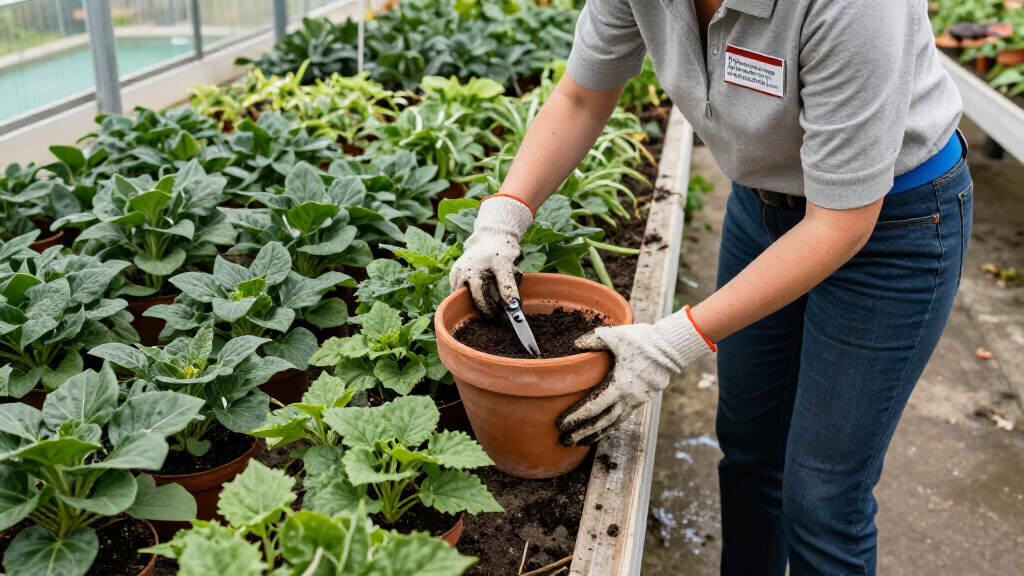
Workers described long hours spent handling heavy plants and materials, digging, and working in awkward or bent positions. Dunleavy said the early findings are encouraging, with reported improvement in pain and work-task difficulty. The source report does not give numerical results, explain how those improvements were measured, or establish whether the changes will persist over time.
Reducing Pain Without Losing Work
Back pain can affect workers’ ability to do physically demanding jobs and may carry costs for employers through reduced productivity, injury expenses and the loss of experienced staff. Dunleavy said the consequences can extend to workers who depend on physical labor for income and to businesses trying to retain skilled employees.
The study also raises the issue of how workers manage pain while remaining on the job. Dunleavy said medication use may include opioids, muscle relaxants and common over-the-counter pain relievers, which can have negative health effects. The report does not say how often participants use these medicines or whether the study measured medication use. Its stated focus is on assessing pain-management options and workplace changes that may help workers continue working while reducing pain.
Because participants described seasonal workloads and limited formal injury-prevention training, a strategy that fits actual nursery and landscape tasks may be more usable than general guidance. The researchers’ early account points to awareness and practical prevention as areas for attention, but it does not establish which particular intervention works best.
What Workers Reported to Researchers
Stakeholders in the study’s first phase said back pain is common enough that some horticulture workers regard it as part of the job. The report says workers may continue working through discomfort rather than going home, even though they described possible longer-term consequences such as injury and burnout.
Participants said preventing back injuries may not require major workplace changes, while also pointing to the need for interventions tailored to horticulture. They cited greater workplace awareness of pain and more injury-prevention guidance as needs; Dunleavy said formal training in this area is often limited. The report does not detail the specific ergonomic modifications being tested.
““Not only is back pain debilitating for workers who rely on their bodies for income, reduced productivity, losing experienced workers, and overall costs for injury have major consequences for companies.””
— Kim Dunleavy, clinical professor in UF’s Department of Physical Therapy and lead researcher
Details Behind Early Results
The available report does not state the number of participants, the study’s full design, the specific self-management techniques or ergonomic changes being tested, or the size of the reported improvements. It also gives no comparison group, follow-up period or evidence that the preliminary changes reduce injuries or medication use.
It is not clear when the study will conclude or when complete results will be published. The early findings are described by the lead researcher as encouraging, but they should not be read as proof that a particular intervention prevents back pain across the horticulture industry.
Awaiting Full Study Results
The researchers are continuing their assessment of pain self-management and ergonomic modifications for horticulture workers. The source report does not provide a timeline for completion or specify the next study milestone. Further reporting from the research team or the UF/IFAS article may provide methods, participant numbers and fuller results that can clarify how well the approaches worked and whether benefits lasted.
Key Questions
What is the University of Florida study examining?
It is assessing whether pain self-management and ergonomic modifications can address back pain among nursery and landscape workers.
What have researchers reported so far?
Lead researcher Kim Dunleavy said preliminary findings show improvements in pain and difficulty with work tasks. The available report does not provide figures or explain how those changes were measured.
What kinds of work do participants say contribute to strain?
Workers described lifting heavy plants, carrying materials, digging and spending long periods in bent or awkward positions.
Are the study’s full results available?
The cited report presents preliminary findings but does not include a full results set, study timeline or detailed account of the methods. Those details remain unclear.
Source: rss
Halloween Picks
halloween
As an affiliate, we earn on qualifying purchases.