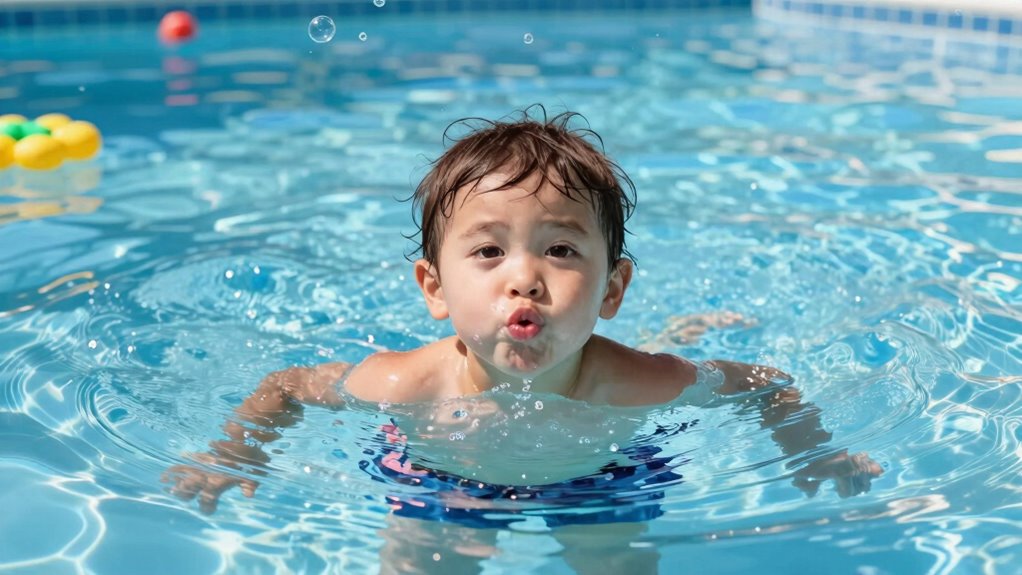
If your child swallows pool water, they could be exposed to harmful bacteria, viruses, or parasites like cryptosporidium or giardia, which can cause nausea, diarrhea, vomiting, and stomach cramps. Poorly maintained pools with cloudy water or strange smells increase these risks. Always supervise children around water and guarantee the pool is properly treated and clean. Want to find out more about protecting your child’s health near pools? Keep going for essential tips.

Get pool and patio gear delivered free with Prime
- Fast, free delivery on millions of items
- Prime Video, Amazon Music and more included
- Member-only deals all year
Key Takeaways
- Swallowing pool water can introduce harmful bacteria, viruses, and parasites, leading to illnesses like diarrhea and stomach cramps.
- Proper pool maintenance, including regular chemical checks, reduces the risk of unsafe water and waterborne diseases.
- Always supervise children closely near or in the pool to prevent accidental ingestion and risky behaviors.
- Signs of unsafe pool water include cloudiness, bad smell, or dirtiness, indicating potential health risks.
- Seek medical attention if your child shows symptoms like nausea, vomiting, or diarrhea after swimming.
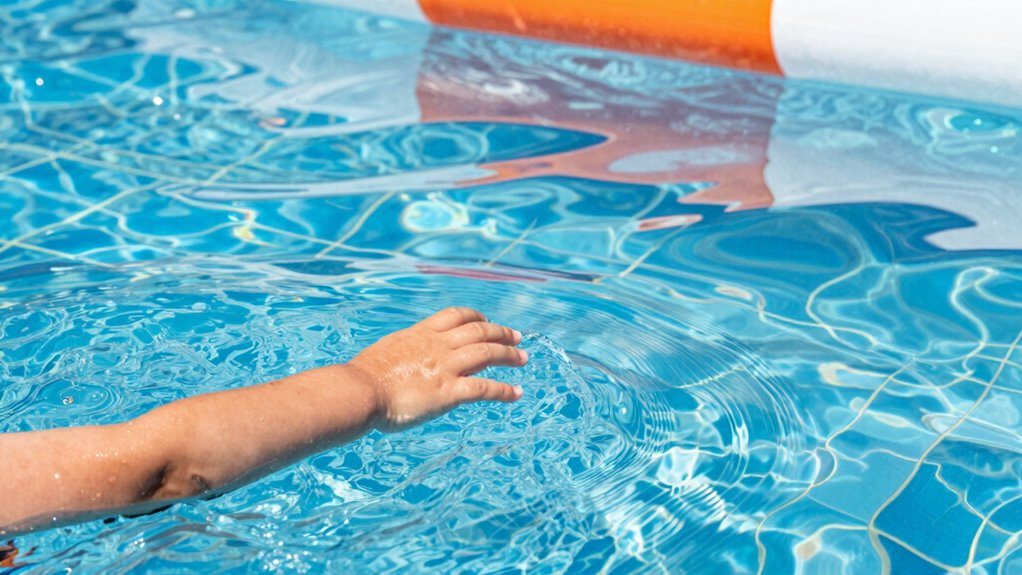
Swimming pools are designed for fun and relaxation, but accidentally swallowing pool water can lead to health concerns. As a parent, it’s important to understand the risks involved and how to keep your kids safe. One key aspect is pool safety—making sure children know not to swallow water and are supervised at all times. Even a small amount of water can carry bacteria or viruses that pose health risks, especially in crowded or poorly maintained pools.
Swallowing pool water can pose health risks; always supervise children and promote safe swimming habits.
When kids swallow pool water, they risk ingesting waterborne illnesses. These illnesses are caused by germs that thrive in contaminated water and can lead to symptoms like nausea, diarrhea, vomiting, or stomach cramps. In some cases, more serious infections such as cryptosporidium or giardia can develop. These parasites are resistant to typical chlorine levels and can cause prolonged illnesses, making it essential to prevent ingestion altogether. Proper water treatment and maintenance are crucial for ensuring the pool remains safe and clean. Regular checks on chemical levels can help ensure the water quality stays within safe standards, reducing health risks. If you notice your child feeling unwell after swimming, watch for signs of waterborne illnesses and seek medical advice if necessary.
Maintaining the pool itself plays an indispensable role in safeguarding your children’s health. Proper chlorination and filtration help control germs, but they aren’t foolproof. You should always check the pool’s chemical levels and ensure they meet safety standards. If the pool looks cloudy, has a strange smell, or the water appears dirty, avoid letting your kids swim until it’s properly cleaned and sanitized. A well-maintained pool reduces the chance of waterborne illnesses and keeps everyone healthier. Additionally, understanding waterborne pathogens and their resistance to disinfection methods can help you better advocate for proper pool maintenance routines.
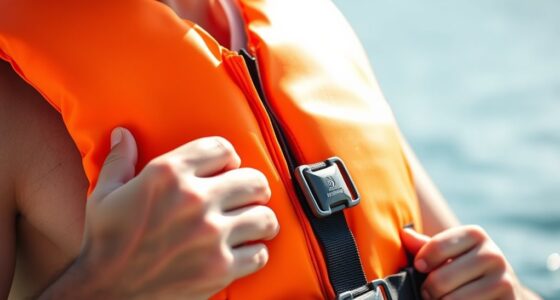
Supervision is another essential component of pool safety. Never leave children unattended near or in the water, even if they’re experienced swimmers. Constant supervision helps prevent risky behaviors like swallowing pool water or diving into shallow areas. It also allows you to intervene quickly if an emergency occurs.
pool water test kit for home use
As an affiliate, we earn on qualifying purchases.
As an affiliate, we earn on qualifying purchases.
Frequently Asked Questions
Can Swallowing Pool Water Cause Long-Term Health Issues?
Swallowing pool water can pose long-term health risks, especially if it contains harmful chemicals or waterborne parasites. Poor pool chemical safety heightens the chance of skin or eye irritation and may cause more serious health issues over time. Waterborne parasites, like Giardia or Cryptosporidium, can lead to persistent gastrointestinal problems. To protect your child, guarantee proper pool maintenance and teach good hygiene, minimizing the risk of long-term health issues from swallowing pool water.
How Much Pool Water Is Dangerous to Swallow?
Swallowing more than a small amount of pool water can be risky, especially if the pool’s chemistry isn’t properly maintained. Even a few sips can introduce harmful bacteria, chemicals, or parasites through water ingestion. To keep your kids safe, monitor their pool time, discourage swallowing water, and guarantee the pool’s chlorine and pH levels are balanced. This minimizes health risks associated with water ingestion and potential illnesses.
Are There Specific Symptoms to Watch for After Swallowing Pool Water?
You should watch for symptoms like stomach pain, nausea, vomiting, diarrhea, or coughing after swallowing pool water, as these can indicate water contamination. Surprisingly, studies show over 80% of recreational water illnesses are caused by swallowing contaminated water. Practicing pool safety by encouraging kids not to swallow water helps prevent illness. If symptoms persist or worsen, see a healthcare provider promptly to address potential infections or other issues.
Does Swallowing Pool Water Increase the Risk of Infections?
Swallowing pool water can increase the risk of infections, especially if the water isn’t properly maintained. Poor pool water safety can expose your child to bacteria, viruses, and parasites, which may lead to illnesses like ear infections, gastrointestinal issues, or respiratory problems. To protect your child’s health, make sure the pool is clean, chlorinated correctly, and supervise your child to prevent accidental swallowing. Good pool hygiene minimizes these health risks effectively.
What Immediate Actions Should I Take if My Child Swallows Pool Water?
Did you know that 30% of pool-related illnesses stem from swallowing contaminated water? If your child swallows pool water, stay calm and encourage them to rinse their mouth with clean water. Watch for signs of choking or discomfort. Prioritize pool water safety by staying close and supervising your child at all times. If symptoms worsen, seek medical attention promptly. Quick, calm action helps protect your child’s health.
As an affiliate, we earn on qualifying purchases.
Conclusion
Remember, swallowing pool water is like tasting a tiny storm in your mouth—full of chemicals and germs you can’t see. As a parent, your vigilance is the lighthouse guiding your child’s safety through these sparkling, swirling waters. Keep a watchful eye, teach good habits, and guarantee they’re swimming in safe, clean pools. That way, their poolside adventures stay sunny and bright, not stormy and risky, turning every splash into a safe, joyful memory.
As an affiliate, we earn on qualifying purchases.
As an affiliate, we earn on qualifying purchases.
Halloween Picks
halloween
As an affiliate, we earn on qualifying purchases.