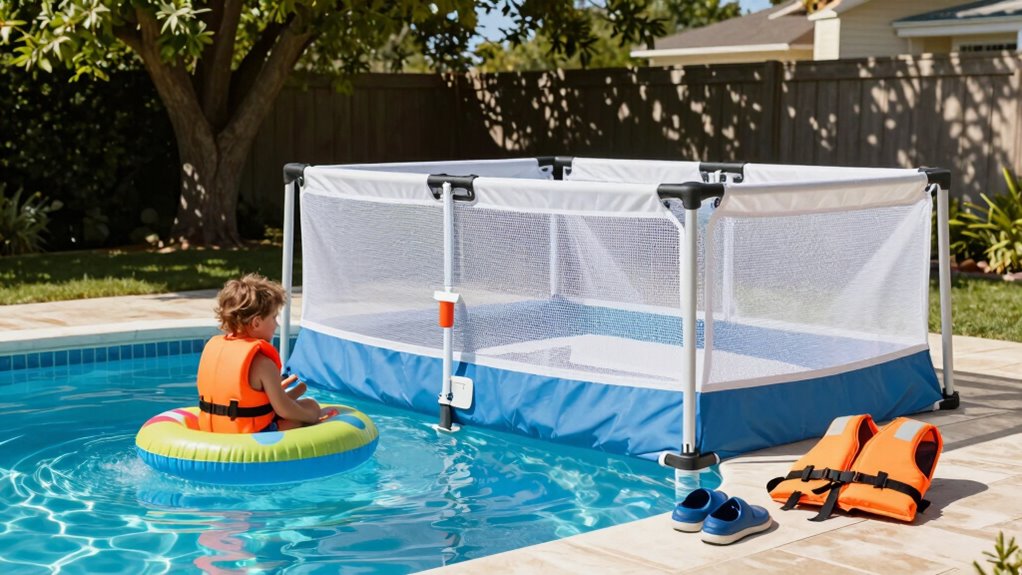
Relying on just one safety product around pools isn’t enough because safety depends on multiple layers working together. Active supervision and water safety education help children stay aware of hazards. Barriers like fences and gates block access, while safety devices such as alarms and life jackets offer extra protection. Each layer covers the gaps left by others. To truly secure your loved ones, an all-encompassing approach is essential—continue to discover the best strategies to keep kids safe.

Get pool and patio gear delivered free with Prime
- Fast, free delivery on millions of items
- Prime Video, Amazon Music and more included
- Member-only deals all year
Key Takeaways
- No single safety product can fully prevent accidents; multiple layers are needed for comprehensive protection.
- Supervision and education are essential, as safety devices alone cannot guarantee safety around pools.
- Properly fitting safety gear, like life jackets, is crucial, but alone cannot prevent falls or slips.
- Physical barriers, alarms, and safety devices must be maintained and combined with active oversight.
- A holistic safety approach reduces risks more effectively than relying on one product or measure alone.
Have you ever wondered how to keep your child safe around pools? It’s a question many parents ask, and the answer isn’t as simple as just having one safety product. When it comes to poolside supervision, your active presence is your strongest defense. No matter how many safety devices you have, they can’t replace your watchful eye. Constant supervision ensures you notice potential hazards early and intervene before an accident happens. It’s about creating a safety zone where your child feels secure, but also where you’re ready to step in at any moment. Alongside supervision, water safety education plays an essential role. Teaching your child how to behave in and around water helps reduce panic and confusion if they find themselves in a tricky situation. Explaining simple rules like “never run near the pool,” “never go near the water without an adult,” and “know how to float or call for help” empowers your child with knowledge that can save their life.
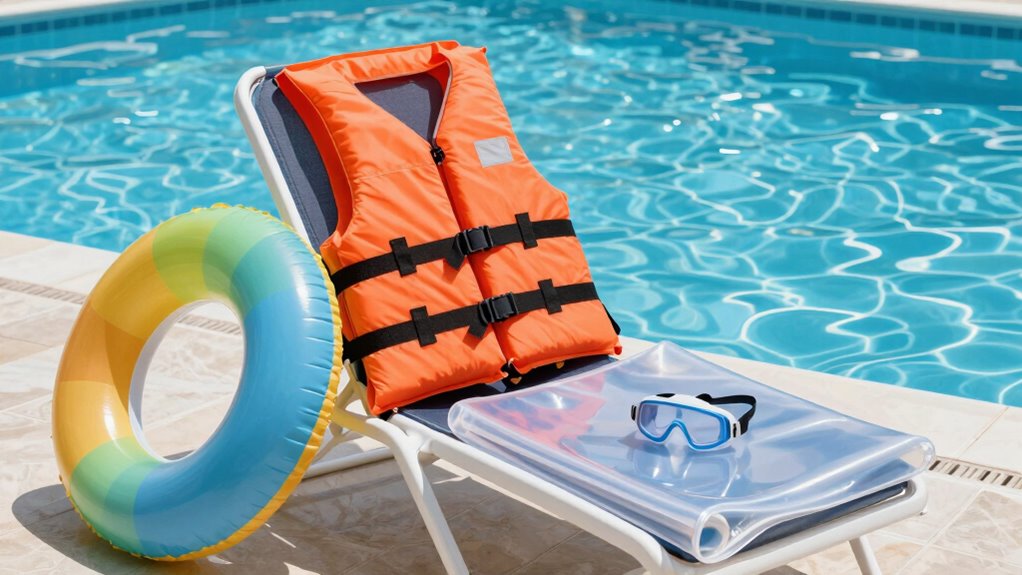
But relying solely on supervision and education isn’t enough. You need multiple layers of safety gear because accidents can happen in a split second. Think about it—one product alone might not prevent a fall or an unexpected slip. For example, a life jacket provides buoyancy, but it’s not foolproof if it’s ill-fitting or not worn properly. Pool alarms alert you when someone enters the water unexpectedly, yet they don’t prevent the incident. Fences with self-closing gates create a physical barrier, but children can sometimes find ways around them if not maintained properly. The idea is to combine these tools—supervision, education, barriers, and safety devices—so that each layer compensates for what others might miss. Incorporating safety technology can further enhance your safety plan, offering real-time alerts and data to help prevent accidents. Additionally, understanding regional safety standards can guide you in selecting the most effective safety measures tailored to your area.
Implementing safety gear as part of an all-encompassing safety plan enhances overall protection. You should see safety gear as part of an all-encompassing safety plan, not just as standalone products. Each piece plays an essential role in protecting your child, but none can do the complete job alone. When you’re actively supervising your child and providing ongoing water safety education, you set the foundation. Adding appropriate safety gear such as life jackets, pool covers, or alarms helps to further mitigate risks that supervision alone may not catch. Incorporating proper barriers like fences and gates also adds an important physical layer of defense. Add to that physical barriers and safety gear, and you greatly reduce the risk of accidents. Remember, safety around pools is about consistency and proactive measures. No single product can guarantee safety, but when you combine vigilant supervision, thorough education, and reliable safety gear, you create a safer environment where your child can enjoy the water confidently.
pool safety fence with self-closing gate
As an affiliate, we earn on qualifying purchases.
As an affiliate, we earn on qualifying purchases.
Frequently Asked Questions
How Often Should Pool Safety Gear Be Inspected or Replaced?
You should inspect pool safety gear monthly to make sure everything’s in working order, paying close attention to signs of wear and tear. Replace gear immediately if it’s damaged or no longer meets safety certifications. Regular pool maintenance helps keep safety equipment reliable, preventing accidents. Staying vigilant with inspections and replacements ensures your child’s safety around the pool, giving you peace of mind while enjoying your pool area.
Are There Specific Safety Gear Recommendations for Different Age Groups?
Yes, safety gear varies by age. For infants and toddlers, use snug-fitting floatation devices and swim training gear designed for their size. Older children should wear properly fitted life jackets during water activities. Always choose gear that’s appropriate for their swimming skills and comfort. Regularly check that floatation devices remain in good condition, and guarantee swim training aids support their learning progress safely.
Can Safety Gear Prevent All Types of Pool-Related Accidents?
Think of safety gear as the shield, not the sword, against all pool accidents. While a pool cover and water alarms greatly reduce risks, they can’t prevent every mishap. Safety gear like life jackets and pool alarms work best when combined with vigilant supervision. Remember, no single product can guarantee safety, but an all-encompassing approach creates a safer environment, turning pool time into fun, not fear.
What Is the Best Way to Teach Children About Pool Safety?
To teach children about pool safety, you should prioritize consistent child supervision and safety education. Keep a close eye on them whenever they’re near water, and explain safety rules in an age-appropriate way. Make learning fun through games and demonstrations, emphasizing the importance of never swimming alone and always using safety gear. Reinforce these lessons regularly, so safety becomes second nature. Your active involvement helps children develop responsible habits around pools.
Are There Legal Requirements for Pool Safety Gear in Residential Areas?
Sure, the legal regulations and safety standards for pool safety gear in residential areas are clear—unless you’re into the thrill of risking fines or worst-case scenarios. Many places require fences, alarms, and life-saving gear by law. So, you might as well follow these rules, because ignoring them isn’t just reckless; it’s inviting trouble, all while your pool remains less of a backyard oasis and more of a legal liability.
As an affiliate, we earn on qualifying purchases.
Conclusion
Just as Icarus’s wings needed more than wax to truly keep him aloft, safeguarding your child requires more than a single piece of gear. You understand that true protection around pools isn’t about one product but a carefully crafted mosaic of safety measures. Like Daedalus’s labyrinth, it’s layered and intentional—each piece working in harmony to keep your little one safe. Remember, in safety, as in myth, it’s the unity that keeps them grounded and secure.
adjustable life jacket for children
As an affiliate, we earn on qualifying purchases.
As an affiliate, we earn on qualifying purchases.
As an affiliate, we earn on qualifying purchases.
Fall Picks
fall essentials
As an affiliate, we earn on qualifying purchases.