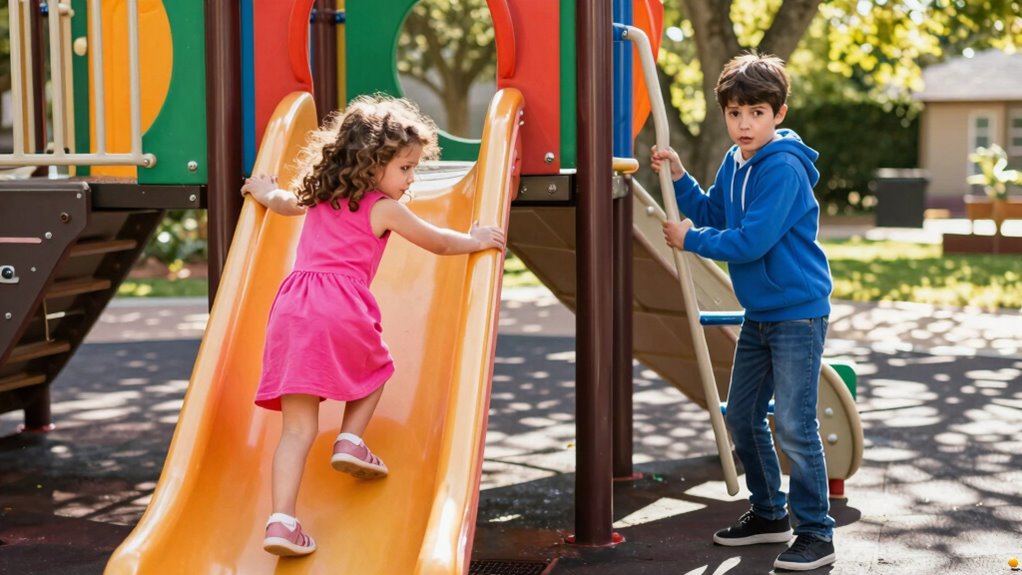

To support both children, acknowledge each of their feelings and avoid pressuring the hesitant one. Create a safe, welcoming space with soft surfaces, clear rules, and supportive cues. Encourage the excited child to be patient and gentle, fostering support for their sibling. Respect boundaries and offer alternative activities if needed. By balancing encouragement with safety, you help everyone feel valued and secure. If you keep exploring, you’ll discover more ways to nurture confidence and harmony.

Get pool and patio gear delivered free with Prime
- Fast, free delivery on millions of items
- Prime Video, Amazon Music and more included
- Member-only deals all year
Key Takeaways
- Acknowledge and validate each child’s feelings, allowing hesitant children to observe and take their time.
- Create a safe, inviting play environment with soft surfaces and visual cues to boost confidence.
- Respect individual boundaries by supervising closely and avoiding pressure to participate in sliding.
- Encourage supportive sibling interactions, fostering patience and gentle encouragement.
- Offer alternative activities to ensure all children feel engaged and valued without forcing slide participation.
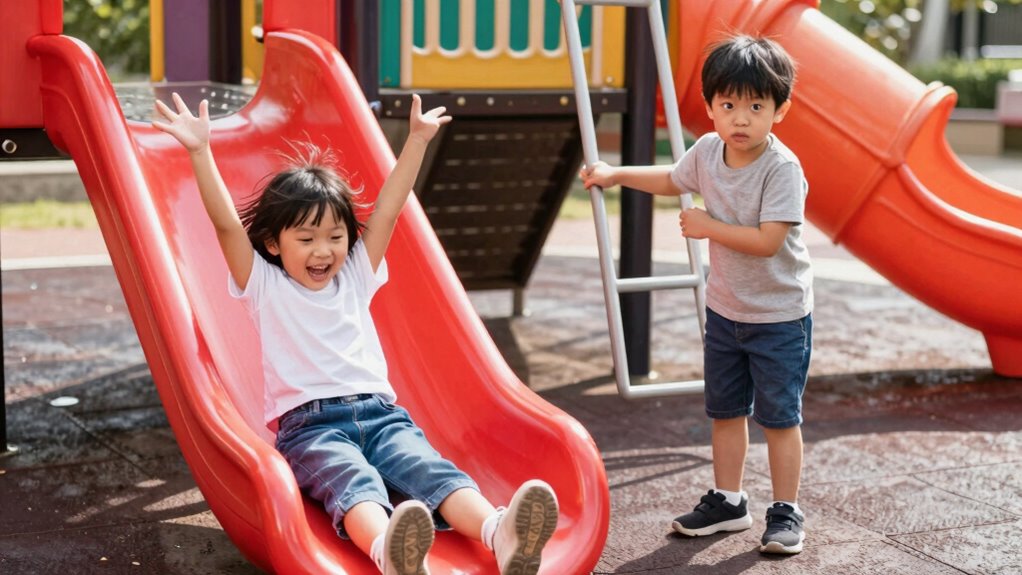
When your children have different feelings about slides—one enthusiastic to climb and slide, the other hesitant or frightened—it can be challenging to find a solution that works for everyone. You want to encourage your kids to enjoy playtime, but their differing comfort levels can create tension. It’s natural for siblings to have contrasting preferences, and navigating this requires patience and understanding. Your goal is to foster a positive environment where both children feel safe and respected, even if their reactions to slides differ.
To start, acknowledge each child’s feelings without dismissing them. Celebrate the child’s enthusiasm for slides, while also validating the hesitations of the one who’s nervous. This approach helps reduce sibling rivalry that might come from comparing their experiences or pressuring the hesitant child. Instead of pushing the reluctant sibling to join in immediately, give them space and time to observe and feel comfortable. You can suggest trying the slide together at a slow pace, perhaps with your support, to build their confidence gradually. Additionally, using landscaping techniques around the play area can create a more inviting and secure environment that encourages exploration at their own pace. Incorporating play area design principles can also help make the environment more appealing and safe for children with different comfort levels. Creating a well-designed play space can significantly influence a child’s willingness to try new activities. Furthermore, considering visual cues like signs or pictures can guide children on how to approach the slide confidently. Introducing appropriate safety gear can also make hesitant children feel more secure and ready to participate.
Safety precautions are essential, especially when managing children with different comfort levels. Make sure the slide area is secure, with soft landing surfaces and clear rules about safe climbing and sliding. Keep a close eye on both kids during play, and be ready to intervene if one feels overwhelmed or unsafe. Reinforcing safety doesn’t mean overprotecting; it’s about establishing boundaries that keep everyone secure. If a child refuses to slide, respect their decision and don’t force it—pushing can intensify fears or lead to conflicts. Instead, offer alternative activities that they enjoy, so they still feel included and valued.
Encourage your children to support each other. If the enthusiastic child wants to help the hesitant sibling, teach them to be gentle and patient. Sometimes, a sibling’s encouragement can make a big difference in overcoming fears. At the same time, respect the hesitant child’s limits. Pushing them too far might deepen their aversion or cause unnecessary stress. If one child loves slides while the other prefers climbing structures or swings, help them explore different options that suit both their interests. This way, they can enjoy playtime side by side without feeling pressured. Emphasizing positive reinforcement can also foster a supportive and inclusive atmosphere during play.
Ultimately, your role is to foster a positive, safe environment where both children’s feelings are acknowledged. By balancing encouragement with safety precautions and respecting each child’s pace, you help reduce sibling rivalry and promote a healthy, enjoyable play experience for everyone.
As an affiliate, we earn on qualifying purchases.
Frequently Asked Questions
How Can I Encourage a Hesitant Child to Try Slides?
To encourage a hesitant child to try slides, start with gradual exposure by letting them observe others go down first. Offer positive reinforcement, like praise or small rewards, when they take a step toward trying it. Stay patient and supportive, ensuring they feel safe. Celebrate each small victory to build their confidence. Remember, your encouragement and patience help them feel secure enough to enjoy sliding at their own pace.
Are There Safety Tips for Children Who Dislike Slides?
Worried about slide safety and fear management? Rest assured, you can keep your child safe by ensuring the slide is sturdy, clean, and age-appropriate. Teach them how to use proper slide safety techniques, like sitting down and holding the sides. Encourage gradual exposure to build confidence, and stay close for reassurance. By addressing safety concerns and managing fears calmly, you create a positive experience that helps your child enjoy slides safely.
How Do I Handle Sibling Conflicts Over Playground Activities?
You can handle sibling conflicts over playground activities by encouraging open communication and setting fair rules. Address sibling rivalry by reminding kids to take turns and share, fostering teamwork. Use playdate strategies like scheduling specific times for each child to enjoy their preferred activities and praising positive interactions. Stay calm and patient, helping them understand each other’s feelings, so they learn cooperation and respect during playtime.
What Alternatives Can I Offer for Children Who Dislike Slides?
Imagine a vibrant playground, full of possibilities beyond slides. You can suggest climbing structures, balance beams, or swings to keep children engaged. These alternatives promote playground safety while nurturing child independence. Some kids might prefer exploring different textures or quiet spaces. Offering varied options guarantees everyone feels included. With a little creativity, you turn a moment of disagreement into an opportunity for kids to discover new favorite activities, making the playground enjoyable for all.
When Should I Seek Professional Advice for a Child’s Fear of Slides?
You should seek professional advice if your child’s fear of slides persists despite your emotional support, especially if it affects their participation in play or impacts their developmental milestones. Notice if they avoid other activities, show signs of anxiety, or if their fear worsens over time. A specialist can help identify underlying issues and recommend strategies to support your child’s emotional well-being and guarantee healthy development.
kids safety slide with soft landing
As an affiliate, we earn on qualifying purchases.
As an affiliate, we earn on qualifying purchases.
Conclusion
Think of your children as two different boats on the same river. One sails smoothly down the slide of excitement, while the other hesitates at the dock. Your job is to be the steady captain, guiding each boat gently, respecting their unique journeys. By offering choices and understanding, you help both navigate their waters safely. Soon, you’ll see them both happily cruising, each in their own way, united by your patience and care.
visual cue signs for playgrounds
As an affiliate, we earn on qualifying purchases.
As an affiliate, we earn on qualifying purchases.
children's safety gear for slides
As an affiliate, we earn on qualifying purchases.
As an affiliate, we earn on qualifying purchases.
Fall Picks
fall essentials
As an affiliate, we earn on qualifying purchases.