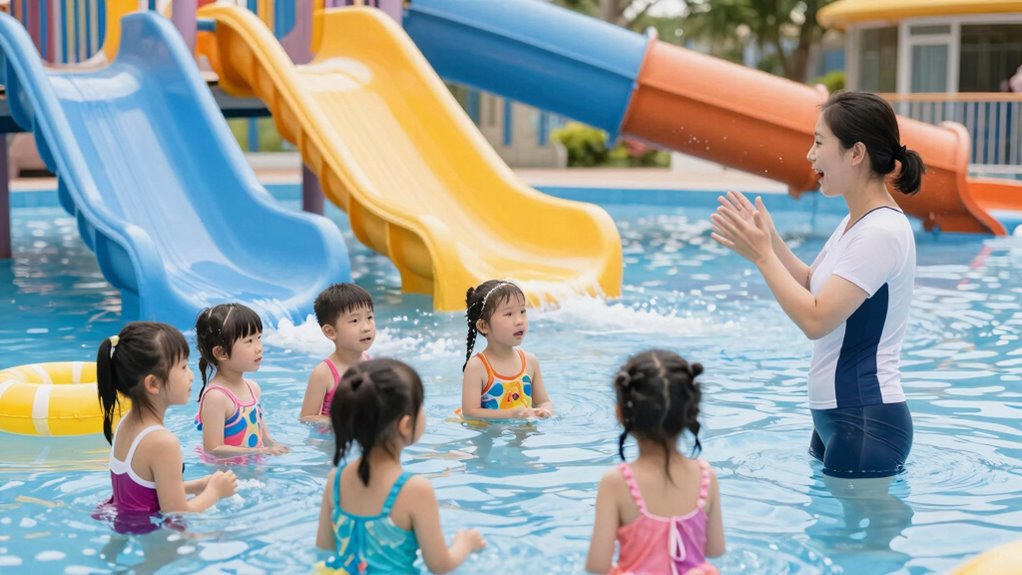

When explaining water park safety rules to preschoolers, use simple, positive language to highlight fun and safety as a team effort. Show them which areas are off-limits and remind them to stay close and listen carefully. Point out safety features like life jackets and lifeguards, and teach them to hold hands near water. Keep lessons short and engaging, praising good behavior. If you keep these tips in mind, you’ll discover more easy ways to keep your child safe and happy.

Get pool and patio gear delivered free with Prime
- Fast, free delivery on millions of items
- Prime Video, Amazon Music and more included
- Member-only deals all year
Key Takeaways
- Use simple, positive language to explain safety rules and the importance of following instructions.
- Show children which areas are off-limits and why, emphasizing staying close and supervised.
- Teach kids to recognize lifeguards and safety equipment, explaining their purpose clearly.
- Set clear rules like no running, pushing, or going into water alone, and practice holding hands.
- Reassure children with calm responses, teach emergency procedures, and praise safe behavior.
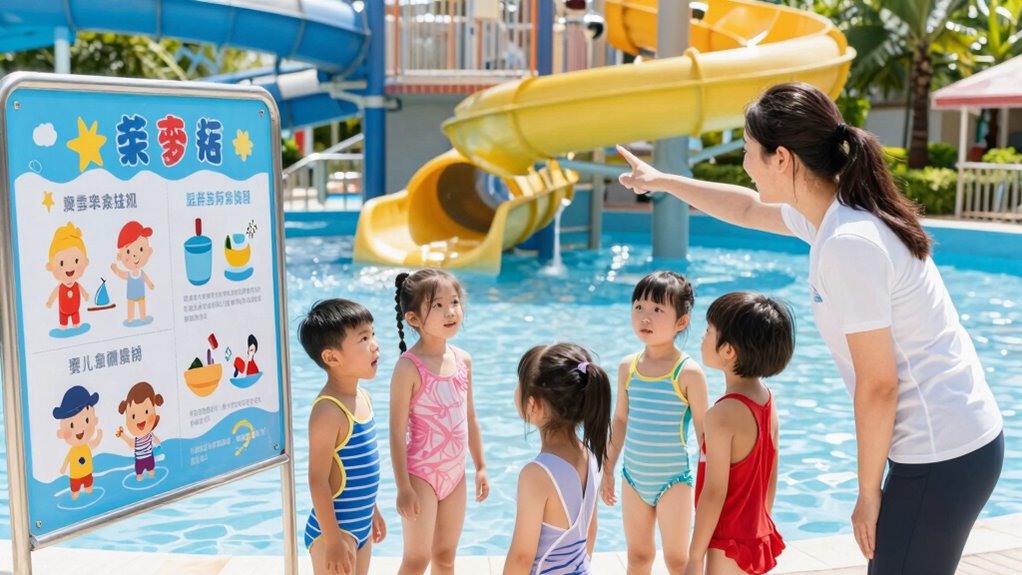
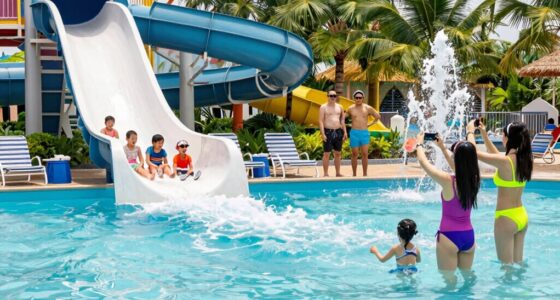
Taking young children to a water park can be exciting, but safety is always the top priority. When you’re steering through this playful environment, it’s essential to focus on water safety and effective supervision strategies. Preschoolers are naturally curious and eager to explore, but their limited understanding of dangers makes clear, age-appropriate safety rules crucial. Before you even arrive, talk to your child about the importance of following instructions and staying close to you. Use simple language and keep it positive, emphasizing fun and safety as a team effort.
Once you’re at the water park, establish clear boundaries early. Show your child which areas are off-limits, like deep pools or restricted zones, and explain why. Reinforce the idea that they should never go into water alone. Keeping a close eye on your preschooler is essential, and supervision strategies should be proactive. Assign yourself the primary role of supervisor, and avoid distractions like phones or conversations that might divert your attention. Remember, even a few seconds of distraction can lead to dangerous situations.
Teach your child to recognize lifeguards and safety staff, so they know who to approach if they need help. Use visual cues or signals, like pointing to a lifeguard or demonstrating what a life jacket looks like. Make sure your child understands that flotation devices are for safety, not for roughhousing or jumping into the water without supervision. When your child wears a life jacket, check that it fits properly—snug but comfortable—and remind them that it’s there to keep them safe.
Practice water safety by setting rules about never running near the water, never pushing or shoving, and always listening to your instructions. Reinforce the importance of staying within sight of you at all times. Consider designating a specific meeting spot in case you get separated. Keep your child’s hands in yours when near water or on slides, and encourage them to call out for help if they ever feel unsure or scared. Additionally, understanding comprehensive safety measures like the use of proper safety equipment can greatly reduce risks in aquatic environments.
Furthermore, discussing emergency procedures with your child can help them feel more secure and prepared in case of accidental separation or other incidents. Lastly, maintain a calm and reassuring attitude. Kids pick up on your confidence and calmness, which helps them feel secure. Reiterate safety rules regularly and praise your child when they follow them. By combining clear communication, vigilant supervision strategies, and a positive attitude, you create a safe environment where your preschooler can enjoy the water park and make wonderful memories without unnecessary risks.
kids life jackets for water parks
As an affiliate, we earn on qualifying purchases.
As an affiliate, we earn on qualifying purchases.
Frequently Asked Questions
What Should I Do if My Preschooler Gets Scared in the Water?
If your preschooler gets scared in the water, stay calm and offer reassurance. Use emergency preparedness strategies like holding their hand and keeping close, making them feel safe. Check that safety equipment like life jackets is secure and comfortable. Talk softly, encouraging them to breathe slowly. Remember, your calm presence helps them regain confidence and enjoy the water safely. Always prioritize safety and comfort to ease their fears effectively.
How Can I Keep My Child Entertained While Waiting in Line?
Waiting in line at the water park? What a surprise—your child’s boredom! To keep them entertained, you can play simple Water park games like “I Spy” or sing silly songs. Remember, your Parent supervision is key—bring small toys or waterproof books to hold their attention, and involve them in watching the fun around them. This way, the wait becomes part of the adventure, not a chore.
Are There Specific Safety Rules for Non-Swimmers?
For non-swimmers, safety gear guidelines are essential. You should guarantee your child always wears a life vest or flotation device approved for water parks. Keep a close eye on them, and stay within shallow areas designated for non-swimmers. Non swimmer precautions also include avoiding deep water zones and not letting your child go on rides or slides meant for experienced swimmers. Always follow posted safety rules to keep your child safe and comfortable.
How Do I Handle a Preschooler Who Refuses to Follow Rules?
Remember, “You catch more flies with honey than vinegar.” When a preschooler refuses to follow rules, stay calm and use clear communication to explain why safety rules matter. Offer positive reinforcement when they cooperate, praising their good behavior. If they continue to resist, gently remind them of the safety consequences and stay patient. Consistent, kind guidance helps them understand the importance of following rules while feeling secure.
What Are the Signs of Dehydration or Sunstroke in Children?
You should watch for dehydration cues like dry mouth, sunken eyes, or tiredness, and sunstroke symptoms such as dizziness, headache, or nausea. If your child shows any of these signs, get them into shade, offer fluids, and cool their skin with a damp cloth. Recognizing hydration cues early and knowing sunstroke symptoms help prevent serious health issues and keep your preschooler safe during water park adventures.
As an affiliate, we earn on qualifying purchases.
Conclusion
By keeping your explanations simple and engaging, you’ll help preschoolers grasp water park safety rules with ease. Remember, patience and a friendly approach turn learning into a fun adventure, much like a trusty steed guiding a knight through a quest. As you reinforce these rules, you’re not just preventing mishaps—you’re building a foundation of trust and awareness. Just like in a well-versed story, clear guidance guarantees everyone’s safety, making the day memorable for all the right reasons.
child life guard recognition toys
As an affiliate, we earn on qualifying purchases.
As an affiliate, we earn on qualifying purchases.
water park safety equipment for kids
As an affiliate, we earn on qualifying purchases.
As an affiliate, we earn on qualifying purchases.
Fall Picks
fall essentials
As an affiliate, we earn on qualifying purchases.