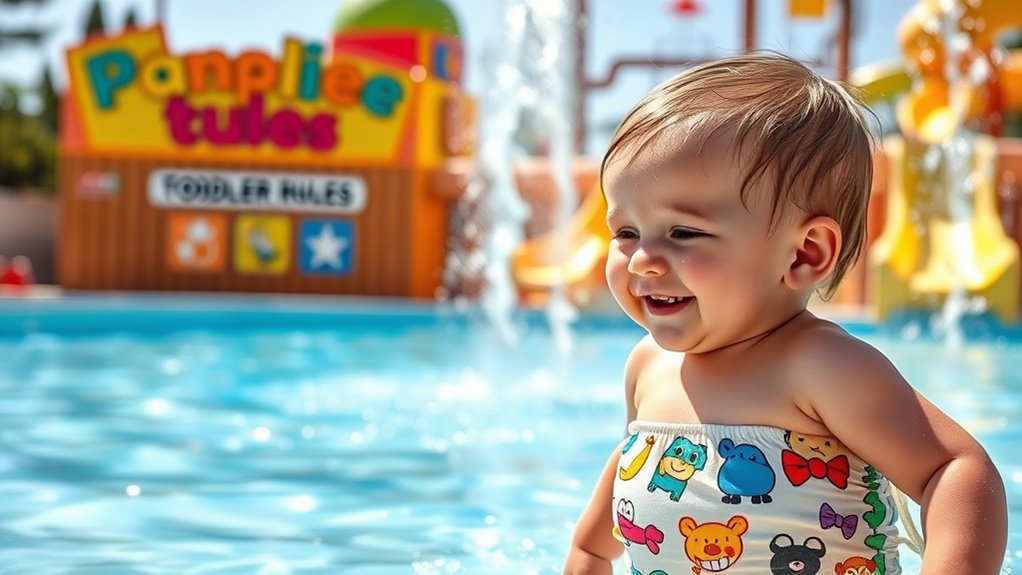

At water parks, it’s crucial to use proper swim diapers designed for containment and hygiene, especially for toddlers not potty-trained. Water park policies typically require all kids under 3 to wear swim diapers and waterproof covers, which are often available on-site. Supervision is key; keep your little ones within arm’s reach and follow safety rules at all attractions. Wearing appropriate flotation gear and understanding age restrictions helps guarantee a fun, safe experience—if you continue exploring, you’ll discover how to stay fully prepared.
Key Takeaways
- All children under age 3 must wear disposable or reusable swim diapers with waterproof covers at water parks.
- Properly fitted swim diapers are essential to prevent leaks and contain solids, reducing water contamination.
- Water parks stock on-site swim diapers (~$1) and covers (~$2.95); bringing personal supplies is recommended.
- Swim diapers do not absorb water; they need frequent changes (every 60-90 mins or after bowel movements).
- Policies apply regardless of potty training status, ensuring hygiene and safety for all young children.
Importance of Proper Swim Diapers for Toddlers
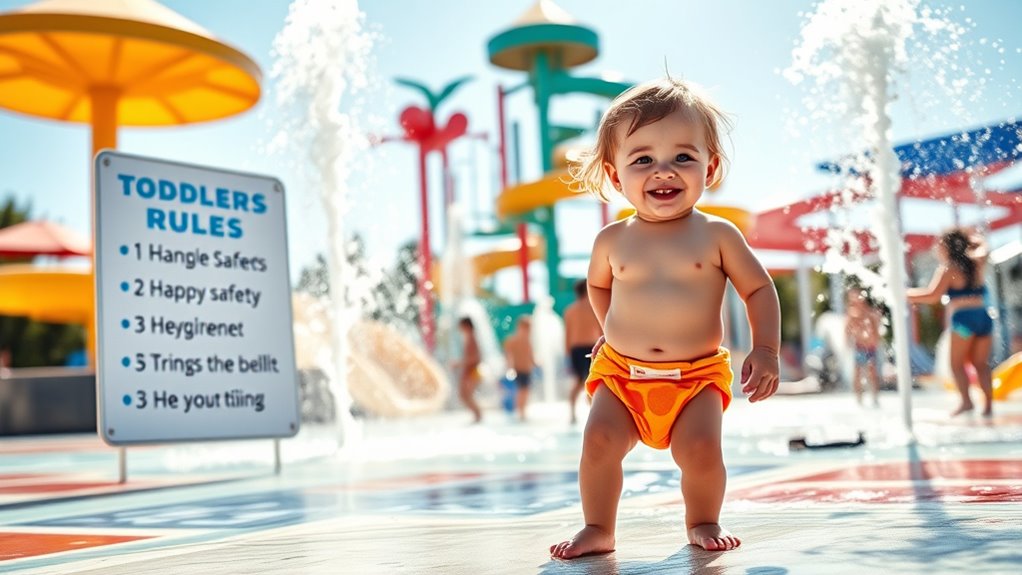
Proper swim diapers are essential for maintaining hygiene and public health at water parks. They’re designed to contain solid waste, preventing fecal contamination in pools and water areas. Using them reduces the spread of waterborne illnesses like gastrointestinal infections and recreational water illnesses, keeping everyone safe. Public facilities often require toddlers not yet toilet-trained to wear swim diapers to uphold community health standards. They also help keep aquatic environments clean, avoiding pool closures caused by contamination incidents. Unlike regular diapers, swim diapers don’t absorb water; instead, they contain solids securely with leak-proof barriers and elasticized cuffs. Proper fit and frequent changes—every 60 to 90 minutes or after bowel movements—are critical to ensure they stay effective and hygienic during water play. They are designed to trap solid waste effectively, which is crucial for preventing contamination. Additionally, understanding state-specific regulations can help caregivers ensure compliance and safety during water park visits.
Selecting the Right Swim Diaper for Water Play
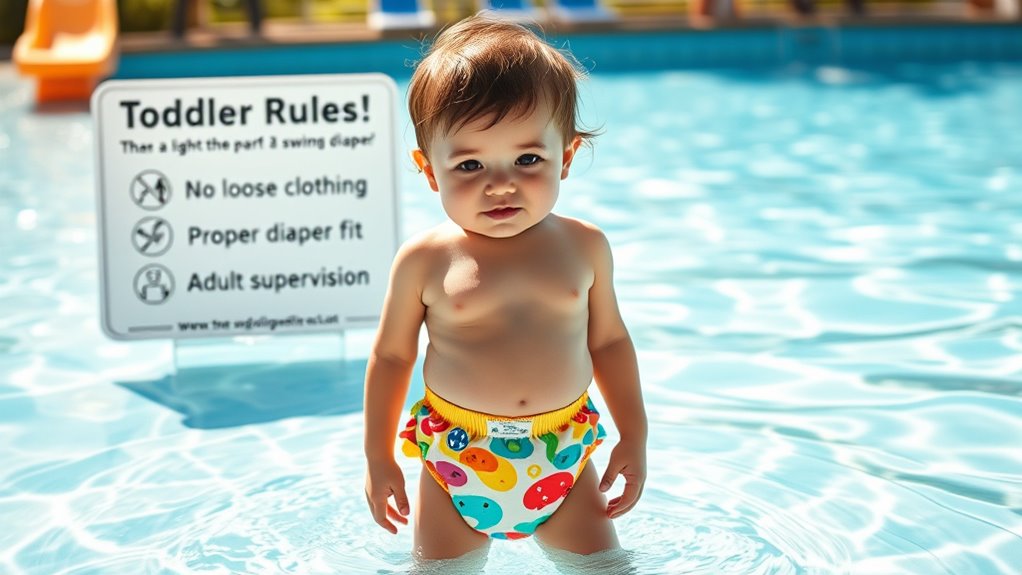
Choosing the right swim diaper for water play involves considering both the type and fit to guarantee safety and hygiene. Disposable swim diapers are convenient for occasional use, featuring a water-repellent shell that prevents waterlogging and leaks. They come in sizes based on weight, offering a snug fit that minimizes leaks. Reusable swim diapers are eco-friendly and cost-effective for regular use, made from durable waterproof fabrics with adjustable closures to grow with your toddler. Proper fit is essential—aim for a snug but comfortable seal around the waist and thighs to prevent leaks and water contamination. Look for adjustable features like snap closures or elastic bands for better fit. Selecting a well-fitting, appropriately sized diaper ensures your child’s water safety and keeps pool hygiene intact. Proper sizing is crucial to prevent leaks and ensure comfort during water activities. Additionally, consider AI-driven security systems to safeguard your data while managing your water park reservations online.
Water Park Policies on Diaper Covers and Supplies
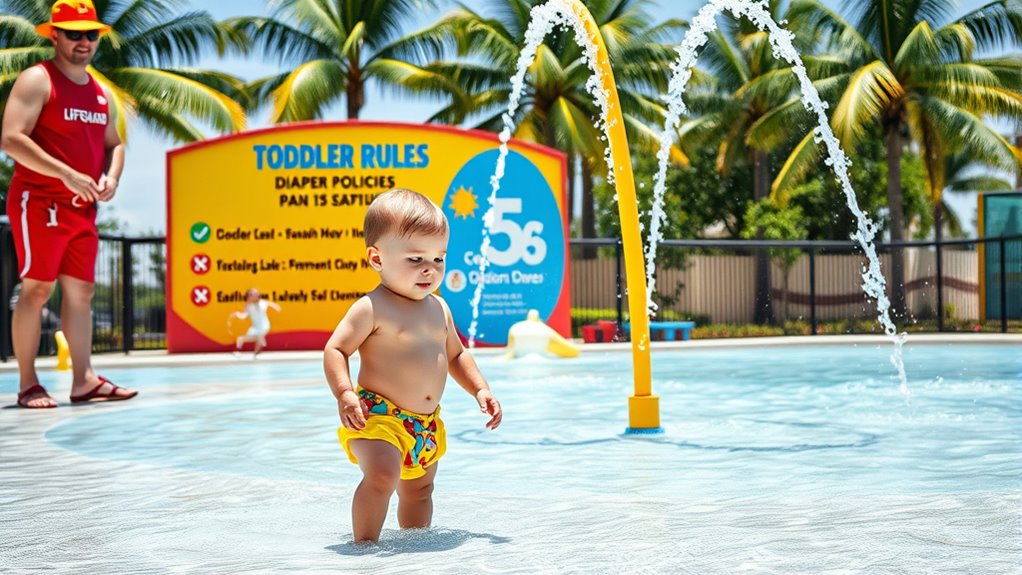
Water parks have strict rules about diaper covers and supplies to guarantee a safe and hygienic environment for all visitors. All children under age 3 must wear a swim diaper plus a waterproof cover before entering the water. Many parks stock these items on-site, often costing around $1 for diapers and $2.95 for covers, making compliance quick and easy. Staff actively inspect for proper diaper use at entry, denying access if children aren’t dressed correctly. These policies apply regardless of potty training status, ensuring consistent safety standards. Parks also restrict inappropriate swimwear, like revealing or damaging styles, and may require showering before entering pools. Bringing your own supplies is recommended for convenience, but on-site options ensure you can meet the policy requirements without delay. Additionally, operating hours are typically from 10AM to 5PM, Monday through Saturday, so planning your visit accordingly can help avoid last-minute issues. Following these policies is essential for maintaining water safety protocols and ensuring everyone can enjoy the water park experience safely.
Supervision Guidelines for Young Children in Water Areas
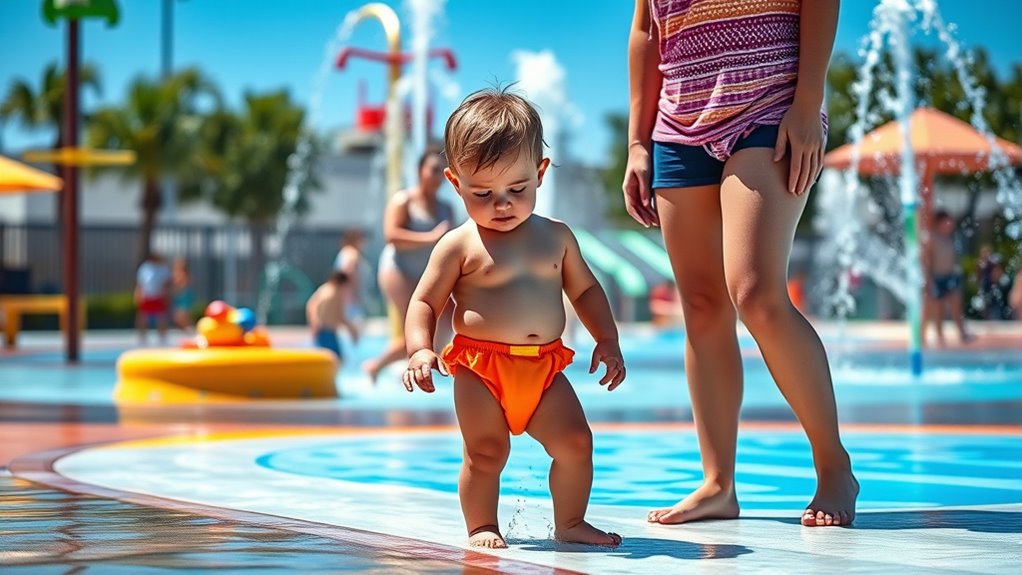
Active, focused supervision is vital when young children are in or near water areas. You must keep constant visual contact, avoiding distractions like phones or conversations that could cause you to miss hazards. Stay engaged and attentive, never multitasking or looking away briefly. It’s essential to supervise children physically, staying within arm’s reach or providing touch supervision, especially during entry, exit, or swimming. Never leave toddlers alone in or near water, including shallow zones or splash areas. Assign a water watcher among adults in shifts to ensure continuous oversight. While lifeguards add safety, they don’t replace your responsibility. Always remain vigilant, enforce water park rules, and confirm proper use of safety gear to prevent accidents and ensure your child’s safety. Research shows that adults not fully engaged may be unaware of child distress, which underscores the importance of active supervision. Maintaining constant vigilance is crucial for preventing accidents and ensuring young children remain safe in water environments.
Safety Equipment and Flotation Devices for Kids
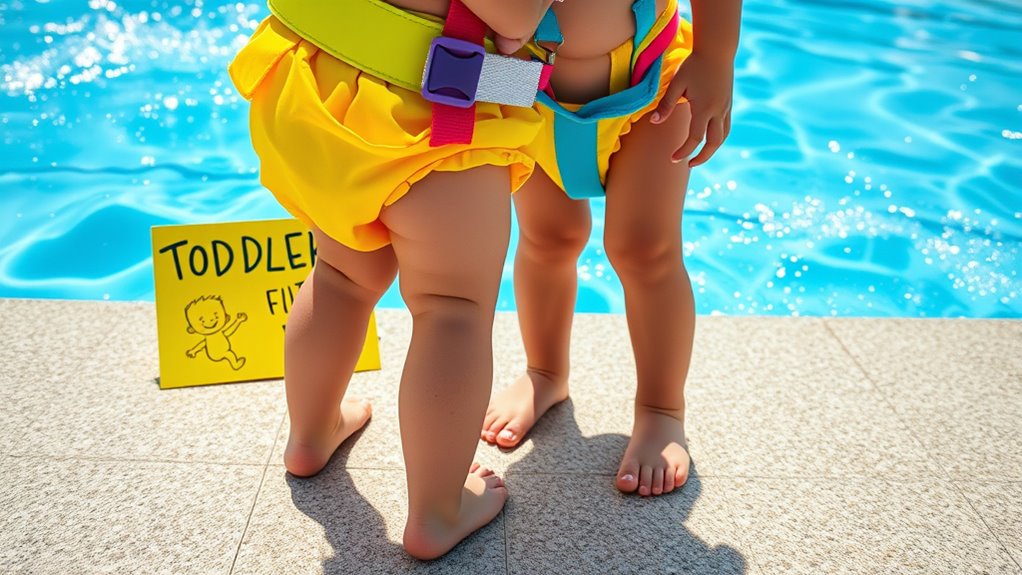
Ensuring your child’s safety at water parks requires the right equipment, particularly flotation devices that meet safety standards. U.S. Coast Guard-approved life jackets are essential for weak swimmers or kids under four feet tall, and many parks require them. Proper fit is critical—an ill-fitting jacket can compromise safety. Many parks provide life jackets, but bringing your own guarantees the best fit and comfort. Remember, flotation devices are especially vital in open water areas where conditions can change quickly. The right safety gear can significantly reduce the risk of drowning in unpredictable water environments. Incorporating appropriate flotation devices into your safety plan ensures your child’s safety is prioritized. Here are some key safety items to consider:
- U.S. Coast Guard-approved life jackets
- Swim diapers and waterproof diaper covers
- Rash guards and sun hats for sun protection
Age and Height Restrictions for Water Attractions
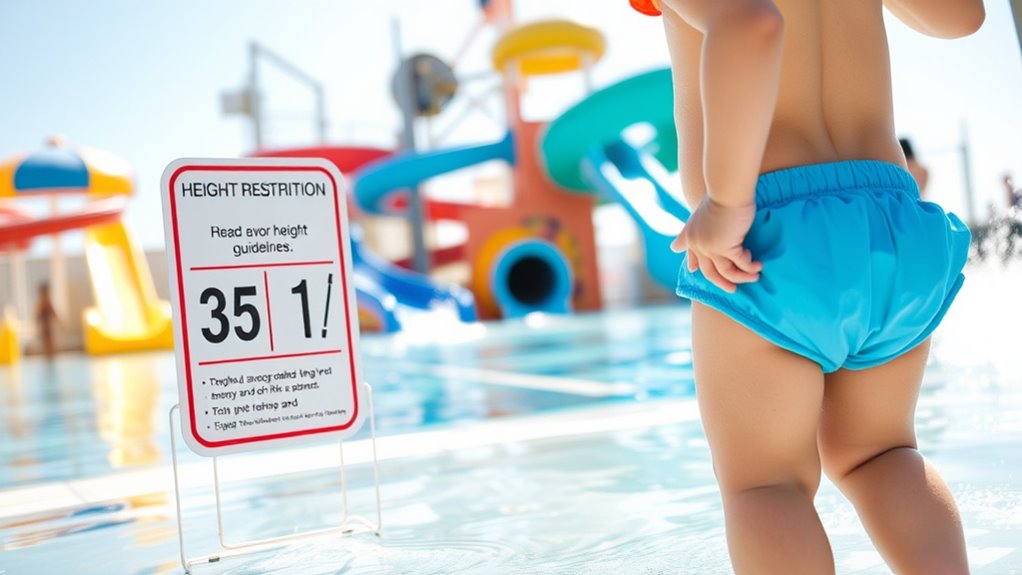
Understanding the age and height restrictions at water parks helps you plan your child’s activities and keep everyone safe. These rules vary by attraction, with common minimum heights ranging from 36 to 54 inches. For high-thrill slides, stricter limits, often 48 inches, are enforced for safety. Some parks allow kids under certain heights to ride if supervised by an adult. Attractions also have age restrictions, requiring children under 14 to be accompanied by an adult, and some rides restrict solo riding based on height. Height checks are typical at designated stations. Here’s a quick overview:
| Attraction Type | Minimum Height | Adult Supervision Needed |
|---|---|---|
| Kiddie Pools | Under 36″ | Yes |
| Family Rides | 36-42″ | Often |
| High-Thrill Slides | 48-54″ | Usually |
| Extreme Rides | 54″+ | Mandatory |
These restrictions help guarantee safety and appropriate ride experiences. Knowing the specific rules helps ensure that children are matched with rides suitable for their age and height. Understanding safety regulations is key to having a fun and worry-free water park visit.
Ensuring Safe Behavior and Conduct in Water Parks
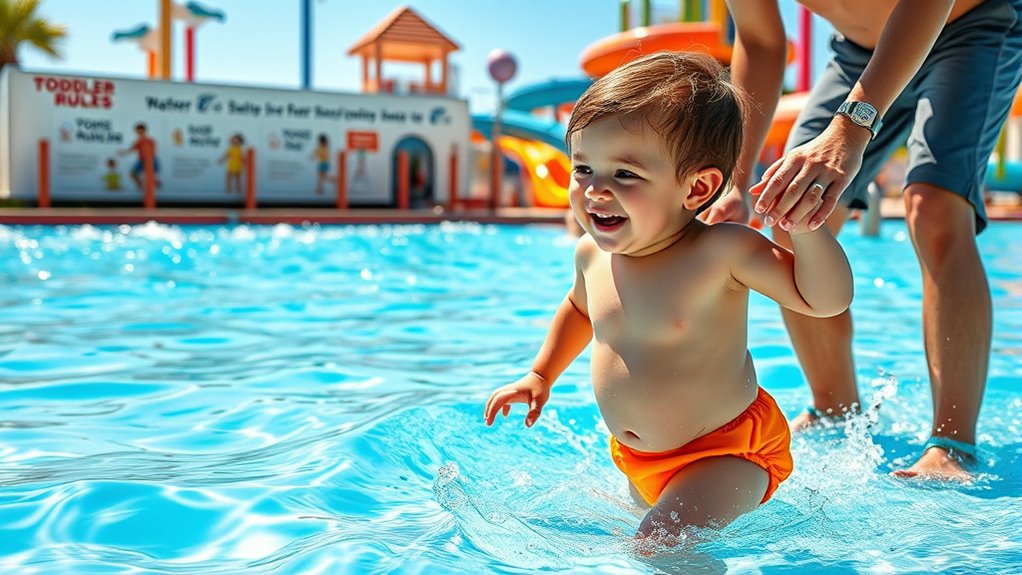
Maintaining safe behavior in water parks requires constant adult supervision and clear guidelines for children. You must stay alert and keep kids within arm’s reach, never leaving them unattended. Assign a water watcher to ensure continuous monitoring, rotating responsibilities to prevent lapses. To promote safe conduct, focus on these essentials:
- Review ride safety instructions with your child before use, emphasizing proper body positioning.
- Supervise splash zones closely, especially near sudden sprays or dumping buckets.
- Remind children to walk, not run, in all areas and use aqua shoes for better traction.
- Educate children about water safety rules and encourage them to follow posted signs and instructions at all times. Having a clear understanding of mental wellbeing can help children stay calm and attentive in busy environments.
- Avoid overcrowded attractions and use safety restraints on rides. Teaching kids to keep mouths closed when splashed helps prevent swallowing water. Consistent supervision and clear rules keep everyone safe.
Frequently Asked Questions
Are Reusable Cloth Swim Diapers Allowed in Water Parks?
Yes, reusable cloth swim diapers are allowed in water parks if they are specifically designed for swimming. You need to guarantee they fit snugly and are made from appropriate waterproof materials. Most parks require you to use a waterproof outer layer like plastic pants with reusable diapers. Remember to change them immediately if soiled, wash them thoroughly afterward, and bring extra diapers for the day to stay prepared for any accidents.
How Often Should I Change My Toddler’s Swim Diaper During the Day?
You should change your toddler’s swim diaper every 60 to 90 minutes during water activities. Check for signs like sagging, leaks, or soiling every 15 to 30 minutes, and change immediately if they’ve had a bowel movement. Regularly changing the diaper minimizes contamination risk and keeps the water clean. Always carry extra swim diapers and follow park guidelines to ensure safety and hygiene for your child and others.
Can I Use a Regular Diaper Under a Swim Diaper?
You shouldn’t use a regular diaper under a swim diaper. Regular diapers absorb water and swell, making your child uncomfortable and increasing the risk of leaks, even with a swim diaper on top. This combination doesn’t prevent fecal leaks or water contamination. Instead, stick with just a proper swim diaper, check it frequently, and change it as needed to keep your child comfortable and the pool clean.
What Should I Do if My Child’s Swim Diaper Leaks?
If your child’s swim diaper leaks, act quickly to keep everyone safe. Remove your child from the water immediately to prevent any mishaps from spreading. Notify water park staff and change the diaper in the designated area using disinfectant wipes. Dispose of the soiled diaper properly, and wash your hands thoroughly. Prompt action helps protect other swimmers and keeps the water clean for everyone.
Are There Size Guidelines for Swim Diapers Based on Age or Weight?
Yes, there are size guidelines for swim diapers based on age and weight. Most brands size by weight, like Pampers Splashers, which fit 13-24 lbs for small and 20-30 lbs for medium. Reusable brands, such as Splash About, also provide detailed weight charts. Always verify the specific brand’s size chart before buying, and measure your child’s waist and thighs to make certain a snug, comfortable fit that prevents leaks.
Conclusion
Remember, keeping your toddler safe in water parks is your top priority. Over 65% of accidents happen due to inadequate supervision or improper gear. Make sure you choose the right swim diaper, follow park rules, and keep a close eye on your little one at all times. By staying vigilant and prepared, you can guarantee a fun, safe experience for your child—making water park adventures enjoyable for everyone involved.