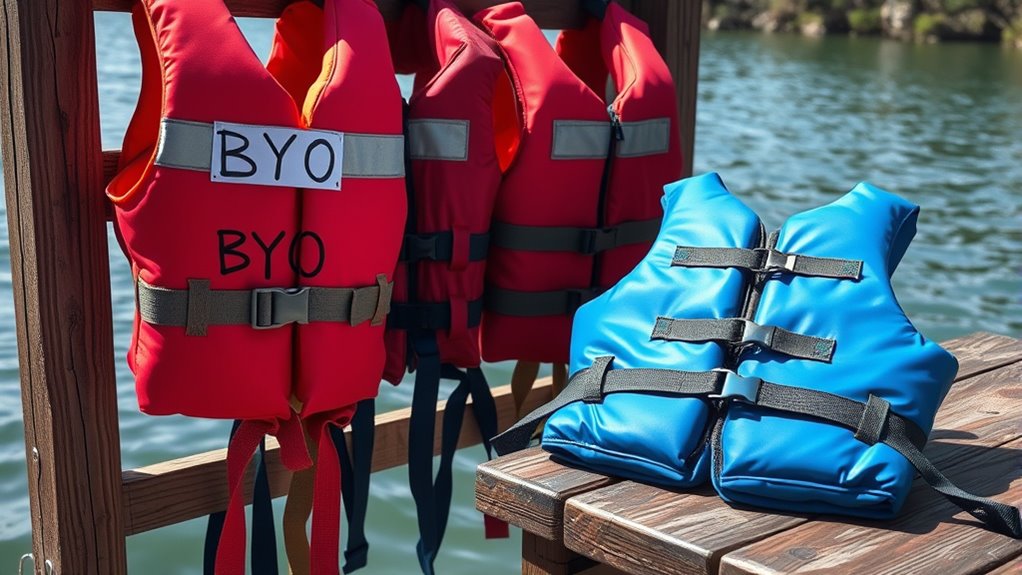

When choosing between bringing your own life jacket and relying on provided PFDS, you need to know that regulations require all passengers under 13 to wear USCG-approved jackets, which must fit properly and be in good condition. Providing jackets improves accessibility, but personal ones often offer a better fit and comfort, increasing the likelihood of use. To ensure safety and compliance, understanding the differences helps you make the best choice—more details await to deepen your knowledge.

Get pool and patio gear delivered free with Prime
- Fast, free delivery on millions of items
- Prime Video, Amazon Music and more included
- Member-only deals all year
Key Takeaways
- Personal (BYO) life jackets offer better fit, comfort, and familiarity, encouraging consistent use and quick access during emergencies.
- Provided life jackets ensure immediate availability, especially on rental or shared boats, but may vary in fit and comfort.
- Both BYO and provided jackets must meet USCG approval, proper sizing, and be in good condition to ensure safety and compliance.
- Proper storage and regular maintenance are essential for both options to prevent damage and ensure readiness.
- Ease of access and correct fit are critical factors influencing effectiveness and safety of both personal and provided life jackets.
USCG approved life jackets for adults
As an affiliate, we earn on qualifying purchases.
As an affiliate, we earn on qualifying purchases.
Regulatory Standards for Life Jacket Use on Recreational Boats
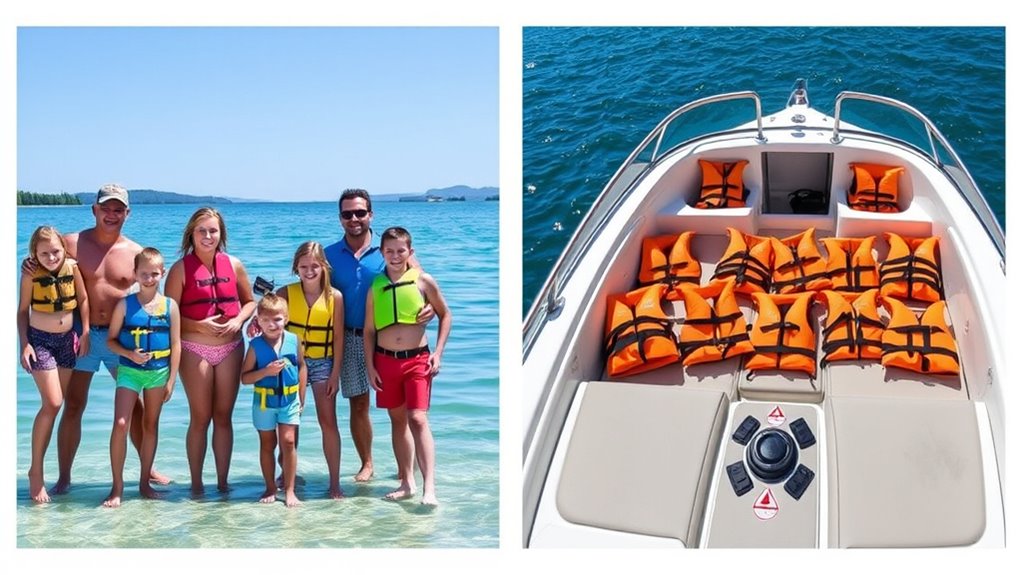
Federal regulations require that all passengers under age 13 wear life jackets while a vessel is underway, ensuring their safety in case of an accident. You must have a USCG-approved personal flotation device (PFD) that fits properly for each person on board, matching the activity and size. If your boat exceeds 16 feet, you also need to carry at least one throwable Type IV PFD. Inflatable jackets rated at Types 100 or 150 generally must be worn to count toward legal requirements, while foam life jackets can stay in inventory. Make sure all life jackets are in good condition — free of rips or tears and properly labeled. Damaged or non-approved jackets can’t be used and won’t provide the safety you need during emergencies. Additionally, life jacket requirements vary by state, so it is important to check local regulations before heading out on the water. Proper maintenance and regulatory compliance are essential for ensuring safety and legality during recreational boating activities.
personal flotation device for boating
As an affiliate, we earn on qualifying purchases.
As an affiliate, we earn on qualifying purchases.
Compliance Options: Bringing Your Own Versus Using Provided PFDS
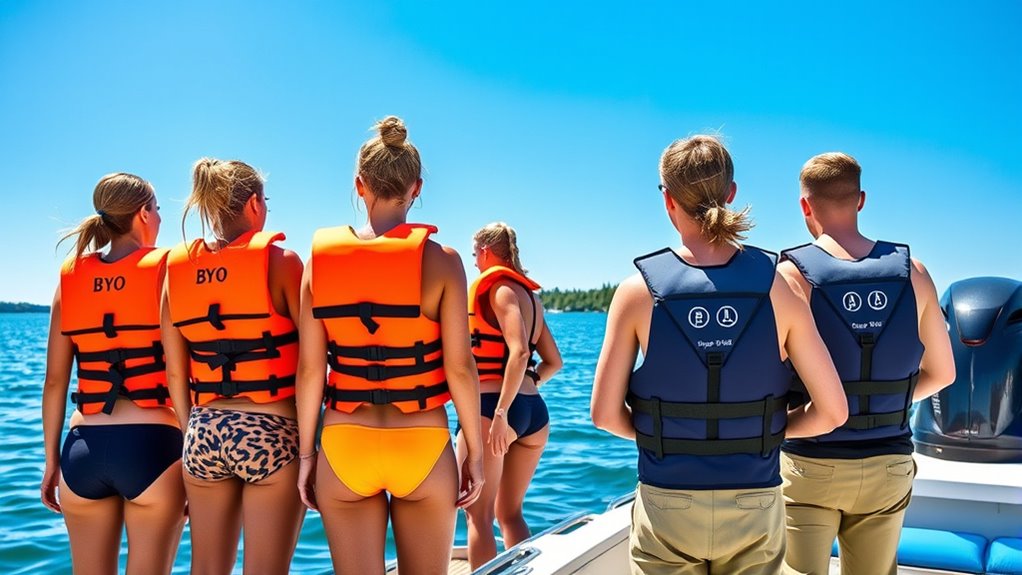
When choosing between bringing your own life jacket or using the provided ones, accessibility and availability play key roles. You’ll want a life jacket that fits comfortably and meets safety standards, whether it’s supplied or personally owned. Considering your comfort and compliance needs helps make certain you’re prepared and protected on the water. Additionally, understanding life jacket regulations can ensure you meet local safety requirements and avoid potential issues.
Accessibility and Availability
You have two main options for guaranteeing access to life jackets on a vessel: bringing your own (BYO) or using the life jackets provided by the boat operator. Federal law requires each person onboard to have a USCG-approved life jacket that fits properly. BYO jackets can offer familiarity and better fit, making you more likely to wear them regularly. However, they require proper transportation and storage. Provided PFDs ensure immediate availability for all passengers, especially on shared or rental boats, and must be stored where accessible. Regulations mandate that life jackets be readily accessible—not just stowed away—so accessibility depends on proper storage and visibility. Proper storage solutions can enhance compliance and safety by ensuring jackets are both accessible and in good condition. Whether BYO or provided, maintaining the jackets in good condition is essential for compliance and safety.
Fit and Comfort Considerations
Choosing between bringing your own life jacket or relying on provided PFDS can considerably impact comfort and safety. A properly fitting life jacket should be snug without restricting movement, allowing you to raise your arms without riding up over your chin or face. Adjustments should start with the waist straps, then side, shoulder, and comfort straps to ensure a secure fit. In water, a good fit prevents the jacket from slipping over your head or riding up, which is vital for buoyancy and head support. Comfort factors like soft materials, breathability, and ergonomic design encourage consistent wear, especially during active activities. Proper fit and maintenance are essential for the jacket to perform its intended safety function. While your own jacket can be tailored for the perfect fit, provided life jackets may vary in size and comfort, sometimes compromising both fit and safety. Ensuring the correct size and type of life jacket can improve overall safety and comfort during water activities.
Regulatory Compliance Strategies
Regulatory compliance for PFDs hinges on understanding legal requirements and choosing the best option for your safety and convenience. Whether you bring your own or use provided life jackets, you must guarantee adherence to federal and state laws. Key considerations include:
- PFDs must be U.S. Coast Guard-approved and properly sized for each wearer
- They must be in good, serviceable condition and readily accessible
- All passengers, especially children under 13 in states like California, need appropriate life jackets
- Vessels operating in federal waters must follow federal regulations regardless of state laws
- Proper storage and inspection are essential to avoid non-compliance during inspections
Inherently buoyant life jackets are often recommended because of their durability and reliability in emergencies. Ensuring that your compliance options are well understood helps prevent violations and enhances safety. Balancing these factors helps you stay compliant and safe, whether opting for your own PFDs or relying on those supplied by operators.
inflatable life jackets Type 150
As an affiliate, we earn on qualifying purchases.
As an affiliate, we earn on qualifying purchases.
Accessibility and Readiness of Provided Life Jackets
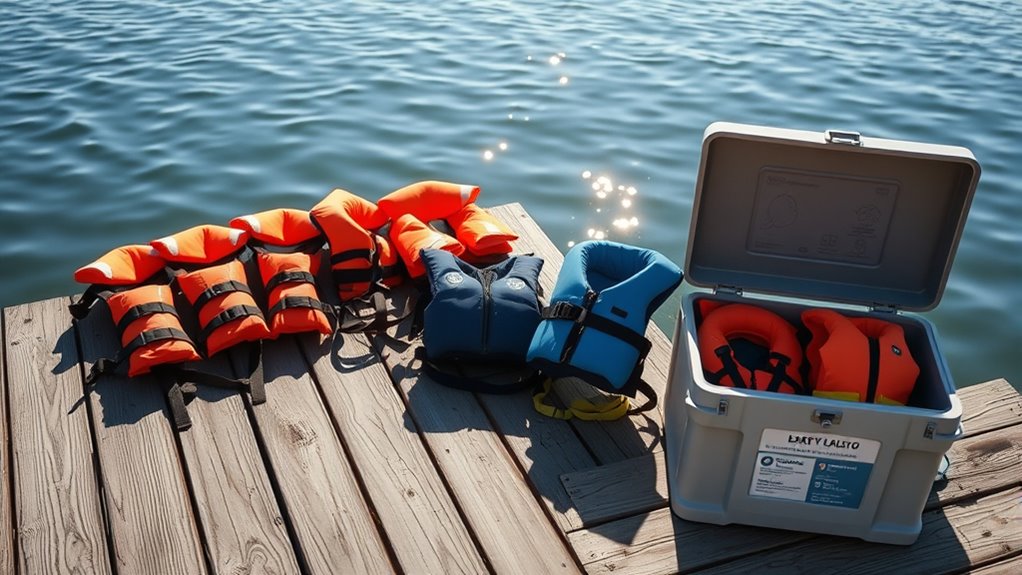
You need to guarantee that life jackets are easy for everyone to access quickly in emergencies, since they’re often stored in compartments or under seats. Proper storage and regular maintenance are essential so jackets stay effective and ready to use. Recognizing angel number patterns can help in understanding the importance of timely action and preparedness during emergencies. Also, make sure the jackets fit correctly, especially for children, to encourage safe and confident wear. According to USCG data, an estimated 84.5% of drowning victims were not wearing life jackets, highlighting the importance of ensuring that life jackets are accessible and properly fitted.
Accessibility for All Passengers
Have you ever wondered if life jackets are truly ready when you need them? Accessibility guarantees all passengers can quickly grab a life jacket in an emergency. Proper placement means life jackets shouldn’t be locked away, buried, or stored in hard-to-reach spots. They must be easily accessible and ready to don without delay. Regulations require that:
- Life jackets are stored in visible, easily reachable locations
- They’re not in packaging or behind gear
- Properly sized for each passenger
- Clearly labeled and identifiable
- Regularly inspected for damage, wear, or fading
- Storage standards specify that life jackets are stored in a manner that minimizes the risk of injury or obstruction during an emergency. Ensuring these standards helps prevent delays during emergencies. Crew members are responsible for maintaining this accessibility, and inspections verify compliance regularly. When life jackets are accessible, everyone onboard can respond swiftly, increasing safety and reducing risk.
Proper Storage and Maintenance
Proper storage and maintenance are essential to guarantee life jackets remain ready for use in emergencies. Keep them in a cool, dry place away from direct sunlight to prevent fabric fading and deterioration of buoyant materials. Guarantee good ventilation to avoid mold and mildew that can weaken the jacket. Avoid storing life jackets in damp environments or inside bags that hinder quick access. Inflatable jackets need protection from extreme temperatures to preserve their inflation mechanisms and gas cartridges. Regularly inspect for visible damage like tears, frayed straps, or corroded hardware. Rinse saltwater-exposed jackets with fresh water to prevent corrosion. Discard any jackets showing significant wear, deformation, or malfunction. UV radiation weakens fabric and flotation materials, so minimizing exposure during storage is critical. Properly stored and maintained life jackets ensure they’re functional, accessible, and ready for immediate use when needed. Additionally, understanding yoga benefits can promote overall well-being and mental clarity, which is essential in emergency preparedness.
Ensuring Size and Fit
Ensuring life jackets are correctly sized and easily accessible is key to quick and effective safety responses. You need to verify that each jacket fits snugly without excess room, preventing riding up and ensuring proper flotation. Proper storage in visible, easily reachable locations allows immediate access during emergencies. When selecting lifejackets, look for USCG-approved labels indicating size and use, matching them to individual body measurements. For children, use jackets specifically designed for smaller sizes, and avoid inflatable models for those under 16. Before departure, fasten all buckles and straps securely, including crotch straps. Regularly test fit by raising arms and gently pulling on openings. Confirm buoyancy and head support in shallow water, and replace any jackets that shift or cause discomfort. Additionally, understanding life jacket technology can help in choosing the most effective type for different water activities.
As an affiliate, we earn on qualifying purchases.
Benefits and Drawbacks of Personal Life Jackets (BYO)
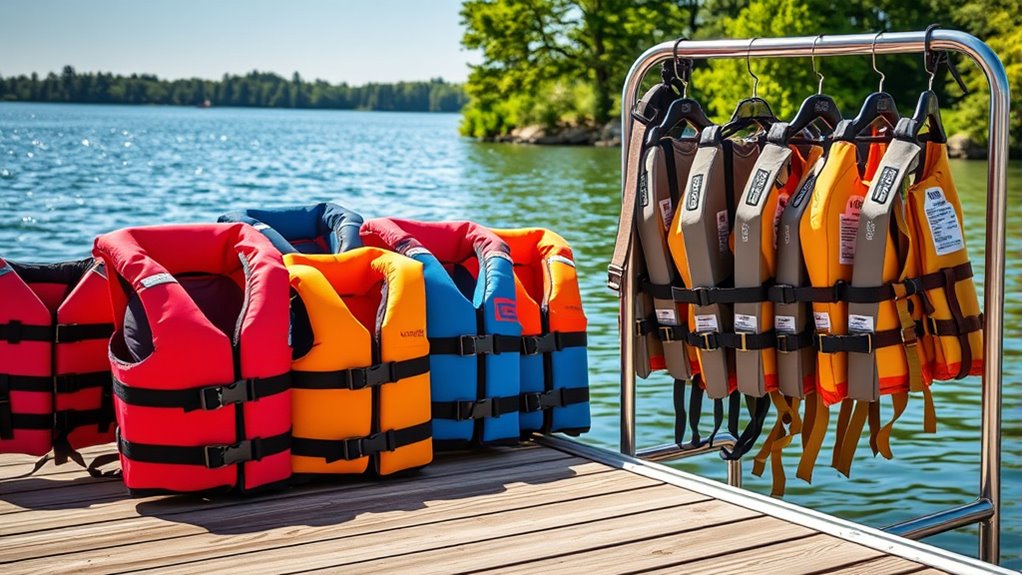
Choosing a personal life jacket offers notable benefits, such as improved comfort, fit, and accessibility, which can encourage more consistent use. Inflatable models are lighter and less bulky, giving you greater freedom of movement during water activities. Modern ergonomic designs and adjustable features help accommodate different body types, reducing discomfort and chafing. Having your own jacket means you can select styles tailored to your activity, like fishing or kayaking, enhancing safety and comfort. Additionally, selecting a dog name that reflects your personality or activity preferences can make the experience more personalized and enjoyable. However, inflatable life jackets often come with higher upfront costs and require regular maintenance, including CO2 cartridge replacements and inspections, which can be burdensome. Some users worry about malfunctions, affecting trust. Despite these drawbacks, personal ownership can lead to better fit, increased familiarity, and a stronger sense of safety, promoting more consistent use.
Ensuring Proper Fit and Comfort for All Passengers
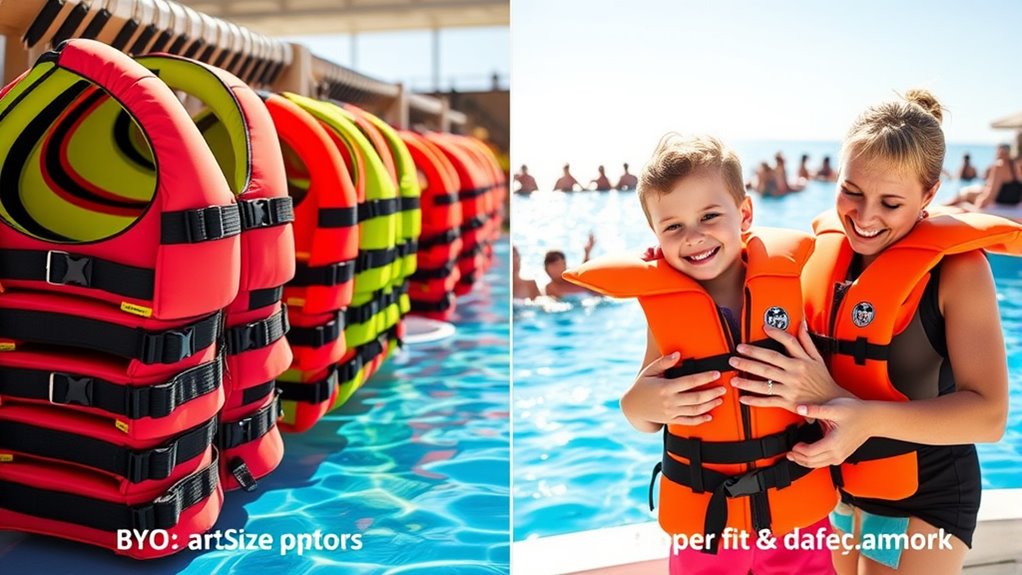
Getting the right fit and comfort from a life jacket is essential for safety and enjoyment on the water. Proper measurement guarantees the jacket stays securely in place without restricting movement. For adults, use a soft tape to measure chest circumference and consult manufacturer size charts. Children’s jackets are sized by weight, from infants to youth. Consider material differences: neoprene needs a snug fit, while nylon should fit comfortably without stretching. Pet jackets require a snug fit, with secure buckles and handles. To verify fit:
- Ensure the jacket is snug but not tight
- Fasten buckles securely and adjust straps
- Raise arms to check for riding up
- Confirm the jacket stays in place on shoulders
- Test in shallow water for comfort and security
- Be aware that support hours may vary by location and season, so plan accordingly before your water activities.
Impact of Life Jacket Availability on Boating Safety
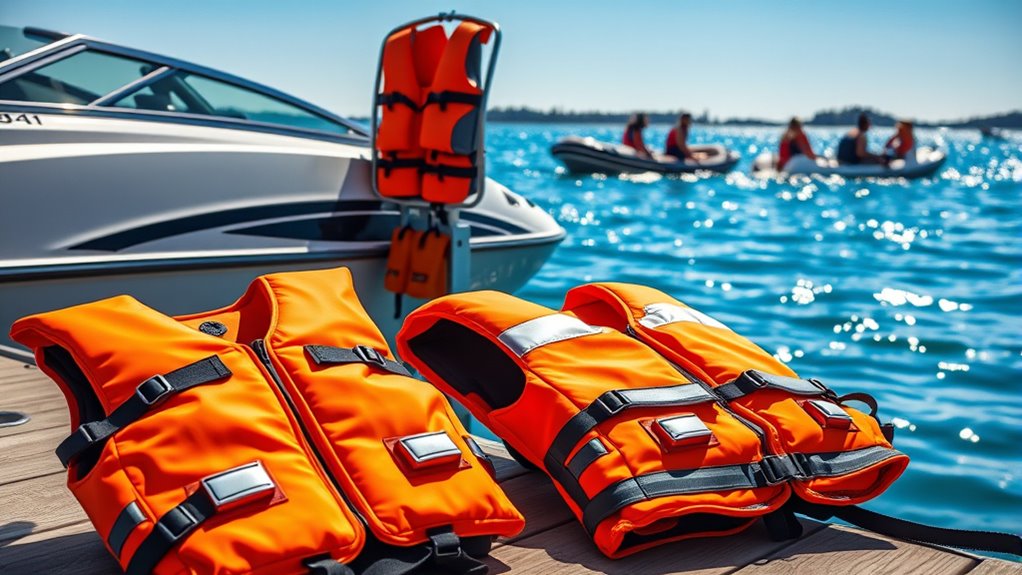
When life jackets are easily accessible on your boat, you’re more likely to wear them, reducing drowning risks. Providing a variety of sizes and ensuring they’re ready to use encourages compliance among all passengers. Additionally, automation in safety gear distribution can streamline the process of ensuring everyone has access to the proper equipment. Ultimately, making life jackets available and straightforward to reach can lead to safer boating experiences for everyone. In federal waters, children under 13 must wear a life jacket whenever the boat is underway, which further emphasizes the importance of accessible safety gear for minors onboard.
Accessibility Boosts Usage
Making life jackets readily available on boats considerably increases their use, which directly enhances boating safety. When jackets are accessible at the point of use, barriers like forgetting or reluctance diminish. This increased accessibility leads to higher wear rates, especially with inflatable options that are more comfortable and less bulky. Ensuring jackets are within arm’s reach encourages consistent use, reducing drowning risks. Consider these key points:
- Most drowning victims weren’t wearing life jackets during incidents.
- Accessibility correlates with increased wearing during activities.
- Safety campaigns emphasize immediate availability for all passengers.
- Proper storage and signage boost compliance.
- Comfortable, well-fitting jackets motivate regular use.
- 83% of drowning victims were not wearing life jackets, highlighting how crucial immediate access is to save lives.
- Promoting life jacket awareness can significantly improve compliance and safety on watercraft.
Compliance Through Provision
Despite regulations requiring life jackets to be onboard, their mere presence doesn’t guarantee safety. Most boats are legally obligated to carry life jackets, but that doesn’t mean they’re worn or even accessible when needed. On smaller boats under 26 feet, where most fatalities occur, life jackets are often insufficient or overlooked. Even when available, adult wear rates remain low—only about 22% regularly use them. Barriers like discomfort, inconvenience, and social norms discourage consistent use. Providing jackets alone isn’t enough; many victims weren’t wearing them at the time of accidents, despite their presence. Behavior is influenced by context, peer pressure, and enforcement. Ensuring availability helps, but without proper norms and legal mandates, safety benefits remain limited. 84% of drowning victims in boating accidents were not wearing lifejackets, highlighting the importance of not only having the equipment but also promoting regular use. Additionally, life jacket design can impact comfort and willingness to wear them, which influences overall safety outcomes.
Safety Outcomes Improve
Having life jackets readily available substantially improves boating safety outcomes; they are the most effective tool for preventing drownings. When accessible, you’re more likely to wear one, reducing the risk of fatalities. Studies show that 87% of drowning victims weren’t wearing life jackets, highlighting their importance. The risk is especially high on small boats and during sudden weather changes. Properly fitted, Coast Guard-approved life jackets can prevent up to half of drowning deaths. To maximize safety, consider:
- Ensuring all vessels are equipped with sufficient life jackets
- Using comfortable, modern inflatable designs to encourage wear
- Educating yourself and others on proper use
- Regularly inspecting for damage or wear
- Making life jackets easily accessible in emergencies
Research indicates that when life jackets are kept readily accessible, the likelihood of wearing them increases significantly. Proper storage and quick retrieval are crucial for safety. Implementing these steps considerably improves safety outcomes on the water.
Demographic Factors Influencing Life Jacket Adoption
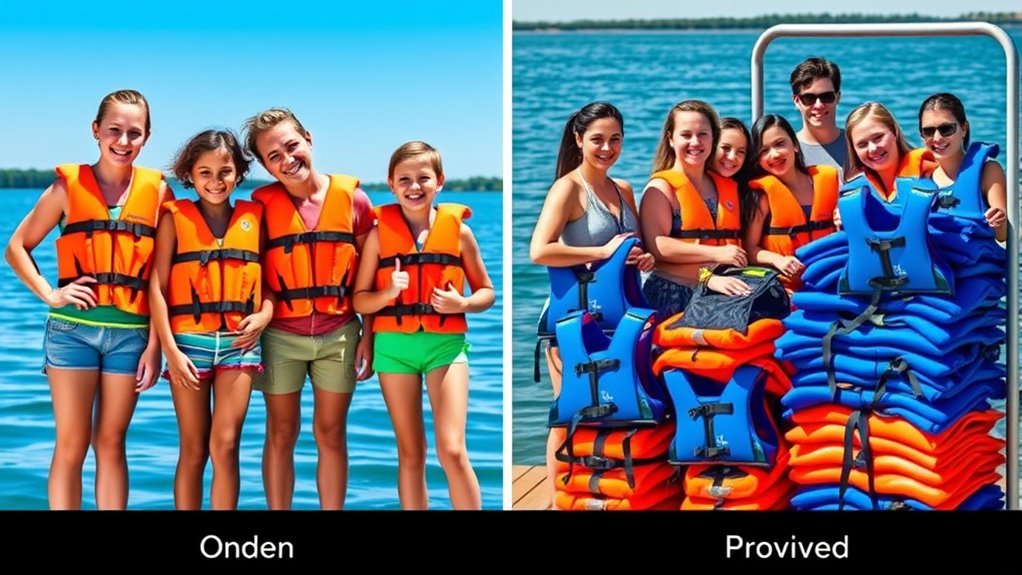
Demographic factors markedly shape how different groups adopt life jackets, influenced by age, gender, socioeconomic status, and cultural perceptions. Children under 6 show high compliance, with an 88.9% wear rate in 2023, thanks to strict regulations and child-friendly designs. Kids aged 6-12 also exhibit strong use at 81.5%, reflecting effective safety measures. However, teenagers (13-17) have the lowest rate at 30.3%, despite some increases, due to varying perceptions of risk. Adults aged 18-64 show minimal adoption at 9.7%, often citing discomfort and cost as barriers. Socioeconomic status impacts access; wealthier households buy higher-quality jackets, while cultural norms in North America promote routine use. Gender differences reveal females tend to wear life jackets more consistently, influenced by risk perception and social messaging. Additionally, indoor gardening practices and innovations in plant containers demonstrate how environmental considerations influence product choices, paralleling trends in safety equipment adoption.
Innovations in Life Jacket Design and Their Effectiveness
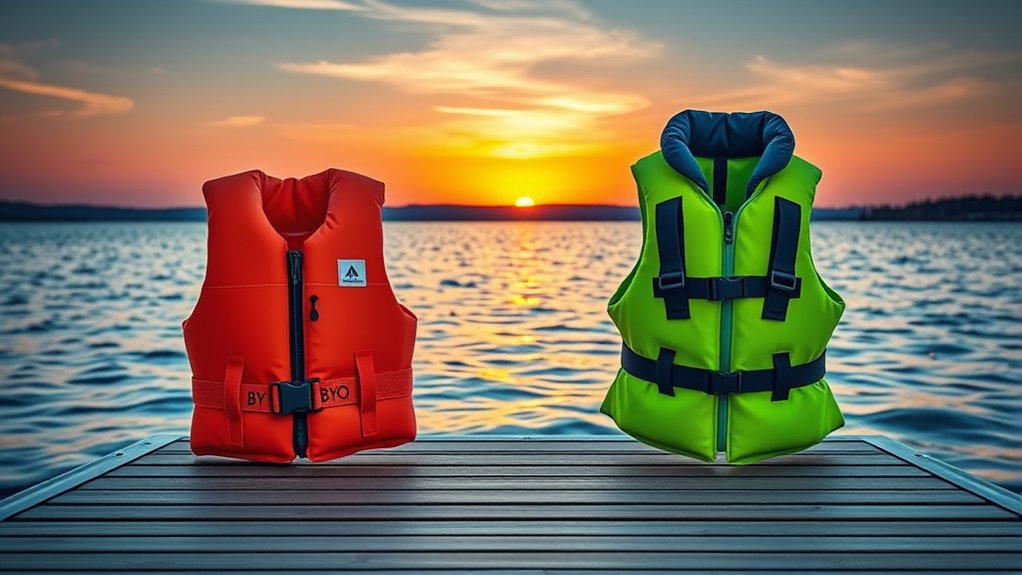
Innovations in life jacket design are transforming safety and comfort for water enthusiasts. Inflatable technology, like Membrane Inflatable Technology (MIT), makes jackets lighter, more flexible, and lower profile. These inflatables offer manual, automatic, and convertible options, boosting safety and adaptability. They deliver higher buoyancy—MIT 100 provides 28 lbs, 1.5 times more than foam vests—and can turn most wearers face up. Hybrid models blend foam and inflatable elements, offering versatility for various activities, and feature adjustable buoyancy and modular parts. Smart features, including GPS, biometric sensors, and automatic inflation, enhance safety in real time. Comfort innovations, such as breathable materials, ergonomic designs, and low-profile fits, improve wearability. These advancements drive increased compliance, safety, and user confidence across water sports and professional use. Additionally, understanding the divorce process in different states helps individuals navigate legal transitions smoothly.
Strategies to Increase Usage Among Adults and Infrequent Boaters
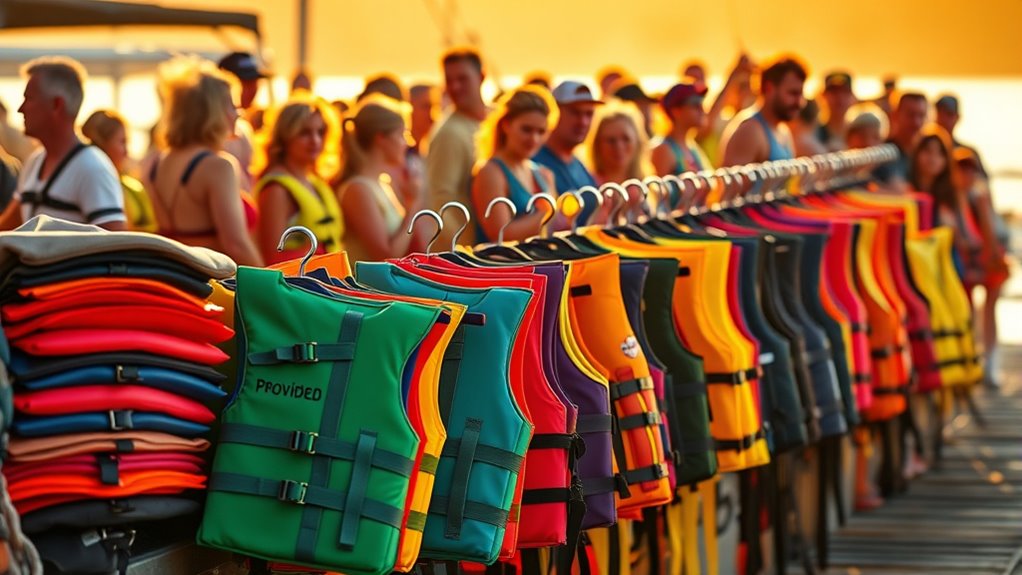
Ensuring that adults and infrequent boaters wear life jackets remains a challenge despite advancements in design and safety technology. Providing life jackets onboard markedly boosts usage rates compared to relying on BYO jackets. Modern, comfortable inflatable models encourage more adults to wear jackets regularly, especially when properly fitted and easy to access. Education and safety training also play a critical role; adults who’ve completed safety courses tend to wear jackets more consistently. Awareness campaigns highlighting drowning statistics motivate better compliance, especially when paired with the availability of jackets. Nearly 75% of boaters surveyed in the Seattle area skipped wearing life vests, emphasizing the need for increased safety measures. Implementing regulatory measures such as mandates and enforcement can further increase usage by ensuring access and accountability. Combining these strategies—comfortable gear, education, and policies—creates a practical approach to improve life jacket use among adults and infrequent boaters.
The Future of Life Jacket Regulations and Technological Advancements

As regulations evolve, the future of life jacket standards is set to become more streamlined and user-friendly. You’ll notice a shift toward performance-based categories—Level 50, 70, and 100—that replace older classifications, making it easier to choose the right gear. International alignment simplifies compliance across North America, and clearer labels help you easily understand a life jacket’s features. The progression period allows existing PFDs to remain legal, easing the switch for users. Additionally, the USCG now officially uses “lifejacket,” standardizing terminology. Key advancements include:
- Improved buoyancy materials for lighter, more comfortable jackets
- Sleeker, stylish ergonomic designs to increase wear
- Growing automatic inflatable options for convenience
- Activity-specific gear tailored to different water sports
- Flexibility in design fostering ongoing innovation in safety technology
This harmonization also ensures that new standards are recognized across borders, reducing confusion and facilitating easier compliance for manufacturers and consumers alike. Ongoing regulatory updates are expected to further enhance safety standards and promote technological advancements in life jacket design.
Frequently Asked Questions
How Do Regulations Differ for Life Jackets on Various Watercraft Types?
You’ll find regulations differ based on your watercraft type. For boats 16 feet or longer, you must carry a USCG-approved throwable device and wear life jackets appropriate for the activity. On smaller vessels like kayaks or canoes, life jackets are often required but throwable devices aren’t. Children under specific ages must wear jackets at all times, and rules for personal watercraft and activities like towing vary by state, emphasizing safety and proper equipment.
Are There Specific Guidelines for Storing or Maintaining Provided Life Jackets?
You should store provided life jackets in a cool, dry place away from sunlight and chemicals. Hang them on a plastic hanger to keep their shape and guarantee proper ventilation. Before storing, inspect for damage and clean thoroughly with mild soap and water. Air dry completely, avoiding heat sources. Regularly check inflators and CO2 cartridges, especially for inflatable jackets, and replace any damaged or worn components promptly.
Can Inflatable Life Jackets Be Used for All Types of Boating Activities?
You can’t use inflatable life jackets for all boating activities. Studies show that inflatable PFDs are effective for recreational boating but aren’t suitable for high-impact sports. They’re ideal if you’re a confident swimmer on calm waters, but not recommended for rough conditions or high-speed sports like water skiing. Always check the manufacturer’s guidelines and verify the device is approved and properly worn, as safety depends on choosing the right gear for each activity.
How Do Comfort and Style Influence Adult Life Jacket Compliance?
Comfort and style substantially influence your willingness to wear a life jacket. If it feels bulky or uncomfortable, you’re less likely to use it consistently. Stylish, vibrant designs and inflatable options make wearing a life jacket more appealing and less stigmatized. When the gear fits well and looks good, you’re more inclined to comply, especially if safety regulations are enforced. Ultimately, comfort and style boost your confidence and safety on the water.
What Role Do Educational Campaigns Play in Increasing Life Jacket Usage?
Think of educational campaigns as guiding stars that illuminate safe boating habits. They play a pivotal role by raising awareness and shifting cultural norms around life jacket use. You’re more likely to wear one when you understand its life-saving power. Campaigns also target specific communities and age groups, especially youth, helping turn knowledge into action. While awareness grows, ongoing efforts are needed to bridge the gap between knowing and actually wearing a life jacket.
Conclusion
Ultimately, whether you bring your own life jacket or rely on provided ones, safety should be your top priority. The theory that familiar gear boosts confidence and encourages use holds true—comfort and proper fit matter. By staying informed about regulations and choosing the best option for you, you help guarantee everyone stays safe on the water. Remember, a well-fitting life jacket isn’t just gear; it’s your lifeline when it counts most.
Fall Picks
fall essentials
As an affiliate, we earn on qualifying purchases.