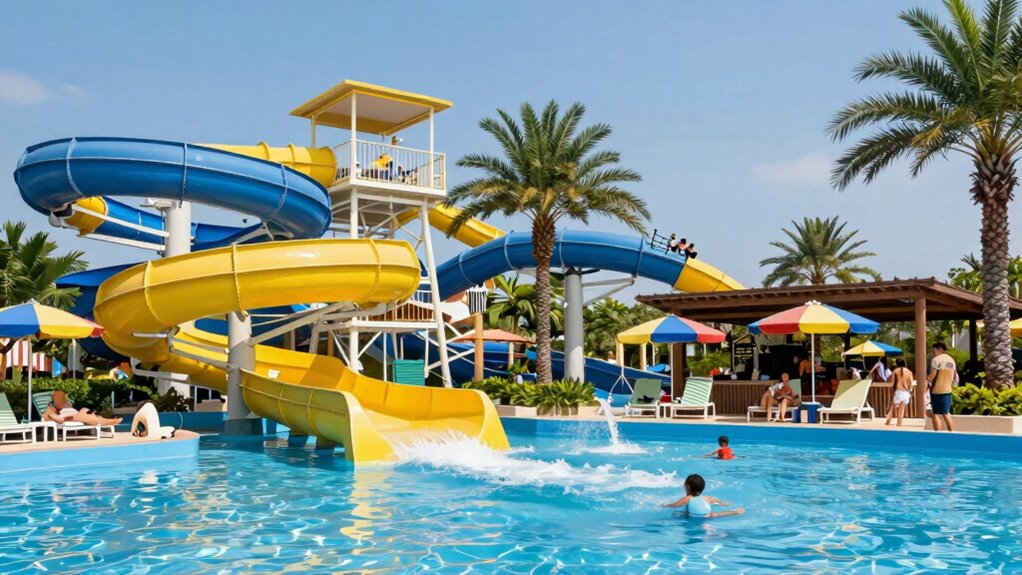
You can enjoy a water park that balances thrills and family comfort by exploring carefully designed spaces with lush landscaping, shaded areas, and clear pathways, making everyone feel welcomed and safe. Parks incorporate inclusive features like ramps and sensory-friendly zones for all ages and abilities while maintaining exciting rides for thrill-seekers. Thoughtful layout and natural elements create a cohesive environment that keeps the fun accessible and relaxing. Keep exploring to discover how these design choices make your visit memorable for everyone.

Get pool and patio gear delivered free with Prime
- Fast, free delivery on millions of items
- Prime Video, Amazon Music and more included
- Member-only deals all year
Key Takeaways
- Incorporates varied ride types and zones to cater to both thrill-seekers and young children comfortably.
- Uses landscape design to create shaded, relaxing areas that provide respite from high-intensity attractions.
- Ensures accessible pathways and inclusive features for guests of all ages and abilities.
- Balances safety measures with engaging aesthetics to maintain excitement while protecting visitors.
- Integrates cohesive themes and natural elements to unify thrill rides and family-friendly spaces seamlessly.
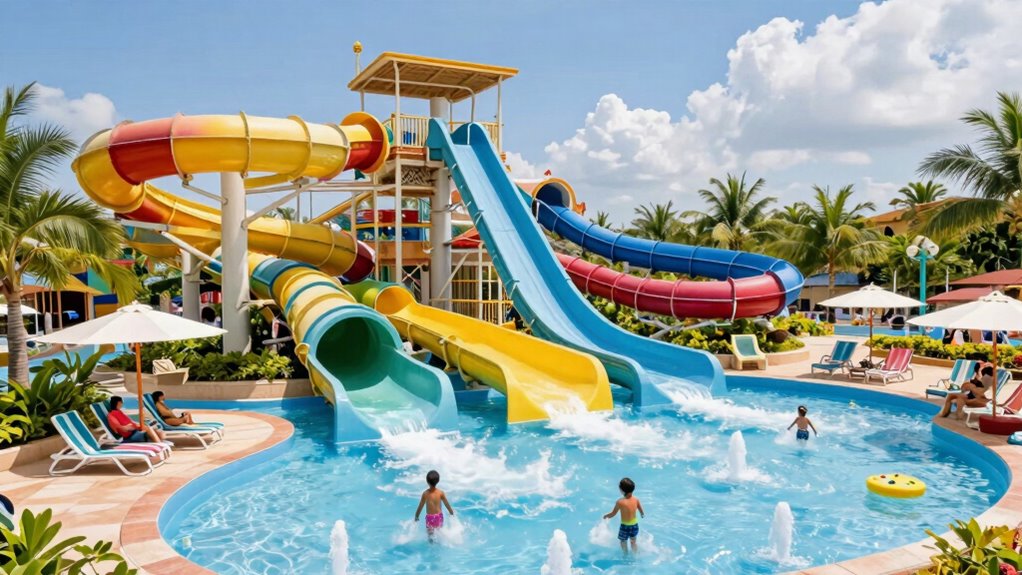
Have you ever wondered what goes into creating an exhilarating and safe water park experience? It’s a complex process that combines creativity, safety standards, and thoughtful planning. One of the key elements is innovative landscaping, which not only adds aesthetic appeal but also enhances safety and functionality. When designing a water park, you want the environment to feel inviting, natural, and engaging. This involves using lush greenery, natural-looking rock formations, and themed elements that blend seamlessly with the rides and attractions. Innovative landscaping can also serve practical purposes, such as guiding visitors along designated paths, reducing glare, and providing shaded areas for rest. These thoughtful touches make the park more visually appealing and comfortable, encouraging guests to linger and enjoy their day. Incorporating landscape design principles ensures that the environment is both beautiful and functional, contributing to a cohesive overall experience. Additionally, integrating native plants can help with water conservation and maintenance, making the landscape more sustainable and easier to care for. Employing sustainable landscaping practices can further enhance the park’s eco-friendliness and operational efficiency. Thoughtful landscape design also plays a role in visitor safety, helping to prevent accidents and ensure smooth circulation throughout the park. Moreover, careful planning of landscaping elements can reduce chemical usage and minimize the environmental impact of maintenance routines. Accessibility features are another critical aspect of balanced water park design. You want every visitor to feel welcome and able to participate fully, regardless of physical ability. This means incorporating ramps, wide pathways, and accessible entry points for rides and pools. It also involves installing lifts or transfer systems to help those with mobility challenges get in and out of water attractions safely and comfortably. Clear signage, tactile guides, and sensory-friendly spaces further contribute to an inclusive environment. Prioritizing accessibility doesn’t just meet legal standards; it creates a welcoming atmosphere that encourages families and individuals of all abilities to enjoy the water park together. When designing with accessibility in mind, you’re fostering a sense of community and ensuring that no one feels left out of the fun. Considering universal design principles can help improve the overall experience for all visitors, regardless of their needs.
As an affiliate, we earn on qualifying purchases.
Frequently Asked Questions
How Do Water Parks Ensure Safety During High-Thrill Rides?
You see water parks guarantee safety during high-thrill rides by strictly following safety protocols, like regular inspections and trained staff supervision. They also implement emergency response plans, making sure staff know how to act quickly if an issue arises. These measures help prevent accidents, giving you peace of mind while enjoying the excitement. Constant monitoring and preparedness ensure your safety, so you can focus on having fun without worry.
What Materials Are Used for Water Attraction Construction?
You’ll find that water attractions are built with water-resistant materials like fiberglass, high-density polyethylene, and reinforced concrete, ensuring they withstand constant water exposure. These materials also provide structural durability, essential for safety and longevity. The construction process involves using corrosion-resistant metals and sealants to prevent deterioration. This careful selection guarantees the attractions stay sturdy and safe for visitors, even after years of heavy use and exposure to water.
How Are Water Parks Environmentally Sustainable?
Think of a water park as a living, breathing entity that thrives on eco-friendly innovations. You can make it sustainable by implementing water conservation strategies like recycling and efficient filtration systems. These efforts reduce water waste and energy use, turning your park into a greener paradise. By embracing these practices, you guarantee fun and excitement don’t come at the planet’s expense, making your water park a shining example of environmental responsibility.
What Is the Average Cost of Designing a Water Park?
The average cost of designing a water park varies widely, but you should start with a solid cost estimation and thorough budget planning. Typically, it ranges from $10 million to over $50 million, depending on size, attractions, and location. You’ll need to account for land acquisition, construction, and safety features. By carefully planning your budget early, you guarantee your water park’s design balances thrills with family comfort without overspending.
How Do Water Parks Accommodate Guests With Disabilities?
You’ll find that many water parks dedicate around 10-15% of their design budget to accessible features. They use inclusive design principles to guarantee everyone, including guests with disabilities, can enjoy the attractions. Features like ramps, zero-depth entry pools, and adaptive water rides make access easier. These thoughtful accommodations create a welcoming environment that promotes fun and safety for all visitors, regardless of physical ability.
As an affiliate, we earn on qualifying purchases.
Conclusion
By carefully balancing exciting rides with family-friendly spaces, you create a water park that appeals to all ages. Remember, studies show that 78% of visitors prioritize safety and comfort alongside thrill rides. When you design with this in mind, you guarantee every guest leaves happy and enthusiastic to return. Striking this balance transforms your water park into a fun, safe oasis where thrill-seekers and families alike find their perfect splash of excitement and relaxation.
As an affiliate, we earn on qualifying purchases.
As an affiliate, we earn on qualifying purchases.
Halloween Picks
halloween
As an affiliate, we earn on qualifying purchases.