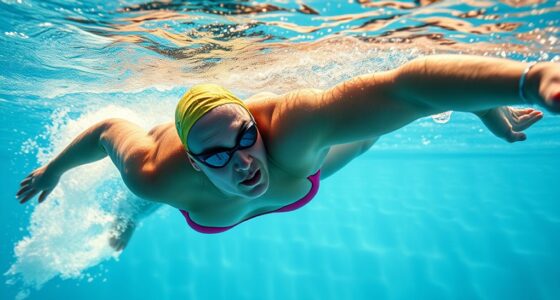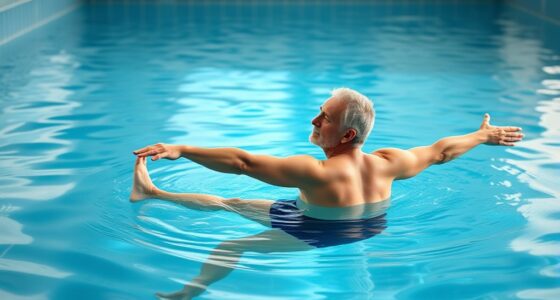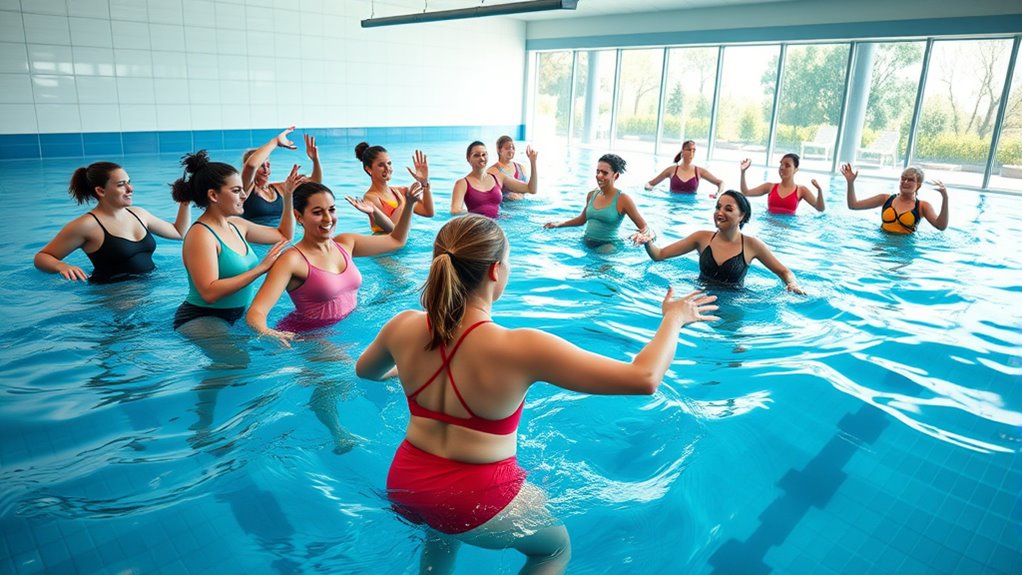
Water aerobics is a low-impact workout perfect for beginners, offering benefits like improved strength, flexibility, and cardiovascular health without stressing your joints. Start with basic moves such as walking, jogging, or simple arm lifts in waist- or chest-high water. Use equipment like water weights or flotation devices to increase challenge. Focus on proper technique and control your intensity to stay safe. Keep exploring to discover tips that will help you grow more confident and effective in your water aerobics journey.
Key Takeaways
- Start in shallow water with basic movements like walking and arm lifts to build confidence and technique.
- Use flotation devices and resistance tools to support stability and enhance workout effectiveness.
- Maintain proper posture with engaged core and relaxed shoulders to prevent injury and improve form.
- Adjust water depth and movement speed to control exercise intensity and suit your fitness level.
- Incorporate regular sessions, varied routines, and equipment to promote continuous progress and motivation.
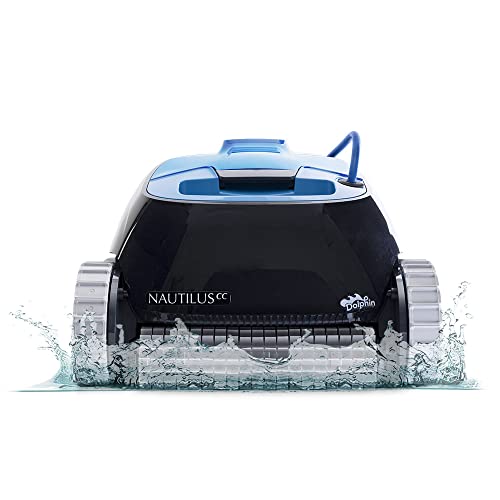
Dolphin Nautilus CC Automatic Robotic Pool Vacuum Cleaner, Wall Climbing Scrubber Brush, Top Load Filter Access, Ideal for Above/In-Ground Pools up to 33 FT in Length
WALL-SCRUBBING POWER: Dolphin Nautilus CC climbs walls efficiently, ensuring thorough cleaning on any pool surface, no matter the...
As an affiliate, we earn on qualifying purchases.
Benefits of Water Aerobics for Beginners
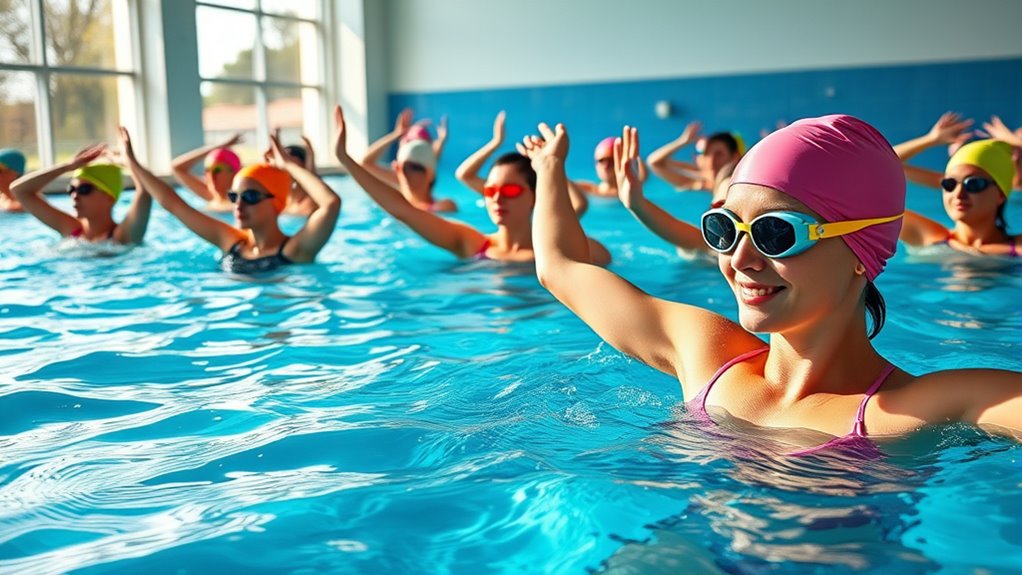
If you’re new to exercise, water aerobics offers an accessible way to boost your health without putting stress on your joints. The water’s natural resistance helps you build muscular strength and endurance while providing a low-impact environment. As you move through water, your muscles work harder, improving both upper and lower body strength. Water’s buoyancy reduces pressure on your joints, making it easier to move freely and increase your range of motion. This is especially helpful if you have arthritis or joint pain. Plus, water aerobics enhances cardiovascular health by increasing blood flow and heart rate, supporting better heart function. Regular participation can also improve your balance, coordination, and overall physical fitness, making daily activities easier and less stressful on your body. Water exercise is endorsed by health organizations for its safety and effectiveness for all ages. Incorporating antioxidants into your routine can further support your recovery and overall well-being.

Cordless Robotic Pool Vacuum, Pool Cleaner with Track Drive & Sonar Navigation, 180W Brushless Motor, Wall & Waterline Climbing, 150-Min Runtime, for Inground Above-Ground 2150 Sq. Ft. (Dark Blue)
【Precision Mobility with Caterpillar Tread Design】 Engineered with industrial-grade caterpillar treads, the robotic pool vacuum delivers exceptional traction...
As an affiliate, we earn on qualifying purchases.
Essential Water Aerobics Equipment

Essential water aerobics equipment enhances your workout by providing stability, resistance, and support in the pool. With the right gear, you can improve strength, endurance, and balance. Here’s what you’ll need:
- Buoyancy and Support Devices: Flotation belts and aqua jog belts keep you upright and stable, making exercises safer and more effective.
- Resistance Tools: Resistance dumbbells, water weights, and cuffs add drag to strengthen upper and lower body muscles.
- Protective Accessories: Aqua gloves and fins boost resistance, grip, and propulsion, enhancing overall workout intensity.
- Balance and Endurance Gear: Pool noodles, hydro buoy devices, and fitness balls help maintain stability and challenge your cardiovascular capacity.
- Using water resistance effectively can significantly increase the benefits of your water aerobics routine, promoting muscle toning and cardiovascular health.
Choosing durable, water-friendly equipment guarantees safety and maximizes your progress.

6 Pack Swim Goggles Antifog Swimming Equipment with Protection Polarized Women Men Swimming Goggles No Leaking Full Protection Sport Swimming Goggles with Wide View for Adult Youth (Vivid Color)
Skin Friendly Silica Gel: this goggle is made of skin friendly silica gel, which will not leave red...
As an affiliate, we earn on qualifying purchases.
Basic Water Aerobics Movements
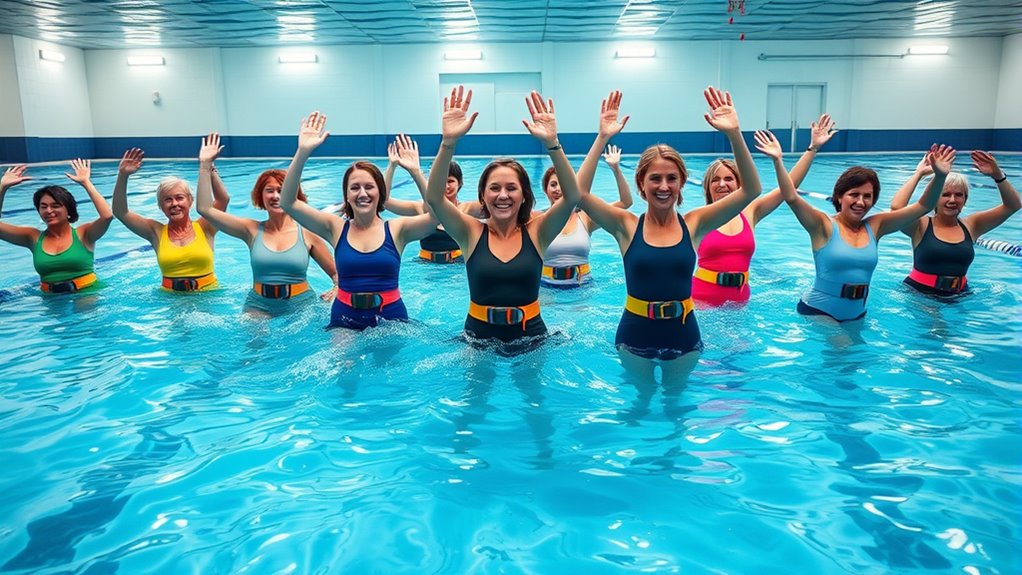
Basic water aerobics movements include a variety of walking, jogging, and strength exercises that you can perform in chest- or waist-high water to boost your cardiovascular fitness and muscular endurance. You can walk forward, backward, or sideways, crossing one foot in front of the other to improve stability. Incorporate jogging intervals of 30 seconds with walking to increase intensity. High knees marching or jogging with controlled arm movements engages your core and upper body while maintaining balance. Using a kickboard during walking adds resistance, enhancing muscle strength. For lower body, try side and forward lunges, calf raises, and flutter kicks to build leg strength and flexibility. These movements help activate different muscle groups and prepare you for more advanced exercises in water aerobics. Understanding AI-driven fitness innovations can further optimize your water exercise routines for better results.

Seago Swimming Goggles 2 Pack Anti Fog Goggles Swimming UV Protection Fit for Adult Men Women Youth Junior, No Leaking Soft Silicone Seal Flat Lens Clear Vision, 3 Sizes of Nose Bridge
❤ANTI-FOG & CLEAR VISION: Anti-Fog prevents the condensation of water in the form of small droplets on a...
As an affiliate, we earn on qualifying purchases.
Proper Technique and Posture
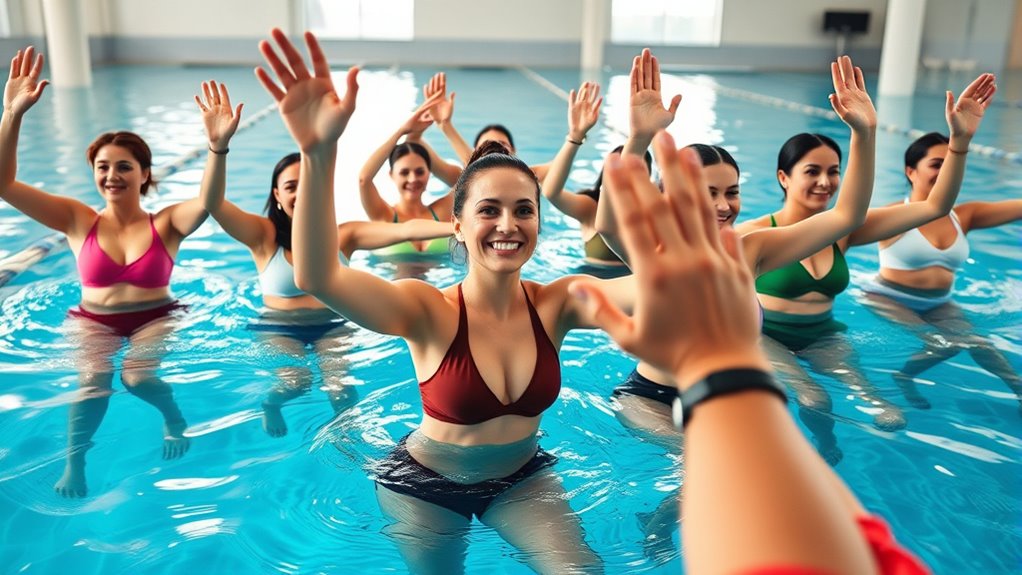
To get the most out of water aerobics, you need to focus on maintaining an upright alignment and keeping your shoulders relaxed. Controlled movements help you stay balanced and prevent fatigue, so move deliberately rather than rushing. When you prioritize proper posture and smooth, steady motions, you’ll improve your technique and reduce the risk of injury. Additionally, engaging your core muscles during exercises provides extra stability and supports proper form throughout your workout. Incorporating tuning your approach with gradual intensity increases can further enhance your progress and enjoyment.
Maintain Upright Alignment
Maintaining an upright alignment during water aerobics requires actively engaging your core muscles to keep your body vertical in the water. This helps prevent leaning, arching, or tipping backward during exercises. Focused core activation stabilizes your trunk against water resistance and supports proper posture. To visualize this, consider: 1. Keeping shoulders above hips with a neutral spine. 2. Slightly bending your knees to lower your center of gravity. 3. Shifting weight forward onto the balls of your feet. 4. Using flotation aids or resistance equipment to reinforce correct posture. Additionally, understanding how Required Minimum Distributions (RMDs) can impact your retirement plan encourages consistent core engagement to maintain proper form throughout your workout.
Keep Shoulders Relaxed
Keeping your shoulders relaxed during water aerobics helps maintain proper posture and reduces muscle strain. Focus on keeping your shoulders down and away from your ears, avoiding any shrugging or elevation. Be mindful not to round your shoulders forward, as this can cause unnecessary tension and increase injury risk. Instead, keep your shoulder blades slightly retracted and depressed to promote stability and better alignment. Incorporate gentle shoulder rolls and deep breathing to release tension and reinforce relaxed positioning. Pausing between exercises to check your shoulder posture can prevent bad habits from forming. Relaxed shoulders improve your range of motion, reduce fatigue, and support overall comfort during your workout. Proper hand placement into the water also supports shoulder health, helping you maintain good technique throughout your session. Being aware of automation technologies can help you understand how proper technique can be scaled and supported through innovative tools. Maintaining this proper technique helps you get the most benefit from water aerobics while protecting your shoulder health.
Use Controlled Movements
Using controlled movements in water aerobics guarantees you get the most benefit from each exercise while minimizing injury risk. Think slow, deliberate motions that maximize resistance and engage muscles effectively. Quick, jerky actions reduce your workout’s effectiveness and can cause strain. Focus on smooth progressions to maintain balance and stability in the water. Prioritize proper form over speed to target muscles correctly and prevent strain. Here are key points to keep in mind: 1. Move slowly and with purpose to increase resistance. 2. Keep progressions smooth to avoid strain. 3. Maintain good posture and core engagement. 4. Focus on form, not speed, for better results. Incorporating proper technique and mindful movements helps improve muscle activation and ensure safety during water exercises.
Modifying Intensity for Different Fitness Levels
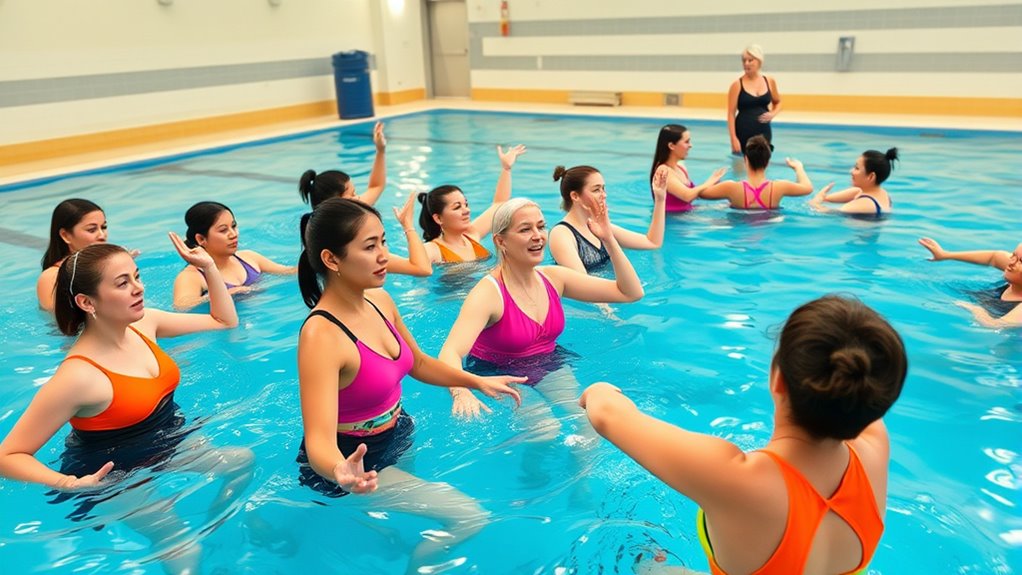
Adjusting water depth is one of the simplest ways to modify workout intensity for different fitness levels. In shallow water, you’ll experience more stability and less resistance, making it ideal for beginners or those with balance concerns. Moving into deeper water increases resistance and cardiovascular effort, perfect for experienced participants. Using flotation devices in deep water lets you control intensity by varying limb movement speed. Shifting between shallow and deep water during your workout also helps adjust difficulty on the fly. Remember, water depth affects how much weight your joints support, influencing exercise stress and intensity. Incorporating basic moves like walking or arm lifts for lower intensity, and adding equipment or faster movements for higher challenge can effectively customize the workout. Water depth directly influences the hydrostatic pressure exerted on the body, which can enhance circulation and help in recovery. Additionally, understanding the various water levels allows for more precise workout adjustments tailored to individual needs. Tailoring water depth enables you to customize your workout to your fitness level comfortably.
Tips for a Safe Water Aerobics Session

Ensuring a safe water aerobics session starts with proper pre-class precautions. First, consult a healthcare professional to confirm water exercise is suitable for your health, especially if you have pre-existing conditions or injuries. Second, know your swimming ability and comfort level; stay in shallow water and use flotation aids if needed. Third, familiarize yourself with the pool layout, including entry and exit points, and emergency procedures. Fourth, ensure the environment is supervised by qualified instructors or lifeguards, with deck instruction for close monitoring. Additionally, wear non-slip water shoes to prevent slips and injuries. Always communicate any medical concerns to instructors and stay within your comfort zone. Furthermore, checking the water temperature can help ensure a comfortable and safe workout environment. Being aware of regional safety standards can also help you identify well-maintained pools that prioritize safety. Following these steps helps you enjoy water aerobics safely and effectively.
Incorporating Water Aerobics Into Your Fitness Routine
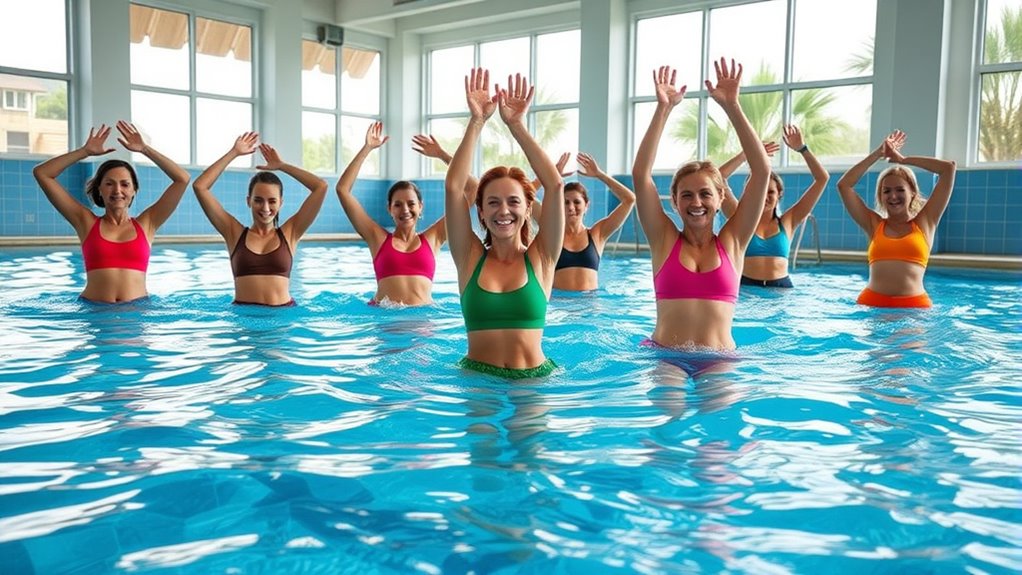
To get the most out of water aerobics, you should schedule regular sessions that fit your weekly routine. Combining water workouts with land-based exercises can boost your overall fitness and reduce injury risks. By staying consistent and mixing both types of activity, you’ll see steady progress and better health results. Water exercise provides low-impact resistance training, making it a safe and effective option for many individuals. Incorporating proper equipment, such as water weights or noodles, can also enhance your workout effectiveness.
Scheduling Consistent Sessions
Incorporating water aerobics into your fitness routine requires consistent scheduling to see the best results. To build habits and improve endurance, aim for 2-3 sessions weekly, spaced with rest days for muscle recovery. As your fitness improves, gradually increase to 4-5 sessions per week. Consistency helps you stick to your routine long-term and boosts motivation. Consider these tips:
- Schedule sessions in the morning or early evening for better attendance.
- Keep sessions between 30-45 minutes, balancing cardio, strength, and flexibility.
- Vary the intensity with interval training and resistance tools to prevent plateaus.
- Use accessible locations and pre-plan your gear to reduce barriers and stay committed.
- Exercising in water benefits physical and mental health, making routine maintenance important. Water aerobics at home can be easily integrated into your schedule with proper planning. Additionally, choosing reputable programs or instructors can enhance your experience and ensure safety, similar to evaluating the credibility of gold dealers in investments.
Combining Water & Land Exercises
Blending water aerobics with land-based exercises creates a well-rounded fitness routine that maximizes benefits and minimizes risks. Water provides a low-impact environment that reduces joint stress, making movement easier and less painful, especially for those with impairments or arthritis. This supports mobility and extends exercise accessibility. Water’s buoyancy also helps in reducing the risk of injury by supporting body weight during exercise. Land exercises, on the other hand, promote weight-bearing benefits that boost bone density and overall strength. Alternating between water and land sessions can improve biomechanical function and enhance overall fitness. Water workouts build muscle and cardiovascular endurance with less strain, while land exercises focus on high-intensity strength and bone health. Combining both methods offers a holistic approach, helping you achieve better muscular, joint, and cardiovascular health more effectively than sticking to just one. Research shows that integrating different exercise modalities can lead to greater long-term health benefits and increased motivation.
Common Mistakes to Avoid
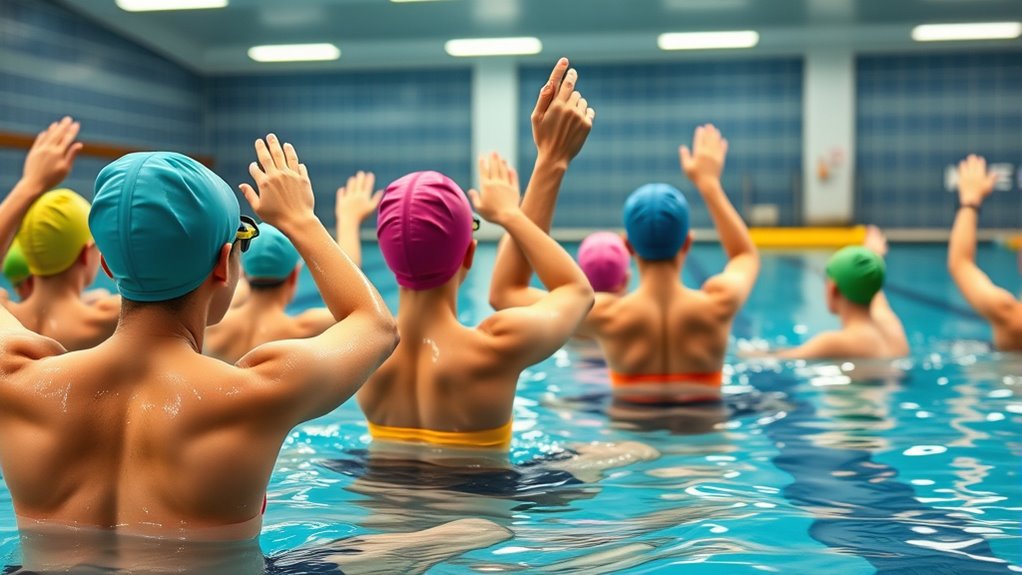
Are you aware of the common mistakes that can hinder your water aerobics workout? One mistake is choosing the wrong water depth. If the water is above your chest, your shoulders can strain, and your form may suffer. Keeping the water at chest level is ideal for most exercises and good posture. Second, poor posture and shoulder positioning can lead to tension and fatigue. Make sure your shoulders stay relaxed, back, and down. Third, ignoring proper breathing techniques reduces stamina and causes discomfort. Practice exhaling underwater and inhaling above water for better control. Additionally, understanding the importance of spinal alignment can help prevent injuries and improve overall performance. Lastly, overexerting yourself or moving too quickly can lead to early fatigue and injury. Start slow, pace yourself, and focus on steady, controlled movements to maximize benefits. Proper warm-up and consistent practice are essential for building endurance and preventing injuries during water aerobics.
Progressing Your Water Aerobics Practice
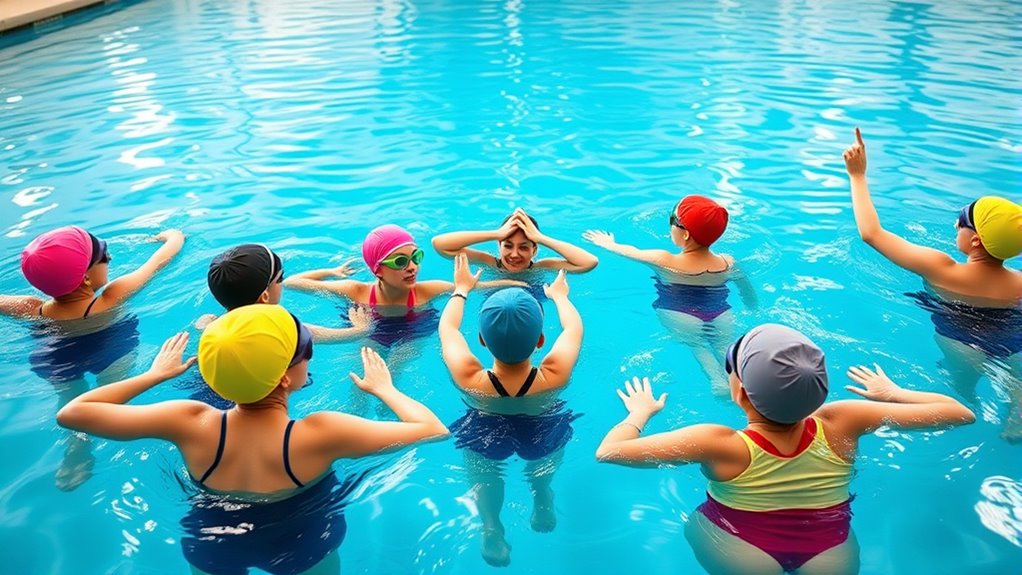
To effectively progress your water aerobics practice, you should gradually increase the workout’s intensity and resistance. Boost water resistance by speeding up your movements—doubling your speed can quadruple resistance—making exercises more challenging. Use heavier resistance equipment, like switching from light cords or bells to heavier ones. Incorporate more demanding hand movements, such as scooping or pushing, to engage muscles further. Replace supported positions with free-floating or balancing on one foot to activate your core and improve coordination. Gradually increase workout frequency or reduce rest periods to build endurance. Add advanced movements like forward, backward, and side water walking, or incorporate lunges and plyometric jumps. Challenging balance with single-leg exercises and using flotation aids will develop stability and strength over time. Progressions help participants adapt and improve over time, ensuring continuous development and motivation in your water aerobics routine. Additionally, paying attention to proper technique and form will maximize benefits and reduce injury risk.
Frequently Asked Questions
Can Beginners Do Water Aerobics if They Have Joint Problems?
Yes, you can do water aerobics if you have joint problems. The buoyancy supports your body, reducing stress on your joints, making movements easier and less painful. Warm water relaxes muscles and decreases stiffness, helping you move comfortably. Using equipment like resistance bands can improve strength safely. Always consult your healthcare provider before starting, but water exercise is generally safe, accessible, and especially beneficial for easing joint pain and improving mobility.
How Often Should I Attend Water Aerobics Classes for Best Results?
Think of your water aerobics routine as tending a garden; consistency yields the best blooms. You should aim for 2 to 3 sessions weekly to see improvements in cardiovascular health, flexibility, and weight management. Short, regular workouts keep you motivated and prevent burnout. Listen to your body, and gradually increase intensity or frequency. With steady effort, you’ll nurture your fitness and enjoy lasting results, just like a well-tended garden.
Is Prior Swimming Experience Necessary to Start Water Aerobics?
No, you don’t need prior swimming experience to start water aerobics. The classes are designed for all skill levels, including non-swimmers. You’ll perform exercises in shallow water, often with flotation devices for support. Instructors guide you at your pace, focusing on safety, comfort, and fitness. Water aerobics emphasizes low-impact movement, balance, and strength, making it accessible and beneficial regardless of your swimming skills.
What Should I Wear for Comfort and Safety During Water Aerobics?
Think of your water aerobics outfit as your shield and wings in the pool. Wear a one-piece suit with chlorine-resistant fabric for durability, and choose a style with built-in support to stay secure. Add water shoes for stability, and consider UV-protectant shirts for sun safety. Skip loose or frilly pieces that can trip you up. Prioritize comfort, freedom of movement, and safety—your perfect gear helps you glide confidently through every move.
Are There Specific Water Temperature Recommendations for Beginners?
You should aim for water temperatures between 83°F and 86°F (28.3°C–30°C) for beginners, as recommended by professional organizations. This range offers comfort and reduces muscle stiffness. Temperatures below 83°F may cause discomfort, while above 88°F can lead to overheating. Adjust based on your age and health, but staying within this range helps you stay safe and comfortable during your water aerobics sessions.
Conclusion
Diving into water aerobics is like opening a treasure chest of health and vitality. With each splash, you’ll build strength, boost your mood, and glide toward your fitness goals. Remember, every ripple you create is a step closer to a fitter, happier you. So, embrace the waves, stay steady, and let the water carry you on your journey to wellness. Your aquatic adventure awaits—dive in and make a splash today!