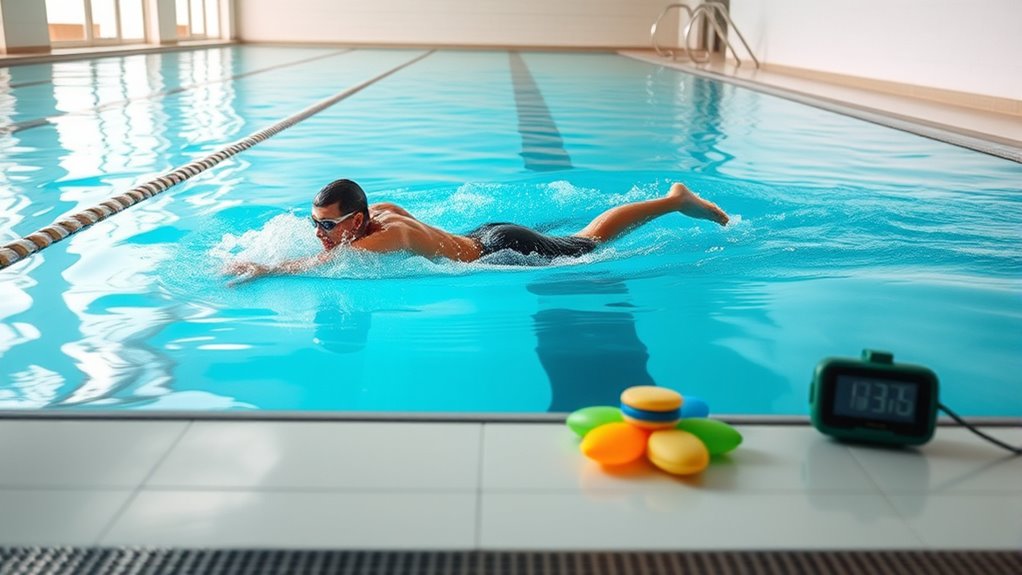

For busy adults, effective interval swim sets combine high-intensity efforts with rest to maximize cardio, strength, and calorie burn in 15-30 minute sessions. Start with 25-50 yard sprints followed by rest periods of 45 to 120 seconds, adjusting based on your fitness level and goals. Vary your strokes and intensities to keep progress steady, and learn how water resistance boosts strength. To improve further, explore tailored workouts that fit your schedule and performance goals.

Get pool and patio gear delivered free with Prime
- Fast, free delivery on millions of items
- Prime Video, Amazon Music and more included
- Member-only deals all year
Key Takeaways
- Use short, high-intensity intervals (25–50 yards) with equal or slightly longer rest periods to maximize efficiency in 15–30 minute sessions.
- Incorporate varied interval lengths like pyramids or sets of 4–6 repetitions to maintain engagement and target different fitness aspects.
- Balance work and recovery by adjusting rest periods (45–120 seconds) to suit your fitness level and training goals.
- Focus on technique during rest to improve efficiency and reduce fatigue, enabling more effective training in limited time.
- Combine interval sets with warm-up and cool-down routines, and track progress to ensure continuous improvement within busy schedules.
Products Worth Considering

Samsonite Freeform 2-Piece Hardside Luggage Set, Carry-On and Large Checked Suitcase, Black

GoPro HERO Compact Waterproof 4K Action Camera

Travelpro Maxlite 5 Softside Underseat Carry-On, Black, 15-Inch
As an affiliate, we earn on qualifying purchases.
The Advantages of Interval Swimming for Busy Schedules

If you’re pressed for time, interval swimming offers a highly efficient way to fit workouts into your busy schedule. You can see improvements in fitness in less time than steady-state workouts. Most HIIT sessions last between 15 and 30 minutes, making them perfect for tight schedules. With interval sets taking only 20 to 40 minutes, you can complete effective workouts without sacrificing your day. These shorter sessions deliver high impact, ideal for adults with limited time. Plus, the flexible structure lets you adapt workouts to any available window, from 10 to 45 minutes. No fancy equipment is needed—just a pool, a pace clock, or timer. This adaptability allows you to fit effective, calorie-burning workouts into even the busiest days. Research shows that incorporating interval training into your routine can maximize results in minimal time.
Physiological Benefits of High-Intensity Water Workouts

High-intensity water workouts boost your cardiovascular health by increasing your VO₂ max and heart rate, similar to land-based HIIT. The hydrodynamic resistance of water also enhances muscle oxygenation, helping your muscles work more efficiently. These benefits make water exercise an effective way to improve overall fitness with less joint stress. Additionally, water’s natural resistance provides a comprehensive resistance training effect that can improve muscular endurance over time. Incorporating projector technology concepts such as resistance and visualization can further optimize your training experience.
Enhanced Cardiovascular Function
Engaging in high-intensity water workouts substantially boosts your cardiovascular function by strengthening your heart and improving circulation. These workouts lower systolic blood pressure by about 6 mmHg and decrease resting heart rate by roughly 5 bpm after 15 weeks. Your cardiovascular endurance and performance also improve markedly; for example, you can increase your maximal 10-minute swim by 13%. Water’s hydrostatic pressure and resistance enhance circulation and venous return, while reducing joint stress. Water resistance not only builds muscle but also enhances cardiovascular efficiency during workouts. Additionally, the Relationships – Personality Test emphasize the importance of communication and understanding, which can be beneficial for couples engaging in shared fitness routines. Here’s a quick snapshot:
| Benefit | Effect | Example |
|---|---|---|
| Blood pressure reduction | Lowers systolic BP and improves health | 6 mmHg decrease |
| Heart rate | Decreases at rest, boosts performance | 5 bpm reduction |
| Endurance | Increases cardiac output and efficiency | 13% swim improvement |
These adaptations make your heart stronger and more efficient, supporting overall cardiovascular health.
Muscle Oxygenation Improvements
Building on the improvements in cardiovascular health from interval swimming, muscle oxygenation plays a pivotal role in optimizing your workout outcomes. During high-intensity sets, your muscles experience significant deoxygenation, with SmO2 levels dropping below 10% during anaerobic efforts. This deoxygenation results from increased oxygen use and reduced hemoglobin availability. Monitoring SmO2 with NIRS technology provides real-time feedback on how well your muscles are delivering and extracting oxygen. Repeated low SmO2 episodes stimulate adaptations, improving oxygen utilization and metabolic flexibility without excessive fatigue. These responses vary with effort intensity and duration but consistently enhance muscle efficiency. Research shows that training respiratory muscles can improve oxygen delivery and endurance in athletes. Additionally, understanding the materials used in modern tableware can inspire eco-friendly choices that align with sustainable workout gear. By tracking muscle oxygenation, you can fine-tune your training zones, ensuring you push just enough to trigger beneficial adaptations while minimizing overexertion.
Designing Effective Interval Swim Sets for Maximum Results
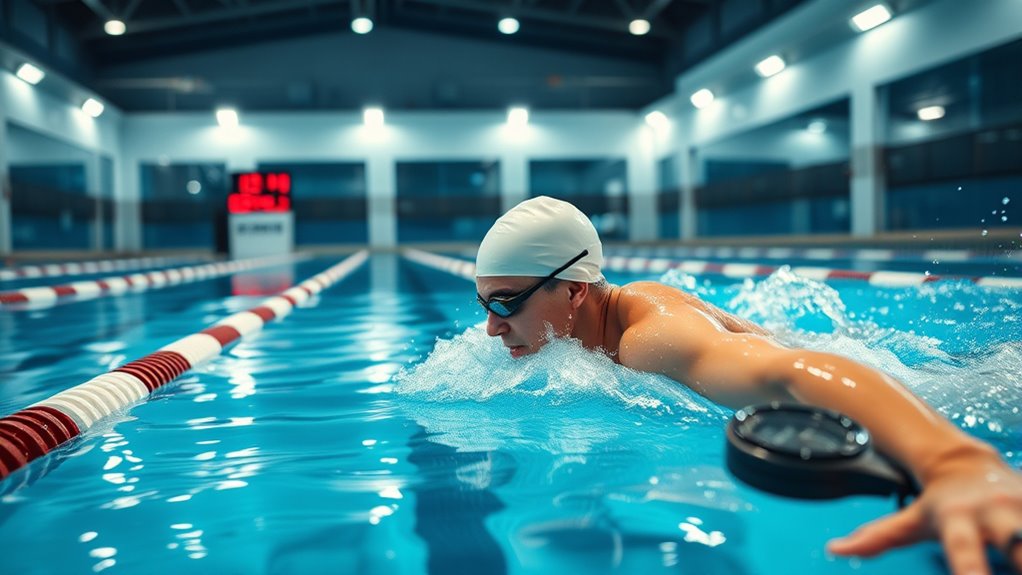
To get the most out of your interval swim sets, you need to carefully balance intensity and duration to match your fitness level and goals. Adjusting rest periods appropriately helps maintain effort and prevents burnout, especially during high-intensity efforts. By tailoring these elements, you can maximize both performance gains and enjoyment in your training sessions. Incorporating structured progression over time ensures continuous improvement and adaptation to increasing fitness levels based on effective training protocols. Additionally, understanding proper recovery techniques can help optimize your results and prevent overtraining.
Optimizing Intensity and Duration
Designing effective interval swim sets hinges on balancing intensity and duration to maximize your training gains within limited time. To do this, adjust interval lengths and effort levels strategically. Short intervals (25–50 yards) push your speed and neuromuscular power with brief rest, while longer intervals (100+ yards) build endurance at submaximal effort. Challenge sets slightly above aerobic pace boost speed and heart rate without overtaxing you. Incorporate variation through negative splits or descending intervals to keep your workout engaging and address both speed and stamina. Focus on:
- Mixing short, high-intensity sprints with moderate, sustained efforts
- Maintaining consistent pace during longer intervals for endurance
- Using interval reductions to progressively increase workload
In addition, paying attention to proper technique during each set can enhance efficiency and reduce fatigue. Interval Sets are highly adaptable to different fitness levels and training goals, making them a versatile tool to optimize your swim workouts. Balancing these elements ensures maximum results within your time constraints.
Tailoring Rest Periods
Choosing the right rest periods during your interval sets can substantially influence your performance and recovery. Shorter rests (like 45 seconds) can decrease your sprint speed and increase fatigue, while longer breaks (around 120 seconds) help improve performance and facilitate better lactate removal. If your goal is to sustain maximum effort, passive rest may support peak performance during short sprints, whereas active recovery at about 60% of your top speed can clear lactate more effectively during longer rests. You should also consider cardiovascular strain—shorter rests elevate heart rate and reduce stroke length, impacting efficiency. Adjusting rest periods based on your goals—whether maintaining peak speed or enhancing endurance—allows you to optimize training effectiveness, reduce fatigue, and maximize results.
Optimal Rest Periods and Intensity Levels

Finding the right balance between rest periods and intensity levels is essential for maximizing your swim training. Properly modifying these factors boosts aerobic capacity and endurance effectively. To optimize your workouts, consider these key points:
Balancing rest and intensity enhances swim training, boosting endurance and aerobic capacity effectively.
- Swimming at 95–96% of race pace during intervals raises heart rate above 160 bpm, stimulating VO₂max.
- Longer rest periods (e.g., 120s) help maintain speed and reduce fatigue, especially after high-intensity efforts.
- Shorter rests (45s) increase aerobic challenge but may impair performance if too brief.
Maintaining high intensity during intervals ensures you’re pushing your limits, while rest allows recovery to sustain effort across sets. Adjusting rest and intensity based on your goals and fatigue levels maximizes training efficiency without overexertion. Interval rest durations influence performance maintenance and recovery, highlighting the importance of tailored rest strategies. Incorporating proper recovery techniques can further enhance your training outcomes. Focus on these principles to improve endurance and speed in minimal time.
Customizing Workouts for Different Fitness Levels
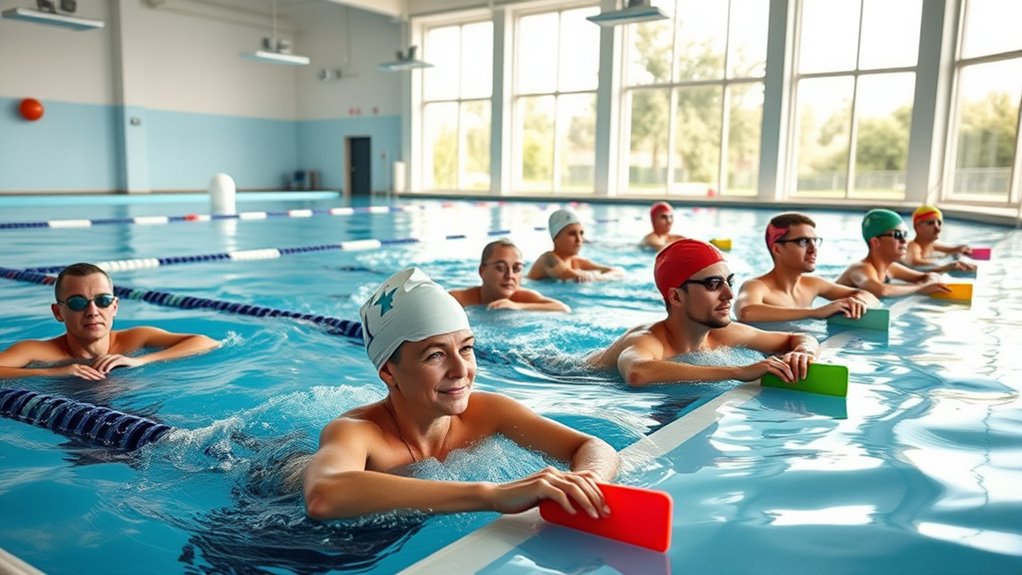
To maximize your swim workouts, it’s vital to tailor your training based on your current fitness level. First, assess whether you’re a beginner, intermediate, or advanced swimmer to determine appropriate intensity and complexity. Set clear goals like improving endurance, speed, technique, or weight loss, and consider your prior experience and physical limits. Use assessment tools such as timed swims or stroke counts to track progress and personalize your plan. For beginners, focus on shorter intervals with longer rest periods to build comfort and technique. Intermediates can handle longer sets with reduced rest to boost endurance. Advanced swimmers should incorporate high-intensity, variable-distance sets with limited rest to develop speed and anaerobic capacity. Adjust these elements progressively to avoid plateaus and ensure continuous improvement. Regularly monitoring your progress helps you stay motivated and make informed adjustments to your training plan. Incorporating training variety can also prevent boredom and promote overall fitness improvements.
How Water Resistance Enhances Strength and Endurance

Water resistance plays a significant role in boosting both your strength and endurance during swimming. It activates all major muscle groups—core, shoulders, arms, legs, and back—due to the all-directional drag. This continuous resistance helps you build muscle strength and tone without joint stress, making workouts safer and effective. Resistance training involves muscle contractions against external resistance to enhance strength. Key benefits include: – Engaging muscles more intensely than air, leading to greater strength gains – Building muscular endurance through repetitive, dynamic movements – Supporting cardiovascular health by combining resistance with aerobic effort Because water provides constant, scalable resistance, you can progressively challenge yourself as your strength improves. This dual focus on strength and endurance makes water resistance an efficient way for time-crunched adults to maximize their workout results. Additionally, water-based exercise offers a low-impact alternative that reduces the risk of injury while still providing an effective workout.
Safety and Precautions for Time-Pressed Adults
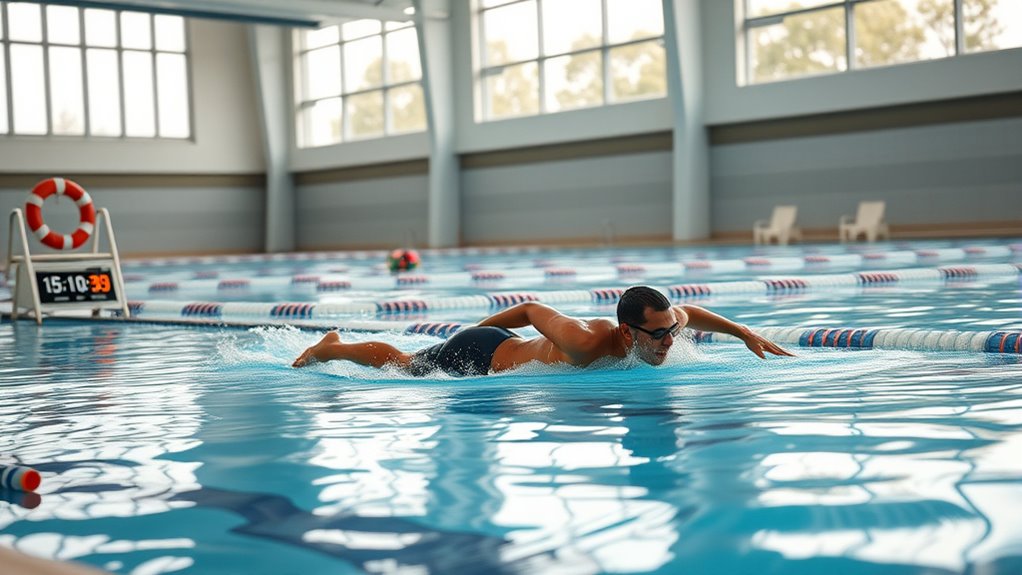
For time-pressed adults, prioritizing safety during swimming is essential to maximize benefits while minimizing risks. Start with a health review to assess your fitness, especially if you’ve recently been ill or injured. If you have heart issues, high blood pressure, respiratory problems, or are pregnant, consult a doctor before diving in. Watch for signs of fatigue or cramping, and take regular breaks to stay hydrated and avoid overexertion. Always warm up and cool down to prevent injuries. Swim in supervised areas whenever possible, never alone, and inspect water conditions beforehand. Use protective gear like non-slip shoes and follow pool rules to prevent accidents. Respect lifeguard instructions, stay hydrated, and avoid risky behaviors like breath-holding or swimming in unsafe environments. Additionally, understanding interval training principles can help you structure your workouts safely and effectively, ensuring you do not overreach during high-intensity efforts. Incorporating training intensity awareness can further help you tailor your swim sets to your current fitness level and avoid unnecessary strain.
Incorporating Interval Swimming Into Weekly Routines
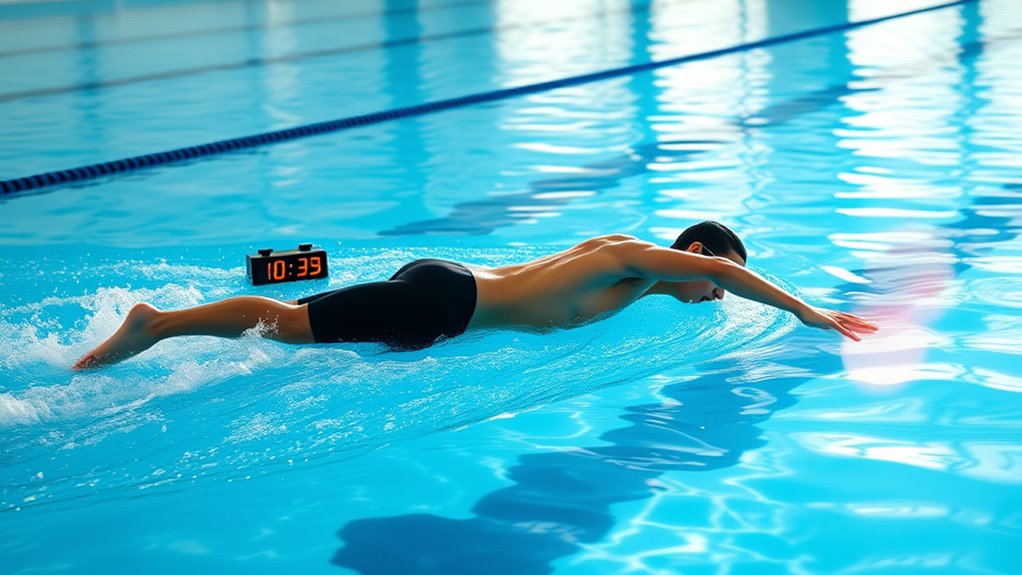
Incorporating interval swimming into your weekly routine can boost endurance and speed without requiring lengthy sessions. To maximize benefits, aim for 2–3 sessions per week, spaced at least 48 hours apart for recovery. Beginners can start with one session and gradually increase frequency, but avoid exceeding three to prevent overtraining. Efficient workouts, like 6 x 50 meters or pyramid sets, can be completed in under 30 minutes, fitting easily into busy schedules. You can also mix strokes and combine intervals with dry-land exercises for variety and added efficiency. To track progress, record times and rest intervals, then adjust based on performance. These strategies help you stay consistent, avoid burnout, and steadily improve your swim fitness within limited time. Consistent training schedules are essential for building endurance safely and effectively. Interval training enhances overall conditioning and can be tailored to your specific goals and fitness level.
Long-Term Benefits for Cardiometabolic Health

Engaging in aquatic high-intensity interval training (AHIIT) offers significant long-term benefits for your cardiometabolic health. It boosts your cardiovascular endurance by increasing VO2max and improving aerobic capacity, engaging both upper and lower body muscles. Regular interval swim sets lower resting heart rate, indicating better cardiac function and autonomic balance. They also enhance mitochondrial density and metabolic function, supporting endurance. Additionally, AHIIT improves vascular health by increasing brachial artery diameter and reducing arterial stiffness, decreasing your risk of hypertension. Lipid profiles benefit too: HDL levels rise, while LDL cholesterol and HbA1c decrease, reducing cardiometabolic risks. These efficient sessions support fat loss, lean muscle gains, and better body composition, providing long-term protection against metabolic syndrome and cardiovascular disease. AI security advancements in healthcare technology further support these benefits by enabling more personalized and precise treatment options.
Frequently Asked Questions
Can Beginners Safely Start Interval Swimming Without Prior Experience?
Yes, you can safely start interval swimming even if you’re a beginner. Begin with basic water comfort, practicing floating and simple strokes. Use gentle intervals, like 4 x 50 meters with rest, and always warm up and cool down. Make sure to swim with a buddy or near a lifeguard, follow pool rules, and listen to your body. Taking lessons or guidance from instructors helps guarantee safety and proper technique.
How Do I Track Progress in Interval Swim Workouts Effectively?
You can make tracking progress in your interval workouts enjoyable by recording key details like distance, time, and rest periods after each session. Use tools like a pace clock, swim log, or smartphone app to log your data effortlessly. Regularly compare your lap times and stroke efficiency, noting improvements over weeks. This approach keeps you motivated, helps you see your growth, and makes your swimming journey rewarding and engaging.
Is There an Ideal Frequency for Interval Swimming Sessions Weekly?
You should aim for 2 to 4 interval swim sessions weekly, depending on your fitness level and goals. If you’re a beginner, start with 2-3 sessions to build endurance and technique without overdoing it. As you progress, incorporating 3-4 sessions can boost your stamina and speed. Remember, listening to your body and allowing adequate recovery between sessions is key to avoiding overtraining and maximizing gains.
What Equipment or Gear Enhances Interval Swim Training Benefits?
You can boost your interval swim training with gear like swim goggles for better visibility, fins to increase resistance and calorie burn, paddles to strengthen shoulders, and kickboards for focused leg work. Using a waterproof swim watch or FINIS Tempo Trainer helps you pace accurately, while resistance cords and stationary trainers add intensity. Snorkels improve breathing technique, and thermal gear keeps you comfortable outdoors. These tools maximize efficiency and results in your limited training time.
How Should I Modify Intervals if I Have Joint or Mobility Issues?
If you have joint or mobility issues, you should modify your intervals by using flotation devices to reduce joint stress, choosing gentle strokes to minimize strain, and incorporating low-impact activities like water walking or aqua jogging. You should also include stretching routines to improve flexibility, focus on joint-friendly movements, and start with shorter, lower-intensity intervals. Always listen to your body, take adequate rest, and seek guidance from a professional to tailor your workouts safely.
Conclusion
By embracing interval swimming, you open a powerful shortcut to fitness—like carving a clear path through a dense forest. Even with a busy schedule, these workouts can transform your health and endurance faster than you might think. Stay consistent, listen to your body, and let water’s resistance be your ally. Remember, small ripples today create waves of long-term health, proving that even the busiest can make a splash in their wellness journey.