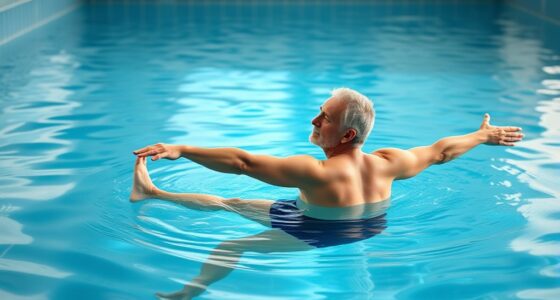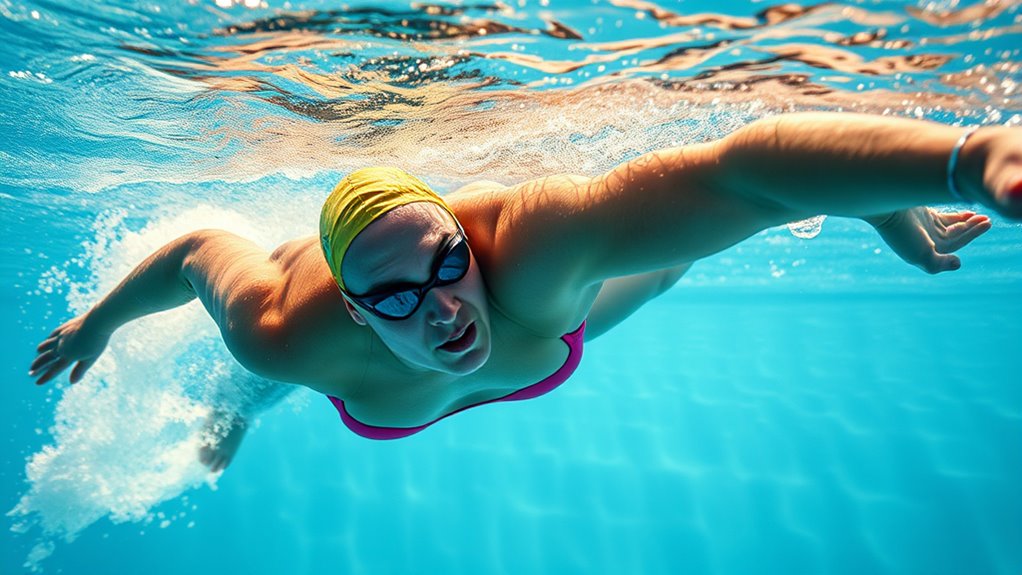
To improve your swim endurance, focus on breathing drills that balance technique and capacity. Practice bilateral and restricted breathing to enhance symmetry and control. Incorporate breath-hold exercises to boost CO₂ tolerance, and work on specific patterns like 3-5-7 breaths to extend lung capacity. Dryland exercises such as diaphragmatic breathing strengthen respiratory muscles. Using these techniques consistently helps you swim more efficiently even when tired—keep exploring how to incorporate these methods for lasting results.
Key Takeaways
- Incorporate bilateral and restricted breathing drills to enhance balance, symmetry, and stroke efficiency.
- Practice controlled breath-hold exercises to boost CO₂ tolerance and respiratory endurance.
- Use structured breathing patterns, like 3-5-7 drills, to increase lung capacity and stamina.
- Combine dryland diaphragmatic breathing and breath-hold techniques to strengthen respiratory muscles.
- Vary breathing cadences during training to improve adaptability, oxygen utilization, and overall swim endurance.
Bilateral and Restricted Breathing Drills for Balance
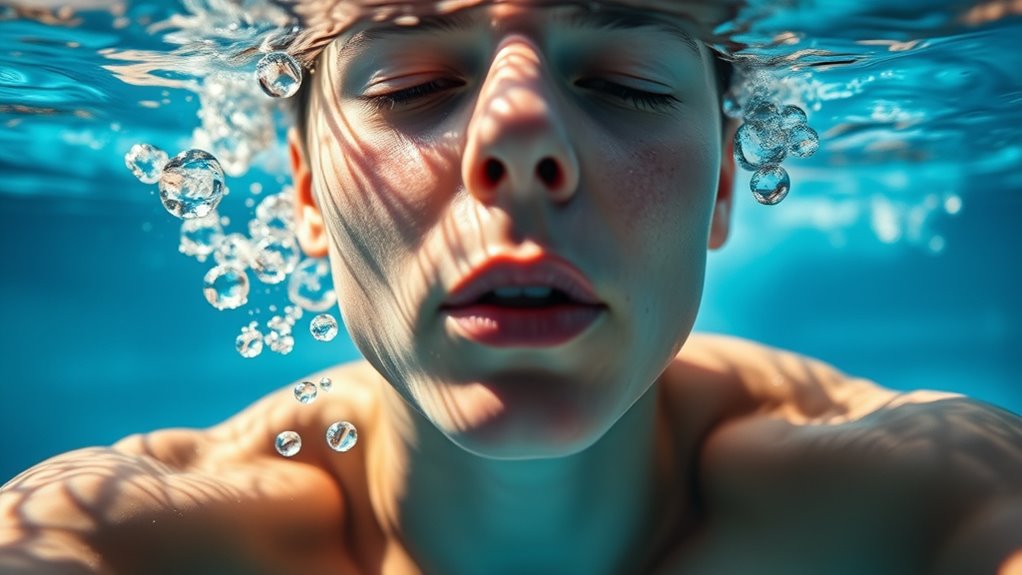
Bilateral and restricted breathing drills are essential tools for achieving balance and symmetry in your swim stroke. Alternating breathing on both sides promotes even stroke development, reducing workload differences and strengthening your weaker side. This approach helps you adapt to open water by allowing you to breathe away from waves or wind, while encouraging a relaxed, efficient rhythm. Proper body rotation, involving hips, torso, and shoulders, is key to smooth bilateral breathing, with drills focusing on symmetrical movement to improve coordination. Using tools like snorkels and fins isolates rotation and helps you focus on technique. Incorporating varied breathing patterns, such as every third stroke or restricted breathing, trains your body to handle different conditions, enhancing endurance, stroke economy, and overall balance for more effective swimming. Additionally, understanding the importance of city dynamics can help you prepare mentally for open water conditions and unpredictable environments.
Enhancing CO₂ Tolerance Through Controlled Breath-Hold Exercises

By practicing controlled breath-hold exercises, you can boost your body’s ability to tolerate higher CO₂ levels, which helps delay the urge to breathe during swims. These techniques improve endurance and efficiency, but safety protocols are essential to prevent risks. As you progress, gradually increase the intensity to build your CO₂ tolerance safely and effectively. Incorporating well-being tips such as mindfulness and relaxation techniques can further enhance your mental focus during training sessions.
Controlled Breath-Hold Benefits
Engaging in controlled breath-hold exercises can markedly boost your tolerance to carbon dioxide (CO₂), which is essential for maintaining performance during demanding swims. When you practice breath holds, your body adapts by raising your CO₂ threshold, allowing you to delay the urge to breathe and sustain effort longer. This increased tolerance reduces sensations of breathlessness and discomfort, making underwater phases more comfortable. Additionally, these exercises improve your ability to manage internal CO₂ signals, helping you stay calm and focused during races. As a result, your overall swimming endurance and technique efficiency improve, especially during high-intensity efforts. Controlled breath-hold training not only enhances physical resilience but also trains your nervous system to better handle physiological stress, contributing to faster, more consistent performance in the pool. Study by Robertson et al. shows breath holds before a race can improve swim times by 1%, highlighting the practical benefits of breath control training. Developing a strong CO₂ tolerance through these exercises can make a significant difference in your competitive edge.
Techniques for CO₂ Tolerance
To enhance your CO₂ tolerance, incorporating controlled breath-hold exercises into your training is highly effective. Begin with 25-meter breath-hold swims, then rest for 30 seconds, gradually increasing distance or duration over time. Limit your breathing during freestyle, such as every two strokes, to increase CO₂ buildup. Sprint 25 meters on a held breath, then rest for several minutes before repeating. Use passive exhalation before breath-hold sprints to reduce lung volume and retain CO₂. Incorporate hypoventilation by voluntarily reducing your breathing frequency during high-intensity sets, which boosts lactate production and improves tolerance. Performing these drills twice weekly helps your body adapt, allowing you to sustain longer swims with less breath awareness and better control over CO₂ levels. Enhanced oxygen efficiency can also be achieved through breath-hold training, as it trains your body to utilize oxygen more effectively during endurance efforts. Additionally, focusing on respiratory muscle strength can further improve your overall breathing capacity and endurance during swim training.
Safety and Progression
Ensuring safety during CO₂ tolerance and breath-hold training is essential to prevent serious risks like shallow water blackout. Always follow safety protocols, such as training with a partner or coach present to monitor for signs of distress and intervene if needed. Start with short breath holds (10-30 seconds) and gradually increase duration, ensuring you remain relaxed and calm. Incorporate dryland drills and in-water exercises like underwater kicks, paced breathing, and recovery swims to build endurance safely. Focus on controlled exhalation to reduce CO₂ buildup and stay relaxed during holds. Track how you feel during training, adjusting intensity if you experience dizziness or discomfort. A gradual, supervised approach fosters safe progression, helping you improve CO₂ tolerance without risking your safety. Proper supervision and consistent practice are key components to safely increasing your breath-hold capacity. Additionally, staying informed about AI safety measures can help you understand the importance of monitoring progress and risks in all training environments.
Implementing Specific Breathing Patterns to Boost Endurance
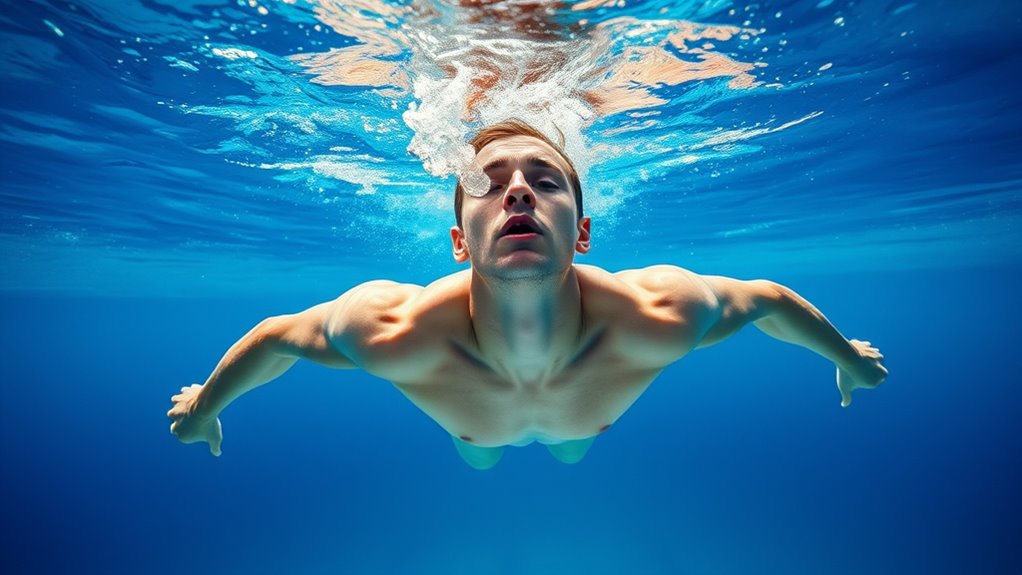
By practicing specific breathing patterns, you can extend the number of strokes between breaths and improve your respiratory control. Varying your breathing cadence challenges your system, making it more adaptable during races. Consistent pattern practice helps develop muscle memory, enhancing endurance and overall performance. Incorporating best training techniques can further optimize your breathing drills for maximum benefit.
Consistent Pattern Practice
Implementing specific breathing patterns during your swim training can considerably boost endurance by optimizing oxygen intake and reducing fatigue. Consistently practicing these patterns helps your lungs expand, increasing lung capacity by up to 20%, and strengthens respiratory muscles by 25-30% within six months. This efficiency allows you to utilize oxygen better, improving VO₂ by 12-15%, and lowers your resting heart rate, sometimes to below 50 bpm. Maintaining a regular breathing cycle stabilizes your respiratory effort, decreases muscle deoxygenation, and minimizes sudden ventilation spikes. Scientific studies show that structured breathing routines can also reduce perceived exertion, making long swims more manageable. Additionally, proper breathing techniques can help prevent overbreathing and hyperventilation during intensive training. Over time, this consistency enhances stroke mechanics and delays fatigue, giving you a competitive edge. By adhering to a structured breathing routine, you train your body to operate more efficiently, supporting sustained effort during long swims and high-intensity sets.
Varying Breathing Cadences
Varying your breathing cadence during swim training can substantially enhance your endurance by challenging your respiratory system and improving coordination. By adopting specific breathing patterns, you stimulate respiratory muscle adaptations, boost oxygen uptake, and increase carbon dioxide tolerance. These changes help you handle transient ventilation demands during turns and sprints more efficiently. Incorporating breath-hold segments followed by controlled breathing cycles intensifies physiological stress, leading to stronger respiratory muscles and better lung capacity. Such drills can also improve stroke efficiency by promoting greater propulsive continuity and reducing energy expenditure. As you adapt to different cadences, you’ll notice reduced breathlessness and increased endurance. To deepen your training, consider:
- Alternating bilateral and unilateral breathing patterns
- Implementing breath-hold segments with regulated cycles
- Gradually increasing breathing cadence complexity
- Respiratory coupling exercises to synchronize breathing with stroke rhythm
An understanding of respiratory adaptation can further guide your progression and help you optimize training outcomes.
Core Techniques for Improving Breath Control and Stability
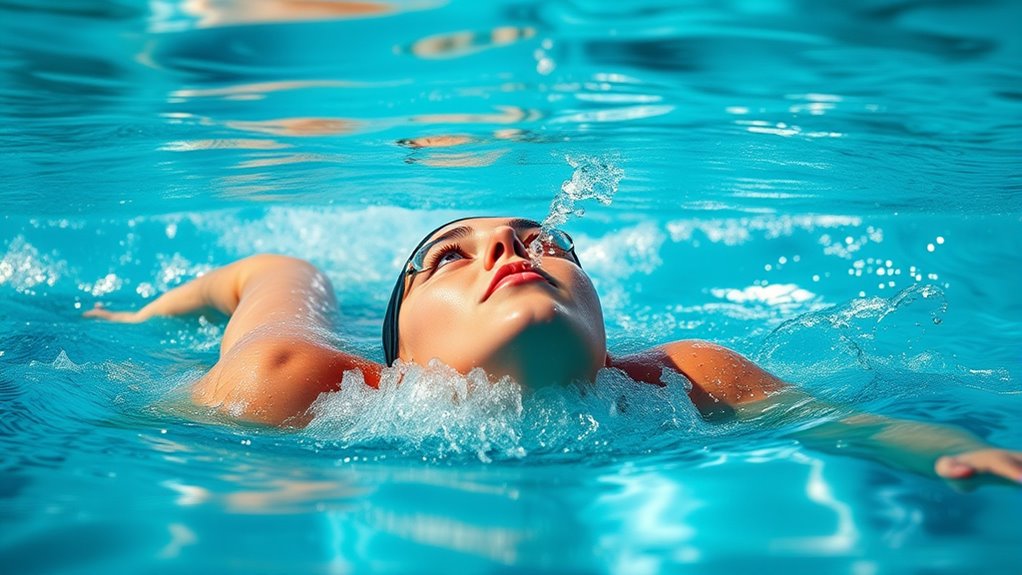
Core stability plays a crucial role in enhancing your breath control and maintaining steady swimming. Engaging your core prevents over-rotation and sinking during breathing, keeping your body balanced. Balance drills like side kicking strengthen core control, allowing for smoother, more consistent breaths. When your body rotates in sync with your breathing, drag decreases, and stroke efficiency improves. Keeping a neutral head position minimizes sway and stabilizes breathing mechanics. Drills that focus on slow, fluid rotation build core endurance, supporting better breath control over time. Proper head alignment, with eyes fixed on a point on the pool bottom, helps maintain a streamlined position. Engaging your core also improves your overall body awareness and coordination in the water, allowing you to breathe more effortlessly, reducing fatigue and boosting endurance during your swim. Additionally, incorporating vetted training tools and techniques can further enhance your core stability and breathing efficiency.
Dryland Respiratory Exercises to Strengthen Breathing Muscles

By practicing breath-hold techniques on dry land, you can expand your lung capacity and boost your endurance. Incorporating diaphragmatic breathing into your routine helps strengthen your diaphragm and increases overall breathing efficiency. These exercises prepare your respiratory muscles for more demanding swim sessions and improve your oxygen use. Breathing exercises like this can also help reduce anxiety and promote relaxation during competitions. Additionally, focusing on air purification in your environment can enhance respiratory health and support your training efforts.
Breath-Hold Techniques for Lung Capacity
Have you ever wondered how dryland breathing exercises can boost your lung capacity and endurance? Breath-hold techniques, like hypoxic training and box breathing, help you build CO2 tolerance and expand lung capacity. By gradually increasing breath-hold durations, you teach your body to handle more carbon dioxide without discomfort. This improves your breathing efficiency during swims, making each inhale quicker and more effective. Regular practice enhances your respiratory muscles and lung function, allowing you to take in more air with less effort. Incorporating these exercises into your routine can lead to significant improvements in performance and recovery. Respiratory training has been shown to make your breathing muscles more efficient, which directly translates to better oxygen delivery during intense activity. Developing cultural impact awareness of your breathing patterns can also help optimize your training.
- Increase CO2 tolerance through controlled breath-holds
- Strengthen respiratory muscles with progressive exercises
- Improve lung capacity for better oxygen intake
Diaphragmatic Breathing for Strength
Diaphragmatic breathing is a highly effective dryland exercise to strengthen your respiratory muscles and improve overall breathing efficiency. By engaging your diaphragm, you promote deeper breaths that expand your lungs and abdomen, boosting lung capacity. Proper technique involves pulling your ribcage downward and tilting your pelvis forward to stabilize your core and reduce lumbar sway, which cuts drag and improves hydrodynamics. Strengthening your breathing muscles delays fatigue during swimming, enhances oxygen delivery, and increases endurance. Controlled diaphragmatic breaths, especially with prolonged exhalation, build respiratory muscle endurance and improve oxygen utilization. Regular practice not only enhances lung function but also supports better stroke mechanics and body alignment. Incorporating these exercises helps you breathe more efficiently, ultimately elevating your swim performance and stamina. To maintain optimal performance, ensure your storing essential oils practices are followed, as proper care can help sustain respiratory health and overall well-being.
Incorporating Breathing Drills Into Swim Workouts for Endurance

Incorporating breathing drills into your swim workouts can considerably boost endurance by challenging your respiratory system and improving breath control. By integrating techniques like bilateral breathing, you develop symmetry and expose yourself to different breathing patterns, which enhances adaptability during open water or races. Restricted breathing drills, where you breathe less frequently, boost CO₂ tolerance and improve efficiency under pressure. CO₂ tolerance and breath-hold exercises help you manage rising carbon dioxide levels and delay fatigue, while dryland training strengthens your diaphragm, supporting longer swims. Using structured breathing patterns in endurance sets, such as every third or fourth stroke, increases respiratory capacity without adding intensity. These methods collectively build your breath control, making you more comfortable and resilient during extended swim efforts. Proper breathing is essential for maintaining energy and technique over long distances, preventing premature fatigue and ensuring sustained performance. Additionally, incorporating sound design techniques like layered breathing sounds or ambient cues can help reinforce breathing patterns and promote relaxation during training.
Using Blowout Freestyle to Develop Efficient Breathing Under Fatigue
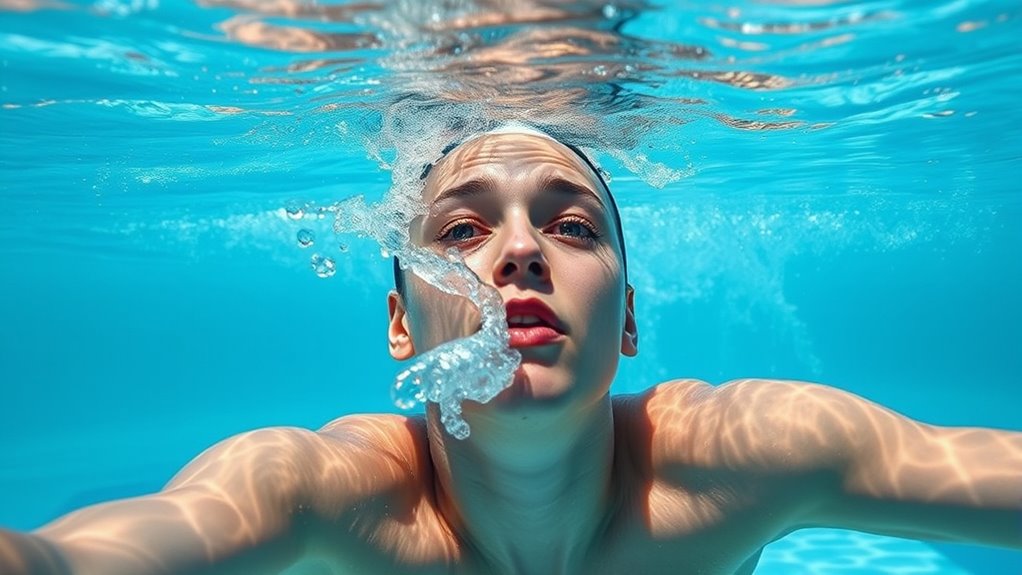
Mastering efficient breathing during fatigue is vital for maintaining swim endurance. Blowout freestyle emphasizes fully exhaling underwater before turning your head for the next breath. This steady, controlled exhale promotes continuous airflow, reduces gulping, and prevents choking. Proper body rotation ensures the head turns just enough to clear the mouth, reducing drag and maintaining alignment. A strong, steady blowout maximizes oxygen exchange and delays CO2 buildup, essential during extended efforts. Consistent blowout beats lower erratic breathing, decreasing fatigue and improving economy. Incorporate these components:
| Technique Aspect | Purpose | Benefit |
|---|---|---|
| Full exhale underwater | Maximize oxygen exchange | Delay fatigue |
| Alternating sides | Balance technique | Reduce asymmetry |
| Rhythmic cycles (3-4 sec) | Simulate fatigue | Improve endurance |
| Relaxed kicks & arms | Maintain form | Enhance efficiency |
| Wall drills | Reinforce technique | Build confidence |
Main factual point: Fully exhaling underwater creates a steady flow of air, which enhances gas exchange and reduces the likelihood of breath-holding during fatigue.
The Role of Diaphragmatic Breathing in Recovery and Performance

When you engage in diaphragmatic breathing during recovery, you activate your body’s natural relaxation response, which helps lower heart rate and blood pressure. This calming effect speeds up recovery, reduces perceived exertion, and eases muscle soreness. It also improves oxygen delivery, supporting faster removal of metabolic waste. Proper diaphragmatic breathing enhances core stability, helping you maintain better body position and reduce drag in the water. Additionally, it conserves energy by reducing reliance on accessory respiratory muscles. This efficient breathing promotes longer, more sustainable swim sessions and helps you bounce back quicker after intense efforts. Incorporating wall organization techniques can further optimize your training space, making recovery routines more accessible and organized.
Balancing Stroke Symmetry With Breathing Focused Drills

Balancing stroke symmetry with breathing focused drills is essential for developing a smooth and efficient freestyle technique. Bilateral breathing helps you achieve mirror-image strokes, ensuring both sides move equally. Practicing every three strokes reinforces symmetry, promoting balanced body rotation and preventing imbalances. Incorporating drills like the 3-5-7 breathing pattern improves your endurance and breath control, gradually increasing lung capacity. Using a pullbuoy during these drills maintains proper body alignment, allowing you to focus on symmetrical arm recovery and rotation. Single arm freestyle drills help you synchronize your breath with arm entry, reducing shoulder strain and correcting imbalances. Side-breathing and stroke play drills emphasize proper head position and arm recovery, reinforcing stroke balance. These techniques promote consistent, efficient movement, crucial for swim endurance and overall technique. SwimGym also highlights that bilateral breathing supports better propulsion and balance, making your swim more efficient and comfortable. Additionally, understanding battery technologies and how they relate to energy storage can inspire innovative training tools and recovery methods for swimmers.
Practical Tips for Safe and Effective Breath Training

Implementing structured breath training routines enhances both safety and effectiveness during swim practice. To do this, focus on controlling your breathing patterns and listening to your body. Practice bilateral breathing to balance lung capacity and avoid over-reliance on one side. Incorporate pattern drills to build adaptability and reduce overbreathing during endurance swims. Maintain a steady exhalation underwater to prevent CO₂ buildup and keep your rhythm consistent. Use a metronome or count to set a breathing tempo, helping your body adapt to steady oxygen supply. Remember to avoid overbreathing by keeping inhalations controlled and efficient. Proper breathing technique is essential for long-term swimming endurance and minimizing fatigue. Developing breath control can significantly enhance your overall performance and help prevent fatigue during extended swims.
- Focus on slow, steady exhalation underwater
- Gradually increase breath-hold intervals
- Monitor fatigue and stop if dizziness occurs
Frequently Asked Questions
How Often Should I Incorporate Breathing Drills Into My Training?
You should incorporate breathing drills into your training about 2 to 4 times a week. Start with shorter, comfortable intervals like every 3 or 5 strokes, then gradually increase as your lung control improves. Include these drills during warm-up, main sets, or cool-down, and alternate intensity levels to prevent fatigue. Consistent practice helps boost endurance, efficiency, and overall swim performance without overtaxing your respiratory muscles.
Can Breathing Exercises Improve Swimming Performance for Beginners?
Yes, breathing exercises can definitely improve your swimming performance as a beginner. They help you develop better breath control, increase lung capacity, and reduce fatigue. By practicing rhythmic breathing and breath-hold drills, you’ll become more comfortable underwater and enhance your stroke efficiency. Incorporating these exercises regularly builds confidence, improves oxygen intake, and ultimately allows you to swim longer and faster with less effort.
What Are the Signs of Overdoing Breathing Exercises?
If you push your breathing too hard, you’ll notice warning signs like persistent fatigue, muscle soreness, and a drop in swim performance. You might feel breathless, anxious, or struggle to maintain a smooth rhythm. Your heart rate could spike, and you could experience chest tightness or dizziness—like driving a car beyond its limits. Pay attention to these signals, or risk overtraining and setbacks in your swimming journey.
Are There Specific Breathing Drills for Different Swimming Strokes?
Yes, there are specific breathing drills for each swimming stroke. For freestyle, you can practice bilateral breathing and restricted breathing to enhance lung capacity. Backstroke benefits from rhythmic, steady inhalations matching stroke cycles. Breaststroke drills focus on timed breathing during arm pulls and exhalations underwater. Butterfly techniques emphasize breathing during the dolphin kick, with drills promoting bilateral breathing for balance. Tailoring drills to each stroke improves efficiency and endurance effectively.
How Do I Measure Progress in My Breathing Endurance?
Did you know that measuring lung capacity can increase by up to 20% with dedicated breath training? You can track progress by using spirometry tests like FVC and FEV1, which show improvements in lung function. Keep an eye on your swim-specific metrics like breath-hold times, stroke rate, and endurance during hypoxic sets. Recording these regularly helps you see how your breathing efficiency and endurance are advancing over time.
Conclusion
By embracing these breathing drills, you’ll gently nurture your endurance, allowing your stroke to flow more effortlessly. With patience and consistent practice, you’ll find your breath becoming a steady companion, supporting your progress without rushing. Remember, every inhale and exhale is a step toward smoother, more confident swimming. Trust the process, and over time, you’ll uncover a rhythm that feels natural—turning your breath into a quiet, powerful ally in your swim journey.