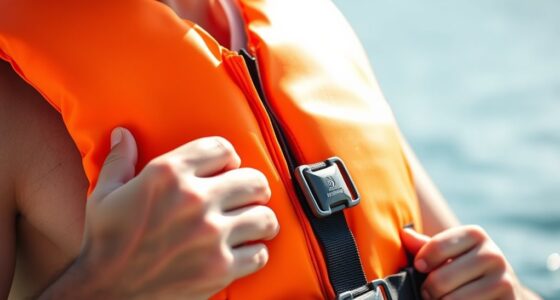
If you or someone else gets injured at a water park, act quickly by applying direct pressure to stop bleeding, elevating the area if possible, and cleaning wounds gently. For fractures or sprains, keep the person still, immobilize the limb, and add cold packs to reduce swelling. Be prepared to support head or neck injuries carefully, and always seek professional help for severe wounds or serious trauma. More tips can help you respond confidently in emergencies.
Key Takeaways
- Apply direct pressure with a sterile cloth to control bleeding from cuts or lacerations.
- Use splints and immobilization techniques for fractures and severe sprains.
- Stabilize the head and neck and check responsiveness for head or spinal injuries.
- Keep the environment safe and dry, avoiding running and supervising children closely.
- Seek professional medical help immediately for deep wounds, head injuries, or difficulty breathing.

250 PCS Waterproof First Aid Kit, Roll Top Reflective Boat Dry Bag Bug Out Bags, Emergency Medical Kit Ideal for Boating, Camping, Fishing, Kayaking, Floating, Red
IPX6 100% WATERPROOF ▶ Made of waterproof & durable thickened knife-scraping cloth, which is tear-resistant, wear-resistant and scratch-resistant,…
As an affiliate, we earn on qualifying purchases.
As an affiliate, we earn on qualifying purchases.
Handling Lacerations and Cuts
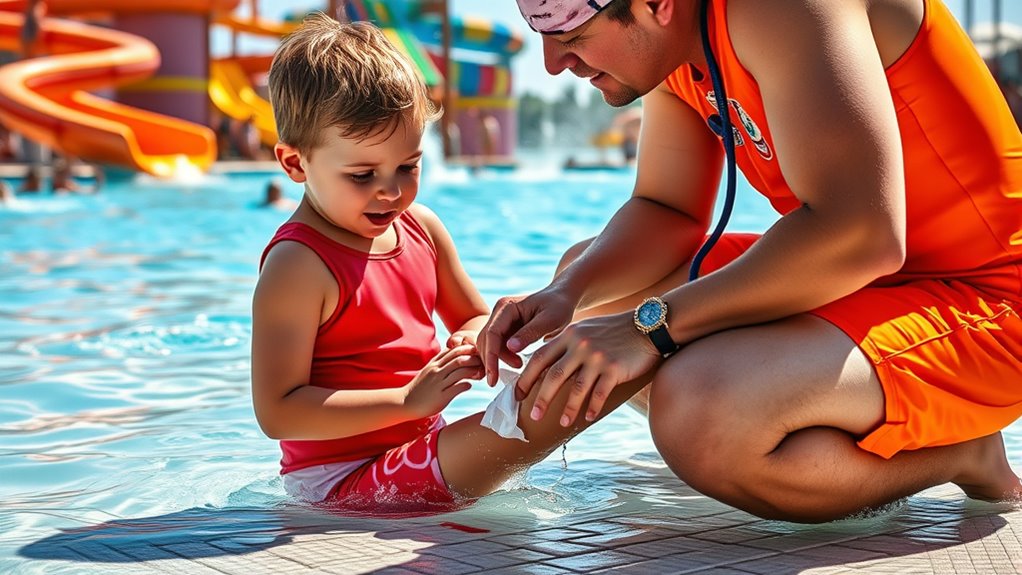
When you or someone else suffers a laceration or cut at a water park, acting quickly can prevent complications. First, apply direct pressure with a clean, dry cloth until the bleeding slows or stops, and elevate the injury if possible. Avoid using a tourniquet unless the bleeding is severe and uncontrollable, as prolonged use can cause more harm. Once bleeding is controlled, rinse the wound thoroughly with clean water to remove dirt and debris, then gently pat it dry. Cover it with a sterile, waterproof bandage to prevent water from contaminating the wound during water activities. Regularly check and change the dressing if it gets wet or dirty. Keep an eye out for signs of infection, and seek medical help if bleeding persists or the wound appears deep or contaminated. Proper disinfection is essential to reduce the risk of infection and promote healing.

MED PRIDE Butterfly Wound Closure Strips Pack of 100 Sterile Nonstick Hypoallergenic Latex Free Bandages for Cuts and Injuries (Medium)
PROFESSIONAL-GRADE: Imagine the convenience of having professional-grade wound care at your fingertips with our butterfly strip. Accelerating the…
As an affiliate, we earn on qualifying purchases.
As an affiliate, we earn on qualifying purchases.
Managing Fractures and Sprains
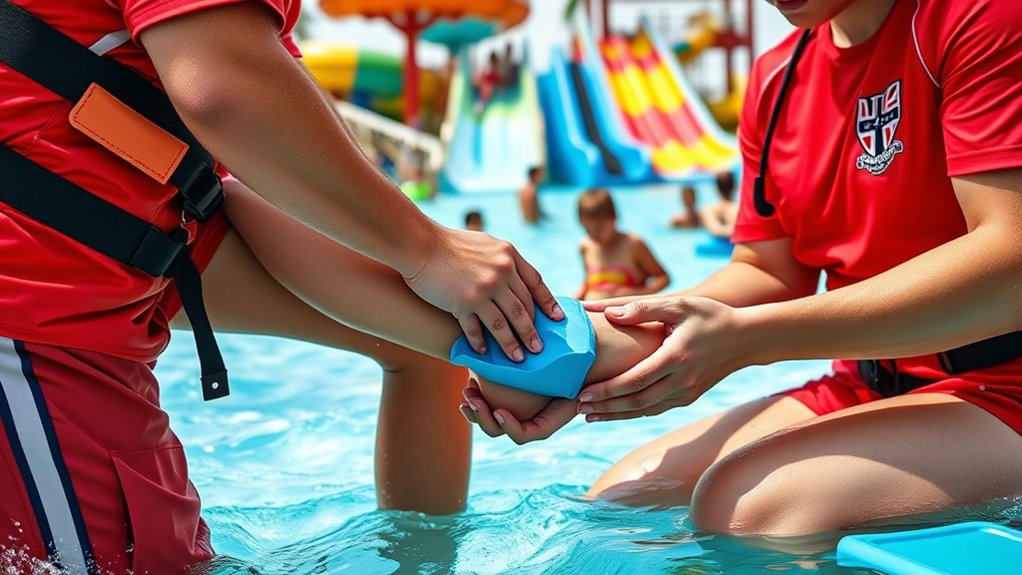
In the chaos of a water park, fractures and sprains can happen suddenly, often resulting from slips, falls, or collisions on wet surfaces. If you see someone injured, keep them still and avoid moving the affected limb. Use a splint or padding to immobilize the area without attempting to realign bones. Apply a cold pack to minimize swelling and pain, and encourage the person to avoid putting weight on the injured limb. Elevate the limb above heart level if possible. Do not delay seeking professional medical help, especially if a fracture or severe sprain is suspected, as some injuries may need surgical treatment. Prompt, careful management helps prevent further damage and ensures the injured person receives the proper care they need. Recognizing common water park injuries can help you respond more effectively and provide immediate aid.

Ice Packs for Injuries Reusable for Swelling & Pain Relief – Soft Gel Ice Packs Reusable, Cold Packs for Injuries, Soft Ice Packs for Sprains, Bruises & Recovery, 10.5 x 5 Inch (4 Pack)
DUAL PURPOSE HOT AND COLD PACKS – Reusable Ice pack are really handy in the home, can be…
As an affiliate, we earn on qualifying purchases.
As an affiliate, we earn on qualifying purchases.
Responding to Head and Spinal Injuries
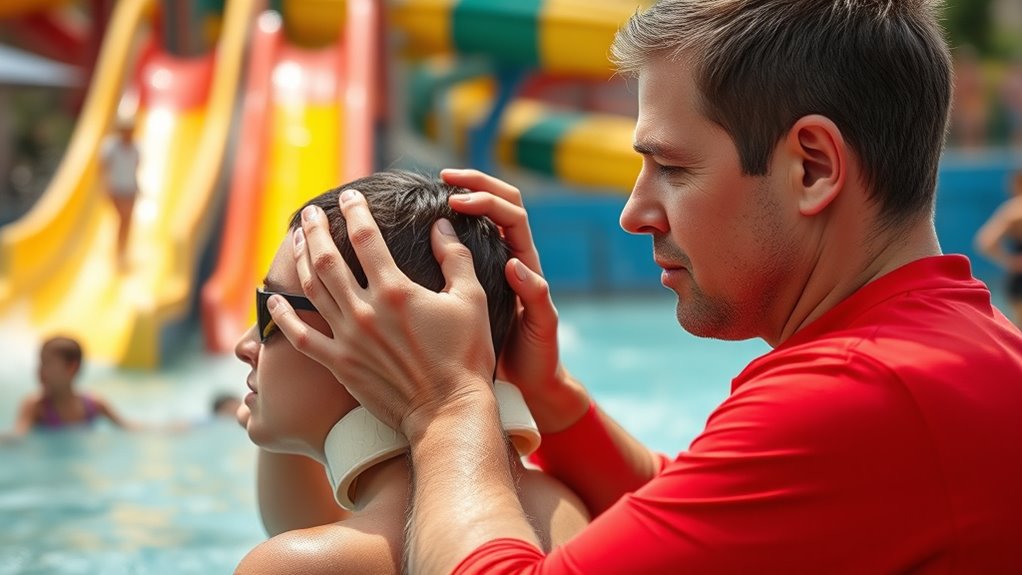
Responding effectively to head and spinal injuries requires quick assessment and careful handling. First, check if the person is conscious by speaking loudly; if unresponsive, gently stimulate without excessive movement. Second, evaluate breathing by observing chest movement, listening for breath sounds, and feeling airflow. Third, use simple questions like your name or location to assess awareness. Fourth, if breathing stops or is abnormal, begin CPR immediately and call emergency services. Keep the person lying flat with head and shoulders slightly elevated if no spinal injury is suspected, but avoid moving them unnecessarily. Stabilize the head and neck by placing hands on both sides and support with a cervical collar if trained. Do not remove helmets or reposition unless in immediate danger. Always communicate calmly to prevent further injury. Proper first aid techniques can significantly reduce the risk of further harm in water park injuries.

EMS XTRM Spine Board Head Immobilizer for Backboard – Re-usable, Lightweight, Portable, Adjustable Straps, and Universal Fit – Red
RE-USABLE, DURABLE & LIGHTWEIGHT: This spine board head immobilizer, measuring Length 7", Width 15", Height 10", ensures the…
As an affiliate, we earn on qualifying purchases.
As an affiliate, we earn on qualifying purchases.
Preventative Measures and Safety Tips
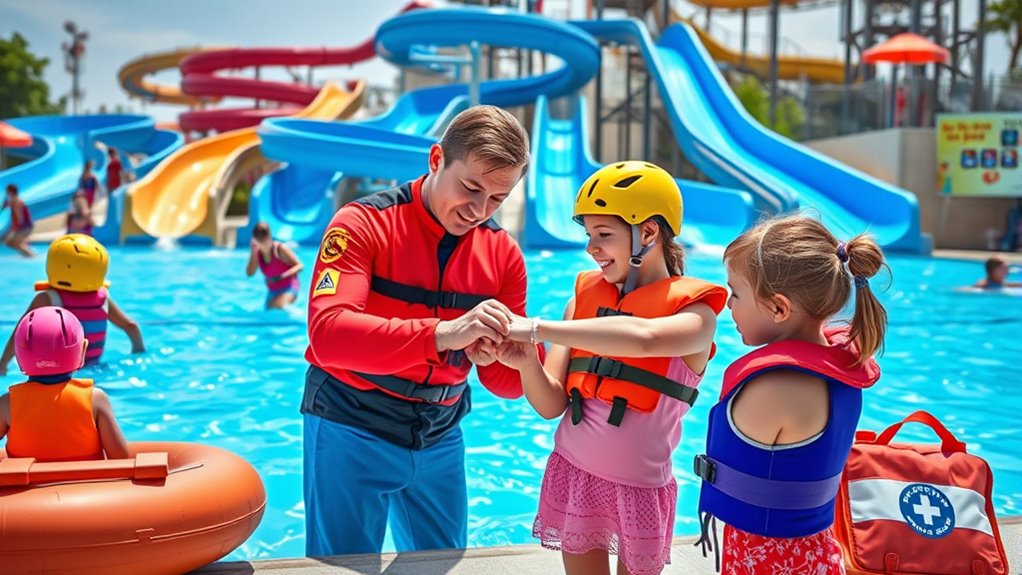
Implementing effective safety measures at water parks can substantially reduce the risk of injuries and emergencies. Always choose areas with lifeguard supervision, as their presence greatly lowers drowning risks, especially for children. Follow water slide rules carefully, respecting size, weight, and rider limits to prevent accidents. Properly maintain pools, ensuring splashdown depths are at least one meter to avoid collisions. Keep walkways dry and clear of obstacles, and avoid running to prevent slips and falls. Adhere to posted instructions and supervise children closely near wave pools and deep water. Encourage guests to use designated safe zones and be aware of emergency procedures. These precautions, combined with regular maintenance and vigilant supervision, create a safer environment for everyone and help prevent preventable injuries. Regular safety audits are essential to identify and address potential hazards proactively.
When to Seek Professional Medical Assistance

Recognizing when a water park injury requires professional medical assistance is crucial for ensuring proper treatment and preventing complications. You should seek emergency help if:
- You experience head, neck, or back trauma, especially with loss of consciousness, confusion, or vomiting. Trauma assessment is essential to determine the severity of these injuries.
- There are deep cuts or severe bleeding that won’t stop, or signs of infection like redness and swelling.
- You notice deformity, intense pain, or inability to move a limb, indicating broken or dislocated bones.
- You have difficulty breathing, persistent coughing, or altered consciousness after water inhalation or near-drowning.
- Water-related injuries such as traumatic brain injuries or spinal cord damage require immediate medical evaluation.
If any of these signs occur, don’t hesitate to call emergency services. Prompt medical attention can prevent long-term issues and ensure proper healing.
Frequently Asked Questions
How Can I Tell if a Water Slide Injury Is Serious?
You can tell an injury is serious if you notice severe pain, swelling, or deformity around joints or bones, or if the person can’t move or bear weight afterward. Watch for signs like loss of consciousness, dizziness, confusion, or head pain, which may indicate head trauma. Also, if there’s active bleeding, deep cuts, or visible bone protrusion, seek emergency medical help immediately. Any signs of neck or spinal injury need urgent attention.
Are There Specific Water Park Safety Regulations I Should Know?
Like steering a ship through stormy seas, knowing water park safety regulations helps you steer clear of trouble. You should be aware of local, state, and federal rules, including inspections, signage, and equipment standards. Keep an eye on signage for rider restrictions, and guarantee lifeguards are present and trained. Understanding these regulations helps you stay safe and enjoy the park responsibly, avoiding avoidable accidents.
What’s the Best Way to Minimize Water Park Injury Risks?
To minimize water park injury risks, you should implement strict safety measures like fencing off swimming areas, posting clear warning signs, and maintaining non-slip surfaces. Guarantee trained lifeguards are always present and enforce ride rules and capacity limits. Regularly inspect rides and facilities for hazards, promote safety awareness through signage and programs, and educate visitors on water safety practices. These actions create a safer environment, reducing accidents and injuries effectively.
How Long Should I Wait Before Seeking Medical Help?
You should seek medical help immediately if you experience unconsciousness, difficulty breathing, severe bleeding, suspected head or spinal injuries, or if symptoms worsen after a water-related incident. For minor cuts or scrapes, clean and dress them promptly, but monitor for signs of infection or heavy bleeding. Keep a close eye on any respiratory issues or neurological symptoms for at least 24 hours, and don’t hesitate to get medical care when in doubt.
Can Minor Injuries Escalate if Untreated?
Yes, minor injuries can escalate if left untreated, especially at water parks where contaminated water increases infection risks. Your small cut can become infected, or a twisted ankle may worsen into a long-term problem without proper care. Ignoring pain or swelling might hide serious internal injuries. Acting quickly with proper first aid and seeking medical attention when necessary helps prevent complications, ensuring you stay safe and healthy after water park fun.
Conclusion
Think of yourself as the captain of a ship, steering the waters of the water park. Your quick, calm responses are the compass guiding everyone safely to shore. With proper first aid knowledge, you’re prepared to navigate through minor injuries and avoid storms. Remember, your vigilance keeps the adventure fun and safe for all. Trust your skills, stay alert, and you’ll guarantee smooth sailing—turning potential chaos into moments of calm and care.