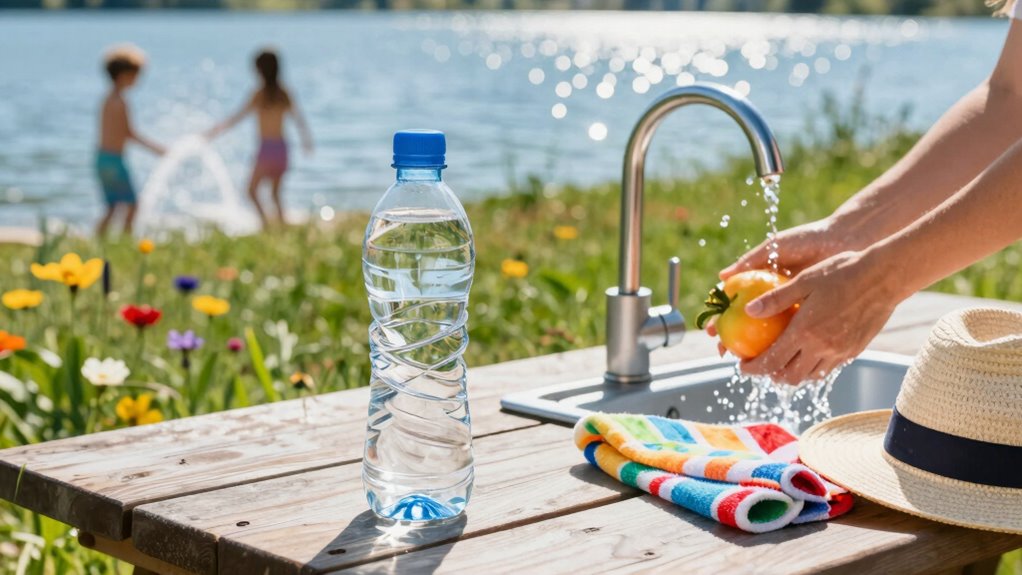
To lower your risk of stomach bugs on water days, always drink safe, clean water by using bottled, filtered, or boiled options. Practice good hygiene by washing hands thoroughly before eating, and avoid swallowing pool or ocean water during activities. Keep personal water bottles clean and avoid sharing them. Stay alert for signs of contamination and inspect water sources regularly. Following these precautions helps protect your health—continue exploring for more tips to stay safe.

Get pool and patio gear delivered free with Prime
- Fast, free delivery on millions of items
- Prime Video, Amazon Music and more included
- Member-only deals all year
Key Takeaways
- Use only bottled, filtered, or boiled water for drinking and cooking.
- Avoid swallowing water from pools, lakes, rivers, or unverified sources.
- Practice thorough hand hygiene before eating or touching your face.
- Choose reputable vendors and establishments with good hygiene standards.
- Regularly inspect water sources for signs of contamination and stay alert to symptoms.
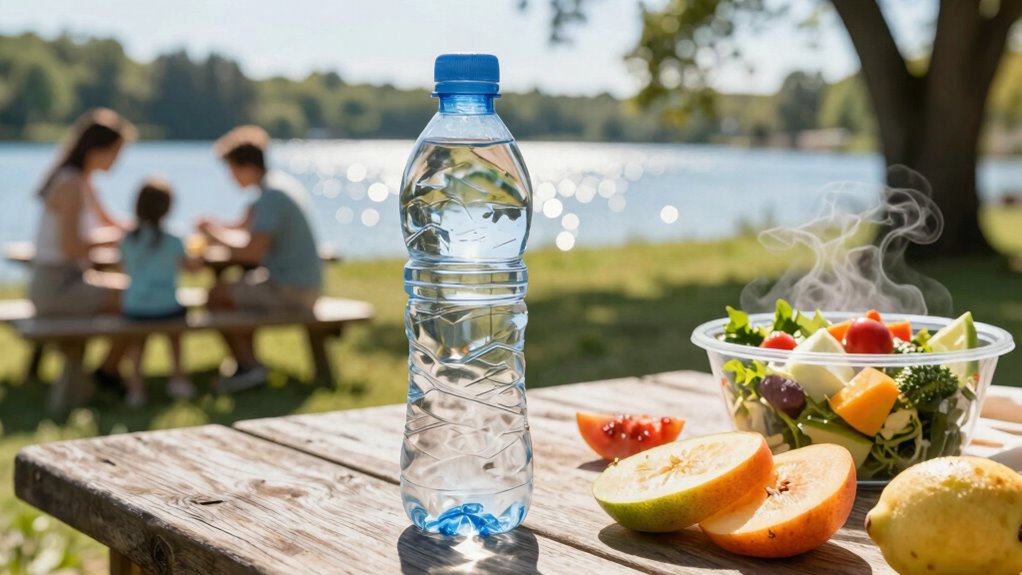
Stomach bugs can strike unexpectedly, but you can reduce your risk by taking simple precautions. When water days are part of your routine, whether at the beach, pool, or during outdoor adventures, staying vigilant is key. One of the most effective ways to protect yourself is by paying attention to hydration tips. Proper hydration isn’t just about drinking enough water; it’s also about ensuring the water you consume is safe. Always opt for bottled, filtered, or boiled water if you’re unsure about the water quality in your area. Avoid drinking from lakes, rivers, or unverified tap sources, as they can harbor harmful bacteria and viruses. Using a reliable water purifier or carrying water purification tablets can help safeguard your health, especially when traveling or spending time in unfamiliar places. Additionally, understanding the importance of water quality can make a significant difference in preventing illnesses.
Travel safety plays a critical role in reducing your chances of catching a stomach bug during water days. If you’re traveling, research the water conditions beforehand, and adhere to local advisories. Be cautious about street vendors or food stalls that serve water or ice, as these are common sources of contamination. When eating or drinking out, choose reputable establishments with good hygiene standards. Always wash your hands thoroughly with soap and water before eating or touching your face, especially if soap isn’t readily available. Hand sanitizers with at least 60% alcohol are a good backup when soap and water aren’t accessible, but they shouldn’t replace proper handwashing when possible. Remember that hygiene practices are fundamental in preventing the spread of germs. Being aware of contaminated water sources can further help in avoiding potential health risks.
Another travel safety tip is to keep your personal water bottles clean and avoid sharing them with others. Contamination can happen easily if bottles aren’t rinsed properly or if they come into contact with unclean surfaces. After swimming, rinse off with fresh, clean water and dry thoroughly to prevent skin infections that can lead to gastrointestinal issues. When engaging in water activities, avoid swallowing pool or ocean water, as it may contain germs that cause stomach problems. Regularly inspecting your water sources for signs of contamination can also help in preventing illnesses. Staying mindful of these details ensures you protect yourself effectively.
Finally, stay alert for symptoms of illness, such as nausea, diarrhea, or stomach cramps. If you start feeling unwell, rest, hydrate with safe fluids, and seek medical attention if symptoms worsen. By combining hydration tips, travel safety awareness, and good hygiene practices, you significantly lower your risk of catching stomach bugs on water days. Taking these precautions keeps you healthier and allows you to enjoy your water-based activities without worry.
As an affiliate, we earn on qualifying purchases.
Frequently Asked Questions
Can Stomach Bugs Be Spread Through Contaminated Water Sources?
Yes, stomach bugs can spread through contaminated water sources. To prevent this, you should use proper water filtration methods, like boiling or certified filters, to eliminate germs. Practice good germ prevention by washing your hands before eating or preparing food, especially after contact with potentially contaminated water. Staying vigilant about water quality and maintaining hygiene helps reduce your risk of catching or spreading stomach bugs during water-related activities.
Are There Specific Symptoms That Indicate a Stomach Bug From Water?
You’ll notice symptoms like nausea, vomiting, diarrhea, stomach cramps, and sometimes fever if you have a stomach bug from contaminated water. To catch it early, pay attention to water testing results and monitor for any signs of contamination. Maintaining good hygiene practices, like washing hands thoroughly and avoiding swallowing water during activities, helps prevent infection. If symptoms persist, see a healthcare professional promptly.
How Long Should I Wait Before Swimming After Contamination?
You should wait at least 48 hours after water contamination before swimming again. During this time, guarantee proper water filtration and sanitation to eliminate bacteria. Wait for symptoms to fully resolve, like nausea or diarrhea, before resuming swim activities. Monitoring water quality and practicing good hygiene helps reduce your risk. Swim timing is vital—don’t rush back into the water until you’re confident it’s safe, keeping both yourself and others protected.
Do Children or Elderly Have Higher Risks of Waterborne Stomach Bugs?
Children and the elderly are at higher risk of waterborne stomach bugs, with seniors being twice as susceptible due to weakened immune systems. To protect them, prioritize food safety and maintain strict hygiene practices around water activities. Regular handwashing, avoiding swallowing water, and ensuring safe, clean water sources are essential. By doing so, you reduce their chances of falling ill and keep everyone safer during water days.
What Are the Most Common Bacteria Causing Stomach Bugs From Water?
The most common bacteria causing stomach bugs from water are *E. coli*, *Salmonella*, and *Shigella*. To protect yourself, guarantee proper water filtration, like boiling or using certified filters, before drinking or cooking. Be cautious with untreated sources, as these bacterial strains thrive in contaminated water. Regularly check water quality and practice good hygiene, especially during water days, to reduce your risk of infection.
As an affiliate, we earn on qualifying purchases.
Conclusion
Think of your stomach as a mighty fortress guarding your health. When you’re careful about what you drink and how you handle water, you’re reinforcing its walls against invaders. By staying vigilant and practicing good hygiene, you become the brave knight defending your castle. Remember, each wise choice is a shield, keeping stomach bugs at bay and ensuring your kingdom remains strong and healthy on water days. Stay vigilant, stay healthy!
As an affiliate, we earn on qualifying purchases.
As an affiliate, we earn on qualifying purchases.
Fall Picks
fall essentials
As an affiliate, we earn on qualifying purchases.