To avoid getting sick from crypto at water parks, practice good hygiene by showering before and after swimming, avoiding swallowing pool water, and supervising children to prevent mouthfuls. Choose facilities with proper filtration and secondary disinfection like UV or ozone. Confirm the water quality is monitored regularly, and follow all posted hygiene guidelines. Staying informed about safety measures helps protect you and your family — more tips to keep you safe are just ahead.
Key Takeaways
- Shower thoroughly before and after swimming to remove contaminants and reduce infection risk.
- Avoid swallowing pool water; supervise children to prevent mouthfuls and minimize ingestion.
- Ensure water parks use proper filtration and supplemental disinfection like UV or ozone.
- Check for visible hygiene facilities and enforce bathroom breaks and diaper management.
- Stay home if you experience symptoms of illness and report any suspected waterborne infections.
Top picks for "crypto water park"
Open Amazon search results for this keyword.
As an affiliate, we earn on qualifying purchases.
Understanding Waterborne Cryptosporidium and Its Risks
Cryptosporidium is a hardy parasite that resists standard disinfection methods like chlorine, making it a significant concern in water safety. It produces infectious oocysts that can survive in properly treated pools for days, contaminating drinking and recreational water sources. These oocysts are shed in feces, contaminating environments, water, and surfaces, which helps spread infection. Because of its resistance, it’s difficult for water treatment and testing to reliably detect and eliminate Cryptosporidium. The parasite primarily spreads through ingestion of contaminated water from lakes, rivers, springs, ponds, and pools. Rainfall and flooding often increase surface water contamination, especially when livestock near water sources contribute oocysts. This makes cryptosporidiosis a persistent threat at water parks and recreational venues. Best water safety practices are essential to reduce the risk of infection and ensure clean water for all users.
Recognizing Common Symptoms of Cryptosporidiosis
Understanding how cryptosporidiosis manifests is key to recognizing when you might be infected after water exposure. The most common symptom is watery diarrhea, often accompanied by stomach cramps and nausea. You might also experience vomiting, a low-grade fever, and weight loss. Some individuals feel generally unwell, lose their appetite, or develop headaches and muscle aches. Symptoms typically appear 2–10 days after exposure and last 1–2 weeks, but can persist longer. Severe cases can cause dehydration, especially in vulnerable groups. Recognizing these signs early helps you seek treatment and avoid complications, particularly since protective styling benefits are important in maintaining overall health.
Best Practices for Personal Hygiene at Water Parks

Practicing good personal hygiene at water parks is essential to prevent the spread of germs and reduce your risk of illness. Showering before entering the water removes sweat, oils, and contaminants, lowering chlorine demand and waterborne disease risk. After swimming, shower with soap for at least a minute to wash away chlorine, bacteria, and chemicals, especially for children. Avoid swallowing pool water by teaching kids not to put water in their mouths and supervising their play. Proper diaper management includes frequent bathroom breaks, checking swim diapers every 30-60 minutes, and changing diapers in designated areas. Wearing water shoes and rash guards protects against infections and injuries. Finally, wash hands thoroughly after bathroom use and before eating, and dry ears after swimming to prevent infections. Maintaining water quality through proper sanitation is also critical in preventing the spread of illnesses at water parks. Additionally, understanding the importance of water filtration systems can help ensure the water remains clean and safe for all visitors.
How Water Quality Management Prevents Cryptosporidium Spread
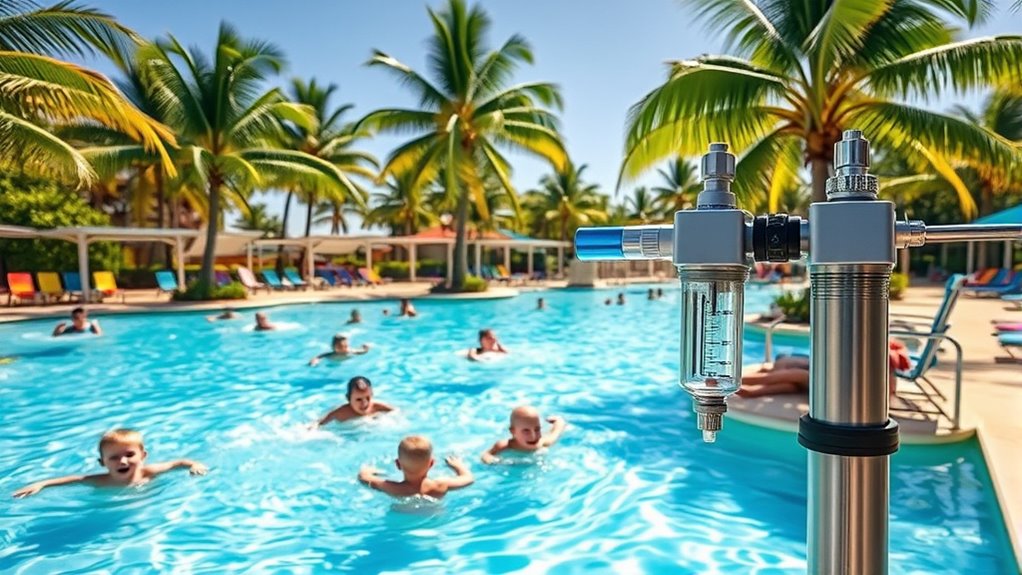
Effective water quality management plays a essential role in preventing the spread of Cryptosporidium in water parks. Since Cryptosporidium oocysts resist standard chlorine levels, relying solely on chlorination isn’t enough. Proper filtration is critical; inadequate maintenance or malfunctioning filters can allow these tiny oocysts to bypass treatment. To enhance safety, water parks should incorporate supplemental disinfection methods like ultraviolet (UV) light or ozone, which effectively inactivate crypto oocysts resistant to chlorine. Regular monitoring of water quality and quick responses to any rise in cryptosporidiosis cases enable early intervention. Additionally, protecting source water by controlling runoff from farms and maintaining watershed integrity reduces initial contamination. Filtration systems are essential components in removing crypto oocysts from water. Combining these strategies creates a robust barrier against Crypto’s spread, keeping water safer for everyone.
Tips for Choosing Safer Water Park Facilities

Choosing a safer water park begins with evaluating its facility design and infrastructure. First, check if the park uses proper filtration systems that prevent water bypassing filters, especially since Cryptosporidium oocysts resist chlorine. Second, see if secondary disinfection methods like UV light are in place, especially in areas for young children. Third, ensure the water is properly circulated and monitored with calibrated equipment to maintain safe disinfectant levels. Fourth, confirm the park follows model aquatic health codes that specify disinfection standards. Additionally, look for barrier-free access to showers and handwashing stations, encouraging hygiene before swimming. These features demonstrate the park’s commitment to safety and reduce your risk of waterborne illness. Crypto is resistant to chlorine due to an outer shell, making these safety measures even more essential.
What to Do If You Suspect Waterborne Illness

If you start experiencing symptoms like diarrhea, vomiting, or respiratory issues after visiting a water park, it’s crucial to take immediate action. First, stop using the suspected contaminated water source and avoid further recreational water activities until your symptoms resolve or a healthcare professional confirms your condition. Seek medical evaluation promptly, especially if you have diarrhea, vomiting, or respiratory problems. Inform your healthcare provider about your water park visit to help guide testing and diagnosis. Do not return to work or school until you’ve been symptom-free for at least 24 hours. Be sure to report your illness to local health authorities to assist with outbreak tracking. Follow your provider’s instructions, stay hydrated, and complete any prescribed treatments to prevent complications and prevent spreading the illness. Regular monitoring of water quality, including filtration systems, can help reduce the risk of waterborne illnesses in aquatic facilities.
Frequently Asked Questions
Can Cryptosporidium Spread Through Casual Contact at Water Parks?
No, cryptosporidium doesn’t spread through casual contact at water parks. It mainly transmits through ingestion of contaminated water, especially when you swallow pool water that contains oocysts. You’re at risk if you accidentally swallow water during swimming, but casual contact like touching or splashing isn’t a common transmission route. To stay safe, avoid swallowing water, practice good hygiene, and supervise children to prevent fecal accidents.
Are Children More Susceptible to Cryptosporidium Infections Than Adults?
You’re like a sponge, soaking up what you encounter, but children are more vulnerable to cryptosporidium infections. Their immature immune systems act like fragile shields, letting the parasite slip in more easily. In crowded water parks, where germs swirl like a storm, kids face higher risks of catching and shedding the infection longer. Their innocence and developing defenses make them prime targets, so extra caution is crucial to keep them safe.
How Long Does Cryptosporidium Survive in Water Park Pools?
Cryptosporidium can survive in water park pools for over a week, even in properly chlorinated water. At typical pool pH and temperature, oocysts remain infectious for more than 7 days, with some sources citing survival up to 11 days. Since standard chlorine levels don’t reliably kill it quickly, you should avoid swallowing pool water, especially with young children, and look for parks that use additional disinfection methods like UV or ozone to reduce risks.
Are Certain Water Park Features Higher Risk for Cryptosporidium Transmission?
Certain water park features are like open books for Cryptosporidium, revealing higher risks. Splash pads, fountains, shallow pools, and waterslides, especially when children swallow water, increase your chances of exposure. These features often have design flaws or heavy traffic, making contamination more likely. To stay safe, avoid swallowing water, practice good hygiene, and steer clear of risky features, especially if kids aren’t feeling well or wearing proper swim diapers.
What Are the Long-Term Health Effects of Cryptosporidiosis?
Long-term, cryptosporidiosis can cause persistent gastrointestinal issues like ongoing diarrhea, abdominal pain, and fatigue that may last for months. You might also experience dizziness, headaches, and cognitive difficulties long after the initial infection. Vulnerable populations, such as immunocompromised individuals and children, face severe risks, including chronic illness and developmental problems. It is crucial to recognize these prolonged effects and take preventive measures to reduce infection and transmission.
Conclusion
By staying vigilant and practicing good hygiene, you can enjoy water parks without inviting unwelcome visitors. Trust in well-maintained facilities and heed your body’s signals to stay comfortable and safe. Remember, a little attentiveness can help guarantee your adventure remains delightful and worry-free. Embrace these simple steps, and you’ll turn a day at the water park into a truly invigorating escape, free from any unwelcome interruptions to your splash-filled joy.