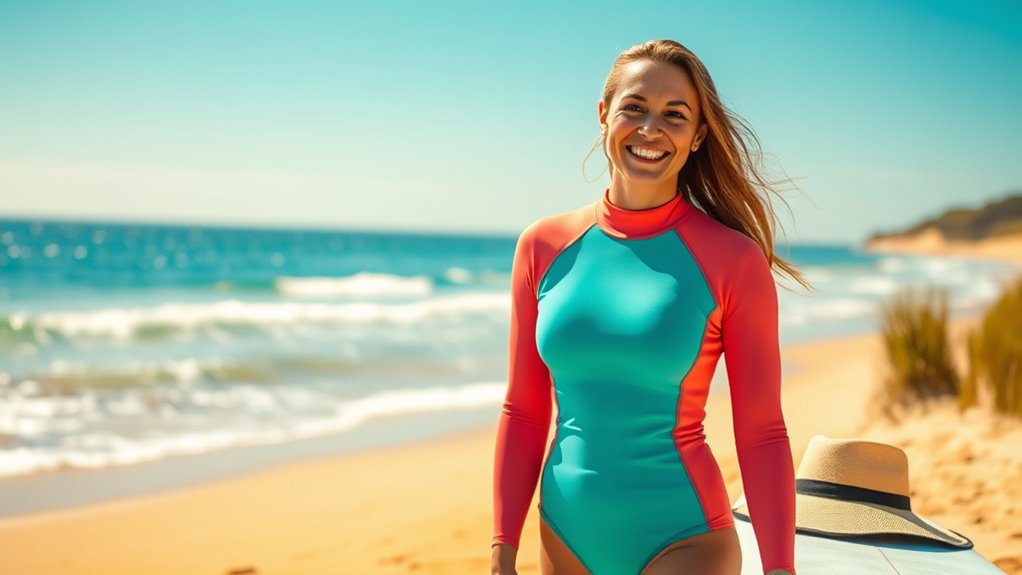

Yes, rash guards help with sun safety by providing consistent, high UPF-rated fabric that blocks most UVA and UVB rays during outdoor or water activities. They cover larger areas of your skin, reducing the need for frequent sunscreen reapplications and offering long-lasting protection. With snug fits, durable fabrics, and flatlock seams, they keep you comfortable and protected even when wet or active. Keep going to find out more about how they can naturally boost your sun safety routine.
Key Takeaways
- Rash guards provide high UPF-rated fabric that blocks at least 98% of UVA and UVB rays.
- Their snug fit and dense weave create a consistent, long-lasting barrier against the sun.
- They protect large skin areas continuously, reducing the need for sunscreen reapplication.
- Rash guards maintain UV protection even when wet or during active movement.
- Combining rash guards with other sun safety measures enhances overall skin protection during outdoor activities.

baleaf Men's Sun Protection Shirts UV SPF T-Shirts UPF 50+ Long Sleeve Rash Guard Fishing Running Quick Dry Blue Size L
Stay comfortable all day long with our lightweight and quick-dry fabric that wicks moisture away from your skin.
As an affiliate, we earn on qualifying purchases.
As an affiliate, we earn on qualifying purchases.
Understanding UPF Ratings and Their Significance
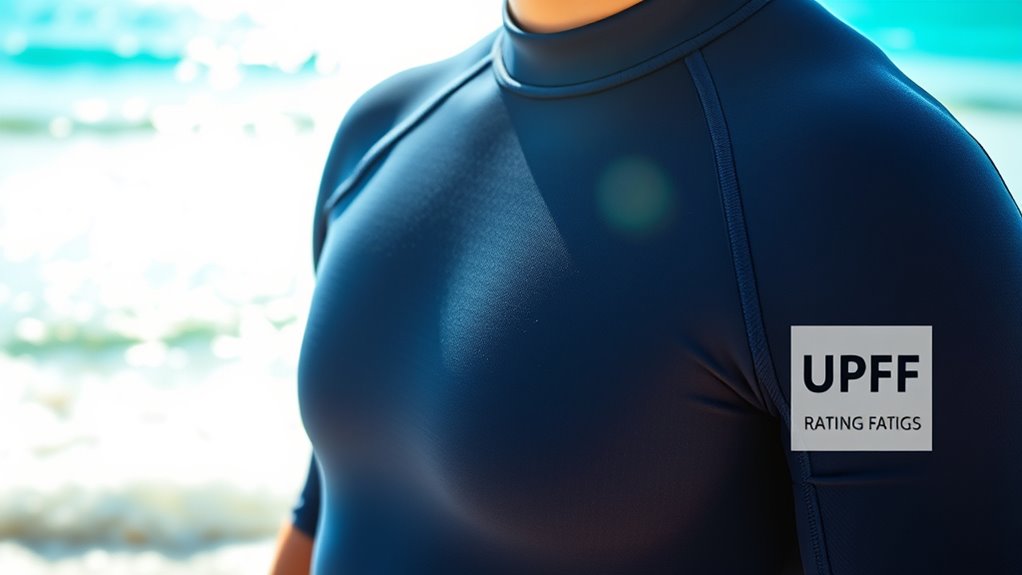
Understanding UPF ratings is essential when choosing sun-protective clothing because they indicate how well the fabric blocks harmful ultraviolet rays. UPF, or Ultraviolet Protection Factor, measures protection against both UVA and UVB rays, unlike SPF, which only covers UVB. The ratings range from Good (15-24), Very Good (25-39), to Excellent (40-50+). A UPF 50+ fabric blocks at least 98% of UV rays, offering the highest protection. Fabrics with higher UPF ratings typically have denser weaves, more synthetic fibers, or special treatments. These ratings are verified through laboratory tests using spectrophotometers, not on human skin. Clothing must transmit less than 2% of UV radiation to qualify for UPF 50%. UPF ratings are standardized and regulated by testing organizations to ensure accuracy. Choosing garments with high UPF ratings guarantees better, more consistent sun protection during outdoor activities.

MAGCOMSEN Women's UPF 50+ SPF Long Sleeve Swim Shirt, Fishing & Hiking Rash Guard – Black
Polyester Material, Lightweight, Quick Dry, Moisture Wickingand Comfortable
As an affiliate, we earn on qualifying purchases.
As an affiliate, we earn on qualifying purchases.
How Rash Guards Provide Consistent Sun Protection
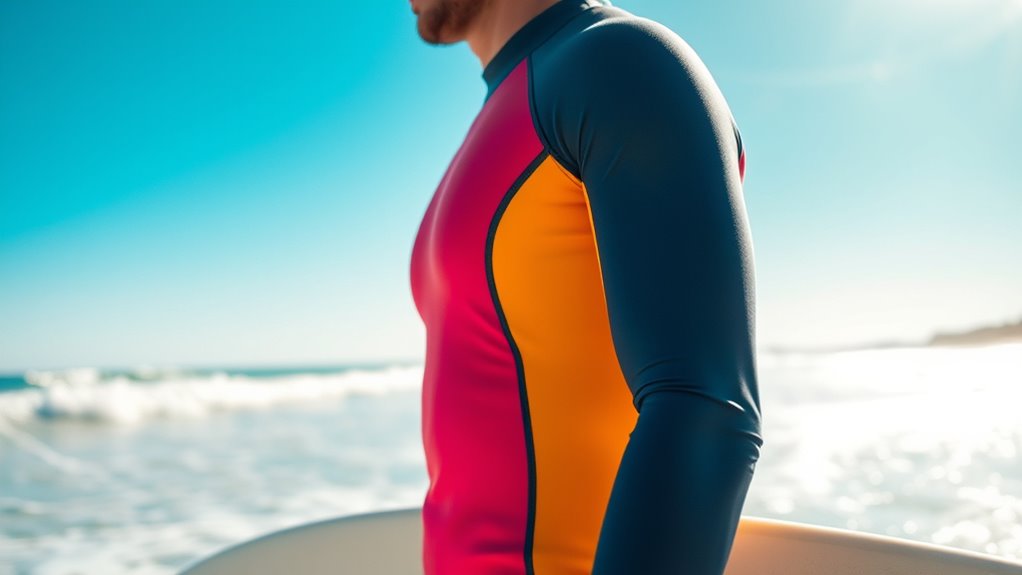
Rash guards offer consistent sun protection because their fabrics create a uniform UV blockade that doesn’t weaken over time. Unlike sunscreen, you don’t need to reapply or worry about it washing off during water activities. This reliable barrier keeps your skin protected without any extra effort. UPF protection is embedded in the fabric itself, ensuring that the level of protection remains effective regardless of how often you wear or wash the garment. The durability of the fabric helps maintain its protective qualities through multiple uses and washes.
Uniform UV Blockade
Because rash guards are made from tightly woven fabrics, they create a consistent barrier against ultraviolet radiation across your skin. The fabric’s density and construction ensure even UV protection, unlike sunscreen, which can wear off or be applied unevenly. UPF ratings, especially UPF 50+, indicate that about 98% of UV rays are blocked, providing reliable coverage. The weave, fabric thickness, and special UV-inhibiting additives contribute to this uniform protection. As long as the garment covers your skin, the UV shield remains steady, regardless of movement or water exposure. The snug fit helps maintain contact with your skin, preventing gaps. The fabric’s tight weave and high UPF rating ensure maximum UV defense. Additionally, the UV protection properties of rash guards are designed to last through extended exposure, making them a dependable choice for outdoor activities. Overall, rash guards deliver consistent, high-level UV protection across all covered areas, reducing your risk of sunburn and long-term skin damage during outdoor activities.
No Reapplication Needed
Rash guards deliver continuous UV protection without the need for reapplication, unlike sunscreen that wears off quickly with water, sweat, or towel drying. As long as you wear and care for your rash guard properly, it provides consistent UPF50+ protection, blocking about 98% of UVA and UVB rays. Unlike sunscreen, which can diminish within two hours or after swimming and sweating, rash guards stay effective during all water activities without washing off. They eliminate the risk of missed spots or improper reapplication, ensuring reliable defense. Designed for durability, high-quality rash guards maintain their UV blocking properties through multiple washes when cared for correctly. Many rash guards are made from materials like polyester or nylon that retain their protective qualities over time. This means you can enjoy extended sun safety without the hassle of frequent reapplication, giving you peace of mind during outdoor and aquatic adventures. Additionally, the durability of rash guards ensures that their protective features remain intact over prolonged use, making them a cost-effective and reliable choice for sun protection.

Runhit UPF 50+ Boys Swim Shirt Long Sleeve, Rash Guard for Boys, Youth Kids UV Sun Protection Shirt for Beach Surf Hiking Orange L
UPF 50+ Sun Protection: This boys swim shirt long sleeve is made with UPF 50+ fabric to block…
As an affiliate, we earn on qualifying purchases.
As an affiliate, we earn on qualifying purchases.
Comparing Rash Guards to Sunscreens in Sun Safety Strategies
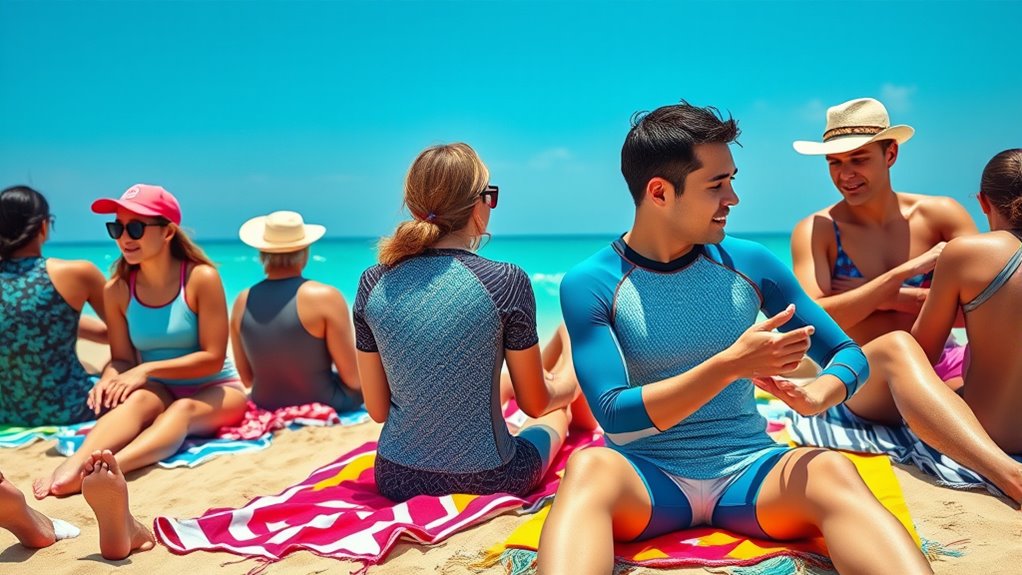
When evaluating sun safety strategies, rash guards and sunscreens each offer distinct advantages that can complement one another. Rash guards provide high, consistent UV protection—often exceeding UPF 50—blocking over 98% of UV rays, including UVA. Sunscreens, rated by SPF, block about 97–98% of UVB rays but depend on proper application and reapplication. They’re flexible for exposed areas but can wash off or be applied unevenly. Combining both maximizes protection: rash guards cover large skin areas continuously, while sunscreen shields exposed spots like the face and neck. Utilizing UV protection effectively involves understanding the strengths and limitations of each method to create a comprehensive sun safety plan.

MLYENX 7 Pack Long Sleeve Shirts for Men UPF 50+ UV Sun Protection Quick Dry Moisture Wicking Workout Tee Shirts XL
Breathable Comfort: Crafted from premium, moisture-wicking fabric, these long sleeve shirts for men offer excellent moisture-wicking performance; great…
As an affiliate, we earn on qualifying purchases.
As an affiliate, we earn on qualifying purchases.
Key Material and Design Features of UV-Blocking Rash Guards
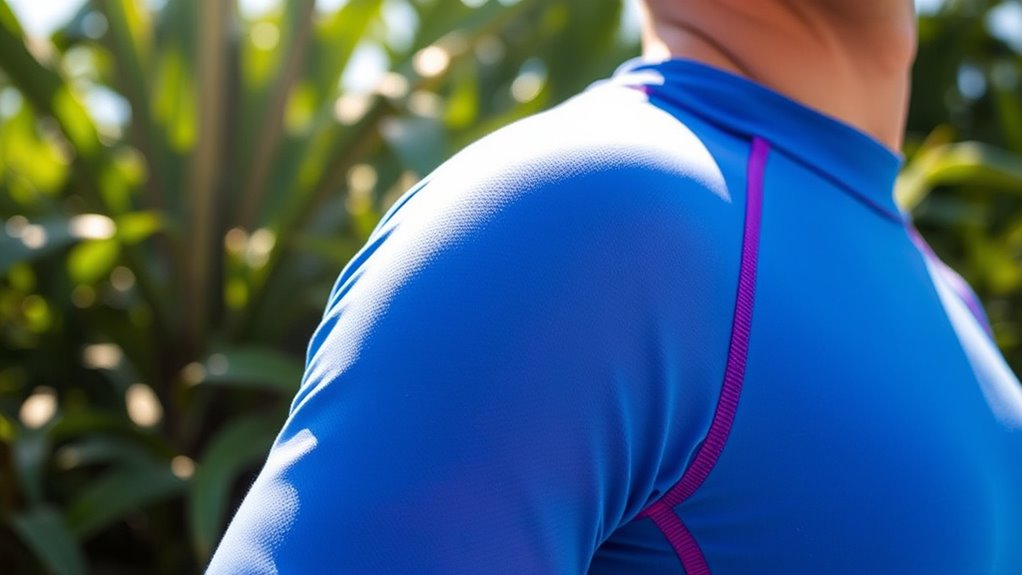
The materials used in UV-blocking rash guards directly influence their protective effectiveness and comfort. Fabrics like nylon and polyester are durable, resist abrasion, and offer high UV protection, especially when treated with UV inhibitors. Spandex provides excellent stretch, ensuring a snug fit that moves with you, reducing gaps where UV rays could penetrate. Blends such as polyester/spandex balance durability, flexibility, and moisture management. Some rash guards feature embedded mineral-based UV blockers like zinc oxide, boosting sun safety without stiffness. The design features—long sleeves, tight fit, flatlock stitching, and double-layer panels—enhance UV protection and durability. Additionally, fabric properties such as breathability and quick-drying capabilities make your activity comfortable while maintaining sun safety. Lighter, breathable fabrics make your activity comfortable while maintaining sun safety. Overall, choosing the right materials and thoughtful design elements maximizes both UV protection and comfort. Understanding fabric properties helps you select rash guards that effectively block UV rays while providing comfort during your water activities.
Benefits of Rash Guards for Water and Outdoor Sports
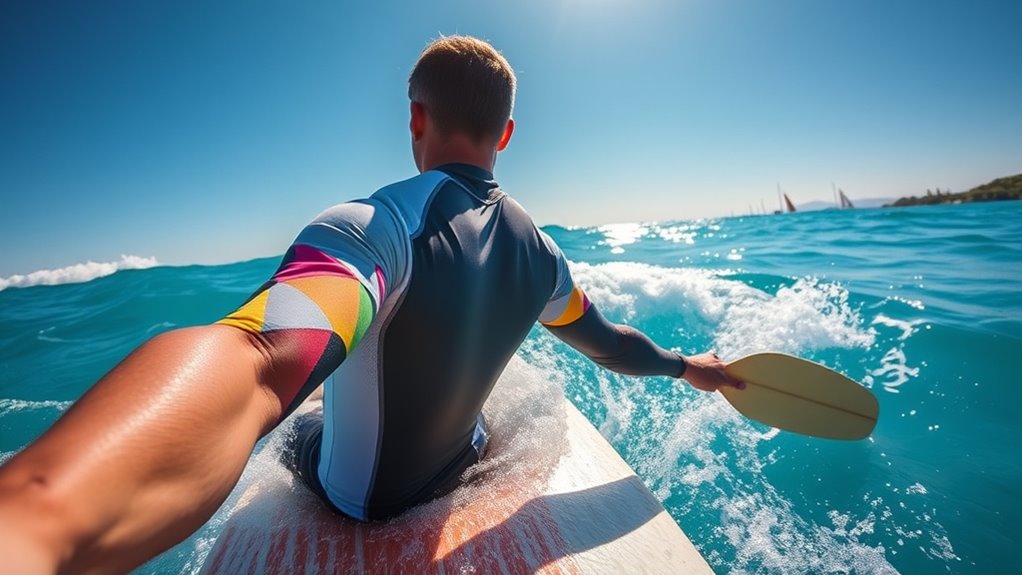
Engaging in water and outdoor sports becomes safer and more comfortable with rash guards, thanks to their high UPF ratings that effectively block harmful UVA and UVB rays. Unlike cotton shirts, which only block a small fraction of UV rays when wet, rash guards provide consistent protection embedded in the fabric, reducing skin damage risk. They also shield you from minor stings, scratches, and abrasions from rocks, coral, or equipment, while preventing irritation from rough surfaces like sand or surfboards. Rash guards help regulate your body temperature, keeping you cooler or warmer depending on conditions, and support full range of motion for activities like surfing, swimming, or running. Their durability ensures they withstand harsh environments, making them a reliable choice for extended outdoor and water sports. Additionally, rash guards are made from high-performance, quick-drying materials that enhance comfort during prolonged activity. Using rash guards can also help reduce the need for frequent reapplication of sunscreen, lowering the risk of chemical exposure from sunscreens during extended outdoor sessions.
The Role of Coverage and Fit in Maximizing Sun Safety
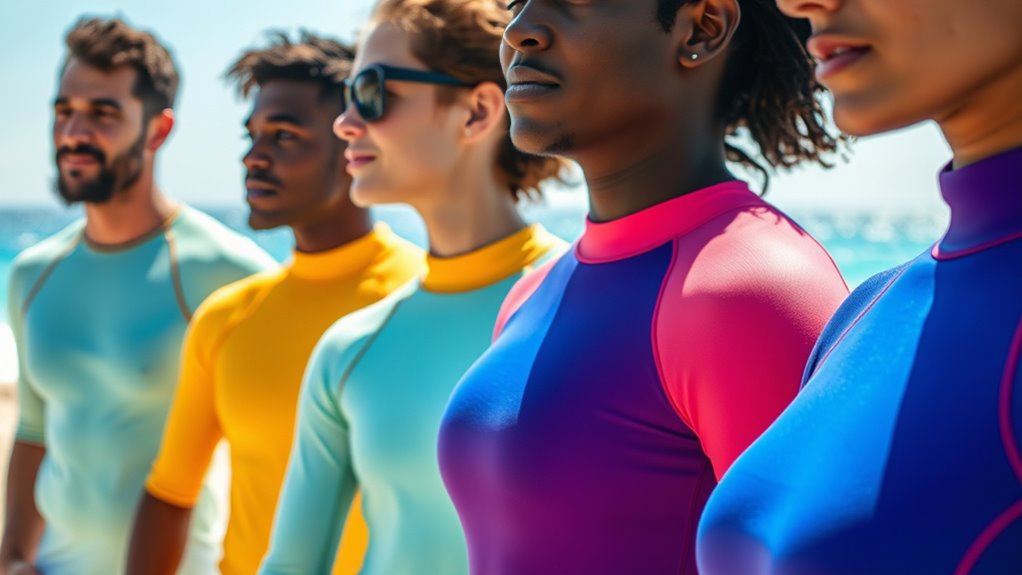
Maximizing sun safety with rash guards depends heavily on how well they cover your skin and fit your body. Long-sleeved, high-neck rash guards offer more extensive UV protection than short-sleeved versions, especially for vulnerable areas like shoulders, upper back, and chest. A snug fit ensures consistent fabric contact, minimizing gaps where UV rays can reach your skin. Four-way stretch fabrics help maintain a close fit during movement, while compression styles enhance protection. The fabric’s construction also matters—densely woven materials like polyester or nylon block more UV rays, especially when combined with advanced technologies. Proper fit and coverage are essential for maximizing the protective benefits of rash guards against UV exposure. Ensuring your rash guard has adequate UV protection helps maintain its effectiveness even after multiple wears and washes. Wet conditions don’t reduce UV protection, and proper coverage prevents gaps that expose skin. Regularly inspecting your rash guard for wear ensures sustained sun safety during outdoor activities.
Combining Rash Guards With Other Sun Protection Measures
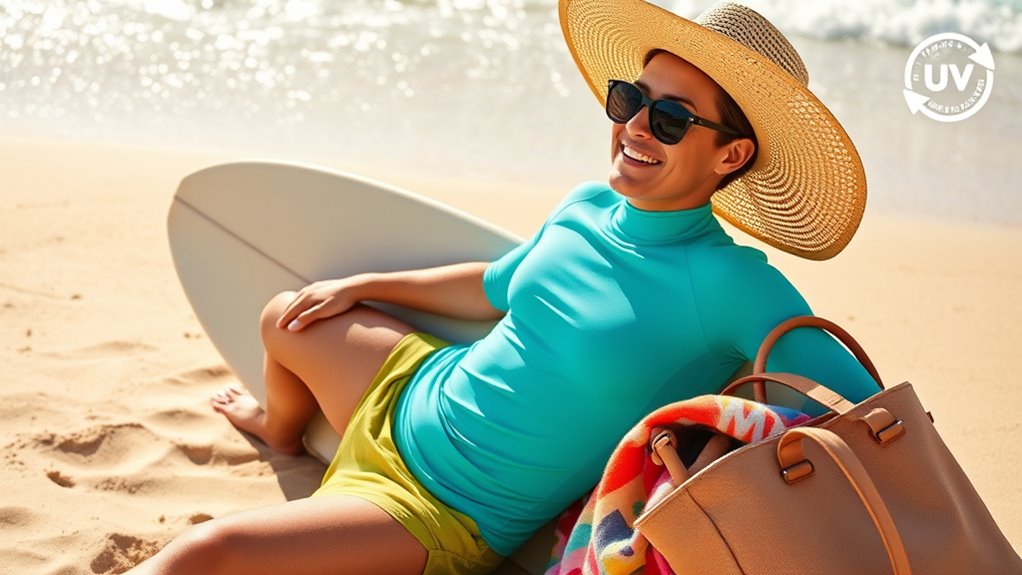
Combining rash guards with other sun protection measures enhances your overall defense against harmful UV rays. To maximize protection, consider these strategies:
- Apply broad-spectrum sunscreen to exposed skin, like your face, neck, hands, and feet, before putting on your rash guard.
- Reapply sunscreen every two hours or after swimming, sweating, or towel drying to maintain effectiveness.
- Choose rash guards with high UPF ratings (50+), which block about 98% of UV rays.
- Wear accessories such as wide-brimmed hats and sunglasses to shield your face, eyes, and neck further.
High UPF ratings can actually increase when fabric gets wet, providing even better protection in water or humid conditions.
This layered approach ensures extensive protection, especially during prolonged outdoor activities. Remember, even high-UPF rash guards can have coverage gaps, so combining methods offers the best defense against UV damage.
Differences Between Rash Guards and Sun Shirts or Regular Clothing
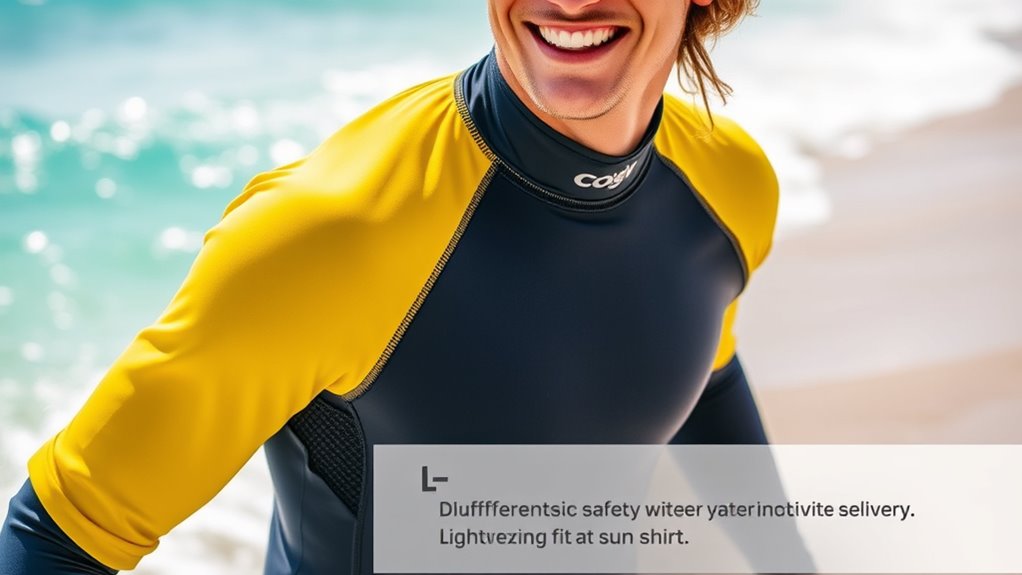
You’ll notice that rash guards are designed for active water use with a snug fit and durable, quick-drying fabrics, while sun shirts are looser and focus on breathability and comfort on land. When it comes to UV protection, rash guards and sun shirts typically offer high UPF ratings that stay effective even when wet, unlike regular clothing. Understanding these differences helps you choose the right option based on your activity, fit preferences, and protection needs. Additionally, rash guards often have flatlock seams and reinforced areas to withstand the rigors of water sports, enhancing durability and comfort during extended use. Proper selection of protective clothing can also be influenced by regional divorce statistics, emphasizing the importance of understanding local needs and conditions.
Fabric Fit and Design
The fit and design of rash guards differ markedly from sun shirts and regular clothing, primarily due to their intended use in water sports. You’ll notice rash guards are snug and form-fitting, designed to stay close to your skin, reducing chafing and supporting active movement. In contrast, sun shirts tend to have a looser, more relaxed fit for comfort and casual wear. The fabrics also differ: rash guards use dense, stretchy synthetic blends like nylon and spandex for durability, while sun shirts often feature lightweight cotton or polyester with more breathability. Additionally, rash guards have high crew necklines, flatlock seams, and minimal bulk, focusing on performance, while sun shirts may include casual features like collars or hoods for style and versatility. The fabric composition plays a crucial role in how each garment performs in water and sun protection.
UV Protection Levels
Understanding UV protection levels is essential when choosing between rash guards, sun shirts, and regular clothing. Rash guards typically have a UPF rating of 50+, offering “excellent” protection by blocking about 98% of UV rays. Swim shirts also usually carry UPF ratings around 50+, providing similar UV defense, though fabric quality can vary. In contrast, regular clothing like cotton T-shirts generally has much lower UPF ratings, around 5 to 15, unless specially treated or tightly woven. The UPF rating measures how much UV radiation penetrates fabric, making it a key factor in selecting sun-protective gear. Keep in mind that not all rash guards or swim shirts automatically come with UPF certification, so verifying the label guarantees you’re getting reliable protection. High-quality rash guards often undergo testing to ensure their UPF ratings are accurate, which helps consumers make informed choices for sun safety. Additionally, some recycled materials used in rash guards can contribute to their durability and environmental friendliness.
Intended Activity Use
Choosing the right garment depends heavily on the activity you plan to do. Rash guards are designed for high-performance water sports, offering abrasion protection, stretch, and quick drying. In contrast, swim shirts prioritize comfort and style for casual water activities, with lighter fabrics and looser fits. Sun shirts are best for outdoor activities away from water, focusing on sun protection and breathability, often with looser fits and varied styles. Wearing clothing made from UPF-rated fabrics adds an extra layer of sun safety during your activities. 1. Rash guards suit surfing, paddleboarding, and snorkeling with snug, compression fit. 2. Swim shirts are ideal for casual beachwear and swimming. 3. Sun shirts work well for outdoor activities like jogging, gardening, or boating. 4. Rash guards provide abrasion and sting protection, unlike the others.
Tips for Choosing the Right Rash Guard for Sun Protection
Selecting the right rash guard for sun protection involves more than just picking a stylish design; it requires paying close attention to specific features that guarantee maximum UV defense. First, choose a rash guard with a UPF 50+ rating, as it blocks about 98% of UVA and UVB rays, offering the best protection. Look for fabrics made from polyester, nylon, or spandex blends that are lightweight, quick-drying, and sweat-wicking, ensuring comfort during activity. Ascertain the fit is snug but not restrictive, with long sleeves and higher necklines to cover more skin. Check for flatlock stitching to prevent chafing. Proper care, such as air drying and avoiding fabric damage, maintains UV protection over time. The fabric’s UPF rating is a crucial factor in sun safety, ensuring the garment provides reliable coverage. Additionally, selecting a rash guard with moisture-wicking properties can help keep you dry and comfortable during active use. Remember, rash guards complement sunscreen, hats, and shade for all-encompassing sun safety.
How Rash Guards Support Long-Term Skin Health During Outdoor Activities
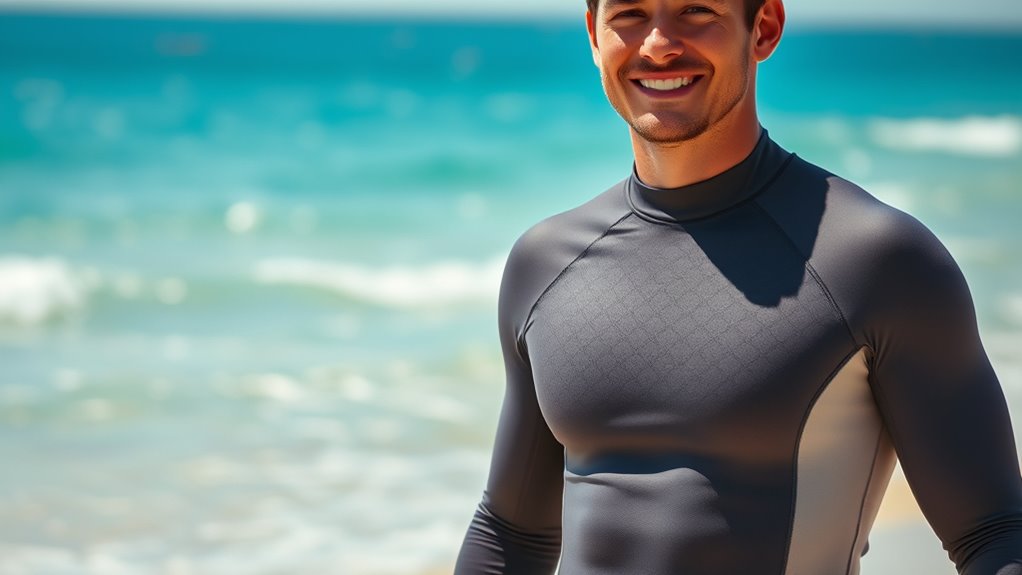
Rash guards play a vital role in safeguarding your skin during extended outdoor activities by providing consistent, long-lasting UV protection. They use fabrics with high UPF ratings, typically 40–50+, that block both UVA and UVB rays linked to skin damage and cancer. Unlike cotton T-shirts, rash guards maintain their protection when wet and during movement, thanks to tightly woven synthetic fibers like polyester or nylon. Their multi-mechanism approach—blocking, absorbing, and reflecting UV radiation—reduces cumulative sun exposure, helping prevent long-term skin damage. Additionally, they serve as a dependable barrier, often surpassing sunscreens in SPF value and durability. This passive protection minimizes the risk of sunburns, premature aging, and skin cancers, supporting your skin’s health over years of outdoor activity. Proper fit is also essential to ensure maximum UV coverage and comfort during wear.
Frequently Asked Questions
Are Rash Guards Effective in Blocking UV Rays When Wet?
Yes, rash guards are effective at blocking UV rays even when wet. They’re made from high-UPF fabrics that retain most of their UV protection, though wetness can slightly reduce their effectiveness. Darker colors and UPF 50+ ratings offer better protection. You should still apply sunscreen on exposed skin for extra safety, but wearing a rash guard provides a strong barrier against harmful UV rays during water activities.
How Long Does UPF Protection Last on a Rash Guard?
You get what you pay for, and that’s true for UPF protection on rash guards. Typically, it lasts 2-3 years if you care for it properly. The fabric’s engineered UPF stays effective if undamaged, but surface-treated UPF additives fade after 30-50 washes. To extend its life, rinse after use, air dry in the shade, and avoid harsh chemicals. Watch for signs of wear to keep your sun safety intact.
Can Rash Guards Replace Sunscreen Entirely?
No, rash guards can’t replace sunscreen entirely. They provide excellent protection for covered areas, blocking over 98% of UV rays, but they don’t cover your face, neck, hands, or feet. You still need to apply sunscreen on exposed skin and reapply it regularly, especially after swimming or sweating. For complete sun safety, combine wearing rash guards with broad-spectrum sunscreen, hats, sunglasses, and seeking shade during peak UV hours.
Do All Rash Guards Offer UPF 50+ Protection?
Not all rash guards offer UPF 50+ protection. You need to check the label or product specs because protection varies based on fabric type, weave, and treatment. Some focus on water performance without UV certification, offering lower protection. To stay safe, choose rash guards certified with UPF 50+ or higher, especially for prolonged sun exposure, and make sure they fit snugly for maximum coverage and effectiveness.
Are There Specific Materials Best for UV Protection in Rash Guards?
Polyester and nylon are the best materials for UV protection in rash guards because they’re tightly woven, durable, and naturally block most UV rays, especially when rated UPF 50+. You should look for rash guards made from these fabrics, preferably with a high UPF rating. Blends with spandex add comfort and flexibility without compromising UV blocking. Darker colors and tight weaves also boost your sun safety.
Conclusion
So, when it comes to sun safety, rash guards are your silent shield—reliable, consistent, and designed to protect. They’re more than just sporty gear; they’re your armor against harmful rays, turning the tide in your favor. Remember, no single method is enough—combine rash guards with sunscreen and shade. Because in the battle against the sun, isn’t it better to have a strong defense? Stay protected, stay confident.