Wearing contacts at water parks increases your risk of eye infections from bacteria, viruses, and parasites in water. It’s safer to wear glasses or protective goggles, which stay secure, resist water damage, and create a barrier against contaminants. Properly fitted goggles help prevent leaks and irritation during water activities. If you want to learn about effective eye protection tips, how to choose the right gear, and what to do after water fun, keep exploring useful advice.

Get pool and patio gear delivered free with Prime
- Fast, free delivery on millions of items
- Prime Video, Amazon Music and more included
- Member-only deals all year
Key Takeaways
- Water parks increase infection risk for contact lens wearers due to waterborne bacteria and parasites clinging to lenses.
- Glasses with water-resistant features offer a safer, more comfortable alternative during water activities.
- Goggles provide a proper seal, protecting eyes from irritants and preventing water from entering during rides.
- Contact lenses should be discarded after water exposure to avoid trapping harmful microorganisms.
- Water park safety policies often prohibit loose items; secure or remove prescription glasses before water rides.
water-resistant sports glasses with polycarbonate lenses
As an affiliate, we earn on qualifying purchases.
As an affiliate, we earn on qualifying purchases.
Understanding the Risks of Wearing Contacts in Water Parks
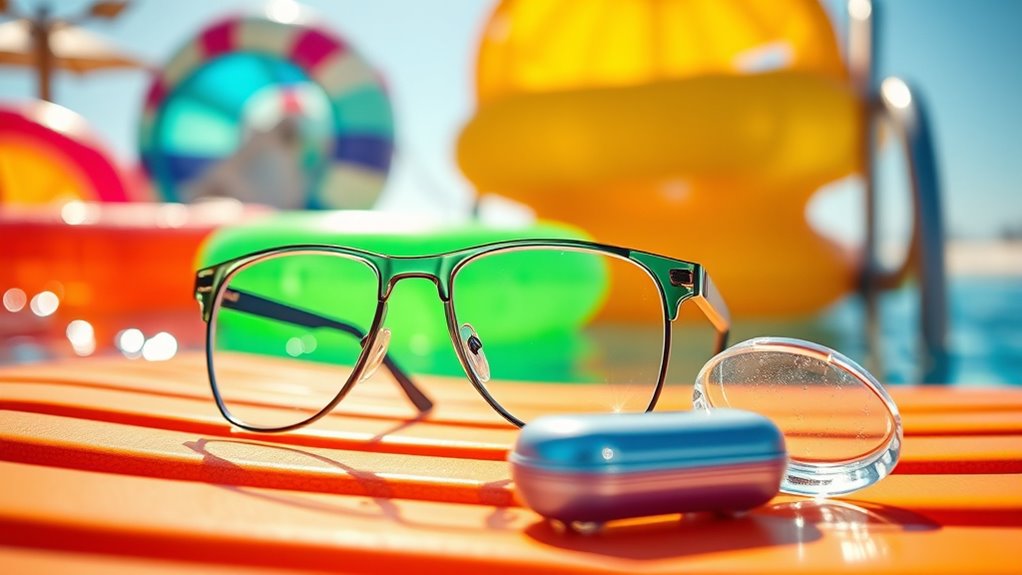
Water parks pose significant risks for contact lens wearers because water can carry harmful bacteria, viruses, fungi, and parasites that stick to lenses. The FDA advises against exposing contact lenses to any water, including pools and water parks. Waterborne pathogens like Cryptosporidium and Acanthamoeba can adhere to lenses, increasing infection risks. Microbial keratitis and Acanthamoeba keratitis are serious infections that can cause pain, redness, blurred vision, and even vision loss or the need for a corneal transplant. Most water-related eye infections happen in public parks, hotels, and water parks. Wearing lenses in these environments raises your chances of infection, especially if hygiene is poor or lenses are not discarded after water exposure. Protect your eyes by avoiding contact with water while wearing contacts. Research shows that water containing microorganisms can remain on lenses even after rinsing, further increasing the risk of infection. Additionally, home decor elements like wall organization systems or stylish dinnerware can influence your overall environment, but when it comes to eye health, prioritizing proper hygiene is essential.
waterproof protective goggles for water parks
As an affiliate, we earn on qualifying purchases.
As an affiliate, we earn on qualifying purchases.
Why Glasses Might Be a Better Alternative
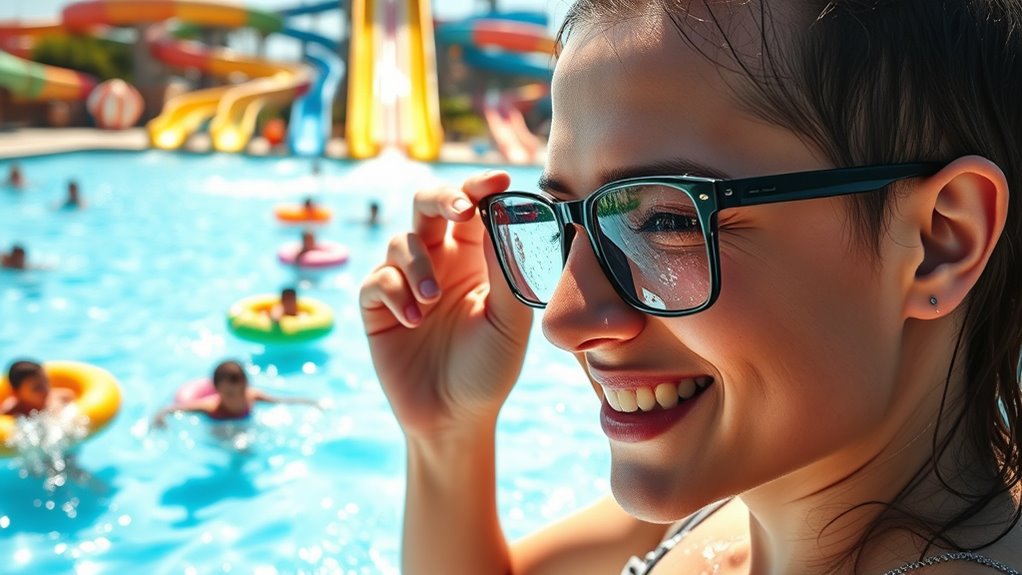
Wearing glasses offers better water resistance and helps prevent eye infections compared to contacts. They stay securely in place and feel more comfortable during water park activities. Plus, glasses eliminate worries about water damage or irritation, making them a safer choice overall. Properly fitting glasses can also provide a good seal to protect your eyes from contaminants and irritants in the water. Additionally, glasses can be equipped with specialized lenses that further enhance protection and comfort while enjoying water activities.
Better Water Resistance
Have you ever experienced blurred vision or discomfort because water droplets stuck to your contact lenses during water park fun? Glasses with water-resistant features can save you from that frustration. Many sports glasses use polycarbonate lenses, which are impact-resistant and naturally water-repellent. They often have hydrophobic coatings that cause water to bead and roll off easily, maintaining clear vision even in splashes. Unlike contacts, glasses won’t absorb water or change shape, so your vision stays consistent. Plus, their sturdy frames and coatings help keep water, debris, and moisture away from your eyes. Vibe coding is an innovative technique that can aid in designing better water-resistant eyewear.
Reduced Infection Risk
Because contact lenses can trap bacteria and microorganisms present in water, they considerably increase your risk of eye infections during water park visits. Waterborne pathogens like Cryptosporidium and Acanthamoeba can cling to lenses, leading to serious infections such as bacterial keratitis and corneal ulcers. Water exposure under lenses fosters bacterial growth, raising the chance of irritation, redness, and pain. Even well-chlorinated pools contain microorganisms that can stick to contacts, despite disinfection efforts. Wearing glasses provides a physical barrier, preventing water and microbes from directly touching your eyes. This markedly reduces infection risk, as glasses don’t trap water or bacteria underneath. Additionally, AI-driven innovations in healthcare are advancing diagnostic tools that can help identify eye infections early, further protecting your vision. By choosing glasses over contacts, you lower your chances of developing infections and avoid the complications that can require urgent medical treatment.
Enhanced Comfort and Fit
Glasses designed for water activities offer a secure fit and greater stability than contact lenses, making them a practical choice for water park visits. They stay in place better during splashes, jumps, or quick movements, thanks to adjustable nose pads, flexible hinges, and rubber grips. Unlike contacts, glasses don’t rely on eyelid or tear film adhesion, reducing the risk of unexpected displacement. Features like wrap-around frames provide extra coverage against splashes and wind, while straps or retainers keep them secure during intense activity. Proper sizing and load‑planning tools can help ensure your glasses fit comfortably and securely for active water fun.
prescription water-resistant glasses
As an affiliate, we earn on qualifying purchases.
As an affiliate, we earn on qualifying purchases.
The Importance of Proper Eye Protection Gear
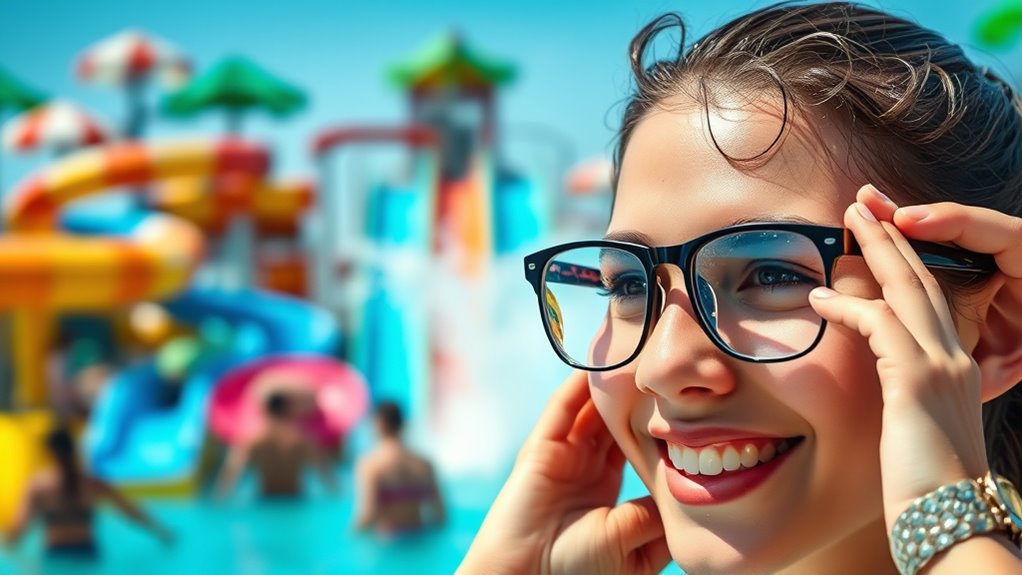
Wearing proper eye protection gear at water parks is essential to keep your eyes safe from irritants, chemicals, and potential injuries. Pool chemicals and water can wash away your tear film, causing dryness and irritation, while exposure to chlorinated or contaminated water increases the risk of corneal damage and infections. Goggles act as a barrier, protecting the tear film and shielding your eyes from harmful substances. Properly cleaned goggles prevent bacterial buildup that could lead to infections. Wearing goggles that fit snugly creates a watertight seal, reducing water contact and irritation. Proper eye protection is especially important during high-impact rides, where the risk of injury is higher. Remember, goggles are safe for most activities but should be removed during high-impact rides to prevent injury. Investing in quality eye protection helps maintain eye health and ensures a safer, more comfortable water park experience. Additionally, pool chemicals and water can wash away the tear film, leaving eyes vulnerable to irritation and infection.
disposable contact lenses for water activities
As an affiliate, we earn on qualifying purchases.
As an affiliate, we earn on qualifying purchases.
Tips for Fitting and Wearing Goggles Safely
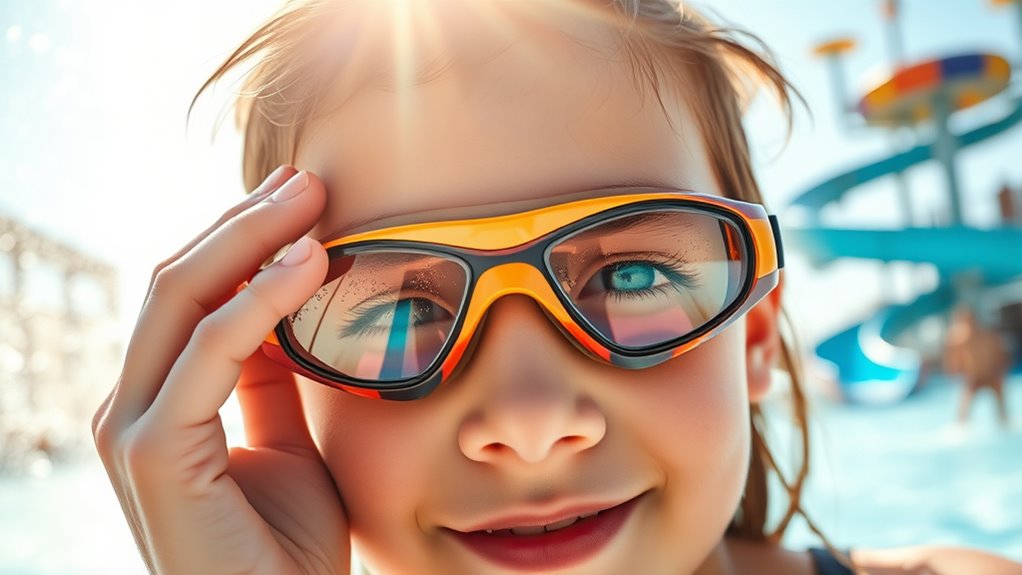
To make certain your goggles stay comfortable and effective, make sure they fit snugly without pinching or causing gaps. Adjust the strap so it’s secure but not too tight, and choose goggles with soft edges that mold to your face. Always try them on before entering the water to confirm a proper, watertight seal. Wearing protective eyewear significantly reduces the risk of irritation and infection during water activities. Additionally, selecting goggles with professional quality can provide better durability and comfort.
Proper Goggle Fit
Achieving a proper goggle fit is essential for comfort and safety at water parks. First, perform the suction test: goggles should briefly stick to your eye socket without straps, ensuring a good seal. The gasket, whether silicone, rubber, or specialized like Swedish goggles, must mold tightly around your eye socket without gaps. Adjust the strap gradually for snugness—too tight causes discomfort, too loose leads to leaks. Wide or split straps distribute pressure evenly, enhancing comfort over time. An adjustable nose bridge helps customize fit and prevents pressure points. Remember, lenses should sit close to your eye socket, reducing water entry and drag. For better fit and comfort, consider these points:
- Ensure no gaps between gasket and skin
- Adjust straps to prevent slipping without discomfort
- Use goggles with customizable nose bridges
- Proper fitting prevents leaks and enhances overall comfort during extended use
- Additionally, selecting goggles made from comfortable materials can improve long-term wearability and safety.
Secure Strap Placement
Did you know that proper strap placement is key to keeping your goggles secure and comfortable during water park adventures? Make sure straps are evenly positioned around the back of your head, not too high or low, for maximum stability. Avoid placing straps directly over or under swim caps unless they’re designed for that, to prevent slipping. Adjust the straps so they’re snug but not tight enough to cause headaches or discomfort. Use dual or split straps when available to distribute pressure evenly during vigorous activities. Periodically check strap tension as water and movement can loosen them. Wearing a swim cap over the straps helps anchor your goggles, preventing them from slipping or falling off. Proper strap placement ensures your goggles stay secure, so you can enjoy the water worry-free. Additionally, selecting goggles with adjustable straps made from durable materials can enhance fit and longevity.
Remedies for Water-Related Eye Irritation
When water-related eye irritation occurs after swimming at a water park or pool, immediate and proper rinsing can markedly reduce discomfort and prevent further damage. Rinse your eyes with fresh, non-chlorinated water, directing a gentle stream at the inner corner to flush out irritants. Rinse for at least 30 seconds, and consider using sterile saline or artificial tears instead of tap water. Following rinsing, apply a cold compress to soothe inflammation and promote tear production. To aid recovery, keep these points in mind:
- Use preservative-free artificial tears every hour if irritation persists.
- Avoid rubbing your eyes, which can worsen irritation or cause infection.
- Discard contact lenses worn during swimming to prevent trapped chemicals and bacteria.
- Regular eye care after exposure is essential to prevent long-term damage and ensure quick recovery.
Prompt action helps your eyes recover faster and reduces the risk of complications.
Safety Guidelines and Water Park Policies
Safety guidelines and water park policies are essential for guaranteeing your well-being during visits. These rules require you to secure prescription eyeglasses with head straps or remove loose eyewear like sunglasses before rides to prevent loss or injury. Many attractions prohibit loose eyewear altogether to avoid hazards. Water parks also ban metal components on swimwear and loose items, including glasses, to prevent damage and accidents. Staff enforce these policies to keep everyone safe. Wearing goggles or prescription swim goggles protects your eyes from chlorine and contaminants, reducing irritation and infection risks. If you wear contacts, always use watertight goggles to shield your eyes, and remove lenses before water activities. Proper eye protection minimizes the risk of infections and injuries, especially considering the impact of water quality on eye health, and following these policies helps prevent injuries and ensures a safe, enjoyable experience for all guests.
Best Practices for Post-Water Park Eye Care
After enjoying your time at the water park, taking proper steps to care for your eyes helps prevent lingering irritation and potential infections. First, rinse your eyes with clean, cool water for at least 30 seconds, directing the stream from the inner corner outward to flush out chlorine and chemicals. Avoid rubbing your eyes; instead, blink rapidly to stimulate tears and reduce irritation. Applying a cool compress can soothe inflammation and discomfort. If your vision remains blurry, blinking helps distribute tears and can improve focus as your eyes recover. To support eye health, consider these practices: Proper rinsing reduces chemical buildup, use preservative-free artificial tears to rehydrate your eyes. Keep hydrated to promote natural tear production. Choose well-fitting goggles to prevent future irritation. Proper eye care is essential to prevent infections and promote quick recovery. These steps help your eyes recover quickly and stay healthy.
Frequently Asked Questions
Can I Wear Prescription Goggles Instead of Contacts at Water Parks?
Yes, you can wear prescription goggles instead of contacts at water parks. They offer clear vision underwater, fit snugly to stay secure during rides, and protect your eyes from water contaminants. Make sure to choose well-fitting goggles with secure straps to prevent slipping, especially on fast slides. Prescription goggles are a safer, reusable alternative that reduces infection risk and keeps your vision sharp during water activities, giving you peace of mind and better experience.
Are There Specific Goggles Designed for Children Versus Adults?
Yes, there are specific goggles designed for children and adults. Children’s goggles are smaller, with softer seals and simple adjustments for comfort and security, often featuring fun colors. Adult goggles are generally larger, more streamlined, and may include features like polarized lenses or prescription options. Choosing the right size and design guarantees a comfortable fit, better vision, and protection, making your swimming experience safer and more enjoyable.
How Often Should I Clean My Goggles After Water Park Visits?
Imagine your goggles as a shield protecting your eyes—cleaning them regularly keeps that shield clear and strong. You should rinse your goggles with fresh water immediately after each water park visit to wash away chemicals and debris. Every four swims or when heavily soiled, give them a deep clean with mild soap. Proper drying and storage ensure your shield stays effective, giving you crystal-clear vision every time you immerse yourself.
What Are Signs of Eye Infection After Swimming With Contacts?
If you notice eye redness, irritation, excessive tearing, or discharge after swimming with contacts, you might have an infection. Other signs include blurred vision, sensitivity to light, a sensation of something in your eye, or persistent pain and swelling. If these symptoms appear, remove your contacts immediately, switch to glasses, and see an eye care professional promptly to prevent further damage and get proper treatment.
Can Wearing Glasses With a Strap Prevent Them From Falling Off?
Wearing a strap on your glasses acts like a lifeline in a storm, helping keep them anchored during water park adventures. It definitely reduces the risk of losing your glasses, especially in moderate rides. However, don’t rely solely on it—bigger waves, sudden splashes, or high-impact rides can still send your glasses flying. Always check park rules and consider backup options like waterproof pouches or prescription goggles for peace of mind.
Conclusion
To keep your eyes safe, prioritize proper protection, follow water park policies, and choose the right gear. Wear goggles correctly, avoid water contact with your eyes, and seek prompt care if irritation occurs. Stay vigilant, stay informed, and stay protected. By taking these simple steps, you can enjoy water park adventures without risking your eye health, ensuring fun and safety go hand in hand today, tomorrow, and beyond.
Halloween Picks
halloween
As an affiliate, we earn on qualifying purchases.