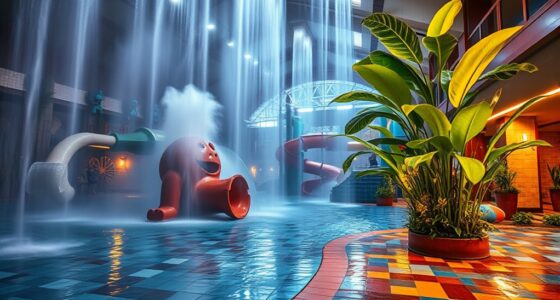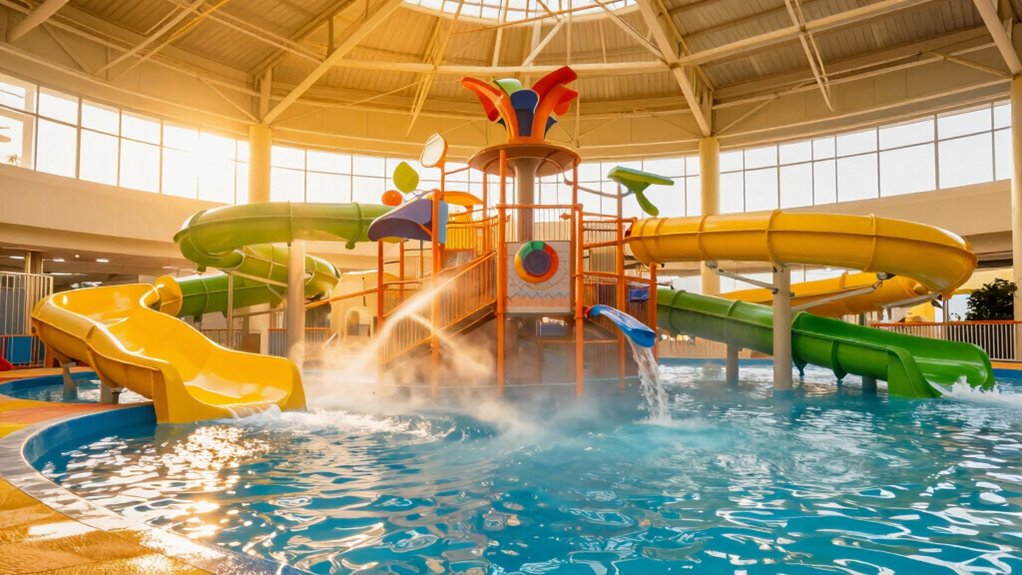

Indoor water parks balance warm air and safe surfaces by using advanced climate control systems that regulate temperature and humidity, preventing excess dampness and fog. They select durable, slip-resistant materials for floors and walls to guarantee safety when surfaces are wet. Ventilation and dehumidification remove excess moisture and contaminants, maintaining a comfortable environment. These efforts keep the air warm and inviting while safeguarding visitors. Keep exploring to discover more about how these features work seamlessly together.

Get pool and patio gear delivered free with Prime
- Fast, free delivery on millions of items
- Prime Video, Amazon Music and more included
- Member-only deals all year
Key Takeaways
- Advanced HVAC systems regulate both temperature and humidity to maintain a warm, comfortable environment while preventing excess moisture.
- Specialized surface materials like non-slip tiles and textured coatings ensure safety despite high humidity and wet conditions.
- Continuous monitoring and adjusting of humidity levels prevent condensation and structural issues, balancing warmth and safety.
- Proper ventilation and dehumidification remove excess moisture, reducing fogging and maintaining clear, safe surfaces.
- Regular maintenance and surface treatments enhance hygiene, reduce slipperiness, and ensure safety in humid indoor environments.
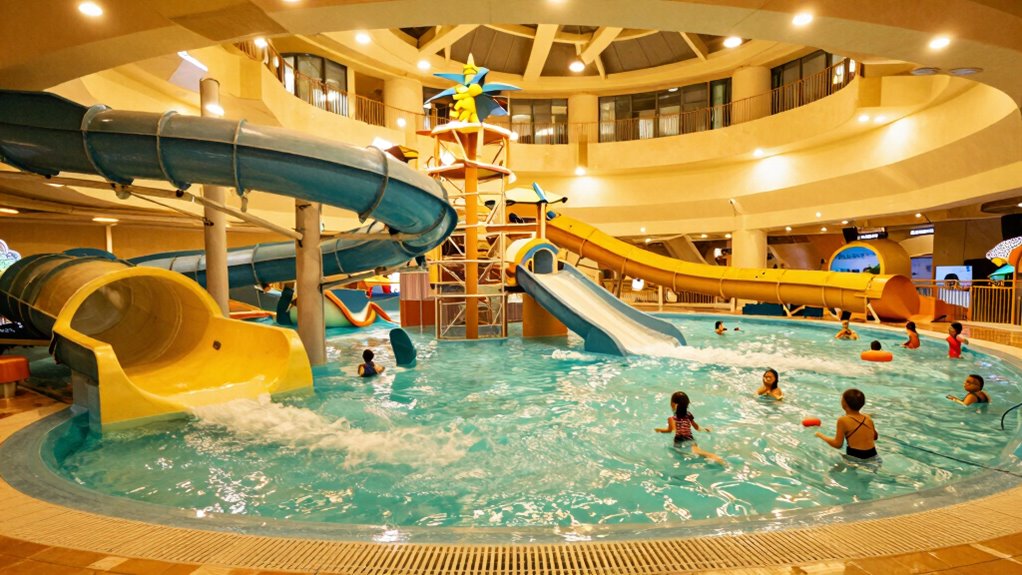
Have you ever wondered how indoor water parks manage to keep the environment both warm and safe? It’s a delicate balancing act that involves careful control of humidity and strategic choices of surface materials. When you step into an indoor water park, the warm air envelops you, but behind the scenes, sophisticated systems work tirelessly to prevent moisture from turning the environment into a safety hazard. Humidity control is essential—by maintaining ideal moisture levels, the park prevents excessive dampness that could cause surfaces to become slippery or mold to develop. Specialized dehumidification systems remove excess moisture from the air, ensuring the environment remains comfortable for visitors while also protecting the structural integrity of the facility. Proper humidity regulation is critical for maintaining a safe and enjoyable atmosphere. Additionally, monitoring and adjusting humidity levels helps to prevent condensation that can lead to dangerous surfaces and structural issues. Advanced climate control systems are often employed to fine-tune these conditions, making sure the environment remains stable and safe. Surface materials play a key role in safety and maintenance. The flooring and wall surfaces are selected with durability and slip resistance in mind. Non-slip tiles, textured concrete, and rubberized mats are common choices because they provide traction even when wet. These materials are designed to withstand constant exposure to moisture without degrading or becoming hazardous. You might notice that the walkways around pools are often made of materials that are easy to clean and resistant to mold and mildew. This prevents buildup of bacteria and keeps the environment hygienic, which is indispensable for your safety and health. Additionally, these surfaces are often treated or coated with substances that reduce slipperiness, especially when wet. The use of moisture-resistant materials further enhances safety and ease of maintenance in these humid environments. The HVAC systems in indoor water parks are engineered to regulate temperature and humidity simultaneously. They work together to circulate air, control moisture, and prevent condensation on surfaces. Proper ventilation not only keeps the air comfortable but also reduces humidity levels that could lead to fogging or dampness on surfaces. When humidity is well-managed, you won’t feel the air heavy or sticky, and the floors won’t be slick with water droplets or condensation. In fact, advances in dehumidification technology have significantly improved the ability to maintain optimal indoor conditions in these environments. This meticulous regulation creates a safe environment where you can enjoy the water attractions without worry. Furthermore, effective ventilation systems also help to remove airborne contaminants, contributing to a healthier indoor atmosphere.
non-slip waterproof tiles for indoor pools
As an affiliate, we earn on qualifying purchases.
As an affiliate, we earn on qualifying purchases.
Frequently Asked Questions
How Do Water Parks Prevent Mold Growth on Surfaces?
You prevent mold growth on surfaces by applying effective surface treatments that inhibit mold spores. Regular cleaning with mold-preventive solutions, proper ventilation, and controlling humidity levels are essential. Ensuring surfaces stay dry and well-maintained also helps reduce mold risk. By consistently using these mold prevention techniques, you keep water park surfaces safe, clean, and free from mold, ensuring a pleasant experience for everyone while maintaining safety standards.
What Are the Energy Costs of Maintaining Warm Indoor Air?
A stitch in time saves nine, and managing warm indoor air at water parks costs energy. You’ll find that energy efficiency plays a key role here, with advanced ventilation systems helping reduce costs. These systems regulate humidity and temperature, preventing heat loss and excess energy use. While maintaining warmth does have expenses, efficient design minimizes energy costs, making it sustainable and safe for visitors and staff alike.
How Often Are Safety Surface Materials Replaced or Inspected?
You should inspect safety surface materials regularly, typically weekly, to guarantee surface durability and safety. Replacement frequency depends on material longevity, usage, and exposure to water and chemicals. High-traffic areas or worn-out patches need prompt attention, often annually or sooner. Routine inspections help identify cracks, tears, or deterioration, allowing timely repairs that maintain safety standards and prolong the lifespan of the surfaces, keeping visitors safe and minimizing liability.
What Temperature Ranges Are Considered Safe for Indoor Water Parks?
You’re in a giant, steaming paradise where water temperatures stay between 82-86°F, ensuring comfort without risking burns or chills. Indoor climate control and water temperature management work together like a well-oiled machine, keeping the environment safe and inviting. Temperatures outside this range could turn the fun into a hazard, so staff constantly monitor to keep it perfect. Your safety depends on these precise, carefully maintained temperature ranges.
How Do Water Parks Manage Humidity Levels Effectively?
You manage humidity in indoor water parks by using advanced dehumidification systems that remove excess moisture from the air. Proper air circulation ensures even distribution of dry air, preventing mold and mildew. You also strategically place vents and exhaust fans to maintain ideal humidity levels. Regular maintenance of these systems keeps the environment comfortable and safe, allowing guests to enjoy the water park without discomfort or health concerns related to high humidity.
dehumidifier for indoor water parks
As an affiliate, we earn on qualifying purchases.
As an affiliate, we earn on qualifying purchases.
Conclusion
So, next time you’re reveling in that perfect blend of warm air and safe surfaces, remember: it’s all a delicate dance behind the scenes. While it feels like pure magic, it’s actually a careful balancing act to keep you comfortable and safe. Ironically, what seems like effortless fun is the result of countless tiny adjustments. So, enjoy the thrill, knowing that behind the scenes, experts are working tirelessly—so you don’t have to sweat the safety or the chill.
HVAC system for humidity control
As an affiliate, we earn on qualifying purchases.
As an affiliate, we earn on qualifying purchases.
moisture-resistant wall coatings
As an affiliate, we earn on qualifying purchases.
As an affiliate, we earn on qualifying purchases.
Halloween Picks
halloween
As an affiliate, we earn on qualifying purchases.