Choosing between saltwater and chlorine pools depends on your priorities. Saltwater pools offer a softer, silkier feel with fewer irritants, making swimming more comfortable and gentle on your skin and eyes. They tend to have lower ongoing chemical costs, but initial setup is more expensive. Chlorine pools are cheaper upfront and easier to maintain but can cause more irritation and harsher water. To explore these options further, consider how each fits your budget and comfort preferences.
Key Takeaways
- Saltwater pools provide softer, gentler water with less skin and eye irritation compared to traditional chlorine pools.
- They generate chlorine naturally, reducing chemical handling and maintaining more stable water chemistry.
- Initial setup for saltwater pools is higher, but they often have lower ongoing chemical costs and easier maintenance.
- Saltwater pools tend to cause less hair damage and dryness, improving overall swimming comfort.
- Operating costs for saltwater pools include higher electricity expenses due to salt generators, while chemical expenses are lower.

XtremepowerUS Saltwater Pool Chlorine Generator Salt Water Up to 40,000 Gallons Pools Chlorinator Flow Switch 40K Salt Chlorine w/Cleaning Stand
Effortlessly Sanitized Your Swimming Pool – Our salt water generator will eliminate the need to physically add chlorine…
As an affiliate, we earn on qualifying purchases.
As an affiliate, we earn on qualifying purchases.
Water Quality and Comfort Considerations

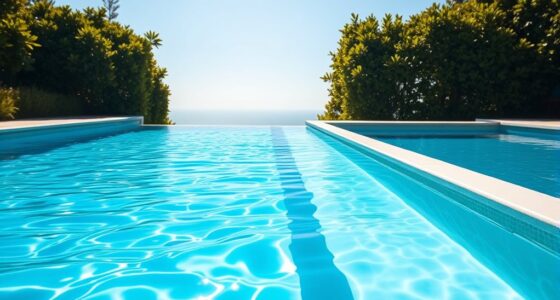
When choosing between saltwater and chlorine pools, water quality and comfort are key factors to contemplate. Saltwater pools offer a softer, silkier water feel that’s gentler on your skin, making swimming more comfortable. The lower chlorine levels produce fewer chloramines, reducing eye and skin irritation and eliminating the strong chemical smell common in traditional pools. In contrast, chlorine pools typically have higher chlorine concentrations, which can leave your skin feeling dry, cause red eyes, and damage hair. Saltwater pools maintain a salinity similar to human tears, providing a mild, pleasant experience without a salty taste. Overall, saltwater pools tend to feel more soothing and less harsh, making your swimming experience more enjoyable and skin-friendly. Additionally, saltwater pools generate chlorine naturally, which means less handling of harsh chemicals and a cleaner swimming environment. This natural chlorination process also helps maintain more stable water chemistry, reducing the need for frequent chemical adjustments.

In The Swim Opening Kit and Chlorine Bundle – Pre-Measured Opening Kit for Easy Use – 5 Pound Bucket of 3-Inch Stabilized Chlorine Tablets – Inground and Above Ground Pools Up to 7,500 Gallons
Save time and eliminate the guesswork with our pre-measured pool opening kits, ensuring a hassle-free start to your…
As an affiliate, we earn on qualifying purchases.
As an affiliate, we earn on qualifying purchases.
Maintenance, Installation, and Operating Costs
Installing a saltwater pool typically costs more upfront due to specialized equipment like the salt-chlorine generator, which can range from $1,700 to $2,500. The total cost for in-ground saltwater pools averages between $29,000 and $100,000, while above-ground models are $3,000–$8,000. Traditional chlorine pools are initially cheaper, costing $1,600–$7,500 for above-ground and $25,000–$100,000 for in-ground options. Maintenance costs differ markedly:
| Cost Aspect | Saltwater Pool | Chlorine Pool | Notes |
|---|---|---|---|
| Chemical Costs | $70–$100 annually | $300–$800 annually | Salt vs. chlorine chemicals |
| Operating Expenses | Higher electricity, $36–$48/year | Lower energy, mainly pump costs | Salt generator consumes power |
| Equipment Replacement | Salt cell every 3–7 years, <$1,000 | No major replacement needed | Ongoing equipment costs |
Additionally, saltwater pools often require less frequent chemical adjustments, making them more convenient for regular upkeep.

HOUSOUTION Salt Water Pool Chlorinator System, Salt Chlorine Generator with Smart App Control, Saltwater Pool System, Chlorinator for Inground Pool, Salt Cell for Pool, Up to 40,000 Gallon Pool
【Brand New Design】Revolutionary compact design allows this salt water pool chlorinator system incredibly easy DIY installation
As an affiliate, we earn on qualifying purchases.
As an affiliate, we earn on qualifying purchases.
Frequently Asked Questions
Can Saltwater Pools Help Reduce Allergies or Asthma Symptoms?
Saltwater pools can help reduce allergies or asthma symptoms because they use less chlorine, which often irritates airways. You might notice less eye and skin irritation, making swimming more comfortable. While there’s no definitive proof that saltwater pools directly lessen asthma, many find them gentler, especially indoors. To minimize risks, guarantee good ventilation, and consider talking to your healthcare provider to see if saltwater swimming suits you.
How Does Salt Affect Pool Landscaping and Surrounding Vegetation?
Salt can be a wolf in sheep’s clothing for your landscaping. It slowly accumulates in the soil, dehydrating plants, upsetting nutrient balance, and causing long-term damage. You might see wilting or stunted growth if salt splashes onto your vegetation. To keep your garden thriving, rinse plants with fresh water regularly, choose salt-tolerant plants, and monitor soil health. Proper management guarantees your landscape stays lush and healthy despite salt exposure.
Are There Specific Health Conditions That Benefit More From Saltwater Pools?
You’ll find that individuals with skin conditions like eczema, psoriasis, and dermatitis benefit more from saltwater pools because saltwater helps hydrate skin, reduce inflammation, and promotes healing. People with respiratory issues such as asthma or COPD also gain relief, as saltwater pools produce fewer irritants and support better breathing. Additionally, those with joint pain or arthritis often experience less soreness and improved mobility thanks to the natural muscle relaxation and buoyancy.
What Are the Environmental Impacts of Salt Discharge From Pools?
Think salt discharge is just a splash of flavor? Think again! It harms aquatic life, poisons waterways, and disrupts ecosystems. When you dump salty pool water into storm drains or streams, you’re risking fish, plants, and water quality. Instead, dechlorinate and drain into sanitary sewers or landscaped areas responsibly. Remember, your pool’s salt might be the environment’s poison if not disposed of properly—so don’t be that person!
Can Saltwater Systems Be Used in Above-Ground or Small Pools?
Yes, you can use saltwater systems in above-ground or small pools if they’re compatible. Check that your pool’s materials withstand corrosion, especially if it’s metal. Use resin or corrosion-resistant parts, and consider retrofit kits designed for above-ground pools. Install a saltwater generator, add the right amount of salt, and verify your filtration system works with it. Maintenance is simpler, with softer water, but monitor salt levels regularly to prevent damage.

Clorox® Pool&Spa™ Shock Clear, for Crystal Clear Swimming Pool Water, Swim-ready in 15 minutes, Suitable for vinyl pools (6-Pack)
4 in 1 Formula: Kills bacteria and won’t impact pH. Clears cloudy water. Destroys contaminants. Improves filter performance
As an affiliate, we earn on qualifying purchases.
As an affiliate, we earn on qualifying purchases.
Conclusion
Choosing between saltwater and chlorine pools depends on what matters most to you—whether it’s comfort, cost, or maintenance. Did you know that saltwater pools can be up to 75% softer on your skin and eyes? That’s a huge plus for your comfort. Consider your budget and lifestyle, then weigh the pros and cons carefully. Whichever you pick, a clean, inviting pool is just a decision away, making your backyard the perfect retreat.