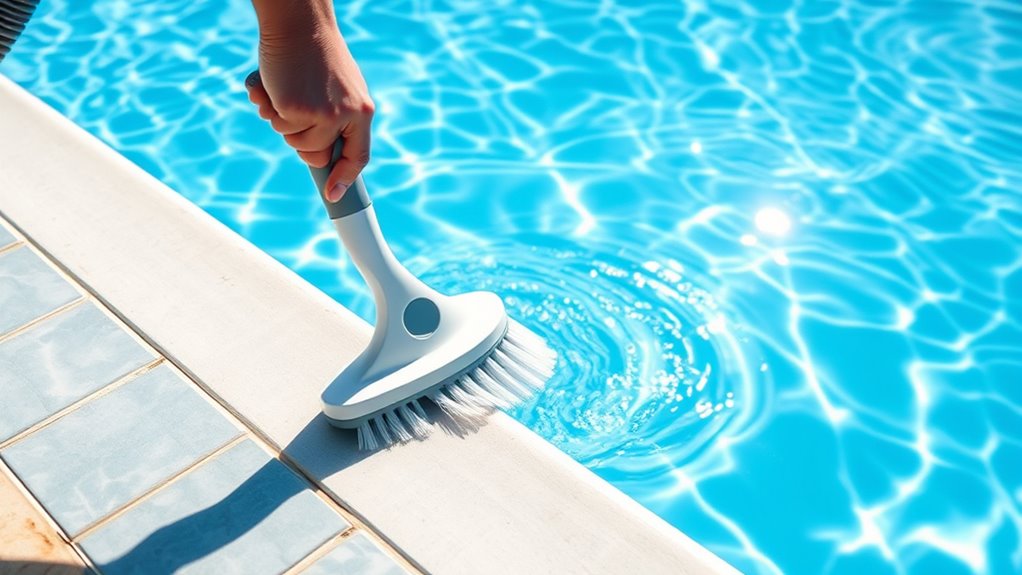

To brush and vacuum your pool effectively, start by using the right brushes for your surface, applying steady pressure and overlapping strokes to cover all areas, especially corners and steps. Make certain your water level stays at least halfway up the skimmer. Connect your vacuum properly, prime the hose to remove air, and maintain consistent pressure while cleaning. Regular maintenance of equipment, along with proper techniques, keeps your pool sparkling—continue to explore steps to optimize your cleaning routine.
Key Takeaways
- Use appropriate brushes for your pool surface, replacing damaged tools to prevent surface damage and ensure effective cleaning.
- Brush from top to bottom, overlapping strokes, focusing on corners, steps, and hard-to-reach areas for thorough coverage.
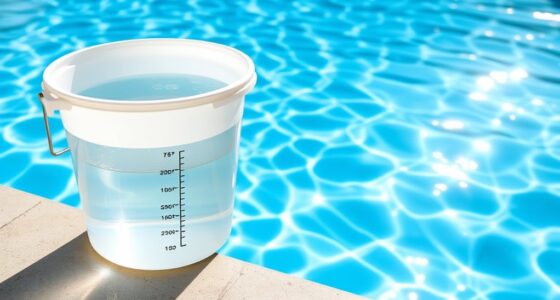
- Ensure pool water level is at least halfway up the skimmer opening before vacuuming to maintain proper suction.
- Prime the vacuum hose by submerging it fully in water to eliminate air pockets and achieve optimal suction.
- Regularly inspect and maintain equipment, including pumps and filters, to prevent issues and prolong the lifespan of your pool cleaning tools.
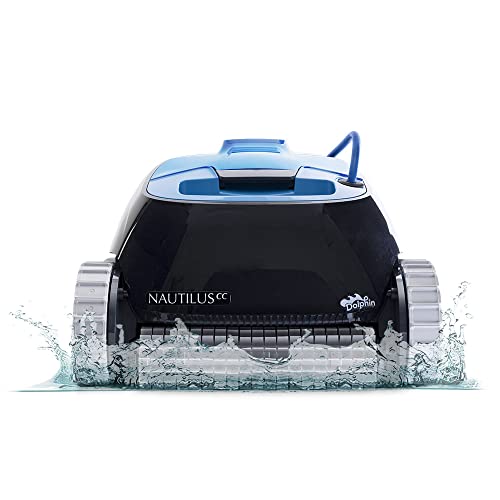
Dolphin Nautilus CC Automatic Robotic Pool Vacuum Cleaner, Wall Climbing Scrubber Brush, Top Load Filter Access, Ideal for Above/In-Ground Pools up to 33 FT in Length
WALL-SCRUBBING POWER: Dolphin Nautilus CC climbs walls efficiently, ensuring thorough cleaning on any pool surface, no matter the...
As an affiliate, we earn on qualifying purchases.
Essential Pool Brushing Techniques

Have you ever wondered how to effectively keep your pool clean and spotless? The key is mastering essential brushing techniques. Start by applying firm, steady pressure on the walls and floor, adjusting your force based on surface type to avoid damage. Use a systematic approach: brush from the top of the walls downward, then move to the pool floor, working from the shallow end toward the deep end. Overlap your strokes to ensure no spots are missed, and focus on hard-to-reach areas like steps, corners, and around ladders. Use a telescopic pole for high walls and deep corners, maintaining control throughout. Remember to push debris toward the main drain or skimmers, preventing cloudiness. Regular brushing disrupts algae growth, which helps maintain water clarity and reduces the need for chemical treatments. Incorporating proper pool maintenance techniques can further enhance cleanliness and water quality. Proper technique guarantees thorough cleaning, reduces algae buildup, and extends your pool’s lifespan.

Cordless Robotic Pool Vacuum, Pool Cleaner with Track Drive & Sonar Navigation, 180W Brushless Motor, Wall & Waterline Climbing, 150-Min Runtime, for Inground Above-Ground 2150 Sq. Ft. (Dark Blue)
【Precision Mobility with Caterpillar Tread Design】 Engineered with industrial-grade caterpillar treads, the robotic pool vacuum delivers exceptional traction...
As an affiliate, we earn on qualifying purchases.
Effective Pool Vacuuming Procedures
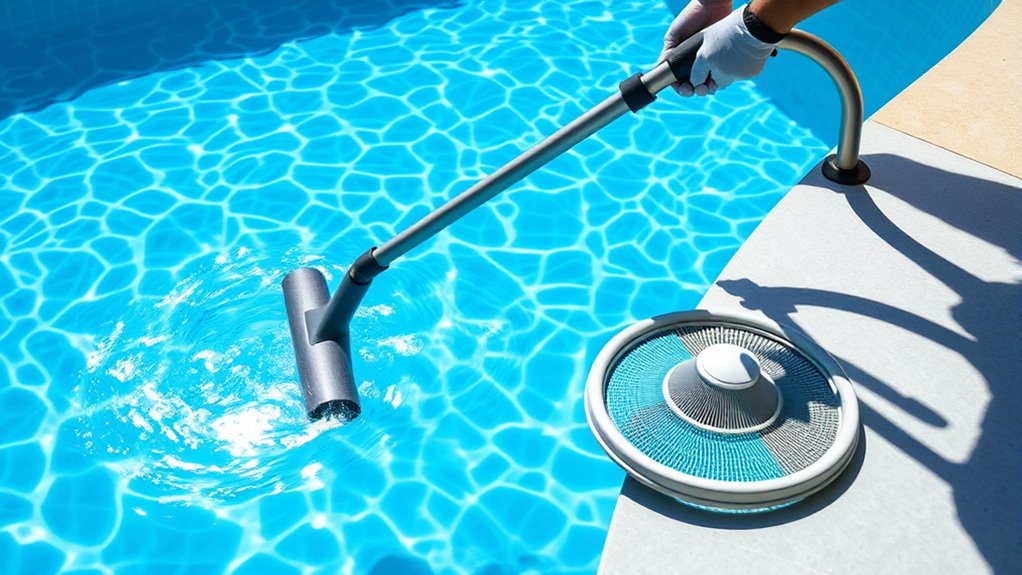
To guarantee thorough cleaning, you need to follow an effective pool vacuuming procedure that begins with proper preparation. First, ensure the water level is high enough to fully submerge the vacuum hose—ideally, at least halfway up the skimmer opening. Attach the vacuum head to the telescopic pole and connect the hose securely, then fully submerge the hose to expel trapped air. Prime the hose by feeding it into the water until water exits the other end, preventing air pockets that could break suction. Insert the vacuum plate into the skimmer or connect directly if needed. Adjust the pool valve settings to maximize suction at the vacuum intake. Proper preparation guarantees optimal suction, smooth operation, and efficient debris removal, setting the stage for effective vacuuming. Additionally, checking the pool’s water chemistry before vacuuming can help ensure the water remains clear and balanced during and after cleaning. Regular maintenance, including Glycolic Acid treatments, can support overall water quality, making your vacuuming efforts more effective.
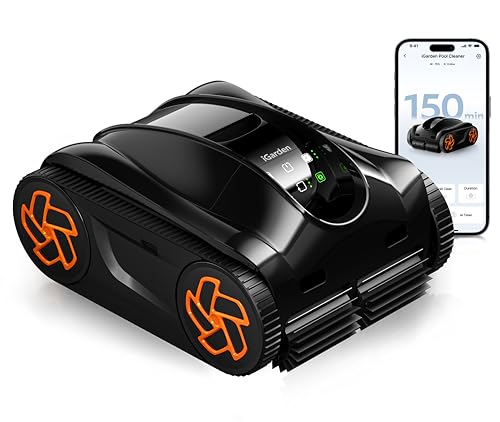
iGarden Robotic Pool Cleaner K Series, Cordless Pool Vacuum Robot for Inground & Above Ground Pools, Smart Navigation, Touchscreen, Self-Parking, Cleans Floor, Wall & Waterline, 150 Min
Robust Cleaning Capability: Engineered with a turbine-grade impeller, an optimized flow system, and 3 brushless motors, the cordless...
As an affiliate, we earn on qualifying purchases.
Choosing the Appropriate Equipment
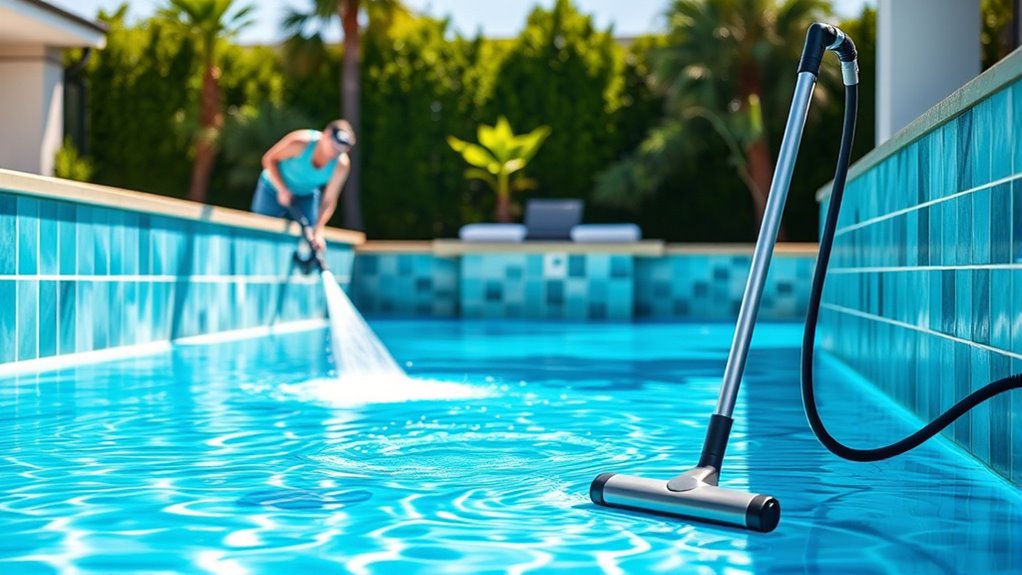
Choosing the right equipment depends on your pool’s surface, size, and debris load. You’ll need to select a vacuum size that fits your pool’s dimensions and cleaning needs. Additionally, regular tool maintenance guarantees your equipment stays effective and lasts longer. Incorporating proper maintenance techniques can significantly extend the lifespan of your cleaning tools.
Surface Compatibility Matters
Selecting the right cleaning equipment depends on your pool’s surface material, as each type reacts differently to brushes and vacuum tools. For concrete or plaster surfaces, use sturdy steel brushes to scrub away algae and stubborn debris, since these porous surfaces absorb grime easily. Fiberglass pools have gel-coat finishes that are sensitive to abrasives, so opt for soft sponges or fabric pads to prevent scratches. Tile or stone surfaces are nonporous and resistant to algae, allowing for gentler brushes and cleaning agents. Vacuum heads should match the surface’s delicacy: soft brushes for fiberglass and non-abrasive tools for tile. Always choose equipment tailored to your pool’s material to ensure effective cleaning without damaging the surface. Proper maintenance also involves understanding surface compatibility, which helps prevent damage and prolongs the life of your pool’s finish.
Vacuum Size Selection
The size of your pool plays a crucial role in determining the right vacuum equipment, as larger pools demand vacuums with greater debris capacity and stronger suction power to clean efficiently. For small pools under 10,000 gallons, compact or manual vacuums with basic filtration work well. Medium pools (10,000–20,000 gallons) benefit from mid-range robotic or pressure-side models. Large pools over 20,000 gallons require high-capacity robotic or pressure-side vacuums with debris baskets holding 2–4 liters for fewer interruptions. Use the table below to match pool size with vacuum type:
| Pool Size | Recommended Vacuum Type | Debris Capacity |
|---|---|---|
| Under 10,000 gallons | Manual or basic suction-side | Small, basic filtration |
| 10,000–20,000 gallons | Mid-range robotic or pressure-side | Moderate debris capacity |
| Over 20,000 gallons | High-capacity robotic or pressure-side | Large debris baskets, fewer emptying |
Additionally, selecting the right vacuum can improve cleaning efficiency and reduce maintenance time.
Tool Maintenance Essentials
To guarantee your pool remains clean and well-maintained, it’s essential to use the right equipment and keep it in top condition. Choose brushes with nylon bristles for vinyl pools to prevent surface damage, and stainless steel for concrete or plaster pools to remove algae effectively. Use adjustable telescopic poles to reach different depths easily. Select vacuum heads suited to your pool surface to maximize debris removal without scratches. Regularly clean and inspect your tools—rinsing brushes after use and checking hoses for cracks or kinks. Store equipment in dry, shaded areas to prevent deterioration. Lubricate pump O-rings monthly to maintain seals, and replace worn parts promptly. Proper maintenance guarantees your tools work efficiently and last longer, making your pool cleaning routine more effective. Routine maintenance practices and Regular inspection and cleaning of skimmer and pump baskets help prevent debris buildup and ensure your equipment functions properly, reducing the need for costly repairs.

(2026 Upgraded) WYBOT C2 Cordless Robotic Pool Cleaner, Dual Filtration, Wall Climbing & Waterline Cleaning, App Scheduling, Smart Navigation, Pool Vacuum for Inground/Above Ground Pools-2152 Sq.ft
Dual Filtration System Captures Fine Debris: Featuring dual-layer filtration (180μm + 10μm), the pool cleaner robot efficiently traps...
As an affiliate, we earn on qualifying purchases.
Step-by-Step Guide to Brushing Your Pool
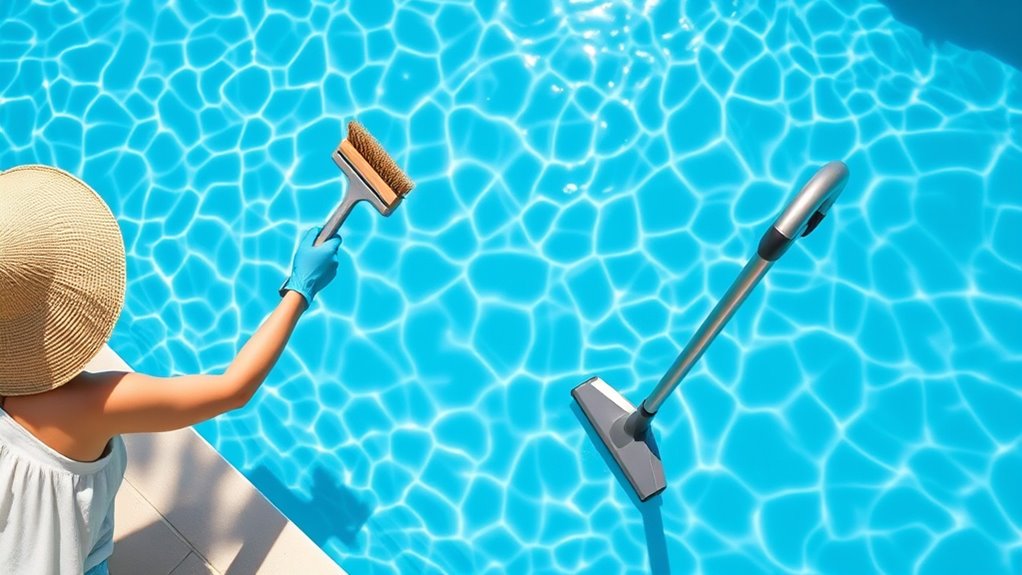
Before you start brushing, gather all your equipment and make certain it’s in good condition. Use proper brushing techniques to cover every surface thoroughly, paying close attention to corners and hard-to-reach spots. Once finished, rinse your tools and store them properly to keep them in top shape for next time. Regularly inspecting and maintaining your tools ensures they remain effective and prolong their lifespan. Additionally, using the appropriate vacuum cleaner attachments can enhance cleaning efficiency and help reach difficult areas more easily.
Prepare Your Equipment
Gather your essential brushing tools first to guarantee a smooth cleaning process. Use a sturdy telescopic pole compatible with different brush types for easy reach. Choose a pool brush with suitable bristles: nylon for general cleaning or stainless steel/brass for tougher surfaces. Keep a leaf skimmer net handy to remove large debris before and during brushing. Have a pool vacuum ready, whether manual or automatic, for immediate cleaning afterward. Inspect your tools by checking bristles for wear, brittleness, or corrosion, replacing damaged brushes as needed. Confirm the telescopic pole locks securely at your preferred length. Clean all equipment after use to prevent deterioration, and store them in a dry, shaded area. Proper preparation ensures efficient brushing and extends your tools’ lifespan. Additionally, regularly maintain your equipment to ensure optimal performance and longevity.
Brush Methodically and Thoroughly
Starting at the shallow end walls, brush from the waterline downward to remove oils, grime, and algae that tend to accumulate there. Use steady, firm strokes in a top-to-bottom motion, ensuring you cover the entire surface to prevent buildup and staining. Overlap each stroke to avoid missed patches and loosen debris effectively. Pay extra attention to high-contact areas like steps and benches, where dirt often gathers. Keep consistent contact between the brush and the pool surface by pulling slightly on the pole for firm pressure. Then, extend your pole to brush the floor, moving systematically from shallow to deep end. Use firm, sweeping motions to push debris toward drains or skimmers, covering corners and edges thoroughly for a clean, well-maintained pool. Incorporate proper cleaning techniques, such as consistent motion and thorough coverage, to ensure your pool stays pristine.
Rinse and Store Properly
After you finish brushing your pool, it’s essential to rinse your brushes thoroughly with clean water. Use a hose with a spray nozzle to flush out all trapped dirt, debris, and chemicals from the bristles. Make sure to rinse specialty brushes separately, like those for ladders or corners, to prevent cross-contamination. Avoid leaving brushes wet and dirty; instead, dry them properly before storage. Store brushes in a dry, shaded area, hanging them off the ground to maintain bristle shape and prevent deformation. Check for wear regularly and replace damaged brushes. Confirm handles and attachments are clean and dry to avoid rust. Proper rinsing and storage extend your tools’ lifespan and keep your pool maintenance hygienic and effective. Proper storage practices help prevent bacterial growth and ensure your tools are ready for the next cleaning session. Additionally, inspecting your brushes for wear and tear regularly can help identify when replacements are needed to maintain effective cleaning.
Step-by-Step Guide to Vacuuming Your Pool
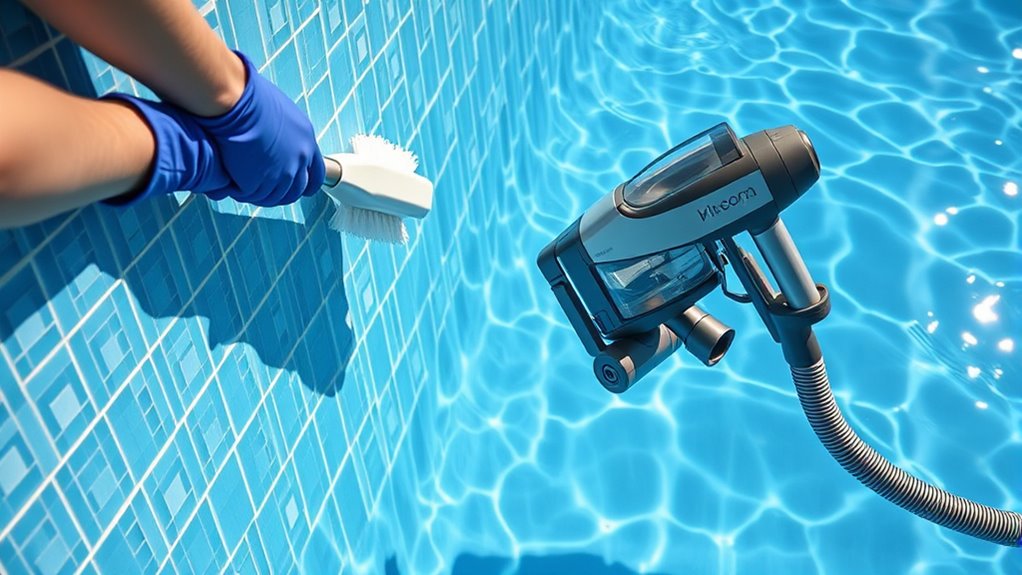
Vacuuming your pool effectively begins with proper equipment setup and preparation. Attach the vacuum head to your telescopic pole for easy maneuvering, then connect the vacuum hose securely to prevent air leaks that can weaken suction. Submerge the hose fully in water to remove all air, holding the free end below the water surface until bubbles stop, ensuring a complete fill. Connect the hose to the skimmer with a vacuum plate or adapter, keeping the skimmer basket in place to catch large debris. For above-ground pools, insert the hose directly on the vacuum plate after removing the skimmer cover. Throughout, keep the vacuum head underwater and maintain steady pressure to prevent air from entering the system, ensuring ideal suction and debris removal. Regularly check the pool equipment for proper functioning to maintain optimal cleaning performance.
Maintaining Your Pool Equipment and Troubleshooting
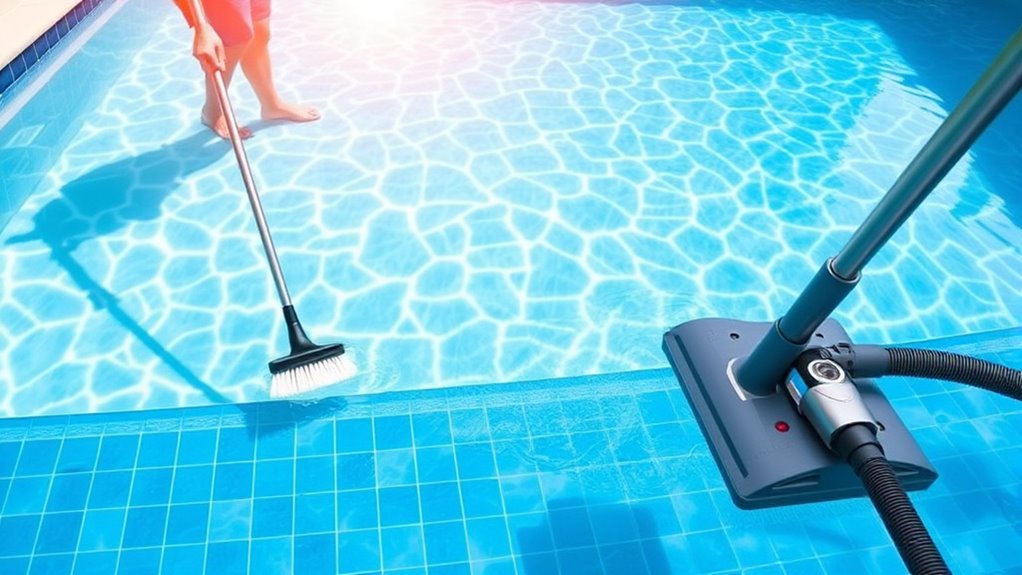
Regular maintenance and prompt troubleshooting are essential to keep your pool equipment running smoothly and guarantee crystal-clear water. You should inspect your pump weekly for leaks, broken seals, or unusual sounds to catch issues early. Clean the pump basket regularly to prevent debris buildup, which can restrict water flow. Lubricate the pump lid O-rings and ensure the lid is tight for peak operation. Keep the water level halfway up the skimmer to avoid air intake and pump damage. Additionally, wipe down the pump and sweep the surrounding area weekly to prevent dust clogging vents. Use the following table to guide your maintenance routine:
| Equipment | Maintenance Tips |
|---|---|
| Pump | Inspect, clean basket, lubricate, check water level |
| Filters | Clean, replace, backwash as needed |
| Heater & Chlorinator | Check for leaks, clean components |
| Water Chemistry | Test and adjust regularly |
| Electrical Systems | Inspect connections, verify operation |
Maintaining your pool equipment regularly can help prevent costly repairs and extend the lifespan of your system. Preventative maintenance ensures all components function efficiently and reduces the likelihood of sudden breakdowns, especially by monitoring system performance and addressing issues early.
Frequently Asked Questions
How Often Should I Replace My Pool Vacuum Hose?
You should replace your pool vacuum hose every 3 to 5 years, depending on wear and tear. Keep an eye out for punctures, cracks, kinks, or reduced suction, as these signs indicate it’s time for a new hose. Proper storage, regular rinsing, and gentle handling can extend its lifespan. If your hose shows significant damage or frequent repairs, replacing it guarantees effective cleaning and prevents damage to your pool equipment.
Can I Use a Different Brush for Algae Prevention?
Yes, you can use a different brush for algae prevention, but make sure it’s suitable for your pool surface. Nylon or polypropylene brushes are best for routine algae prevention and mild cleaning, as they won’t damage delicate surfaces. Avoid steel brushes unless you have a concrete or gunite pool and need deep cleaning. Regularly brushing with the right type helps prevent algae buildup and keeps your pool cleaner longer.
What’s the Best Way to Store Pool Cleaning Tools?
If you want your pool tools to last, store them properly. First, clean all tools thoroughly—rinse off salt, dirt, and chemicals—and let them dry completely. Then, choose a cool, dry spot away from sunlight, hanging brushes and nets on hooks to keep them air-rated. Keep metal parts lubricated, and organize everything in labeled racks or storage boxes. Proper storage protects your tools and makes your pool maintenance easier and more efficient.
How Do I Know if My Vacuum Is Working Properly?
You’ll know your vacuum works properly if it picks up debris efficiently without leaving residue, and the vacuum head stays in contact with the pool surface. Watch for consistent water flow with no air bubbles or foam, and make certain there’s no gurgling or splashing sounds. Check for smooth movement, debris collection, and no leaks or damage in hoses or components. If all these signs are positive, your vacuum is functioning correctly.
Are There Eco-Friendly Options for Pool Cleaning Equipment?
Yes, there are eco-friendly options for pool cleaning equipment. You can choose robotic cleaners like the Dolphin Nautilus CC Plus, which use smart navigation and dual scrubbing brushes to clean efficiently with less energy. Solar-powered skimmers and pumps, like Beatbot iSkim Ultra and advanced variable-speed pumps, reduce electricity use. Additionally, biodegradable cleaning agents and mineral-based solutions help cut chemical consumption, making your pool maintenance more sustainable.
Conclusion
With the right brushing and vacuuming techniques, your pool becomes a sparkling oasis that beckons you to plunge in. Think of your cleaning routine as a gentle dance—each stroke and sweep restoring its crystal-clear beauty. When you keep your equipment in top shape and troubleshoot promptly, you’re the maestro of a flawless symphony. So, roll up your sleeves and turn your pool into a shimmering paradise, inviting you to relax and enjoy every invigorating moment.