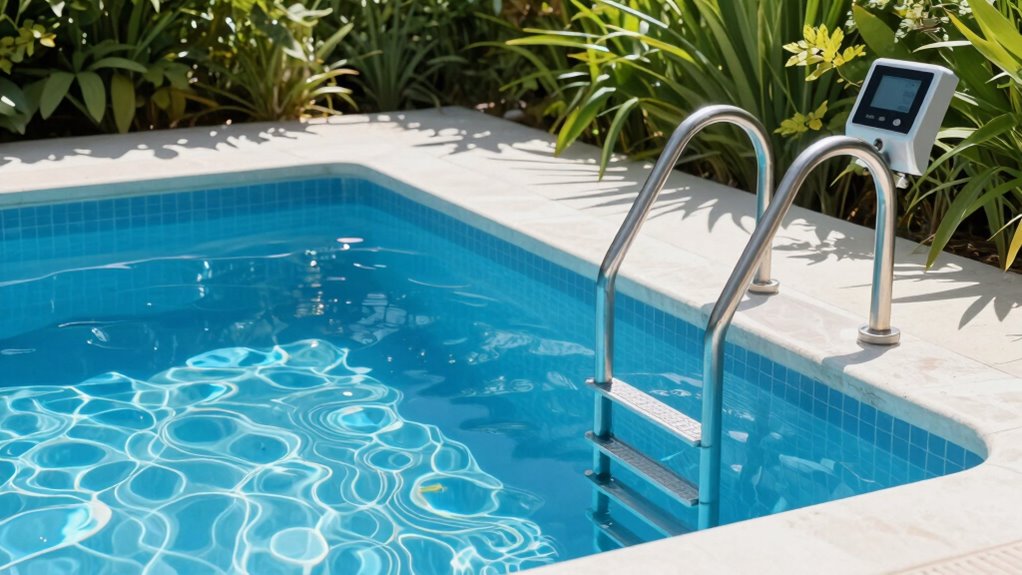

Daily, you need to check and adjust your saltwater pool’s chemical levels, especially pH, alkalinity, and stabilizer, to keep water clear and prevent equipment damage. You should also monitor salt levels and clean the salt cell regularly to guarantee consistent chlorine production. Keep an eye on water levels and ensure proper circulation and filtration. Staying on top of these tasks prolongs your system’s life and maintains ideal water quality—more details await if you keep exploring.
Key Takeaways
- Daily testing of pH, alkalinity, and sanitizer levels ensures proper chemical balance.
- Regularly check and top off salt levels to maintain system efficiency.
- Clean the salt cell to prevent mineral buildup and algae accumulation.
- Inspect and adjust water levels to ensure proper salt cell operation.
- Maintain clean filters and circulation systems for optimal water clarity and equipment health.
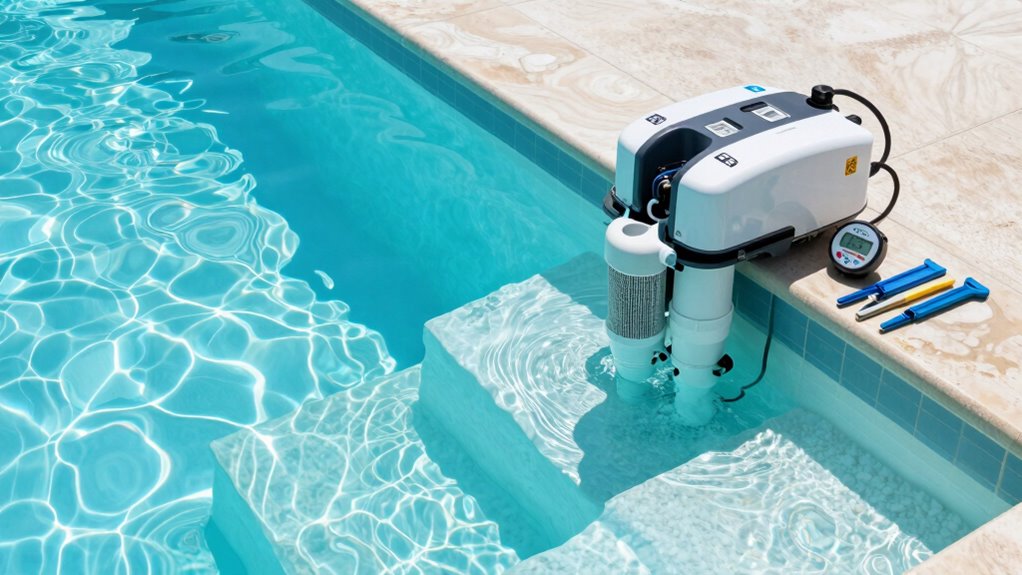
Are saltwater pool systems worth the effort? If you’re considering one, you’ll find that they do change your daily maintenance routine in several ways. Unlike traditional chlorine pools, saltwater systems produce chlorine automatically through a salt cell, which simplifies chemical management but doesn’t eliminate it. You still need to keep an eye on your pool’s chemical balance, especially pH levels, alkalinity, and stabilizer levels. When these aren’t properly maintained, your water can become cloudy, and the equipment may suffer. Maintaining proper pool chemical balance becomes even more essential with saltwater pools because imbalances can lead to corrosion or scaling, jeopardizing equipment durability over time. Regular testing becomes your best friend—aim for daily checks, especially during peak usage or hot weather when chemical levels tend to fluctuate more rapidly.
The equipment in saltwater pools is built to withstand the specific environment created by the salt generator, but consistent maintenance is key to prolonging its lifespan. Salt can be corrosive, especially if the chemical balance isn’t maintained properly, so you need to monitor salt levels regularly and top off as needed. This not only helps keep the salt cell functioning efficiently but also prevents damage to other pool components. Proper filtration and circulation remain indispensable, as they keep water clear and prevent buildup of debris that could interfere with your salt system. Keep your pump and filter clean and functioning well, because their durability directly impacts your pool’s overall health and your maintenance effort.
Daily maintenance in a saltwater pool also involves keeping the salt chlorine generator clean. Over time, mineral deposits and algae can accumulate on the cell plates, reducing efficiency. Regularly inspecting and cleaning the salt cell, according to the manufacturer’s instructions, ensures consistent chlorine production and maintains the health of your pool. This routine task isn’t complicated but is essential for equipment longevity and ideal water quality. Additionally, you should keep an eye on water levels, topping off as necessary, since proper water level ensures the salt cell functions correctly and prevents damage to the pump or other equipment.

Taylor K-2006-SALT FAS-DPD, 9-in-1 Pool & Spa Test Kit, Free & Combined Chlorine, pH, Acid & Base Demand, Total Alkalinity, Calcium Hardness, Cyanuric Acid (CYA), and Chloride (Sodium Chloride).
Reliable Results In Seconds – Everything you need to test your saltwater pool or spa is conveniently packaged…
As an affiliate, we earn on qualifying purchases.
As an affiliate, we earn on qualifying purchases.
Frequently Asked Questions
How Does Saltwater Affect Pool Liner Longevity?
Saltwater can impact your pool liner longevity by accelerating pool liner degradation over time. The salt corrosion effects may weaken the liner, making it more prone to tears or leaks. To prevent this, you should regularly check your pool’s salt levels, maintain proper water chemistry, and inspect the liner for signs of wear. Proper maintenance helps mitigate saltwater’s effects and extends the life of your pool liner.
Are Saltwater Pools Safer for Children and Pets?
Saltwater pools are generally safer for children and pets because they have lower chlorine levels, reducing the risk of irritation and chemical exposure. Saltwater safety means less harsh chemicals, which supports child protection and pet safety. However, you should still supervise kids around the pool and make certain the salt levels are maintained properly. With proper precautions, saltwater pools can provide a safer, more comfortable swimming environment for everyone.
Can Saltwater Systems Be Used With Existing Pool Equipment?
Absolutely, you can use a saltwater system with your existing pool equipment—if you’re willing to embrace the thrill of equipment compatibility adventures. Salt system compatibility varies, so check if your current pump, filter, and chlorinator play nice with a salt generator. Equipment integration might require some upgrades or adjustments, but hey, who doesn’t love a little pool tech puzzle? Just plunge in and enjoy the sweet, salty upgrade!
What Is the Typical Lifespan of a Salt Chlorinator?
A salt chlorinator typically lasts about 3 to 7 years, depending on usage and maintenance. You can prolong its chlorinator lifespan by performing regular salt cell maintenance, such as cleaning the salt cell to prevent buildup. Proper care guarantees efficient chlorine production and minimizes premature replacement. Keep an eye on the chlorinator’s performance, and replace it when it shows signs of decreased effectiveness to maintain a healthy, balanced pool.
Do Saltwater Pools Require Special Cleaning Tools?
Yes, saltwater pools do require special cleaning tools. You’ll want pool cleaning equipment compatible with saltwater, such as brushes and skimmers designed to prevent corrosion. Regularly cleaning your pool’s surfaces and equipment helps maintain water quality and extends their lifespan. Using the right tools guarantees effective cleaning without damaging your system, keeping your saltwater pool in top shape and reducing long-term maintenance costs.

Hayward Automatic Chlorine Feeder, 9lbs, in-Line (incl Mounting Base) (Open Line) CL200EF
X-Ring seal provides long life and easy cover removal
As an affiliate, we earn on qualifying purchases.
As an affiliate, we earn on qualifying purchases.
Conclusion
Think of your saltwater pool as a delicate garden that blooms with care. Each day, you’re the gardener tending to its needs—balancing the water, checking the salt levels, and ensuring the system runs smoothly. With gentle attention, your pool transforms into a serene oasis, inviting you to relax and rejuvenate. Embrace this daily ritual as a loving act of nurturing, and your pool will reward you with endless moments of invigorating bliss.

Salt Cell Cleaner for Saltwater Pools – Pool Salt Cell Cleaner Solution to Help Reduce Buildup and Support Generator Function – AquaDoc Pool Care Made in USA – 2lb
Salt Generator Cleaner – AquaDoc's Salt Cell Cleaner helps reduce mineral and calcium buildup on salt cell plates….
As an affiliate, we earn on qualifying purchases.
As an affiliate, we earn on qualifying purchases.

Risinglink Smart Water Level Monitor, WiFi-Enabled, Text/Email Alerts, Indoor/Outdoor Detector, Battery Powered, Stainless Steel Float Sensor
Easy Setup: Engineered in the USA for reliability and supported by a dedicated US-based team. No hubs, apps,…
As an affiliate, we earn on qualifying purchases.
As an affiliate, we earn on qualifying purchases.