TL;DR

Get pool and patio gear delivered free with Prime
- Fast, free delivery on millions of items
- Prime Video, Amazon Music and more included
- Member-only deals all year
Some homeowners are looking to keep backyard pools open through winter for cold-water swimming, but pool size, heating costs, maintenance and safety all affect whether it is practical. Experts say heating is typically the largest added expense, and cold-water immersion can trigger dangerous physical responses. The source does not provide a complete cost picture or all of its recommendations for safe pool access.
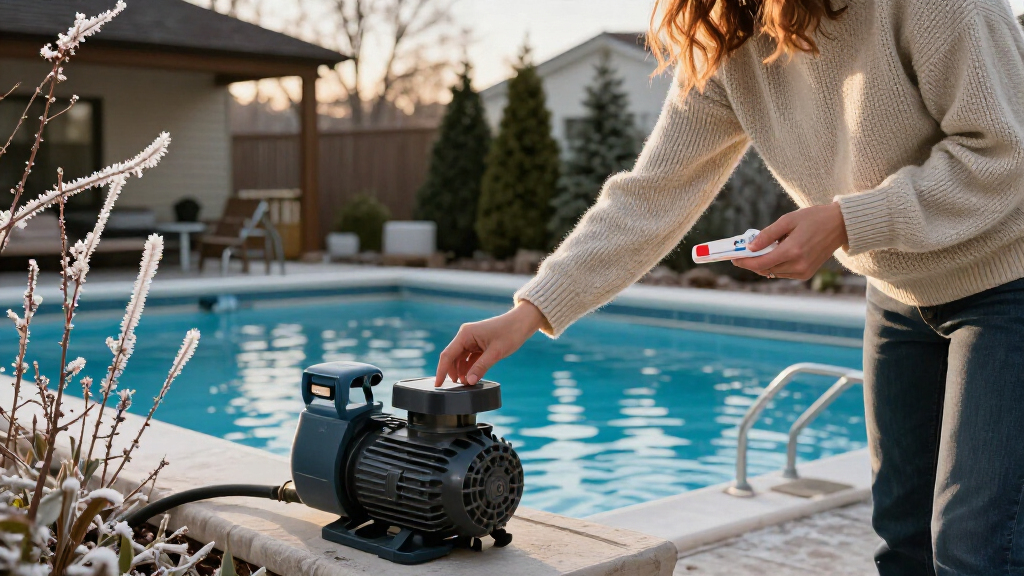
House Beautiful has reported that keeping a backyard pool open for winter swimming can require a suitable heating system, regular maintenance and careful planning for cold-water risks. Pool professionals interviewed by the magazine said heating is the largest winter expense, while pool size, local climate and power reliability also shape whether year-round use is practical.
Jim Eisch Jr., vice president of operations at Pinch A Penny Pool Patio Spa, told House Beautiful that routine maintenance generally remains similar throughout the year, though chemical use may fall depending on how often the pool is used. He identified winter heating as the main additional cost. The magazine reported that cost depends on location, pool size, desired water temperature and heater type.
Eisch offered an estimate for a specific example: a 10,000-gallon pool in Florida. He put annual heating costs at $2,467 with a natural-gas heater, $741 with a traditional heat pump and $434 with a heat/cool pump using inverter technology. These are estimates for that scenario, not a general price guide; the source does not provide the assumptions or a breakdown of energy prices behind the figures.
Pool size can make heating more difficult. Soake Pools cofounder Karen Larson told the magazine that a standard 14-by-28-foot pool can be challenging to cover well enough to retain heat, while smaller cocktail or plunge pools may be more suitable. Larson also recommended a cover and said owners should monitor filtration and water chemistry, prepare for outages and consider a generator to keep the pump running.
Winter Use Brings Added Costs and Risks
Keeping a pool open changes the usual seasonal calculation: owners may avoid closing it, but they take on winter heating costs and must maintain circulation when cold weather or outages threaten the equipment. A cover can help limit heat loss, but the source does not quantify potential savings or say how much a generator or cover would add to the total cost.
Cold-water swimming also carries health and drowning risks. A 2020 review in the International Journal of Environmental Research and Public Health found that sudden immersion can cause involuntary gasping, hyperventilation and a rapid rise in heart rate and blood pressure. Cold can also affect muscle strength and nerve function, which may make it harder to swim safely. These risks matter even for brief swims, particularly when someone is alone.
The source also describes possible wellness benefits, while making clear that these are not a substitute for safety planning. A 2025 systematic review and meta-analysis published in PLOS ONE reported reduced stress for 12 hours after cold-water immersion, along with improvements in sleep quality and quality of life. That research does not establish that every person will experience the same effects or that winter pool swimming is appropriate for everyone.
Products Worth Considering

GoPro Fluid Pro AI 3-Axis Gimbal Stabilizer

Away The Large Flex 29-Inch Expandable Checked Suitcase

Amazon Kindle Paperwhite Signature Edition (12th Generation, 2024), 32 GB, Metallic Black
As an affiliate, we earn on qualifying purchases.
Interest in Cold-Water Swimming
The House Beautiful report frames winter pool use as part of growing interest in cold-water experiences. The American College of Sports Medicine’s 2026 Worldwide Fitness Trends report ranked cold therapies—including cold plunges, cryotherapy and cold showers—17th among fitness trends, compared with 20th in its 2025 report. The ranking reflects a broader fitness trend, not a measure of how many people are keeping swimming pools open.
Larson told the magazine that social media and seeing others swim have helped make winter dips seem more possible to prospective swimmers. She also described the activity as a chance for friends and family to spend time together. Those observations are her account; the supplied report does not provide survey data measuring the number of year-round pool users.
The practical advice in the report is aimed at people considering whether an existing pool can stay open. It highlights heating, pool dimensions, covers, maintenance and outage planning, rather than proposing one solution for every climate or household.
“Ten years ago, most people didn’t think winter swims were possible, especially in colder climates.”
— Karen Larson, cofounder of Soake Pools, as quoted by House Beautiful
Costs and Safety Depend on Conditions
The report’s heating figures apply to a 10,000-gallon pool in Florida; it does not provide comparable estimates for other climates, pool sizes, utility rates or target water temperatures. Actual costs for an individual owner therefore remain uncertain. Nor does the available source material give a complete set of recommendations on safe pool access: it mentions covers, filtration and outage preparation, but its discussion of access ends before all details are available.
The source does not specify one safe winter swimming temperature, a maximum duration for a cold-water swim or a universal acclimation schedule. It says to acclimate gradually and avoid prolonged exposure, and advises people with underlying conditions such as heart disease to consult a doctor. Cold-water responses vary, so the reported wellness findings should not be read as proof that swimming is safe or beneficial for every person.
Check the Pool Before Winter
For homeowners weighing winter use, the report points to a practical first step: assess the pool’s size, local climate, heating system, cover, circulation and backup power before deciding to leave it open. Owners should obtain a cost estimate suited to their own pool and energy rates rather than relying on the Florida example alone.
Anyone who chooses to swim should approach cold water gradually, avoid prolonged exposure and have another person at home, as the report advises. People with heart disease or other underlying health conditions should seek medical advice before cold-water immersion. The source does not announce a new rule or scheduled follow-up; the decision remains specific to each pool and household.
Key Questions
What is the main added cost of keeping a pool open in winter?
According to Jim Eisch Jr., heating is the biggest winter expense. The amount depends on the pool, climate, desired water temperature and heater; the report’s figures are limited to a 10,000-gallon pool in Florida.
Are smaller pools easier to keep open?
Larson told House Beautiful that smaller cocktail and plunge pools may be better candidates because large pools are harder to cover in a way that retains heat. Suitability still depends on the climate and the pool’s heating and maintenance needs.
What maintenance does a winter pool need?
The report says to keep checking filtration and water chemistry and to plan for power outages that could stop the pump. It also notes that chemical use may vary with how frequently the pool is used.
What are the risks of cold-water swimming?
Research cited by the report links sudden cold-water immersion to gasping, hyperventilation and rapid changes in heart rate and blood pressure. Cold may also impair muscle strength and nerve function, increasing difficulty swimming safely. The report advises gradual acclimation, avoiding prolonged exposure and having someone else at home.
Should people with heart conditions swim in cold water?
The report advises people with underlying conditions such as heart disease to consult a doctor before cold-water immersion, which may place additional strain on the heart.
Source: housebeautiful.com