To improve your sprinting, focus on short, intense sets of 25s and 50s with proper rest intervals. Use 6–12 repetitions, varying effort and rest to build power and speed while maintaining form. Concentrate on technique—streamlined position, quick arm recovery, and powerful kicks. Progress gradually by increasing repetitions or intensity, and combine dry-land strength work to boost explosiveness. Keep improving and refining your workout—there’s more to master for faster races.
Key Takeaways
- Incorporate 6–12 repetitions of 25s and 50s sprints with 15–60 seconds rest to boost speed and endurance.
- Focus on technique, maintaining a streamlined body, quick arm recovery, and synchronized kicks during all sprint efforts.
- Use varied set structures like build-ups, descending efforts, or drop sets to challenge and improve sprint performance.
- Progress workouts gradually, increasing repetitions or intensity weekly by about 10%, while monitoring fatigue and form.
- Combine dryland strength training with plyometrics and core exercises to enhance explosive power and transfer gains to the pool.
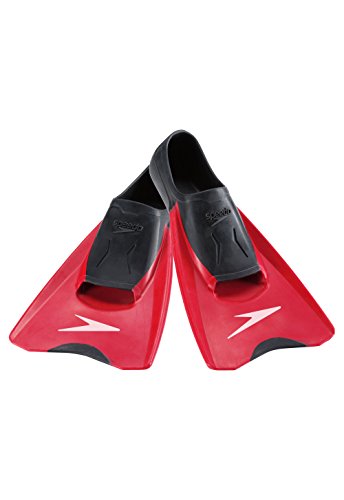
Speedo Unisex-Adult Swim Training Fin Rubber Medium Blade
This innovative rubber fin offers a whole new angle on training
As an affiliate, we earn on qualifying purchases.
As an affiliate, we earn on qualifying purchases.
The Benefits of Sprint Training for Swimmers
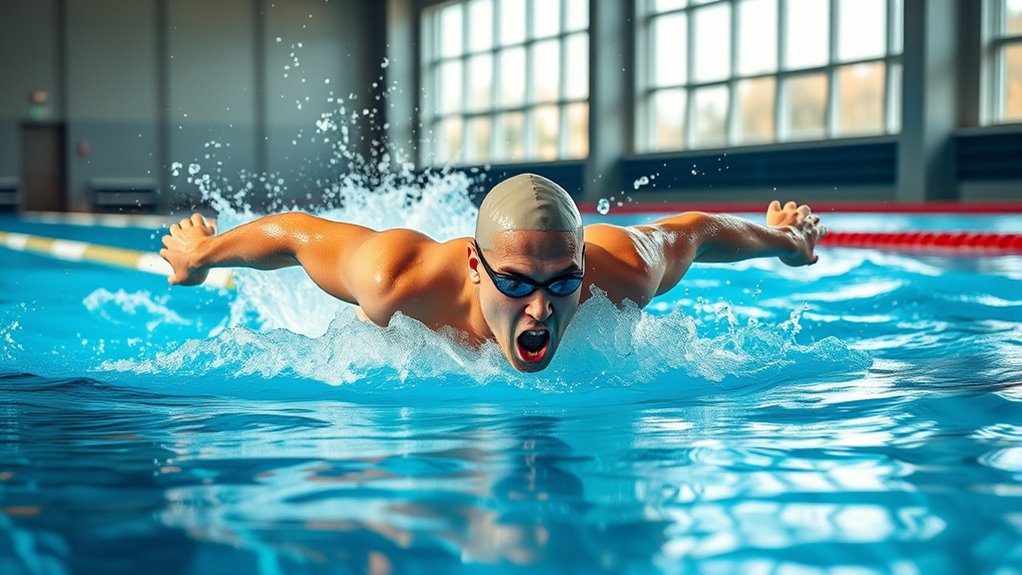
Sprint training offers swimmers a powerful way to boost their explosive power and speed. It focuses on short, maximum-effort efforts with minimal rest, pushing your physical limits. This type of training trains your fast-twitch muscle fibers, increasing how quickly and forcefully your muscles contract, which results in higher propulsion and faster speeds. It also enhances your anaerobic capacity, allowing you to sustain high speeds over short distances and improving your lactic acid tolerance. Additionally, sprint workouts sharpen your technique at high speeds, helping you maintain proper form during intense efforts. Beyond physical benefits, sprint training builds mental toughness, improves reaction times, and boosts confidence. Plus, it promotes faster recovery between efforts, enabling you to handle high-intensity sessions without excessive fatigue or injury. Research shows that incorporating sprint workouts regularly can lead to significant improvements in race times and overall performance. Engaging in proper recovery techniques helps maximize the benefits of sprint training and prevent injuries.
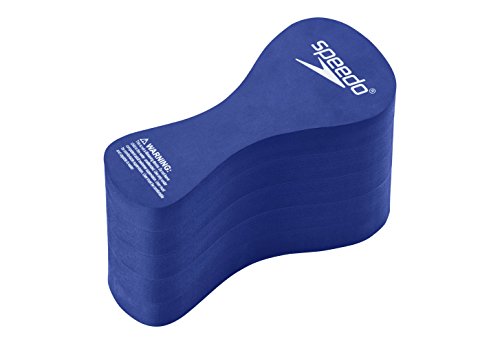
Speedo Unisex-Adult Swim Training Pull Buoy, Blue, One Size
Elevates hips and legs to promote proper positioning
As an affiliate, we earn on qualifying purchases.
As an affiliate, we earn on qualifying purchases.
Structuring Your 25s and 50s Sprint Sets
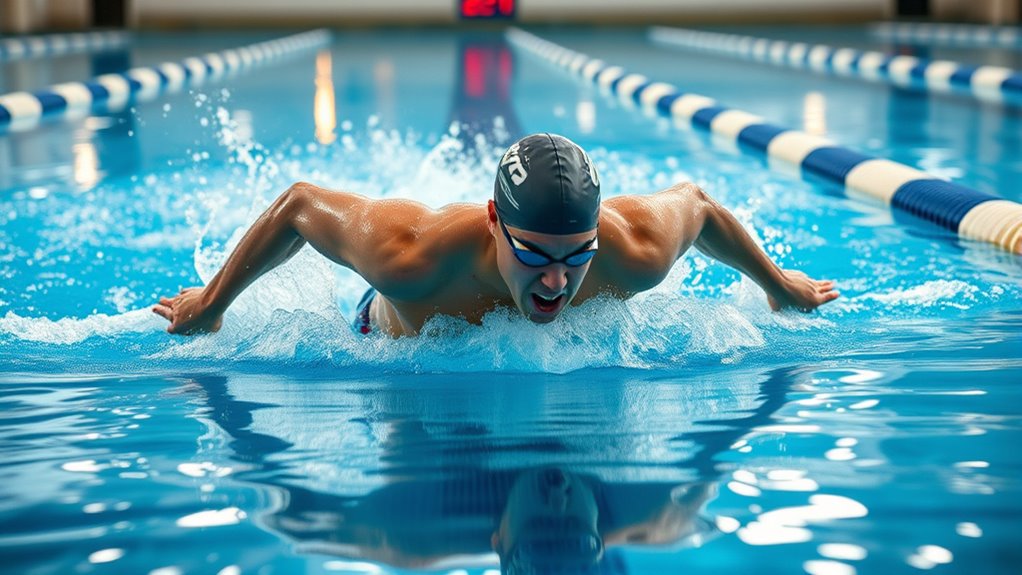
To maximize your speed development, it’s vital to structure your 25m and 50m sets thoughtfully. Use 6–12 repetitions, adjusting based on your level and goals. For pure speed, stick to 4–6 reps; for endurance, aim for 8–12. Incorporate different set types, like straight sprints, build-ups, or descending efforts, to keep training diverse. Rest intervals vary from 15–40 seconds for short sprints to 30–60 seconds for longer efforts, maintaining intensity. Proper rest is crucial to allow recovery and sustain high-quality efforts across sets. Additionally, paying attention to training environment can enhance your sprint workouts by providing optimal conditions. Here’s a quick view:
| Set Type | Reps | Rest Interval |
|---|---|---|
| Pure Speed | 4–6 | 15–30 sec |
| Endurance | 8–12 | 30–60 sec |
| Build/Descending | 6–12 | Varies |
Adjust these elements to match your focus and improve your sprint performance.

Speedo Unisex-Adult Swim Training Kickboard Adult
Ideal for kicking drills and improving leg strength
As an affiliate, we earn on qualifying purchases.
As an affiliate, we earn on qualifying purchases.
Technique Focus During Short Sprint Efforts
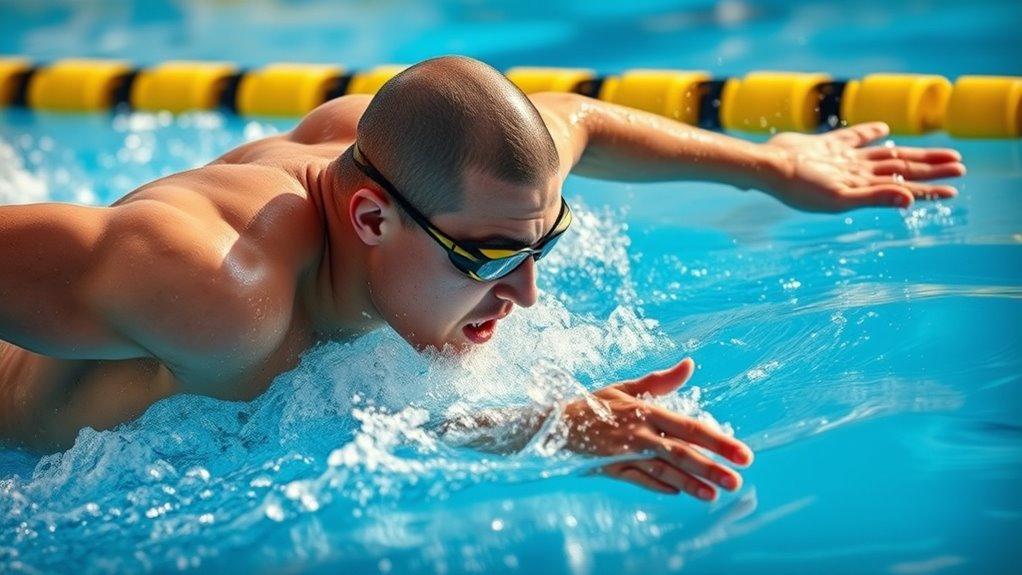
Maintaining proper technique during short sprint efforts is essential for maximizing speed and efficiency. Keep your body position as horizontal as possible, with hips near the surface to reduce drag and enable smooth power transfer. Avoid excessive up-and-down movement; focus on a steady, streamlined posture. In butterfly, recover your arms quickly and low to maintain momentum, while in freestyle, ensure a high elbow catch and rapid arm turnover to generate more power. Synchronize your kicks with arm movements—powerful, hip-driven kicks support body alignment and propulsion. Control your breathing by taking minimal breaths—just 1-2 in a 50m race—and exhale steadily underwater to prevent disruptions. Finally, maintain a tight streamline off the start and turns, breaking out with controlled, strong strokes to sustain your sprint speed. Proper body positioning is crucial for reducing resistance and maximizing your energy transfer during these intense efforts, especially when focusing on technique optimization during short-distance sprints.

Ferok Pro – Swimming Resistance Band Set with Paddles – The Ultimate Swim Training Equipment for Dryland Workout – Resistance Bands & Cords for Swimming – Including Exercise – Light Yellow
【True-to-Pool Swimming Simulation】Our resistance bands with paddles are designed to closely mimic the resistance and movement of pool…
As an affiliate, we earn on qualifying purchases.
As an affiliate, we earn on qualifying purchases.
Progressing Your Sprint Workouts Over Time
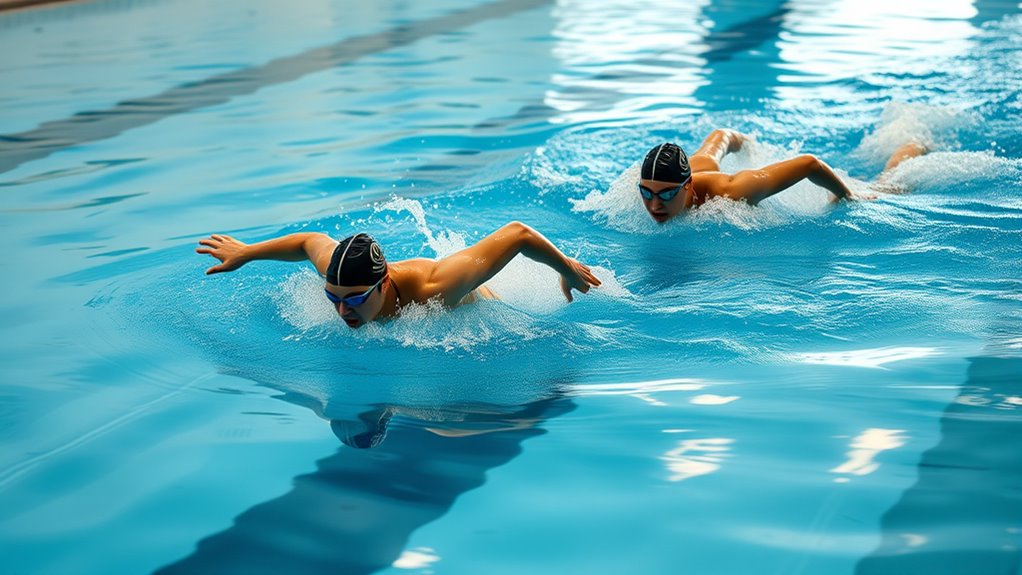
Progressing your sprint workouts over time requires a careful balance between increasing workload and allowing your body to adapt. To do this effectively:
- Gradually add more sprint repetitions, like moving from 8x25s to 12x25s, or increasing 50s at race pace, ensuring adaption without overtraining. Progressive overload is essential for continuous improvement without risking injury.
- Use drop sets or descending intensity sets to manage fatigue while boosting workload.
- Keep weekly volume increases around 10% to prevent injury and maintain form.
- Balance volume with proper warm-up and cool-down to sustain quality and reduce strain.
- Incorporating structured speed-focused sets, such as descending efforts or varied breathing patterns, can optimize your progression and prevent plateaus training techniques.
This approach helps you build endurance and speed while minimizing injury risk. Focus on steady progression, listening to your body, and maintaining technique as workload increases for ideal gains.
Combining Dry-Land Strength and Pool Sprinting
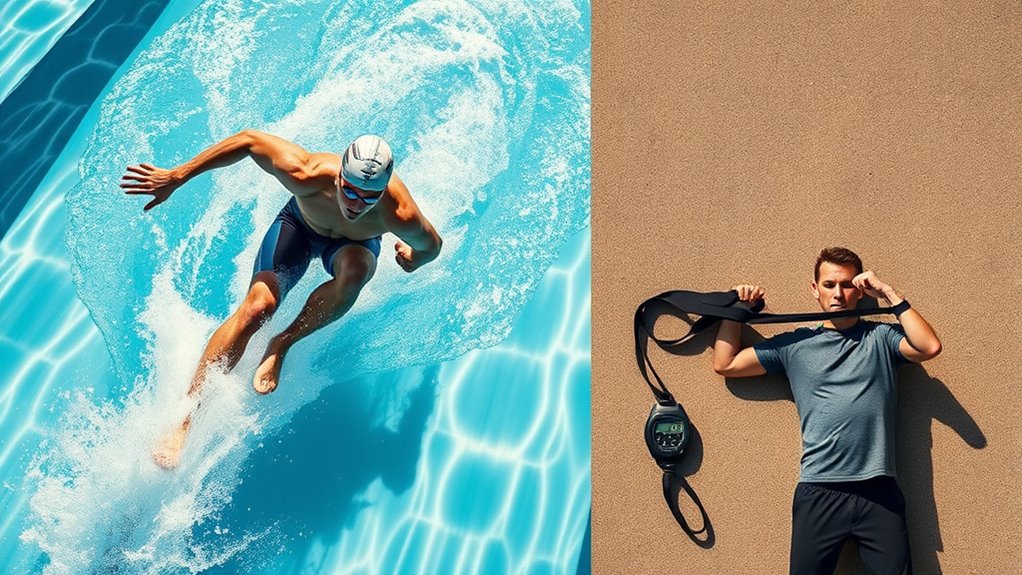
Combining dry-land strength training with pool sprinting creates a powerful synergy that enhances overall performance. Dryland workouts target your Type IIa fast-twitch muscle fibers, vital for explosive speed and quick recovery. Multi-joint exercises like squats activate many muscles simultaneously, maximizing strength gains. Focus on heavy loads with 2-6 repetitions and rest periods of at least a minute to develop power rather than endurance or hypertrophy. Incorporate plyometric exercises such as jump lunges and burpees to improve explosive power and coordination. Core exercises like hip thrusts and Russian twists stabilize your body, supporting powerful starts and strong kicks. When you pair strength training with sprint drills, you build muscle responsiveness and efficiency, translating dryland gains into faster, more explosive swim performances. Proper dryland training enhances neuromuscular coordination, leading to more precise and efficient movements in the water. Additionally, understanding projector technology can be beneficial when creating optimal training environments, such as visual feedback tools or instructional displays for athletes.
Frequently Asked Questions
How Often Should I Include Sprint Sets in My Weekly Training?
You should include sprint sets in your weekly training 2 to 3 times. This frequency helps you build speed and power while allowing sufficient recovery to prevent overtraining. Beginners and intermediates might start with 2 sessions, focusing on technique and recovery. Advanced swimmers can aim for 3 or more, adjusting volume based on their season and recovery. Balance these sprints with endurance and technique work for ideal performance.
What Are Common Mistakes to Avoid During 25S and 50S Sprints?
Watch out for common mistakes that can sabotage your sprint. You might over-breathe early, wasting energy and disrupting your rhythm, or hold your head too high, creating drag. Forgetting to stay relaxed and streamline after turns slows your momentum. Also, avoid over-kicking or losing control of your stroke tempo. These errors sneak in quietly but can cost precious milliseconds—stay focused, refine your technique, and keep your pace sharp.
How Can I Recover Faster Between Sprint Repetitions?
To recover faster between sprint repetitions, focus on incorporating active recovery like easy swimming or low-intensity movements, which help clear lactate more efficiently. Use cool-down swims to lower your heart rate and flush metabolic waste, and consider stretching muscles, especially shoulders and hips, to prevent stiffness. Hydrate well and include light recovery techniques such as cold-water immersion or compression garments to reduce inflammation and promote quicker muscle repair.
Are There Specific Warm-Up Routines Recommended Before Sprint Sessions?
You’re asking about warm-up routines before sprints, because of course, you want to pretend you’re not just winging it. A solid plan includes easy swimming to get your blood flowing, followed by build sets to match sprint intensity. Add drills to sharpen technique, then short, fast efforts to activate your neuromuscular system. Don’t forget dryland exercises if water’s limited. A well-structured warm-up primes your muscles and mind for peak performance.
How Do I Measure Improvement in My Sprint Performance Effectively?
To measure your sprint performance improvements effectively, focus on tracking power-to-drag ratio changes using tools like the MAD system, which reveal your strength and efficiency gains. Use wearable sensors like MySwimEdge to monitor real-time stroke metrics, such as distance per stroke and speed fluctuations. Additionally, keep an eye on your SWOLF scores and total sprint times, comparing these over sessions to see consistent progress and refine your technique accordingly.
Conclusion
Incorporating 25s and 50s sprints into your training can boost your speed and power. Imagine Sarah, a competitive swimmer who added focused sprint sets to her routine and shaved seconds off her times. By consistently refining your technique, progressing workouts, and blending dry-land strength, you’ll see gains too. Stay committed, push your limits, and watch your sprinting improve—just like Sarah did, you’ll reveal your full potential in the pool.