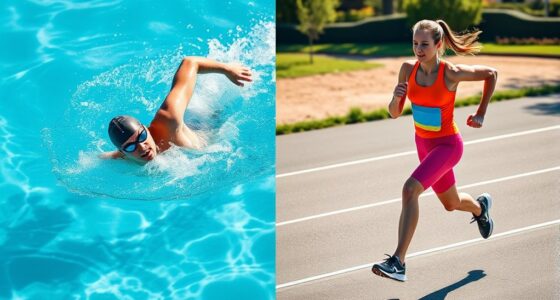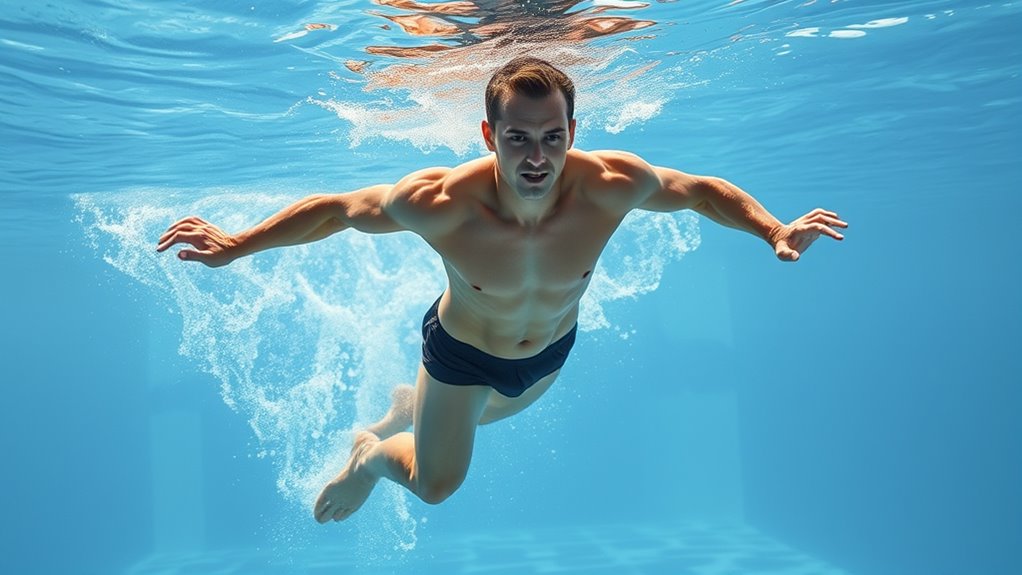

Aquatic cross-training offers runners a low-impact way to boost cardiovascular fitness and strengthen muscles without stressing joints. Water resistance challenges your muscles more than air, helping improve endurance, stability, and muscle balance. It also supports injury prevention and speeds recovery, especially during rehab or off-season. By incorporating water workouts like deep-water running and resistance exercises, you can enhance performance year-round. Keep exploring to discover how to tailor aquatic training to your goals.
Key Takeaways
- Water jogging offers similar cardiovascular benefits to land running with reduced impact on joints.
- Incorporating aquatic resistance exercises enhances muscular endurance and stability for runners.
- Deep-water running supports injury recovery by minimizing joint stress and unloading stress fracture sites.
- Aquatic cross-training improves aerobic capacity, VO2 max, and offers a safe, low-impact alternative during injury rehab.
- Structured water workouts can effectively complement running routines, aiding recovery and preventing overuse injuries.

Pool Paddle Water Aerobics Equipment | Adjustable Resistance Pool Exercise Equipment for Adults, Swim Paddles Water Weights Dumbbells for Aquatic Exercise, Aqua Weights for Men & Women Workout Gear
10 Resistance Settings: Easily adjust your water weights for pool exercise to your ideal resistance by simply turning…
As an affiliate, we earn on qualifying purchases.
As an affiliate, we earn on qualifying purchases.
Enhancing Cardiovascular Fitness Through Water-Based Exercise
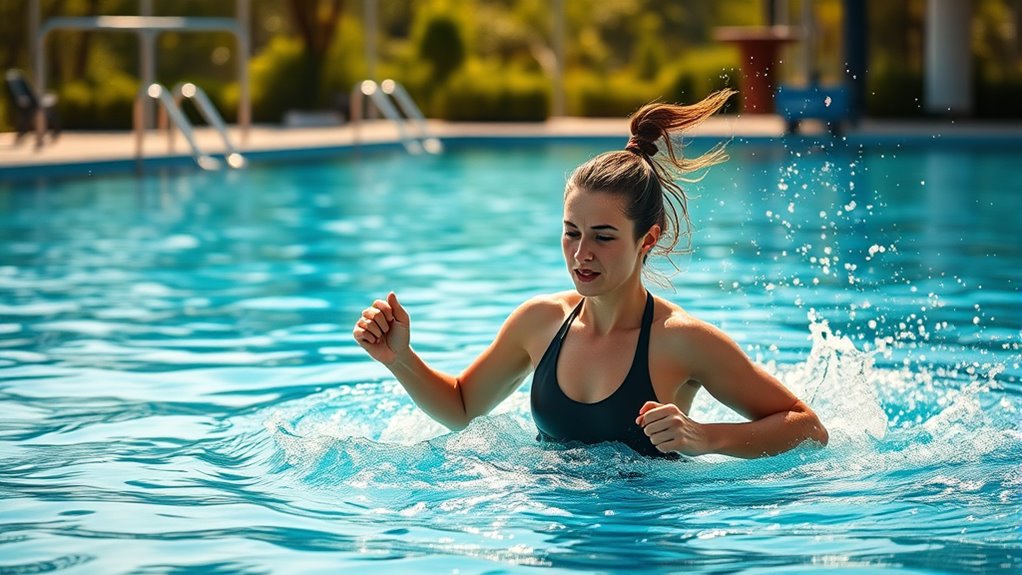
Water-based exercise, particularly aqua jogging, effectively enhances your cardiovascular fitness by eliciting responses similar to land running. Studies show that aqua jogging produces comparable VO2 max and heart rate responses during workouts. At low to moderate intensities, deep-water running is more demanding on your cardiovascular system than land running, thanks to increased upper body involvement. This heightened effort can lead to greater cardiovascular adaptations over time. Elite runners training exclusively in water can maintain aerobic capacity similar to land-based training, while sedentary beginners often see significant VO2 max improvements in just eight weeks. Water’s resistance boosts workload, with 12 times the resistance of air, leading to higher calorie burn even at similar perceived effort. Regular sessions of 30 to 70 minutes, two to five times weekly, effectively promote cardiovascular gains across fitness levels.

New Aqua Water Fitness Deluxe Flotation Belt – Adult Aquatic Swim Belt for Water Aerobics and Other Pool Exercise – Black/Blue
Low-impact exercise: Challenge yourself with fun, low-impact pool exercise to alleviate stress on your joints; swim belt is…
As an affiliate, we earn on qualifying purchases.
As an affiliate, we earn on qualifying purchases.
Injury Prevention and Recovery Strategies in Aquatic Training
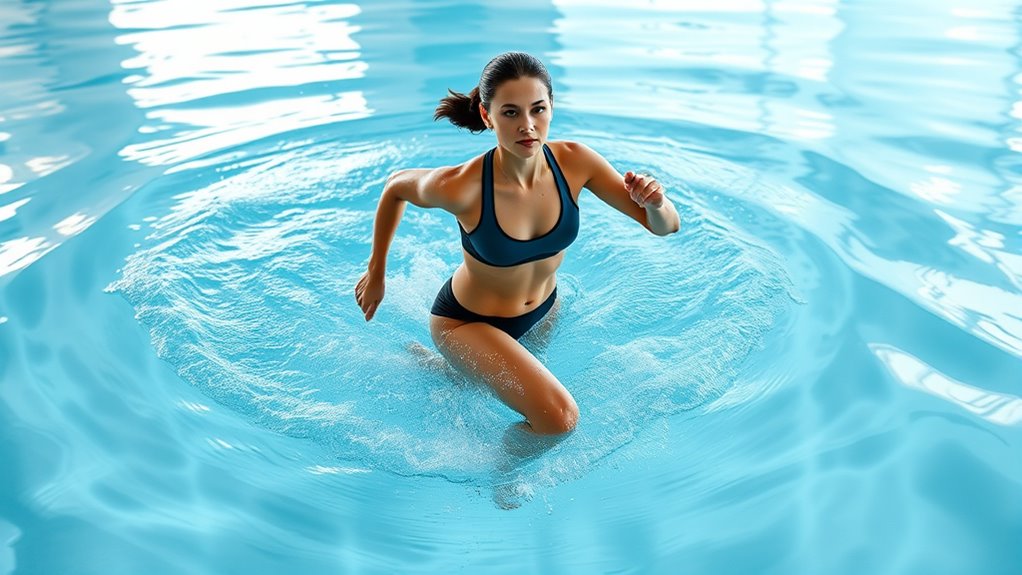
Aquatic training offers effective injury prevention and recovery benefits by reducing joint stress through buoyancy, which lessens impact on knees, ankles, and hips. It also accelerates muscle repair and supports rehabilitation by promoting circulation and enabling safe, low-impact movement. Incorporating water-based exercises into your routine can help you recover faster and prevent common running injuries. Research indicates that water resistance training can enhance muscular endurance and stability, further supporting injury prevention efforts. Additionally, the low-impact nature of aquatic workouts makes them suitable for individuals recovering from injury or managing chronic joint conditions.
Reducing Joint Stress
Because water buoyancy considerably reduces the impact forces on your joints, it’s an effective strategy for injury prevention and recovery. Buoyancy offsets your weight, eliminating ground impact forces on knees, hips, and ankles, which lowers joint stress compared to road running. This reduction supports pain-free movement and helps maintain fitness during injury recovery. Deep water running further decreases compressive spinal loads relative to shallow water or treadmill exercises. Less joint stress prevents overuse injuries like tendinopathy and bone stress fractures, common among runners. Additionally, the lower impact allows you to extend cardiovascular training without risking joint deterioration or aggravating existing injuries. The combination of buoyancy, resistance, and controlled movement makes aquatic cross-training an ideal approach to protect your joints while staying active. Understanding how water resistance also enhances muscular endurance can further optimize your training benefits.
Accelerating Muscle Repair
Utilizing hydrostatic pressure during aquatic training can substantially accelerate muscle repair and enhance recovery. Water compresses blood vessels, boosting circulation and helping remove metabolic waste like lactic acid from muscles. This improved blood flow delivers more oxygen and nutrients crucial for healing. Additionally, water immersion lowers your heart rate by 10-15 beats per minute at similar effort levels, promoting cardiovascular recovery and reducing fatigue. Buoyancy lessens muscle load, allowing active recovery without extra strain. The gentle, consistent hydrostatic pressure may also speed up healing processes in injured muscles. Water’s support combined with resistance from water, which stimulates muscle activation and maintains tone without overloading tissues, supports efficient muscle repair. The hydrostatic pressure effect encourages better oxygenation of tissues, further accelerating healing. These effects help you recover faster and prepare your muscles for future runs.
Supporting Injury Rehabilitation
Supporting injury rehabilitation through aquatic training offers a safe and effective way to promote healing and prevent further damage. The buoyancy of water supports about 90% of your body weight, substantially reducing joint and musculoskeletal load during exercise. This allows you to perform activities like aqua jogging that mimic running without ground impact, protecting injured tissues while maintaining cardiovascular fitness. Deep water running lessens spinal compression, lowering the risk of aggravating back injuries, and water immersion unloads stress fracture sites, enabling safe, progressive rehab. Additionally, water’s resistance improves muscle strength and stability around injured areas without overloading your joints. The warm, buoyant environment also enhances flexibility and range of motion, helping you regain mobility pain-free. Engaging in aquatic exercise can also help address narcissistic tendencies that may develop from frustration or emotional stress during recovery, promoting overall mental well-being. Overall, aquatic training supports recovery, corrects imbalances, and reduces the risk of re-injury. Proper technique is essential to maximize benefits and prevent strain during aquatic exercises.

SEEKWAY Water Shoes for Women Adult Quick-Dry Aqua Sock Barefoot Men for Beach Swim River Pool Lake Hiking Kayaking Surfing Gradient Dark Grey
SEEKWAY: Not just for protection, but also for company.
As an affiliate, we earn on qualifying purchases.
As an affiliate, we earn on qualifying purchases.
Building Muscle Strength and Balance With Water Workouts
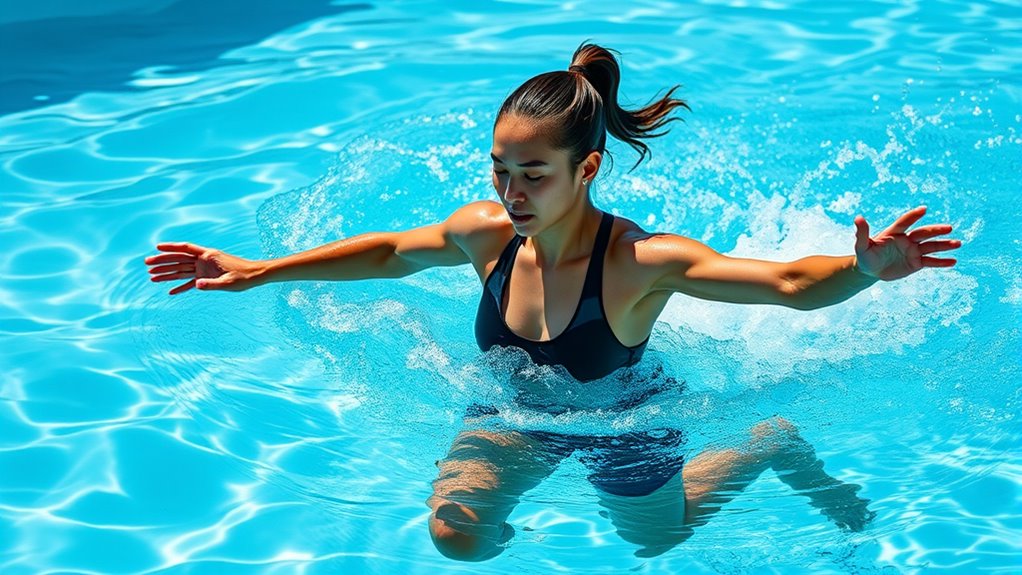
Water workouts are a highly effective way to build muscle strength and improve balance, thanks to the unique resistance properties of water. The resistance is 12 times greater than air, making exercises more challenging and engaging multiple muscle groups simultaneously. To maximize benefits:
- Focus on lower body exercises like aqua squats and water jogging to target quadriceps, hamstrings, and glutes.
- Use water-resistant bands for upper and lower body moves such as bicep curls, tricep extensions, and leg lifts.
- Incorporate water push-ups to engage your chest, shoulders, and arms. These exercises help develop overall muscle tone, boost strength, and improve stability. Plus, the buoyancy reduces joint stress, making balance training safer and more effective for runners. Water’s resistance properties also promote muscle engagement and endurance development, further enhancing training outcomes. Regularly monitoring your air quality indicators can help optimize your workout environment and safety.

Aqua Leisure Fitness Dynamic Resistance Band – Water Exercise – Pool Workout – Fitness Noodle – Length 34"
Resistance Band Foam Tube with swivel handles for total body workout, improves strength throughout the body.
As an affiliate, we earn on qualifying purchases.
As an affiliate, we earn on qualifying purchases.
Adjusting Training Intensity for Optimal Results
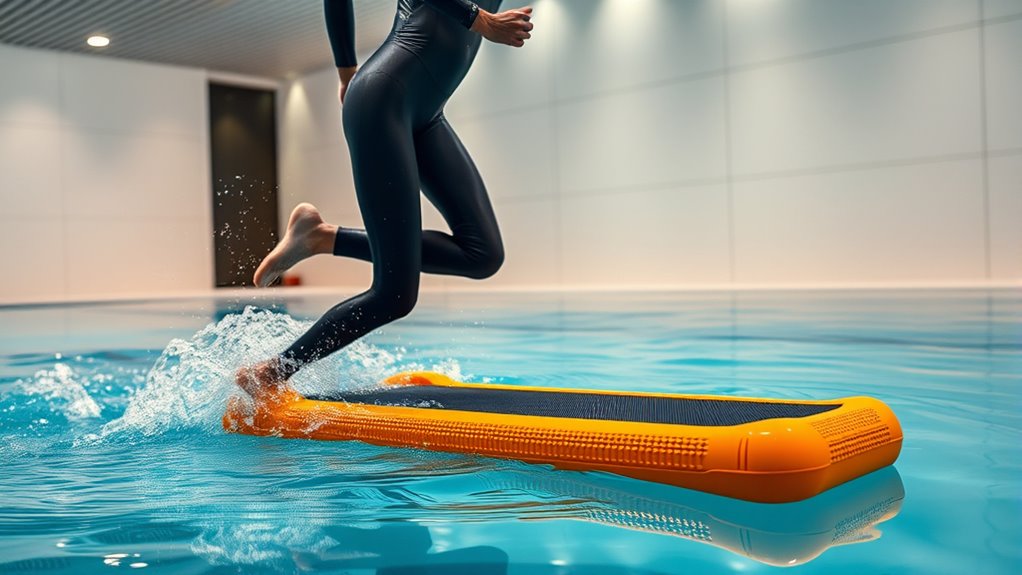
Adjusting training intensity in aquatic cross-training is essential to maximize your results and prevent overtraining. Since heart rate monitoring is unreliable in water, rely on perceived exertion (like the Borg scale) to gauge effort. Match in-water intensity with your typical land training levels to ensure balanced stimulation. Keep track of your training volume—frequency, duration, and intensity—and adjust these to avoid fatigue and promote recovery. Sessions lasting 50 to 90 minutes provide aerobic benefits without excessive strain. During high-intensity workouts, use cool water immersion to prevent overheating. By carefully regulating intensity, you can maintain or improve VO2max, preserve running performance, and reduce injury risk. Research shows that swim training induces specific cardiorespiratory adaptations, and regular feedback and self-monitoring are key to fine-tuning your aquatic workouts for maximal progress.
Mental Benefits and Variety in Aquatic Cross-Training
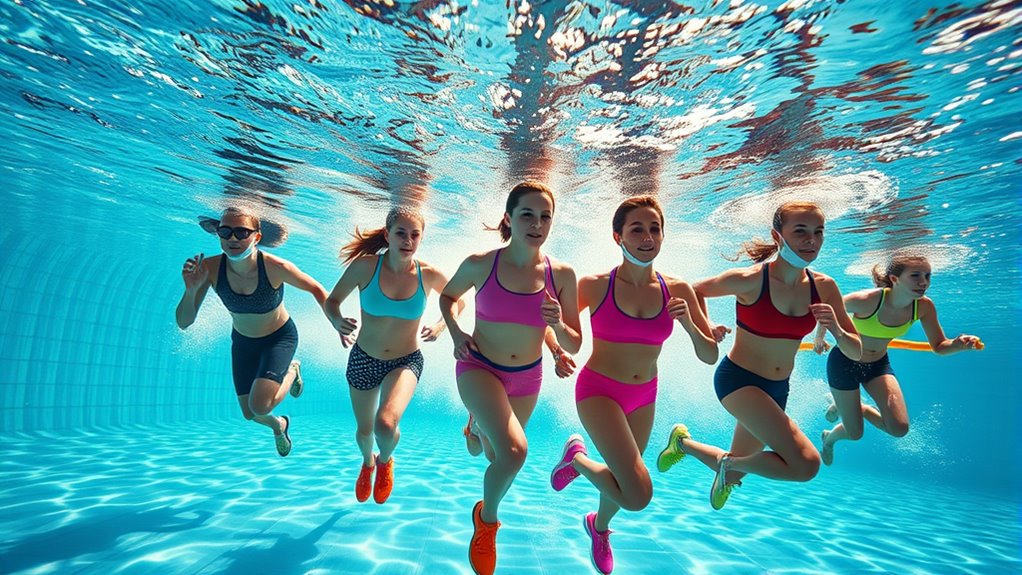
Engaging in aquatic cross-training offers unique mental health benefits that go beyond physical fitness. It reduces stress, boosts resilience, and fosters a positive mindset. Here are three key advantages:
Aquatic cross-training enhances mental well-being by reducing stress, boosting resilience, and fostering a positive mindset.
- It interrupts repetitive routines, helping you avoid mental burnout and keeping your training fresh. Cross-training offers a mental reset by engaging in new exercises like swimming, cycling, or yoga. Incorporating different exercise modalities can further enhance mental engagement and prevent plateauing.
- Water exercises engage your focus on rhythm and flow, promoting mental flow states similar to meditation.
- Participating in community-based aquatic programs offers peer support, enhancing psychological well-being.
These activities stimulate adaptive mental responses through psychophysiological stressors, like breath-hold challenges, building your coping skills. The variety keeps your mind engaged, revitalizing motivation and emotional balance. Incorporating aquatic cross-training provides a mental refresh, making your running journey more enjoyable and sustainable.
Practical Approaches for Incorporating Water Exercises Into Running Routines
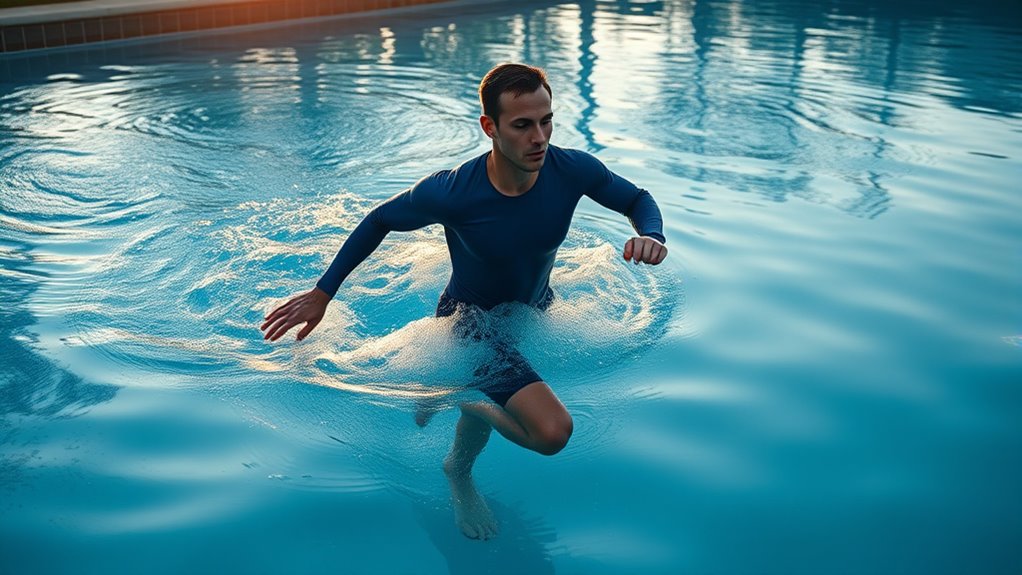
To effectively incorporate water exercises into your running routine, you need to choose the right activities that target your specific goals and needs. Structuring your sessions with clear progression and monitoring progress guarantees consistent improvement without overtraining. By thoughtfully selecting exercises, planning sessions, and tracking your results, you can maximize the benefits of aquatic cross-training. Swimming aids recovery between hard training days, providing aerobic benefits and muscle variety. Additionally, integrating automation technologies can streamline your training process and help you adjust routines based on performance data.
Selecting Appropriate Water Exercises
Choosing the right water exercises to complement your running routine involves understanding the specific benefits each type offers. To get the most out of aquatic cross-training, consider these options:
- Deep-water running: Mimics land running biomechanics, engaging similar muscles and cardiovascular responses, perfect for maintaining running form without impact. This exercise also reduces joint stress, making it ideal for injury recovery or high-mileage training periods. Incorporating lifestyle strategies such as proper hydration and recovery can further enhance your training results.
- Shallow-water running: Adds resistance and stability, helping strengthen muscles, but isn’t as close to actual running mechanics.
- Water-based plyometrics: Jumps and bounds reduce joint stress while boosting leg power, offering performance benefits comparable to land exercises.
Select exercises based on your goals—whether maintaining endurance, building strength, or rehabilitating—and tailor your workouts to match your running intensity and needs.
Structuring Training Sessions
Structuring your water training sessions effectively guarantees you get the most benefit without overtraining or risking injury. Aim for 2–3 sessions per week, each lasting 50 to 90 minutes, fitting into your overall running schedule. Start with a 10-minute easy warm-up to prepare your muscles. Incorporate interval workouts, such as pyramid sets or fartlek-style efforts, alternating between hard and recovery efforts. Use perceived exertion to monitor intensity, targeting 87–92% of max effort for tempo work and up to 100% for sprints. Vary session types with steady-state threshold runs, intervals, or mixed formats like pyramid or wave drills. These structured approaches help maintain fitness, improve speed, and complement your running, especially during injury recovery or high-mileage periods. Additionally, integrating vertical storage solutions can help organize your gear and equipment efficiently between sessions.
Progression and Monitoring
Monitoring your progress during aquatic cross-training helps guarantee you’re training effectively and safely. To do this, focus on three key areas:
- Heart Rate: Post-interval pulse checks by counting beats for 10 seconds and multiplying by six give reliable readings. Adjust target zones by adding about 10 bpm to account for water’s effects, and consider heart rate monitors designed for underwater use for better accuracy. Water immersion up to neck reduces heart rate by 10-15% compared to land effort. Incorporating heart rate zones into your monitoring helps tailor training intensity more precisely.
- Cadence and Movement: Count knee lifts in the last 30 seconds of an interval and double the number to estimate cadence. Tracking this ensures consistent form and intensity, preventing degradation over time.
- Session Progression: Gradually increase interval duration, intensity, or session length, using timing devices and perceived exertion to monitor improvements while avoiding overtraining.
Equipment and Techniques for Effective Aquatic Workouts

Effective aquatic workouts rely on specialized equipment and proven techniques that maximize benefits while minimizing impact. Buoyancy aids like flotation belts suspend your body at shoulder level, supporting natural breathing and movement without weight-bearing stress. Resistance tools such as water dumbbells, cuff weights, and webbed gloves target muscles while protecting joints. Kickboards isolate lower body strength, and pool noodles offer versatile support for balance and core work. Techniques like deep water running, resistance sprints with bungee cords, and plyometric exercises replicate land training with less strain. Proper footwear, like water shoes, ensures safety and grip. Use the table below to explore equipment options and their specific uses: Research supports that aquatic cross-training enhances overall athletic performance, making it a valuable addition to any runner’s training regimen.
| Equipment | Purpose | Benefits |
|---|---|---|
| Flotation belts | Support deep water running | Reduce impact, improve posture |
| Water dumbbells | Arm resistance training | Strengthen upper body |
| Kickboards | Focused leg work | Build lower body endurance |
| Resistance bands | Variable resistance | Enhance strength and speed |
| Pool noodles | Balance and core exercises | Improve stability and coordination |
Monitoring and Progressing in Water-Based Training
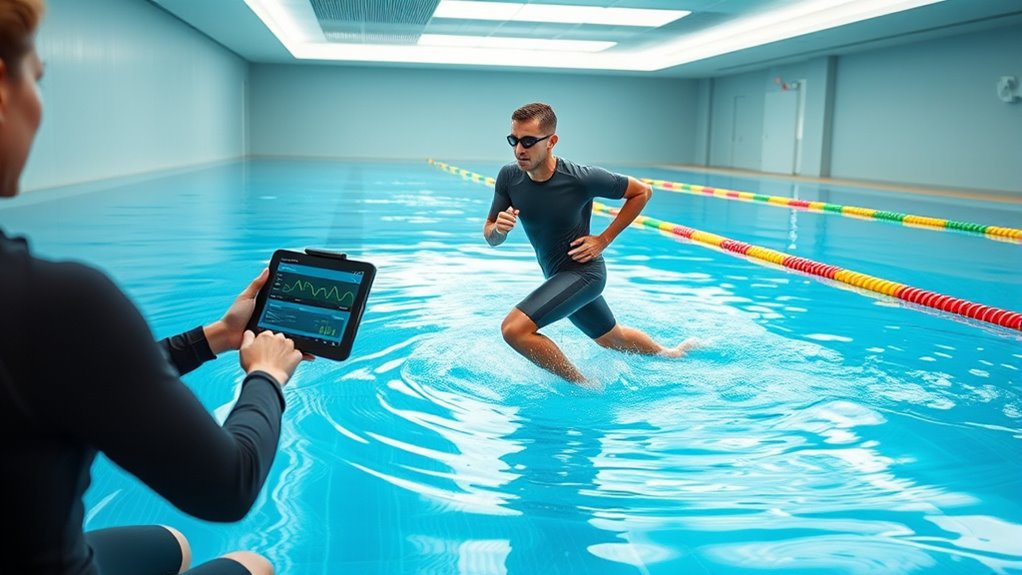
To optimize your water-based training, tracking intensity and progress is essential, especially since physiological responses differ from land workouts. You can monitor your effort through these methods:
- Use heart rate monitors designed for water, keeping in mind immersion reduces heart rate by 10-15%. You can also check your pulse manually.
- Track cadence by counting knee lifts over a set interval and converting to cycles per minute, helping you gauge intensity.
- Employ subjective measures like the Borg scale or session RPE, which reflect how hard you feel you’re working, accounting for water’s unique effects.
- Be aware that AI-driven diagnostics in healthcare technology can assist in monitoring your physical responses more precisely, enhancing your training insights.
Progression involves increasing cadence, adjusting heart rate targets, or perceived exertion. Using interval training and maintaining proper form ensure safe, steady improvement.
Integrating Aquatic Cross-Training for Season and Off-Season Maintenance

Incorporating aquatic cross-training into your seasonal routine helps you maintain fitness while reducing the risk of overtraining and injury. During the season, water-based activities like swimming or water running provide cardiovascular benefits similar to land running, keeping endurance sharp without the joint stress. They serve as excellent active recovery tools, preventing fatigue accumulation and supporting tissue repair. Off-season, aquatic training sustains aerobic capacity and muscle conditioning without high-impact stress, easing your progression back to intense running. Structured programs, such as pool running or swimming for several weeks, help preserve fitness levels and build muscle balance. Additionally, the resistance and low-impact nature of water exercises promote injury prevention, muscle strength, and overall stability, making aquatic cross-training a valuable component of your year-round training plan. Water’s resistance also enhances muscular endurance, contributing to overall athletic performance. Incorporating training principles from *ethical hacking*, such as systematic assessment and adaptation, can optimize your training effectiveness and reduce the risk of setbacks.
Frequently Asked Questions
How Often Should Runners Incorporate Aquatic Cross-Training Into Their Weekly Routine?
You should incorporate aquatic cross-training 1 to 3 times per week, depending on your running volume and goals. If you’re training intensely or recovering from injury, aim for 1-2 sessions to boost endurance and aid recovery without overloading your body. Adjust the frequency based on fatigue and race schedule, ensuring you maintain aerobic fitness and avoid injury. Consistent sessions help improve stability, breathing, and overall running performance.
What Are the Best Water Exercises for Improving Running Performance?
You should focus on water running, especially interval drills like the “Long Reach” to target posterior chain muscles and improve power. Incorporate aqua jogging at various speeds to enhance aerobic capacity and simulate race pace. Use underwater treadmill workouts to build strength and endurance, while pool-based strength exercises boost muscle recruitment. These exercises help you run with better efficiency, reduce injury risk, and maintain performance, especially during injury recovery or intense training phases.
Can Aquatic Training Fully Replace Land-Based Running Workouts?
No, aquatic training can’t fully replace land-based running workouts, but it’s a solid backup plan. Water workouts maintain your cardiovascular fitness, reduce impact stress, and help recover from injuries. However, since water running offers different biomechanics and lower VO2 max, it may not prepare you for high-impact races. Think of it as a trusty sidekick—great for support, but not a complete substitute for the real thing.
How Do I Prevent Overtraining During Aquatic Cross-Training Sessions?
To prevent overtraining during aquatic cross-training, you should listen to your body and recognize signs like persistent soreness or reduced performance. Incorporate regular rest days and avoid excessive sessions—aim for 2-3 per week. Use proper technique, gradually increase intensity, and combine aquatic workouts with land running to balance stress. Monitoring fatigue levels and adjusting your workload guarantees you stay healthy and avoid injury.
What Precautions Should Injured Runners Take When Starting Water-Based Workouts?
Think of starting water workouts like walking a tightrope—you must balance carefully. You should get medical clearance first, then listen to your body and avoid movements that cause pain. Use proper equipment and maintain good form to prevent secondary injuries. Gradually increase intensity, monitor your pain levels, and never push through discomfort. Remember, water is a gentle teacher—respect its power and let it guide your healing journey safely.
Conclusion
Imagine yourself gliding effortlessly through water, each movement building strength, preventing injuries, and invigorating your mind. By incorporating aquatic cross-training into your running routine, you create a balanced, resilient body that’s ready for any terrain. As you adjust the water’s resistance and embrace variety, you’ll see your endurance deepen, muscles tone, and confidence soar. Plunge into this revitalizing approach and watch your running become smoother, stronger, and more enjoyable with every splash.