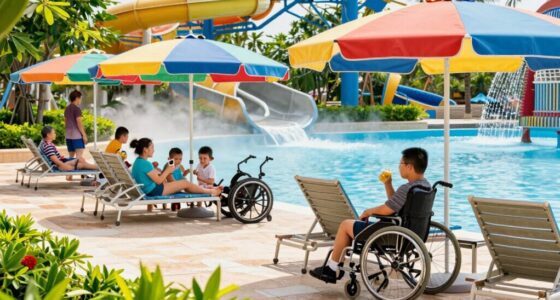
Before visiting a water park, ask about their accessibility features like ramps, zero-entry pools, and specialized equipment such as pool lifts. Check if staff are trained to assist guests with mobility challenges and whether assistance is available all day or upon request. Inquire about clear signage for accessible routes, the layout’s ease of navigation, and nearby shaded resting areas. Ensuring these details are confirmed will help you enjoy a smooth, accessible experience—continue for more key questions to ask.

Get pool and patio gear delivered free with Prime
- Fast, free delivery on millions of items
- Prime Video, Amazon Music and more included
- Member-only deals all year
Key Takeaways
- Confirm the availability and maintenance of accessibility features like ramps, zero-entry pools, and pool lifts.
- Ask if staff are trained to assist guests with disabilities and if assistance is available at all times or upon request.
- Inquire about clear signage, accessible pathways, and navigation aids throughout the park.
- Check for accessible amenities such as changing facilities, shaded resting areas, and proximity to main attractions.
- Ensure there are accessible parking or drop-off zones and smooth, wide walkways suitable for mobility aids.

Visiting a water park should be an enjoyable experience for everyone, but understanding its accessibility features can make all the difference. Before you arrive, it’s essential to ask about pool accessibility to guarantee that everyone in your group can comfortably enjoy the water. Many water parks now offer ramps, zero-entry pools, or beach-style entrances that eliminate the need for stairs or ladders, making it easier for individuals with mobility challenges. When inquiring, find out if these features are available at the attractions you’re interested in and whether they’re well-maintained and easy to use. Knowing the specifics can help you plan your day better and avoid surprises that might limit your fun or require last-minute adjustments.
Another critical aspect to contemplate is staff assistance. A truly accessible water park isn’t just about physical features; it also depends on the staff’s training and willingness to help. Ask about the staff’s familiarity with assisting guests with disabilities. Will they be available to help with getting in and out of pools, or to provide support if a guest needs help maneuvering the park? Find out if there are designated staff members or lifeguards trained in disability assistance, and whether they’re available at all times or only upon request. Understanding the level of staff assistance can give you peace of mind, knowing that help is readily available if needed. Many parks also provide specialized equipment, such as transfer boards or pool lifts, but it’s best to confirm what’s on hand and whether staff are trained to operate these devices properly. Additionally, inquire about pool accessibility features, as these are crucial for ensuring everyone can enjoy the water comfortably. It’s also helpful to ask if the park provides clear signage that indicates accessible routes and facilities, so guests can easily navigate the park without confusion. Furthermore, asking about accessible amenities can ensure that guests’ needs are fully accommodated throughout their visit.
It’s also wise to ask about the layout of the park and the availability of accessible pathways. Are there wide, smooth walkways that accommodate wheelchairs or mobility scooters? Are there shaded resting areas nearby? Knowing these details helps you plan your route through the park and guarantees you can rest when needed without hassle. Additionally, check if the park offers accessible changing facilities, lockers, and showers, as these amenities contribute greatly to a comfortable experience.
Products Worth Considering

Samsonite Freeform Hardside Carry-On Luggage with Spinner Wheels, TSA Lock, and Expandable Shell – Navy

GoPro MAX2 Waterproof 360 and Traditional Action Camera with Touch Screen

Travelpro Platinum Elite 50-Inch Rolling Garment Bag, Black
As an affiliate, we earn on qualifying purchases.
Frequently Asked Questions
Are There Accessible Dining Options for Visitors With Mobility Challenges?
Yes, many water parks offer accessible dining options for visitors with mobility challenges. You can find wheelchair-friendly tables and menus tailored for easier access. Before your visit, ask about accessible parking and wheelchair rentals, so you’re fully prepared. These accommodations guarantee you can comfortably enjoy meals without hassle, making your experience more enjoyable. Always double-check with the staff to confirm that specific dining areas meet your accessibility needs.
Do Water Parks Offer Sign Language Interpreters or ASL Assistance?
Many water parks do offer sign language services, but ASL staff availability varies by location. You should ask ahead of your visit whether the park provides ASL interpreters or assistance from staff knowledgeable in sign language. Confirming these details guarantees you’ll have access to clear communication and a more enjoyable experience. It’s best to contact the park directly to understand their specific sign language services and any accommodations they can provide.
Are There Designated Quiet Zones for Guests With Sensory Sensitivities?
You’ll find designated quiet zones, which serve as calming areas, at many water parks for guests with sensory sensitivities. These sensory-friendly environments offer a peaceful retreat amid the bustling attraction. While some parks clearly label these calming areas, others may not, so it’s best to ask staff about available quiet zones before you go. Knowing these options helps guarantee a more comfortable, enjoyable experience for everyone.
What Are the Policies for Assisting Guests With Service Animals?
You should ask about the water park’s service animal policies and assistance animal guidelines before your visit. Find out if they permit service animals in all areas and what documentation you might need. Clarify if there are designated areas for assistance animals or specific rules to follow. Knowing these policies guarantees you and your service animal are welcomed and comfortable, making your experience enjoyable and stress-free.
Can I Rent Adaptive Water Equipment On-Site?
Yes, many water parks offer adaptive equipment rentals on-site, but rental policies vary. You should check with the park beforehand to make sure they have the specific adaptive equipment you need, like wheelchairs, flotation devices, or other assistive devices. Contact the staff to confirm availability, rental procedures, and any associated costs. Planning ahead ensures you have the right equipment for a comfortable, enjoyable experience at the water park.
Conclusion
By asking the right questions, you’re opening the door to a world of splash-filled adventures where everyone can jump in with confidence. Think of it as planting seeds of understanding that blossom into unforgettable memories, where laughter echoes and worries drift away like clouds. With each conversation, you’re weaving a safety net of inclusivity, ensuring that the joy of the water park becomes a shared river of happiness for all. So, ask away and let the good times flow freely!