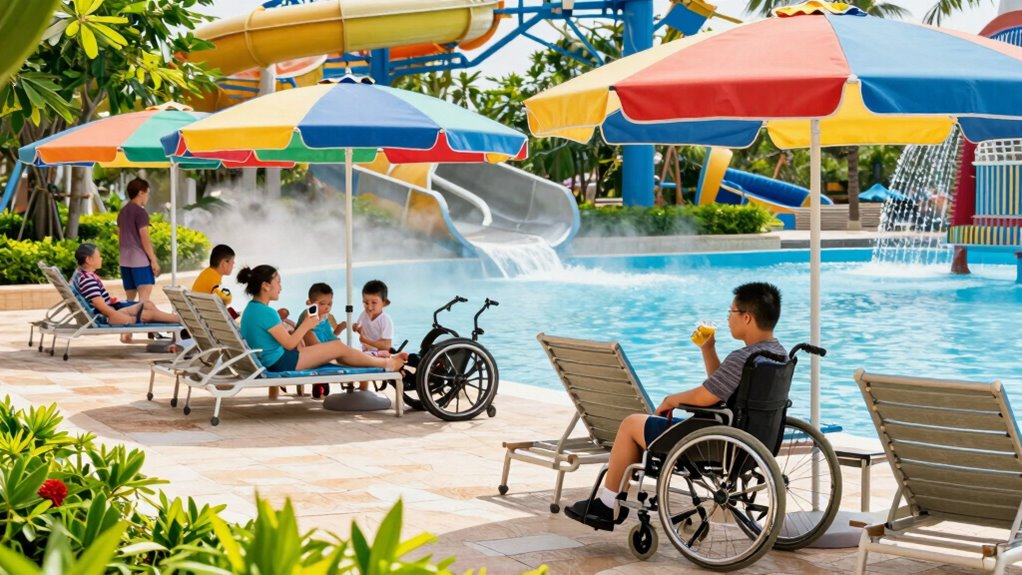

To build rest breaks into your water park day, plan regular pauses at designated calming zones to help everyone recharge and stay comfortable. Communicate break times clearly and appoint a group leader to remind everyone when it’s time to pause. Incorporate adaptive activities, offer hydration, and create quiet spaces for sensory needs. By organizing these strategies, you’ll guarantee your day remains enjoyable and stress-free—keep going to learn more ways to make your trip even better.

Get pool and patio gear delivered free with Prime
- Fast, free delivery on millions of items
- Prime Video, Amazon Music and more included
- Member-only deals all year
Key Takeaways
- Schedule regular, flexible rest intervals with designated quiet zones and calming spaces for sensory regulation.
- Communicate break times and locations in advance; assign group leaders to facilitate timely pauses.
- Incorporate adaptive swimming options and accessible amenities to support varied needs during breaks.
- Encourage self-awareness and listening to one’s body, promoting timely hydration, skincare, and relaxation.
- Provide trained staff and support services to assist guests with special needs during rest periods.
Planning a day at an accessible water park can be exciting, but it’s important to build in rest breaks to guarantee everyone stays comfortable and safe. Water parks can be overwhelming, especially for those with sensory sensitivities or mobility challenges. To make sure everyone enjoys their visit, strategically planning rest periods is essential. You might consider incorporating adaptive swimming opportunities, which allow guests to participate in water activities at their own pace, without feeling rushed or overwhelmed. These designated times or areas can help visitors relax and regain energy, ensuring they stay engaged and comfortable throughout the day.
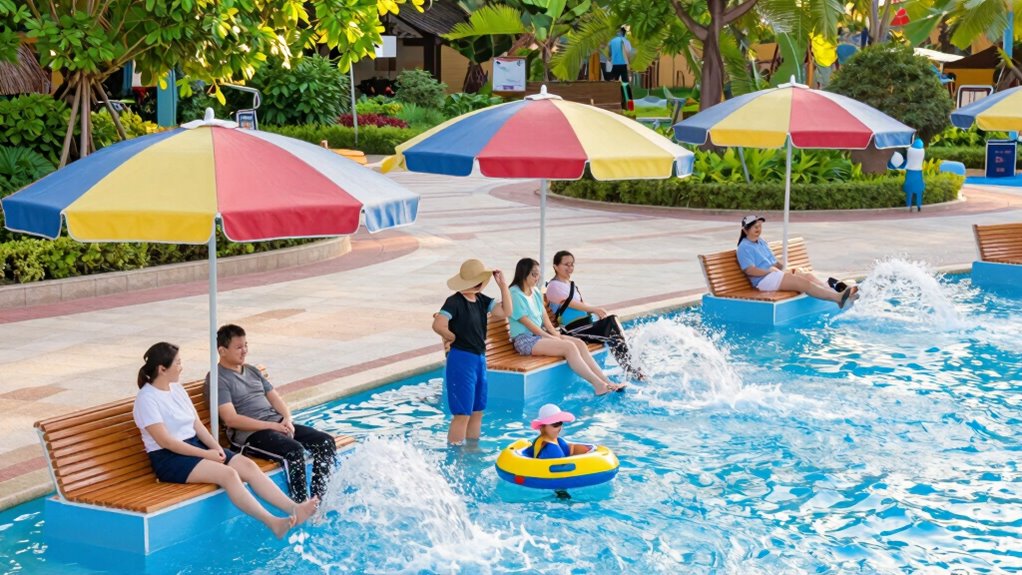
Sensory friendly zones are also crucial for creating a balanced experience. These quiet, calming spaces offer a break from the loud noises, bright lights, and bustling crowds typical of water parks. When you plan your day, identify where these zones are located and encourage their use. They give visitors a safe retreat to decompress, which can prevent sensory overload and reduce stress. Whether it’s a shaded corner with soft seating or a designated room with minimal stimuli, these areas help everyone regain calmness before returning to the fun. Additionally, including accessible amenities can further support guests with diverse needs, making the experience more inclusive. Incorporating sensory accommodations can also help in creating a more comfortable environment for everyone.
Timing your rest breaks is just as important as knowing where they are. Instead of waiting until exhaustion sets in, schedule regular intervals for breaks. For example, every couple of hours, encourage everyone to step away from the water attractions and find a quiet spot. Use these moments to hydrate, snack, or simply relax. This approach helps prevent fatigue and ensures that guests remain enthusiastic and safe. If you’re traveling with children or individuals who need more frequent breaks, plan flexible schedules that adapt to their needs. Establishing a structured routine can help guests feel more secure and aware of when to take their breaks. It’s also beneficial to consider the availability of professional services, such as trained staff or medical support, to assist guests with special needs if required. Incorporating knowledge about Glycolic Acid Benefits for Skin can be helpful in understanding how skin renewal and exfoliation might be affected by sun exposure at the water park, emphasizing the importance of protective skincare and hydration during breaks.
Effective communication is key. Make sure everyone knows in advance when and where to take breaks. If you’re with a group, designate a leader to remind everyone to pause periodically. For those with special needs, having a clear understanding of the location of sensory friendly zones and the availability of adaptive swimming options can make a big difference. Encourage everyone to listen to their bodies and take breaks as necessary, rather than pushing through discomfort.
water park sensory friendly zones
As an affiliate, we earn on qualifying purchases.
As an affiliate, we earn on qualifying purchases.
Frequently Asked Questions
How Do I Communicate Rest Plans to My Group?
To communicate your rest plans effectively, clearly explain the schedule and importance of breaks during your water park day. Use simple language and visual cues if needed. For group rest coordination, designate specific times and spots for breaks, and remind everyone beforehand. Make certain everyone understands and agrees, encouraging open communication. This way, you guarantee your group stays refreshed and enjoys the day comfortably.
Are There Designated Quiet Areas at Water Parks?
Many water parks have designated quiet zones or sensory areas where you can take a break away from the crowd and noise. These areas provide a peaceful environment for relaxation and sensory regulation. When planning your day, ask staff about the location of these quiet zones, and make sure your group knows where to go when someone needs a calm space. Using these areas helps everyone enjoy the water park comfortably.
What Should I Bring for Hydration During Breaks?
For hydration during breaks, bring a refillable water bottle to stay refreshed and maintain your water intake. Follow hydration tips like sipping water frequently instead of gulping, especially in the heat. Keep your water bottle accessible so you can drink regularly without hassle. Staying hydrated helps you enjoy your day comfortably and safely. Remember, consistent water intake is key to preventing dehydration and keeping your energy levels high.
How Can I Tell if Someone Needs a Rest?
You can tell someone needs a rest by watching for signs like heavy breathing, fatigue, or decreased enthusiasm during activities. Encourage them to visit a designated rest zone if they seem overwhelmed. Keep an eye on activity pacing—if they’re slowing down or avoiding water attractions, it’s time for a break. Regularly check in with them, and remind them that taking a rest helps them enjoy the day safely and comfortably.
Are There Specific Rest Break Policies for Accessible Parks?
Accessible parks often have specific rest break policies, recognizing the importance of accessible facilities and designated rest areas. You’ll find rest area signage clearly marking these spaces, making it easy to locate a comfortable spot when needed. These policies encourage taking breaks to prevent fatigue and guarantee everyone enjoys the park safely. Always check the park’s guidelines beforehand, as they typically emphasize the availability of accessible facilities and designated rest areas for all visitors.
As an affiliate, we earn on qualifying purchases.
Conclusion
Planning rest breaks isn’t just about comfort—it’s about creating a memorable, inclusive experience for everyone. Imagine a family with a member who has sensory sensitivities. By scheduling regular breaks, they enjoy the water park without feeling overwhelmed, making the day enjoyable for all. Remember, thoughtful planning guarantees every guest leaves with happy memories. Prioritize rest, listen to your needs, and turn your water park visit into a truly accessible adventure for everyone.
portable quiet space for sensory needs
As an affiliate, we earn on qualifying purchases.
As an affiliate, we earn on qualifying purchases.
water park hydration and rest station
As an affiliate, we earn on qualifying purchases.
As an affiliate, we earn on qualifying purchases.
Halloween Picks
halloween
As an affiliate, we earn on qualifying purchases.