
TL;DR

Get pool and patio gear delivered free — and shop member deals
- Fast, free delivery on millions of items
- Access to Prime Big Deal Days deals on October 6–7
- Prime Video, Amazon Music and more included
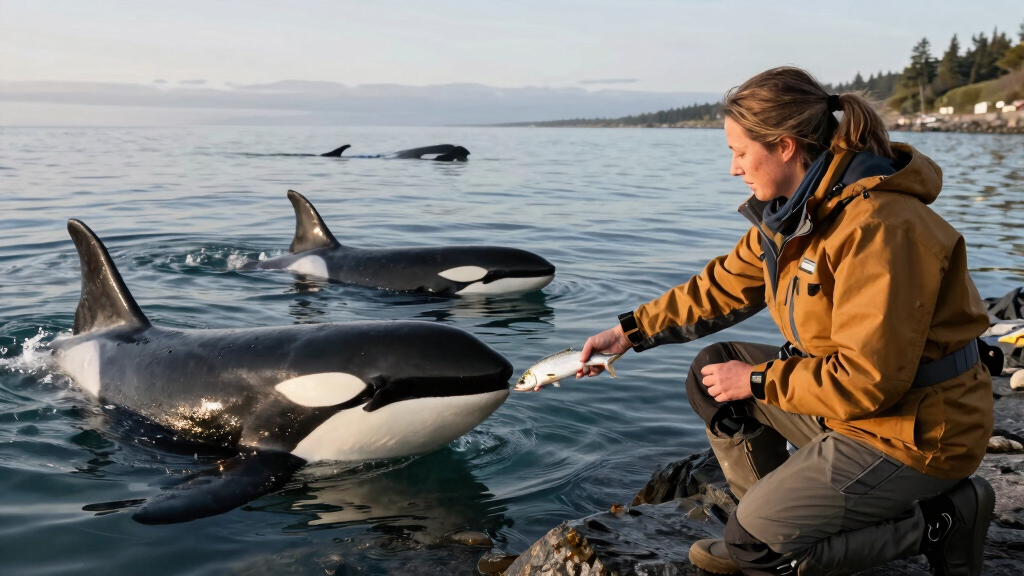
Researchers documented 34 instances where wild orcas appeared to offer prey to humans across several countries. The behavior suggests orcas may recognize human sentience and engage in altruistic actions, but the implications remain uncertain.
Researchers have documented 34 instances of wild orcas offering prey to humans across various locations worldwide, suggesting a potential form of interspecies altruism. This behavior, observed over two decades, raises questions about orca cognition and their capacity for recognizing human sentience, making it a significant development in marine mammal research.
The study, published in the Journal of Comparative Psychology, details 34 cases of prey-sharing behavior involving orcas from 2004 to 2024, occurring in regions including Alaska, California, New Zealand, Argentina, and Norway. These instances include orcas presenting various types of prey, such as rays, seaweed, a turtle, and even a sunfish, often after waiting for a response from nearby humans.
Most of these prey offerings involved dead animals, with some presented whole and others partitioned. In nearly all cases, the orcas appeared to wait for a response after offering the prey, then either retrieved or abandoned it. Researchers believe the behavior is intentional, not accidental, as the animals seemed to seek interaction or recognition from humans.
Why It Matters
This research suggests that orcas may extend social and altruistic behaviors beyond their pods, potentially recognizing human sentience and engaging in actions to build interspecies relationships. Understanding this behavior could influence conservation strategies and human-wildlife interaction guidelines, emphasizing caution due to potential risks.
As an affiliate, we earn on qualifying purchases.
Background
Orcas are known for their complex social structures and cooperative hunting strategies within pods. They often share food among themselves, which has been well-documented. However, documented instances of prey-sharing with humans are rare and have only recently been systematically studied. Previous anecdotal reports have hinted at such interactions, but this research provides the first comprehensive documentation across multiple locations and years.
“The behavior suggests orcas may be extending their prey-sharing to humans, indicating a level of social complexity and possible recognition of sentience.”
— Sarah Kuta, Daily Correspondent
“These weren’t mistakes; the orcas wanted to see how humans responded. It’s a form of concern or curiosity that goes beyond simple hunting behavior.”
— Jared Towers, lead researcher
“Orcas understand us—our sentience—and seem to comprehend the world better than we do. Their willingness to share prey might reflect a desire to relate to humans.”
— Carl Safina, ecologist
As an affiliate, we earn on qualifying purchases.
What Remains Unclear
It remains unclear whether this prey-sharing behavior is widespread or a rare curiosity, and whether it truly indicates altruism or a different motivation. The motivations behind the behavior are still debated, and the potential risks of encouraging such interactions are not fully understood.
As an affiliate, we earn on qualifying purchases.
What’s Next
Further research is needed to determine the prevalence of this behavior and its underlying motivations. Conservation organizations and researchers may monitor ongoing interactions, while guidelines for safe human-wildlife encounters could be updated to reflect these findings.
As an affiliate, we earn on qualifying purchases.
Key Questions
Are orcas intentionally offering prey to humans?
Based on documented cases, researchers believe the orcas are intentionally offering prey and waiting for responses, indicating purposeful behavior rather than accidental drops.
Does this mean orcas recognize human sentience?
The behavior suggests they may have some recognition of human sentience, but definitive evidence is still lacking. More research is needed to understand their cognitive abilities fully.
Should humans encourage interactions with wild orcas based on this behavior?
Researchers caution against encouraging such interactions due to potential risks for both humans and orcas, and recommend maintaining safe distances and respecting wildlife.
Could this behavior be harmful to either species?
Yes, there is potential for harm if interactions escalate or if humans attempt to reciprocate or feed orcas. Experts advise caution and discourage deliberate engagement with wild orcas.
Source: reddit
Fall Picks
fall essentials
As an affiliate, we earn on qualifying purchases.