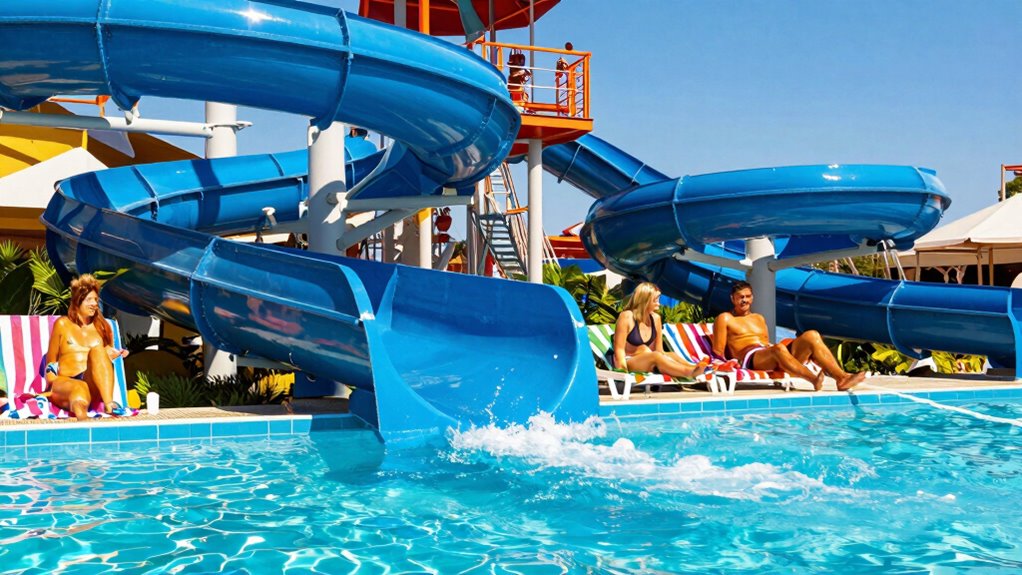

At water parks, sun exposure adds up faster because water reflects up to 90% of UV rays, bouncing them onto your skin from various angles. Reflective surfaces like pools, slides, and water features intensify UV exposure even on cloudy days or in shaded areas. Without proper protection, you can easily overexpose yourself without realizing it. Staying safe means understanding these risks—if you want to discover how to limit this exposure effectively, keep going.

Get pool and patio gear delivered free with Prime
- Fast, free delivery on millions of items
- Prime Video, Amazon Music and more included
- Member-only deals all year
Key Takeaways
- Water reflects up to 90% of UV rays, increasing skin exposure at water parks.
- Reflective surfaces bounce UV rays back, amplifying overall sun exposure.
- UV rays can penetrate clouds and shade, causing skin damage even on overcast days.
- Short-term sunburns can accumulate quickly, raising long-term skin cancer risks.
- Lack of awareness about UV reflection leads to unintentional overexposure and faster cumulative damage.
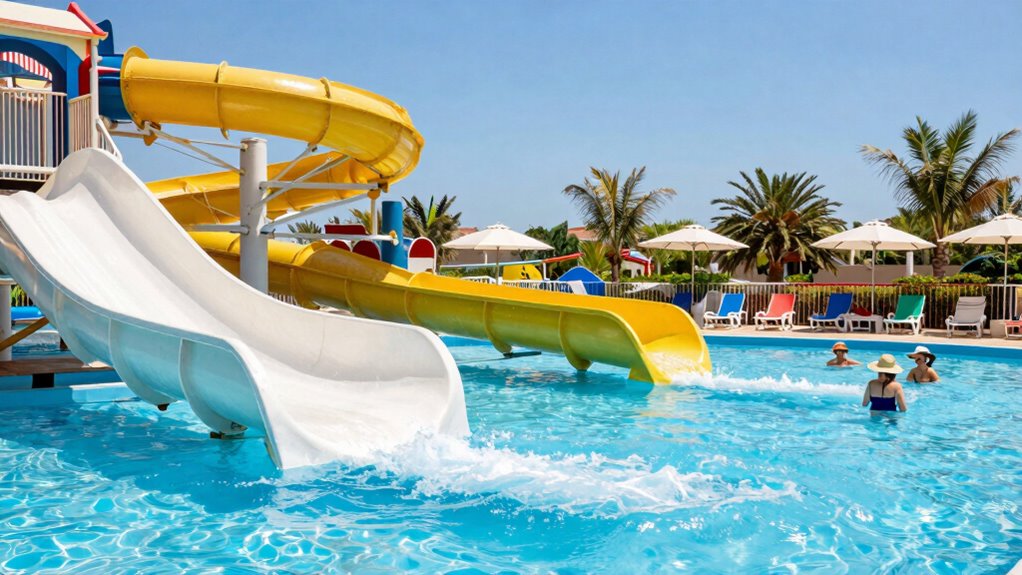
Spending a day at a water park is fun, but the sun’s rays can quickly turn a good time into a health concern if you’re not careful. Water parks are designed for excitement, but they also expose you to intense sunlight for hours. The reflective surfaces of pools, slides, and water features bounce the sun’s rays right back at you, increasing your exposure. That’s why practicing sun safety and skin protection becomes essential, especially when you’re planning to spend a whole day outdoors.
You might think that splashy water and shaded cabanas are enough to shield you from the sun, but the reality is that UV rays can reach your skin even on cloudy days or when you’re in the shade. Water reflects up to 90% of UV radiation, so even if you’re swimming or lounging under an umbrella, you’re still vulnerable. The cumulative effect of this exposure can add up quickly, especially if you’re not vigilant about protecting your skin. The more time you spend in the sun, the higher your risk of sunburn, skin damage, and long-term health issues like skin cancer. Additionally, natural pools designed with eco-friendly filtration systems often incorporate materials that can reflect sunlight, further increasing the risk. Being aware of UV reflection from water and surfaces helps you better understand the importance of rigorous sun protection.
To prevent this, you need to be proactive about skin protection. Apply a broad-spectrum sunscreen with at least SPF 30, and make sure to reapply every two hours, or more often if you’re swimming or sweating. Don’t forget to cover all exposed areas—ears, neck, shoulders, and the tops of your feet. Wearing lightweight, long-sleeved shirts, wide-brim hats, and UV-protective sunglasses adds extra layers of defense. Remember, even if you feel cool and comfortable, your skin can still be getting sun damage. It’s easy to underestimate how quickly UV rays can accumulate, especially when you’re distracted by water slides or playing in the pool.
Staying hydrated is equally important, not just to keep up your energy but because sun exposure and heat can lead to dehydration. Drinking plenty of water helps your body cope with the heat and reduces the risk of heat-related illnesses. It’s also a good idea to seek shade during the hottest parts of the day, usually between 10 a.m. and 4 p.m., when the sun’s rays are at their strongest. Additionally, understanding the effects of hormesis can help you balance sun exposure to promote skin health while avoiding overexposure. Incorporating protective measures into your routine can significantly minimize the risk of sun damage and ensure a safer outdoor experience. Furthermore, being aware of the cumulative effects of UV exposure emphasizes the importance of consistent sun safety practices.
In the end, you’re responsible for your own sun safety at water parks. Taking simple steps to protect your skin ensures that you can enjoy the thrill of the slides without the worry of sun damage. Remember, the effects of sun exposure add up faster than you think, so a little caution now can save you a lot of trouble later.
Products Worth Considering

DJI Osmo Mobile 8 Gimbal with Mic Mini Transmitter, Infinity Black

Samsonite Winfield 2 20-Inch Hardside Carry-On Spinner Luggage, Charcoal

Bose QuietComfort Headphones (2nd Gen), Wireless Noise-Cancelling Over-Ear Headphones, Eucalyptus Green
As an affiliate, we earn on qualifying purchases.
Frequently Asked Questions
How Does Water Reflection Increase UV Exposure?
Water reflection increases UV exposure through UV amplification, as the water surface acts like a mirror, bouncing UV rays back onto your skin. When you’re at a water park, the reflected sunlight doubles your UV exposure, making it easier to get sunburned. You might not realize how much UV you’re absorbing, so it’s essential to wear broad-spectrum sunscreen, protective clothing, and sunglasses to shield yourself from the intensified rays reflected by water.
Are Water Parks More Dangerous Than Beaches for Sunburns?
Water parks can be more dangerous than beaches for sunburns because you’re exposed to reflected UV rays from water surfaces. To prevent sunburn, you should apply broad-spectrum sunscreen regularly, seek shade, and wear protective clothing like hats and rash guards. Keep in mind that water reflection and prolonged exposure increase risk, so taking these sunburn prevention steps helps protect your skin while enjoying water park fun.
What Time of Day Is Safest for Sun Exposure at Water Parks?
The safest time for sun exposure at water parks is during the early morning or late afternoon, when the sun’s rays are less intense. During peak hours, typically from 10 a.m. to 4 p.m., the sun’s strength surges, increasing your risk of sunburn. Practice sun safety by seeking shade, wearing protective clothing, and applying sunscreen during these less intense hours to protect your skin and enjoy your day safely.
Can Water Activities Reduce the Risk of Sunburn?
Water activities can help reduce the risk of sunburn if you prioritize sun protection and stay hydrated. Taking breaks in the shade, applying broad-spectrum sunscreen regularly, and wearing protective clothing are essential. Water encourages skin hydration, which helps keep your skin healthy and more resistant to damage. Just remember, even during water activities, you should remain vigilant about sun safety to prevent harmful effects from UV rays.
How Does Altitude Affect Sun Exposure at Water Parks?
You might think water parks are safe from the sun’s harsh effects, but altitude impact says otherwise. Higher elevations mean increased UV intensity, making you more vulnerable to sun damage. So, while you’re splashing around and having fun, remember that the sun’s rays hit harder, adding to your exposure. It’s ironic—more altitude, more risk—so don’t forget your sunscreen, even on cloudy days.
Conclusion
So, next time you hit the water park, keep in mind that the sun’s rays bounce off the water like a mirror, doubling your exposure in a flash. Protect your skin with sunscreen, wear a hat, and seek shade whenever you can. Think of it as guarding a fragile treasure—your health. With a little caution, you can enjoy the thrills without paying the price of sunburn or skin damage. Stay safe and soak up the fun responsibly!