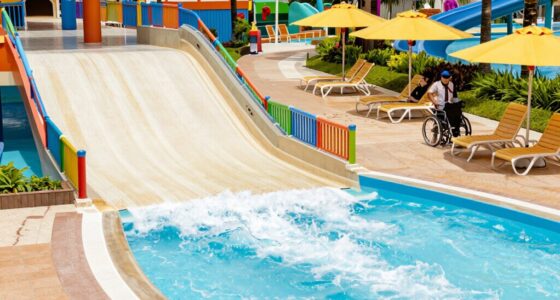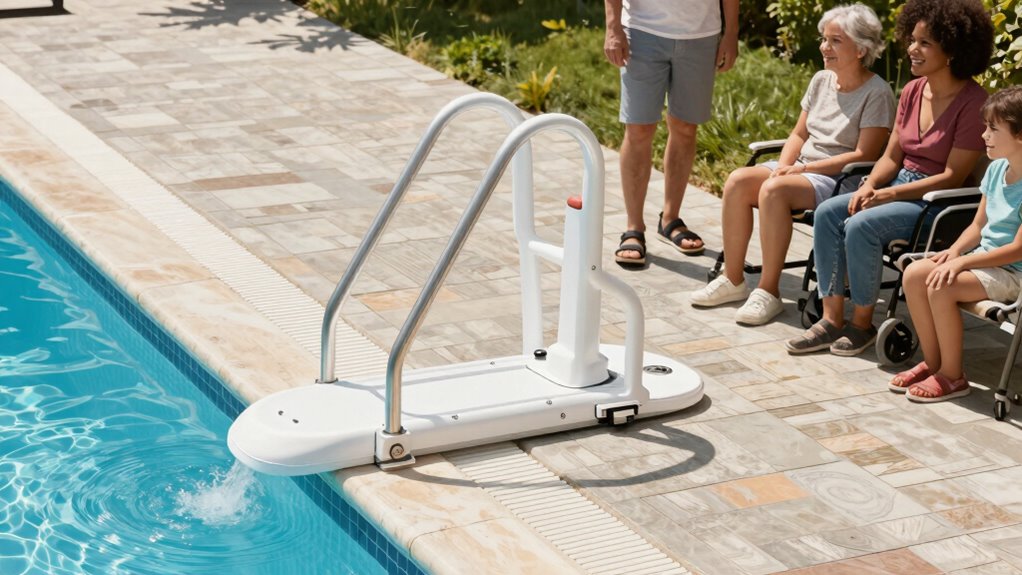

To facilitate your family’s safety and inclusion, choose pool lifts that are easy to operate, sturdy, and weather-resistant, and place them conveniently near the pool edge. Design access paths with gentle slopes, non-slip surfaces, and ample width for wheelchairs or mobility aids, making entry and exit safe and comfortable for everyone. Proper signage and smooth progressions help create an inviting environment. Keep these key points in mind, and you’ll discover how to make your pool area safer and more accessible for all.
Key Takeaways
- Choose user-friendly, weather-resistant pool lifts suitable for various mobility needs and easy to operate safely.
- Ensure access paths have gentle slopes, non-slip surfaces, and adequate width for wheelchairs and aids.
- Place lifts conveniently near the pool edge with ample space for safe transfers and maneuvering.
- Follow accessibility regulations for signage, equipment placement, and proper cable management to ensure safety.
- Design inclusive environments that promote confidence, safety, and enjoyment for all swimmers.

Creating accessible pool environments is essential for families who want everyone to enjoy the water safely and comfortably. When considering pool lifts and access paths, you’re taking important steps toward guaranteeing that all swimmers, regardless of mobility, can participate in the fun without barriers. One of your main concerns should be swimming safety, which isn’t just about preventing accidents but also about making sure everyone feels secure when entering and exiting the water. Properly installed pool lifts and well-designed access paths help reduce the risk of slips, falls, and injuries, especially for those with limited mobility or balance issues.
You also need to be aware of accessibility regulations, which set standards for how pools should accommodate individuals with disabilities. These regulations often specify the types of equipment required, such as lifts that can support different weight capacities, and the dimensions and slopes of access paths. By adhering to these guidelines, you not only assure legal compliance but also demonstrate your commitment to inclusivity. Regulations may also cover the placement of lifts for easy access, the materials used for paths to prevent slipping, and the signage that guides users safely around the pool area. Ensuring that cabling solutions and equipment installation are properly managed is crucial for maintaining safety and functionality. Incorporating accessible design principles can further enhance the overall user experience and ensure that the environment is welcoming to everyone. Additionally, understanding mobility aids can assist in selecting the most appropriate equipment for your pool setting.
When selecting a pool lift, consider models that are easy to operate, sturdy, and weather-resistant. Some lifts are manual, requiring the user to operate a crank or lever, while others are powered, allowing for effortless transfers. You’ll want to think about who will be using the lift most often—children, adults, or seniors—and choose a model that suits their needs. Additionally, the lift should be positioned conveniently near the pool edge, with enough space for maneuvering and safety. Incorporating universal design features can further enhance accessibility for a diverse range of users.
Access paths should be designed with gentle slopes, non-slip surfaces, and wide enough to accommodate wheelchairs or mobility aids. This assures smooth and safe transitions from the deck to the water, minimizing physical strain and potential hazards. Proper signage and clear markings also play a crucial role in guiding users and alerting others of the accessible features. Remember, creating an inclusive environment isn’t just about meeting legal standards; it’s about fostering a space where everyone feels welcome and safe. When you prioritize swimming safety and follow accessibility regulations, you help make pool time enjoyable and safe for every family member, regardless of mobility challenges.
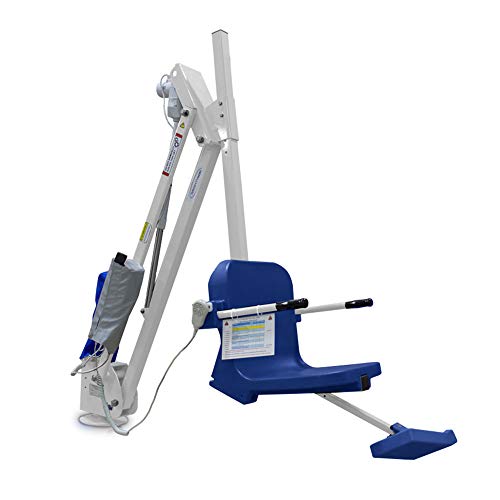
Aqua Creek Mighty Pool Lift, ADA Compliant, Anchor Not Included, 400 lbs. Capacity (Blue)
As an affiliate, we earn on qualifying purchases.
As an affiliate, we earn on qualifying purchases.
Frequently Asked Questions
Are Pool Lifts Suitable for All Types of Pools?
Pool lifts are suitable for most types of pools, but accessibility options and design considerations matter. You’ll want to check if your pool’s shape, size, and surface support the lift system you choose. Some lifts work better with in-ground pools, while others suit above-ground pools. Make certain to select a lift compatible with your pool’s construction and make sure it fits seamlessly with your access path for safe, easy use.
How Much Do Pool Lifts Typically Cost?
Pool lifts typically cost between $1,500 and $4,000, depending on features and installation. When shopping, you should check pool lift warranties to verify quality and support. Also, be aware of accessibility regulations to ensure your lift complies with safety standards. Investing in a reliable pool lift helps provide safe, accessible enjoyment for everyone, and understanding these costs and regulations guarantees you make the right choice for your family’s needs.
What Maintenance Is Required for Pool Lifts?
Like tending to a garden, maintaining your pool lift guarantees its longevity. Regularly check the system for wear and tear, lubricate moving parts, and keep the electrical components clean. Follow the manufacturer’s maintenance schedule to prevent rust, corrosion, or mechanical failure. Proper upkeep enhances pool lift durability, so you can rely on it season after season. Consistent care keeps access safe, smooth, and ready whenever you need it.
Can Pool Lifts Be Installed in Existing Pools?
Yes, pool lifts can be installed in existing pools. You’ll need to plan for pool lift installation, which often involves accessibility modifications to guarantee safety and compliance with regulations. It’s best to consult professionals experienced in accessibility modifications to assess your pool’s structure and determine the best placement. Proper installation makes your pool more inclusive, allowing everyone to enjoy it comfortably and safely.
Are There Any Safety Standards for Pool Lifts?
Yes, there are safety standards for pool lifts. You should look for lifts with proper safety certifications, ensuring they meet rigorous regulations. Conduct risk assessments to identify potential hazards and confirm the lift’s stability and reliability. By choosing certified lifts and evaluating risks, you create a safer, more secure swimming experience. Safety standards serve as strict safeguards, simplifying your decision and supporting your family’s fun and freedom in the pool.

DOK Dog-DOK Inflatable Dock Platform: Safe & Easy Water Access for Dogs Up to 250 lbs; Floating Non-Slip EVA Foam with Dog Boat Ramp for Pool, Dock, & Lake | Military Grade & High Visibility
Ultimate Water Fun: Include your furry friends in the water fun with Dog-DOK. Exclusive EVA Foam DOK-DECK ensures…
As an affiliate, we earn on qualifying purchases.
As an affiliate, we earn on qualifying purchases.
Conclusion
By understanding pool lifts and access paths, you’re taking a page from the book of Hercules, ensuring everyone can enjoy the pool’s benefits. Just as heroes overcome obstacles, your thoughtful choices create a safe, inclusive space for all family members. Remember, the right equipment isn’t just about access — it’s about building memories and fostering independence. With these tools, your family can leap into joy, turning every swim into a victory worth celebrating.

Aqua Creek Mighty Pool Lift, ADA Compliant, Anchor Not Included, 400 lbs. Capacity (White)
Anchor not included.
As an affiliate, we earn on qualifying purchases.
As an affiliate, we earn on qualifying purchases.

Gordon Glass® Wheelchair Shower Entry Threshold – ADA-Friendly, Roll-In Accessible Ramp, 60-Inch Aluminum with Neoprene Seal – Trim-to-Fit – Made in USA
Proudly Made in the USA: Manufactured in the United States with quality materials and craftsmanship you can trust.
As an affiliate, we earn on qualifying purchases.
As an affiliate, we earn on qualifying purchases.