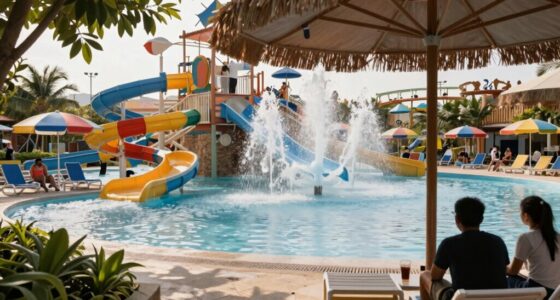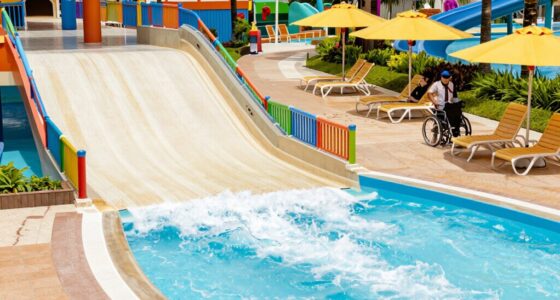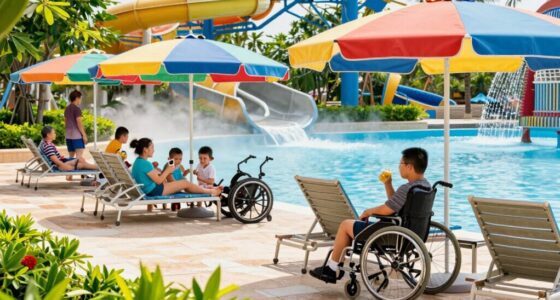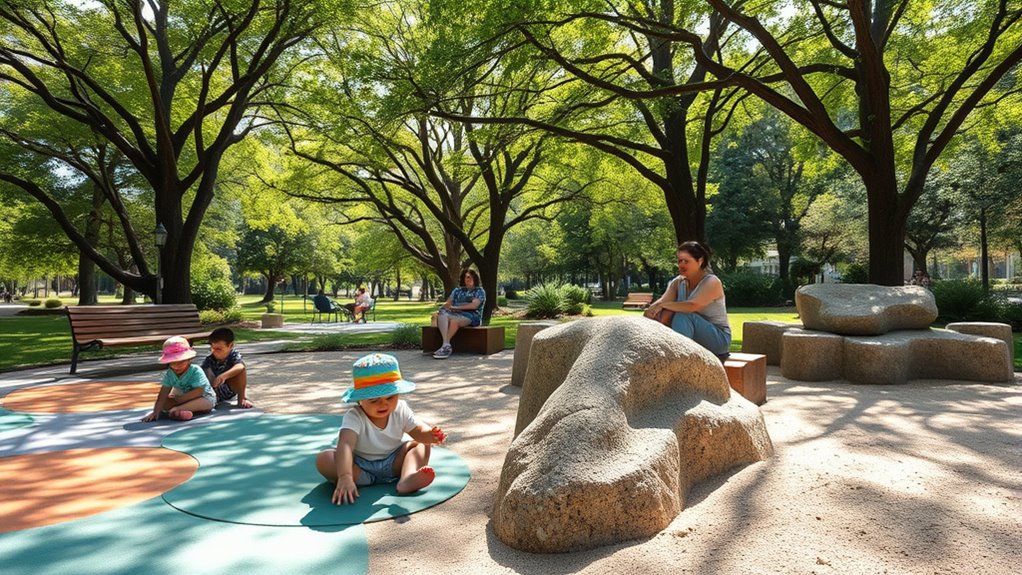

When visiting parks with sensory hours, you can expect a calmer environment with dimmed lighting, lowered noise levels, and less visual clutter. Rides and attractions often operate at reduced speeds or with quiet options, and quiet zones are available with tools to support sensory needs. Staff are prepared to assist, creating a more comfortable experience for visitors. To learn how to make the most of these hours, keep exploring for helpful tips and insights.

Get pool and patio gear delivered free with Prime
- Fast, free delivery on millions of items
- Prime Video, Amazon Music and more included
- Member-only deals all year
Key Takeaways
- Sensory hours feature reduced noise, dimmed lighting, and minimized visual clutter to create a calming environment.
- Access may include priority passes, shorter lines, and quieter ride operations to reduce overstimulation.
- Special sensory-friendly zones equipped with tools like noise-canceling headphones and tactile panels are available.
- Visitors should plan ahead by checking schedules, packing comfort items, and reviewing park policies.
- These hours promote inclusive experiences, reduce stress, and support social interaction for children with sensory sensitivities.
sensory-friendly park headphones
As an affiliate, we earn on qualifying purchases.
As an affiliate, we earn on qualifying purchases.
Features and Modifications During Sensory Hours

During sensory hours, parks implement various features and modifications to create a more accommodating environment for visitors with sensory sensitivities. You may notice special passes that grant priority access, reducing wait times, and allow a caregiver or family member to accompany you. Some parks waive certain fees for necessary companions and limit pass distribution to keep the environment low-stimulation. Rides often operate at reduced speeds, with lowered volume, dimmed or turned-off flashing lights, and alternative options like simulator rides without intense motion. Queue lines are shortened or bypassed for pass holders. Quiet zones are available, featuring minimal noise, subdued lighting, and sensory tools like noise-canceling headphones and fidget toys. Staff are trained to assist and support visitors, ensuring a comfortable, sensory-friendly experience. Research indicates that these modifications can significantly reduce sensory overload and improve overall enjoyment for visitors with sensitivities. Additionally, parks often incorporate sensory-friendly environments that are designed to further support visitors’ comfort and well-being.
noise-canceling headphones for kids
As an affiliate, we earn on qualifying purchases.
As an affiliate, we earn on qualifying purchases.
Sensory-Friendly Environment and Atmosphere

Creating a sensory-friendly environment involves carefully adjusting the park’s atmosphere to minimize overstimulation and promote comfort. You’ll notice reduced noise levels from lowered music, fewer announcements, and quieter equipment. Lighting is softened, avoiding bright or flashing effects, with natural or dim lighting creating a calming ambiance. Visual clutter is minimized by removing unnecessary signs and decorations, helping you navigate with ease. Proper surfacing materials also support a quieter, more acoustically controlled environment, reducing echoes and ambient noise. Consider these features that foster comfort: 1. Quiet zones or sensory retreats for peaceful breaks. 2. Muted, consistent color palettes that soothe the eyes. 3. Minimal artificial fragrances, ensuring a scent-free space. 4. Calm staff using clear, gentle communication to support your experience. Implementing soundproofing techniques can further enhance acoustic comfort by dampening external noise. This environment prioritizes your safety, predictability, and overall comfort, making your visit as pleasant as possible.
As an affiliate, we earn on qualifying purchases.
Activities and Equipment Designed for Sensory Support
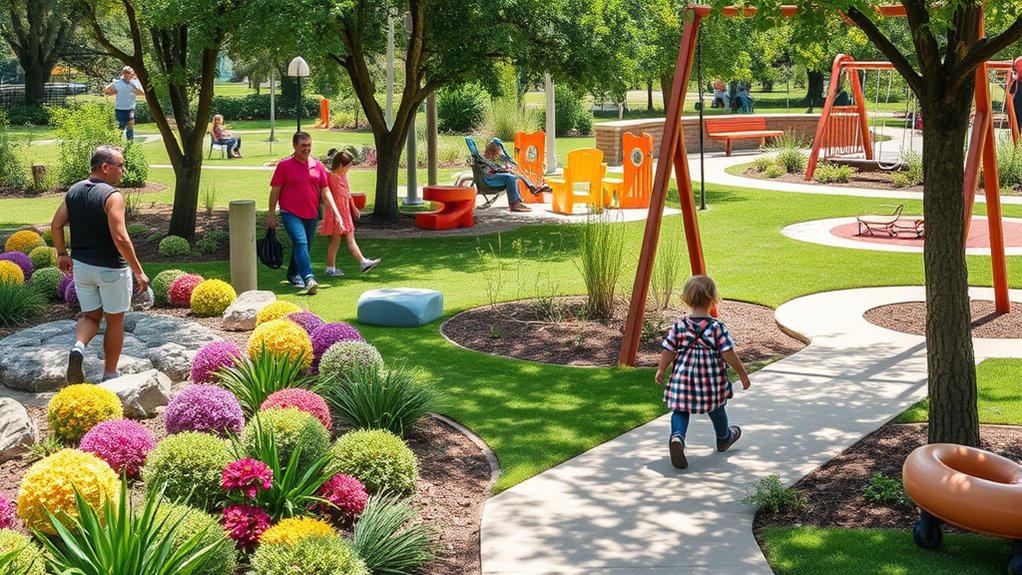
Activities and equipment designed for sensory support offer a range of engaging options that help children explore and regulate their senses. You’ll find musical playground instruments like outdoor drums, chimes, and marimbas, allowing kids to experiment with sound and rhythm. Talk tubes and sound panels enable children to play with voice transmission and control sound levels, promoting self-regulation. Brightly colored panels, mirrors, and patterns stimulate visual interest, while tactile panels, textured surfaces, and sensory mazes encourage touch exploration. Equipment such as sand and water tables support tactile and fine motor skill development. Vestibular and movement equipment like swings, climbers, and trampolines promote balance, coordination, and body awareness. Many structures combine multiple sensory elements, creating inclusive play experiences tailored to diverse needs. Sensory play can be integrated into various equipment to further enhance sensory engagement and development.
As an affiliate, we earn on qualifying purchases.
Tips for Visitors Preparing for Sensory Hours

To make the most of sensory hours at the park, it is vital to do some research and planning beforehand. Knowing the schedule and which attractions are open helps you prepare effectively. Research crowd calendars can inform you of the best days to visit, reducing the likelihood of encountering overwhelming crowds. 1. Review park websites for sensory hours times and eligibility details to avoid surprises. 2. Create a visual itinerary to organize your day and reduce uncertainty. 3. Pack comfort items like noise-canceling headphones, sunglasses, and snacks to stay comfortable. 4. Share your plans with caregivers and park staff, and inform them of any specific needs. Being prepared minimizes stress and maximizes enjoyment. Arriving early, taking breaks, and staying aware of your limits ensures a positive experience. Proper planning makes sensory hours more accessible and fun for everyone.
Benefits and Impact on Visitors and Community

Sensory hours at parks not only benefit individual children but also foster greater inclusion within the community. By creating predictable, low-sensory environments, these spaces help children with sensory sensitivities participate confidently in shared activities, promoting social skills and independence. Families experience less stress and easier access to community resources, while communities gain from increased engagement and acceptance of neurodiversity. Sensory-friendly parks encourage equal participation among boys and girls, especially through sensory and music sections. Community events held during sensory hours strengthen social bonds and normalize diverse needs. Overall, these inclusive spaces promote understanding, reduce stigma, and build a more connected, compassionate community where all children can thrive and feel valued. Research shows that sensory-friendly environments can significantly improve the quality of life for children and their families by providing safe and supportive spaces. Additionally, neurodiversity acceptance in public areas fosters a more inclusive environment that benefits everyone.
Frequently Asked Questions
Are Staff Available to Assist During Sensory Hours?
Yes, staff are available to assist during sensory hours. They act as greeters, provide sensory tools, and help you navigate the park comfortably. Staff oversee quiet zones, manage lighting and noise, and guarantee safety by offering clear communication and support. They’re trained to recognize signs of overload and provide tailored assistance, making sure your experience is safe, calming, and inclusive. You can rely on their support throughout your visit.
Can I Bring My Own Sensory Tools or Equipment?
You can usually bring your own sensory tools, but it’s best to verify park policies first because rules vary. Many parks encourage lightweight, portable items like headphones, fidget toys, or weighted blankets to support your needs. Remember to label your belongings and bring durable, safe items. Coordinating with park staff can help ensure your tools are permitted and safely integrated with the sensory-friendly equipment available, making your visit smoother.
Are Sensory Hours Suitable for All Age Groups?
Yes, sensory hours are suitable for all age groups. You’ll find spaces designed to accommodate infants, toddlers, children, teens, and adults, with features like reduced noise, softer lighting, and accessible equipment. These environments promote social interaction, emotional well-being, and developmental support for everyone. Whether you’re young, old, or have specific sensory needs, you can enjoy a safe, inclusive experience that encourages participation across all ages.
How Often Are Sensory Hours Scheduled Throughout the Year?
You’ll find sensory hours sprinkled throughout the year, like gentle rain on a summer day or the first snow of winter. Some parks host monthly sessions, giving you regular chances to enjoy a calm, welcoming space. Others schedule special events quarterly or annually, aligning with holidays or awareness days. These thoughtfully timed hours help you plan ahead and create a predictable, soothing experience for you and your loved ones.
Is Prior Registration Required to Attend Sensory Hours?
Yes, prior registration is required to attend sensory hours at most parks. You’ll need to sign up online or through phone, often days in advance, to secure a spot. This helps parks manage capacity, prepare accommodations, and guarantee a comfortable experience for everyone. Walk-ins are usually not accepted because of limited space, so it’s best to register early and provide any necessary details about your needs.
Conclusion
Sensory hours open the door to a world where everyone can explore and enjoy without worry. Think of it as a gentle breeze that clears the way for new adventures, making parks more welcoming and inclusive. By taking advantage of these special hours, you create memories filled with joy and understanding. So, step in with an open heart—you’ll find that these moments become shining stars in your outdoor experiences, lighting the way for everyone to thrive.
Fall Picks
fall essentials
As an affiliate, we earn on qualifying purchases.