
Pool plyometrics let you develop explosive power and improve athletic performance without the joint stress of land jumps. Water’s buoyancy reduces impact forces, making exercises safer and ideal for injury prevention and recovery. Incorporating jump variations like tuck, star, and lateral hops in water helps build strength, neuromuscular control, and speed while minimizing soreness. Continue exploring how water-based plyometrics can elevate your training safely and effectively without risking overuse.
Key Takeaways
- Pool plyometrics utilize water’s buoyancy to reduce impact forces during jumps, making exercises safer for joints and tissues.
- Buoyancy supports up to 90% of body weight, significantly decreasing joint stress compared to land-based jumps.
- Water resistance provides muscle engagement and explosive force development without high-impact land impacts.
- Controlled water environments allow for explosive jumps and plyometric training with minimal eccentric overload and soreness.
- Progressing exercises in water enables effective jump training while minimizing injury risk due to reduced impact forces.
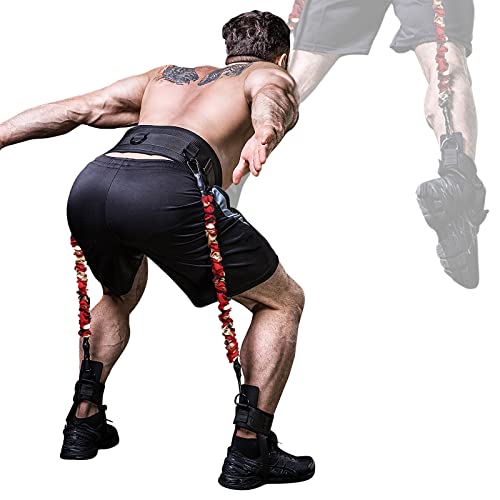
INNSTAR Vertical Jump Trainer for Volleyball Basketball Home Gym, Jump Machine Resistance Bands, Easy to Carry, Adjustable Jump Training Equipment (Passion 50Lbs)
- Portable and Easy to Store: Compact design for home gyms
- Versatile Sports Training: Suitable for basketball, volleyball, soccer, and more
- Full-Body Muscle Engagement: Strengthens shoulders, arms, chest, glutes, legs
As an affiliate, we earn on qualifying purchases.
As an affiliate, we earn on qualifying purchases.
Understanding the Benefits of Aquatic Plyometric Training
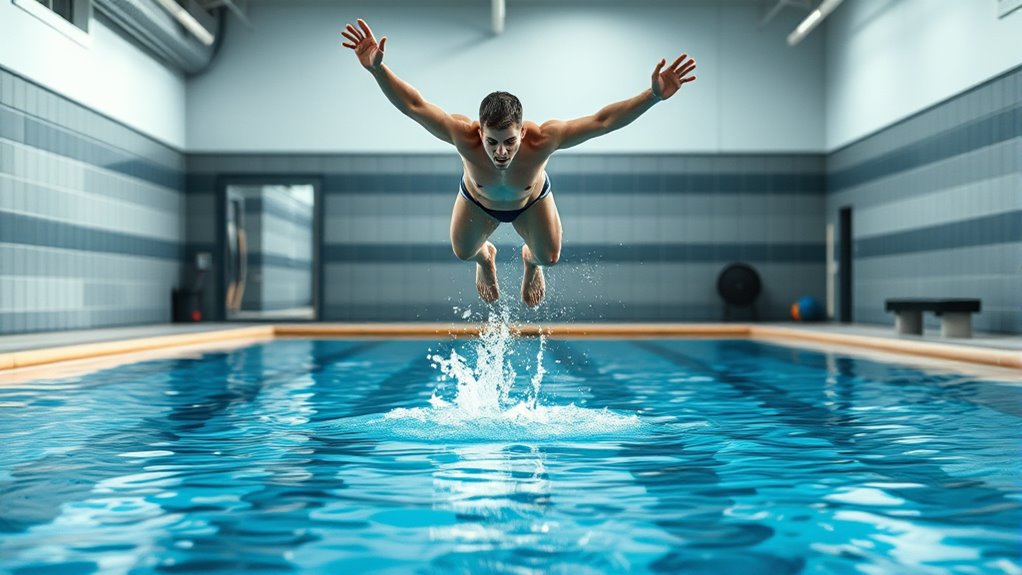
Aquatic plyometric training (APT) offers a range of benefits that can enhance athletic performance, especially in explosive power and agility. When you train in water three times a week for eight weeks, you can see significant improvements in your jump performance and rapid force development, essential for sprinting and quick changes of direction. APT increases flight distance before water entry, reflecting stronger lower limbs. It also reduces neuromuscular asymmetries, improving muscle coordination and balance. The water’s resistance and buoyancy engage muscles more effectively while protecting your joints, lowering injury risk. Unlike land training, APT produces similar strength gains with less impact stress. This safe, effective method helps you build explosive power, improve agility, and enhance neuromuscular control, making it a valuable addition to your athletic routine.

Jump Rope, Tangle-Free Rapid Speed Jumping Rope Cable with Ball Bearings for Women, Men and Kids, Adjustable Foam Handles Steel Jump Ropes for Fitness
- Durable & Adjustable Rope: Steel wire with PVC coating, customizable length
- Fast & Tangle-Free Jumps: High-quality ball bearings for smooth, quick rotation
- Ergonomic Foam Handles: Soft, non-slip, moisture-wicking for comfort
As an affiliate, we earn on qualifying purchases.
As an affiliate, we earn on qualifying purchases.
How Water Reduces Impact and Enhances Recovery
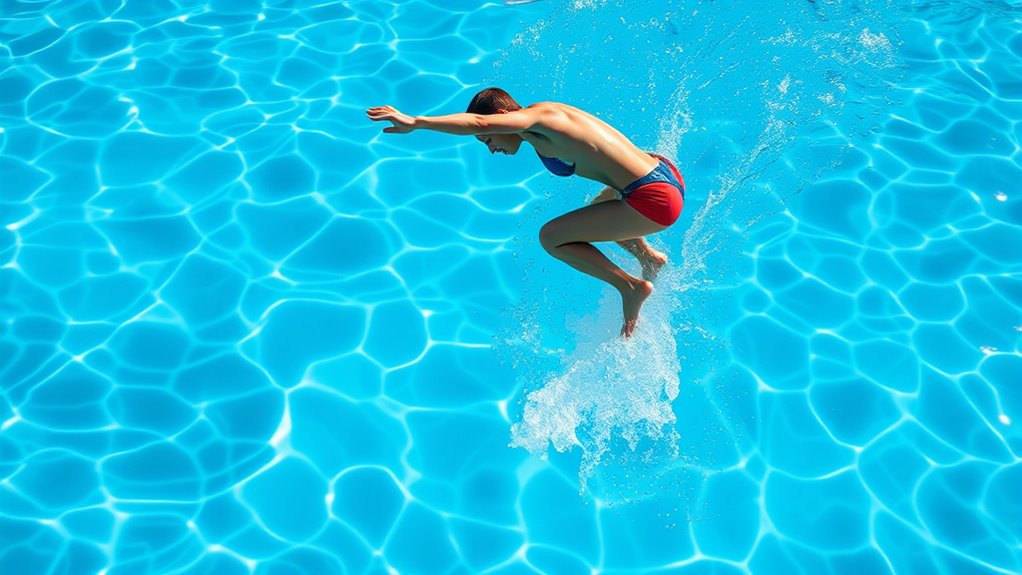
The water’s buoyancy plays a key role in reducing the impact forces on your body during plyometric exercises. It supports up to 90% of your weight in chest-deep water, minimizing joint stress and lowering injury risk. This low-impact environment is perfect if you have arthritis, injuries, or limited mobility, allowing you to perform higher-intensity jumps safely. Additionally, the headphone connection can enhance your workout experience by providing motivational music or guided instructions seamlessly.

Aqua Leisure Fitness Dynamic Resistance Band – Water Exercise – Pool Workout – Fitness Noodle – Length 34"
- Total Body Workout: Resistance band with swivel handles
- Comfortable Grip: Durable, non-slip foam handles
- Smooth Resistance: Ideal for pulling and pushing exercises
As an affiliate, we earn on qualifying purchases.
As an affiliate, we earn on qualifying purchases.
Key Exercises to Incorporate Into Your Pool Plyometric Routine
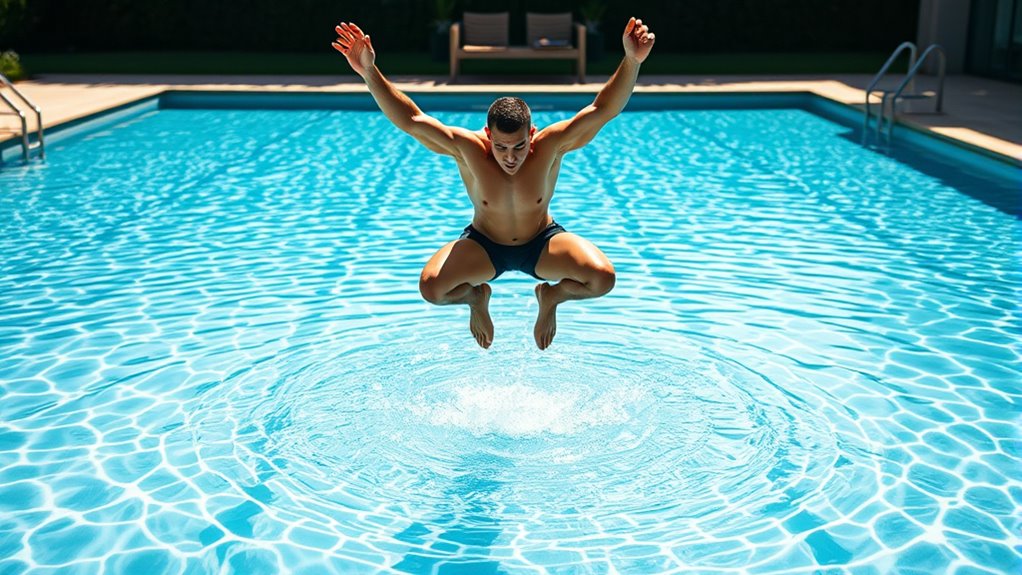
To maximize your pool plyometric workouts, focus on variations in jumping techniques, like tuck jumps or star jumps, to build explosive power from different angles. Incorporating multi-directional drills, such as lateral jumps or cone hops, enhances agility and functional strength. Progress your routine gradually by applying plyometric progression strategies to safely increase intensity and effectiveness over time. Plyometric exercises involve rapid stretch-shortening cycles that generate force, making them highly effective for improving explosive power. Additionally, understanding training progression can help you tailor your workouts to avoid plateaus and reduce the risk of injury.
Jumping Technique Variations
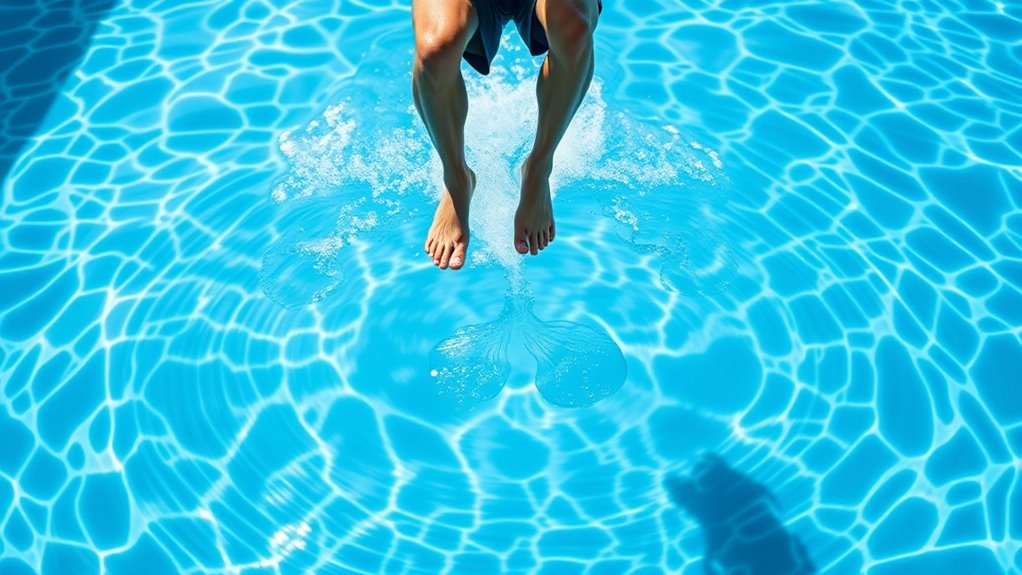
Incorporating various jumping technique variations into your pool plyometric routine can considerably boost your explosive power and athletic performance. Squat jumps, starting from a wide stance, enhance power by combining a deep squat with an explosive overhead thrust in water, increasing resistance. Box and bench jumps focus on controlled landings and gradual progression, building strength and stability. Tuck jumps, with knees to the chest, engage core muscles, while star jumps, spreading limbs wide, maximize muscle engagement through explosive movement. Single-leg and lateral hops challenge balance and joint control, reducing impact in water for safer practice. Vertical and forward plyometric jumps emphasize height and distance, translating to improved starts and turns in swimming. Varying your jumping techniques ensures extensive development and keeps your routine dynamic. Employing a mix of these exercises also prevents plateaus by constantly challenging different muscle groups and movement patterns. Additionally, understanding proper training progression can help optimize your results and reduce injury risk.
Multi-Directional Drills
Adding multi-directional drills to your pool plyometric routine can considerably enhance your agility, stability, and overall athleticism. Incorporate zig-zag sprints to sharpen quick directional changes and improve footwork. Tuck jumps with lateral or rotational shifts boost explosive power and agility, while split jumps with lateral components enhance neuromuscular efficiency. Bounding in multiple directions develops power output and reaction time, mimicking sport-specific movements. Underwater sprint variations with directional shifts help build functional, sport-ready skills. You can also perform lateral hops on one leg to develop balance and single-leg power in the frontal plane. These exercises challenge your stability and coordination across multiple planes, making your training more dynamic and effective. Moreover, research shows that multi-directional and plyometric training can lead to significant improvements in athletic performance and injury prevention. Incorporating diverse movement patterns not only diversifies your workout but also promotes movement variability, which is crucial for adapting to unpredictable athletic scenarios.
Plyometric Progression Strategies
Progressing your pool plyometric routine requires a strategic increase in intensity and complexity to maximize power development while minimizing injury risk. Start with low-intensity drills to build control and confidence, then gradually move to more challenging exercises. Incorporate a variety of plyometrics, rotating linear, lateral, and rotational movements weekly to target different muscle groups. Use progression methods such as increasing sets, repetitions, and adding a countermovement to boost difficulty. Focus on unilateral work, like single-leg jumps, once you have adequate strength, to improve neuromuscular control. Enhance resistance with water drag, deepening pool levels, or adding equipment like weighted belts. Carefully monitor your progress to ensure safe, effective development of explosive power without overtaxing your body. Incorporating proper technique is essential to prevent injury and maximize gains in strength and explosiveness.

GNMN Active Noise Cancelling Ear Buds Wireless Earbuds 96hrs Playback Bluetooth Headphones Dual Battery Display Stereo Bass Earphones with Earhooks Microphone IPX7 Waterproof for Sports/Runing/Workout
- Active Noise Cancellation: Up to 45dB noise reduction
- Transparent Mode: Hear surroundings without removing earbuds
- Long Battery Life: Up to 96 hours with charging case
As an affiliate, we earn on qualifying purchases.
As an affiliate, we earn on qualifying purchases.
Progression Strategies for Safe and Effective Water Jumps
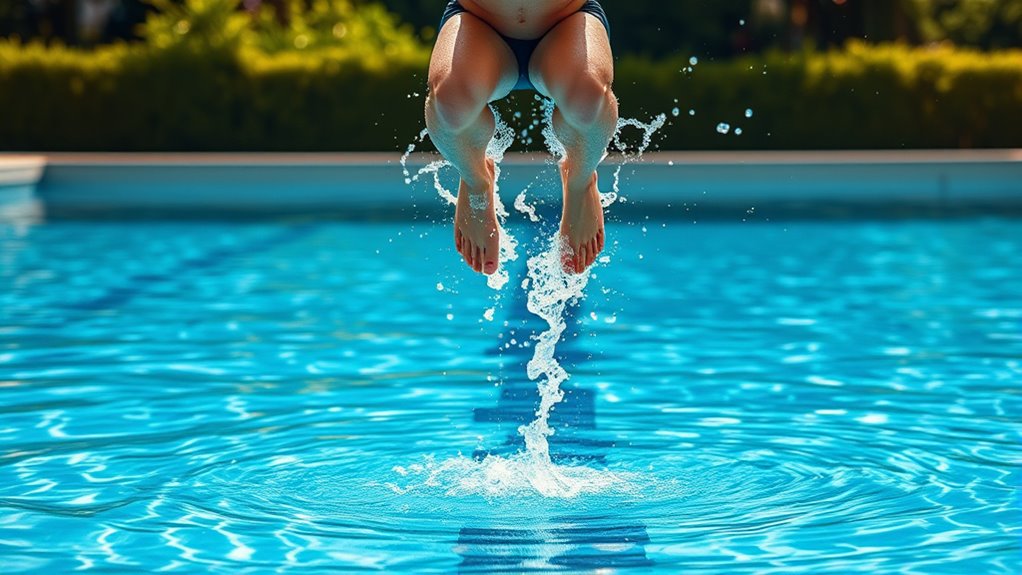
To guarantee water jumps are safe and effective, start with a gradual increase in intensity and load. Begin in waist-high water, where buoyancy supports about 54% of your body weight, reducing joint stress. Focus on low-intensity drills like ankle hops on one leg to build familiarity and strength. Use slow, controlled jumps to perfect technique and ensure safe landings, emphasizing proper mechanics. As you adapt, increase jump height and speed carefully, progressing to medium-intensity exercises such as double-leg or lateral cone hops. Adjust water depth from waist to midchest to progressively load muscles, shifting from 54% to roughly 35% of weight bearing. Water’s resistance provides additional strength stimulus, further enhancing muscular endurance and power development. Incorporating training progression principles ensures systematic and safe advancement in your training. Limit session volume to 2-3 times weekly for 6-12 weeks, monitoring progress and avoiding overload to optimize safety and effectiveness.
Neuromuscular Improvements Through Water-Based Explosive Movements

Water-based explosive movements considerably enhance neuromuscular coordination by training your nervous system to activate muscles more efficiently. This leads to faster, more precise muscle responses, especially during quick movements. As you perform aquatic plyometrics, your nervous system adapts by improving reflexes, increasing muscle recruitment, and optimizing contraction speed. Resistance from water challenges your muscles, demanding precise control and coordination. Neural adaptations include desensitization of the Golgi tendon organ, allowing greater force production before inhibition. You’ll notice:
- Improved muscle activation and reflex responses
- Enhanced stretch reflexes during eccentric phases
- Increased joint stiffness for explosive movements
- Greater motor unit recruitment and firing rates
- Faster rate of force development for jumping and sprinting
- Water’s resistance provides a unique stimulus that promotes additional neural adaptations, further enhancing neuromuscular efficiency. Additionally, the fluid environment reduces impact stress, enabling safer high-intensity training that still promotes neural plasticity.
These adaptations boost your overall neuromuscular efficiency, translating to more powerful, controlled movements in sports and daily activities.
Rehabilitation and Injury Prevention With Pool Plyometrics
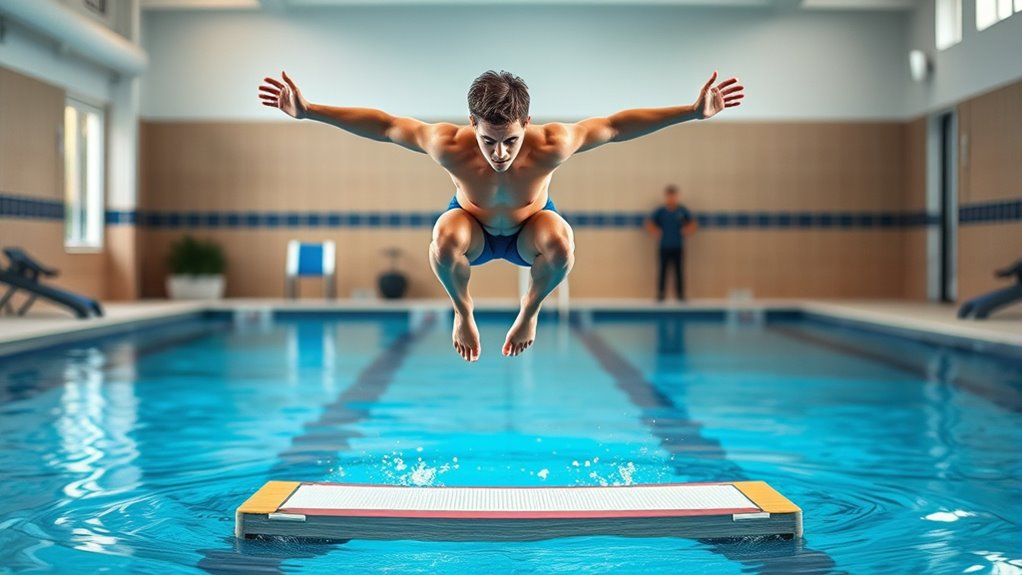
Pool plyometrics reduce joint stress by supporting your body in water, making exercises safer during recovery. This environment also helps you regain strength and explosiveness more quickly without risking further injury. Using aquatic plyometrics can be a smart way to accelerate your rehab process while preventing future issues. Water’s resistance enhances muscle engagement and strength development, further aiding in safe and effective recovery. Additionally, the hydrostatic pressure provided by water can improve circulation and reduce swelling, supporting your healing process.
Reduced Joint Stress
Reduced joint stress is a key advantage of aquatic plyometric exercises, making them especially valuable for rehabilitation and injury prevention. Water’s buoyancy lessens gravitational forces on joints, tendons, and muscles by up to 90%, depending on immersion depth. Hydrostatic pressure supports joints and reduces strain during movement. Impact forces during jumps drop by 33%–54% in water, with the rate of force development decreasing by up to 62%. This environment also alleviates pain and improves function for conditions like patellar tendinitis. Research shows that water-based plyometrics can match the strength gains of land exercises, providing a safe and effective alternative for explosive muscle-building. Imagine:
- Supporting joints with water’s buoyancy, easing stress
- Minimizing impact forces during jumps
- Providing consistent, low-impact training during injury recovery
- Preventing overuse injuries by reducing strain
- Encouraging safe, high-intensity movement for limited mobility individuals
- Incorporating buoyancy effects can further enhance joint protection during training.
Accelerated Recovery
By minimizing impact forces during jumps, aquatic plyometrics enable earlier and safer initiation of explosive movements in rehabilitation. Water’s buoyancy reduces ground reaction forces, limiting muscle and connective tissue microtrauma. This lower impact allows you to start explosive exercises sooner without risking additional tissue damage or inflammation. Studies show aquatic plyometrics speed up recovery of leg muscle explosiveness, matching land-based training results but with less joint stress. The reduced eccentric overload in water decreases muscle soreness and damage, making frequent, consistent sessions possible—key for progress. Water resistance also offers controlled, adjustable loading, supporting gradual strength gains. This safe, effective environment helps you rebuild explosiveness and neuromuscular control, accelerating recovery while minimizing injury risk. Additionally, the health benefits associated with aquatic exercise can improve overall physical and mental well-being during recovery.
Comparing Aquatic and Land-Based Plyometric Outcomes
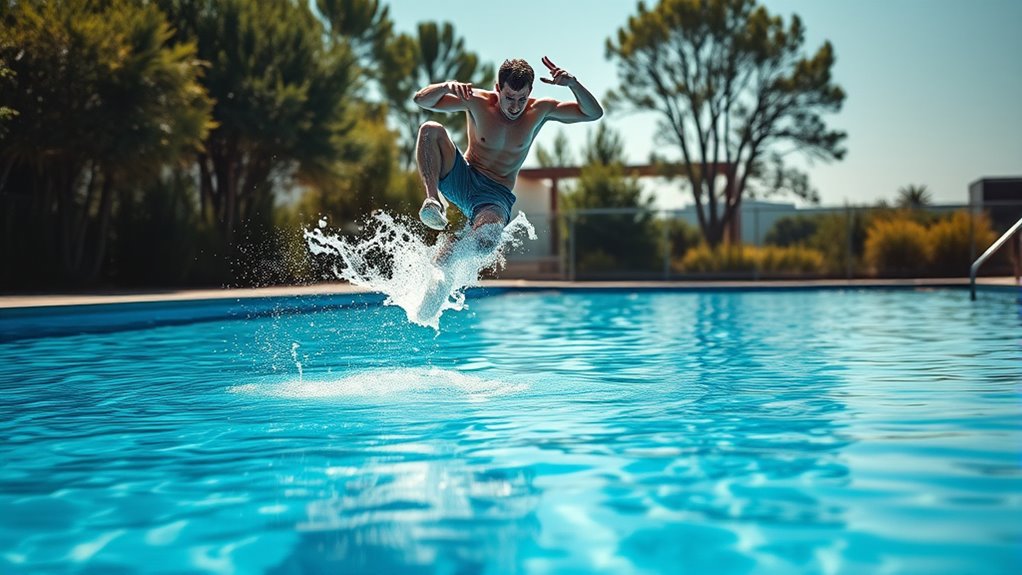
Both aquatic and land-based plyometric training effectively improve vertical jump performance, with studies showing significant gains in jump height and power after training in either environment. You’ll find comparable increases in explosive leg power, regardless of water or land. Some research suggests aquatic plyometrics can produce muscle power gains not always seen on land, thanks to water’s resistance. Using aquatic gear during water training yields similar improvements as traditional land drills. Here’s what you can expect:
Aquatic and land plyometrics both boost vertical jump performance with similar gains and lower impact risks.
- Similar jump height and power gains across both environments
- Reduced impact forces during aquatic exercises
- Lower mechanical load, decreasing injury risk
- Slightly less proprioceptive challenge in water
- Consistent benefits across various athlete populations
- The Kia Tuning options available can further enhance your training experience and results.
Both methods can boost your performance, with aquatic training offering a safer, low-impact alternative.
Tips for Maximizing Power and Speed Gains in the Water

To maximize your power and speed gains in aquatic plyometric training, focusing on ideal water depth and buoyancy is essential. Keep the water between waist and chest level to optimize buoyancy while providing enough resistance to mimic land plyometrics. Buoyancy reduces weight-bearing forces by up to 90%, allowing you to perform explosive movements with less joint stress and faster recovery. Maintaining a vertical posture supports natural jumping mechanics, preventing compensatory movements. The water’s viscosity offers consistent drag resistance throughout each motion, boosting neuromuscular engagement and power output. To progress, gradually increase jump height, repetitions, and resistance variables like water speed or body angles. Incorporate multidirectional jumps and vary training intensity to challenge your muscles and stimulate continuous adaptation for maximum power and speed development. Additionally, understanding juice cleansing benefits can aid recovery and overall performance by supporting hydration and nutrient intake.
Designing a Balanced Aquatic Plyometric Program
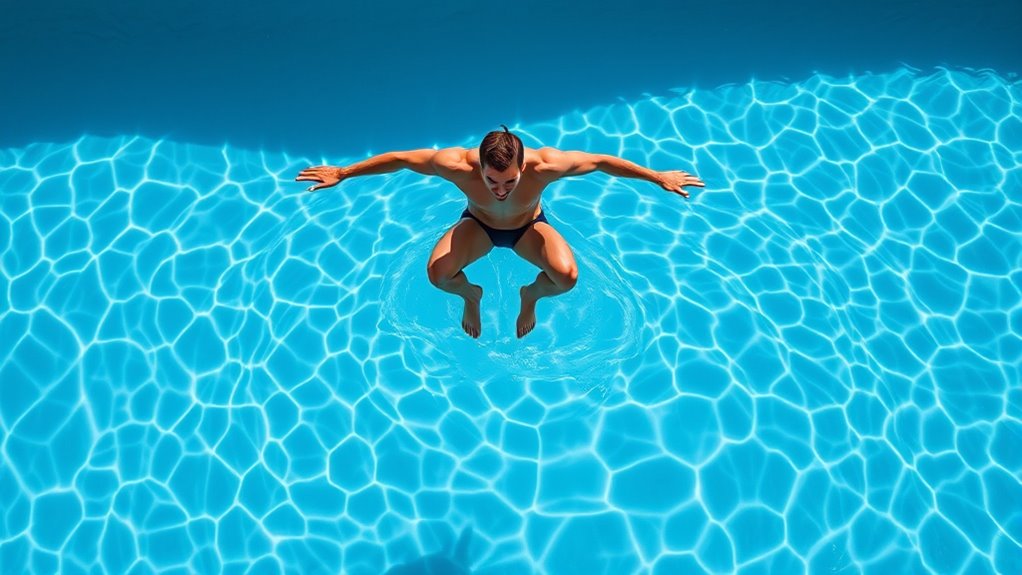
Creating a balanced aquatic plyometric program requires careful planning of structure, scheduling, exercise selection, and intensity variation to guarantee safe and effective training. You should design a 6 to 8-week plan with three sessions per week, each lasting 40 to 60 minutes. Incorporate a gradual increase in intensity and volume, balancing jump repetitions and rest intervals—like 60 seconds between sets and 3 minutes between jumps. Adjust water depth to waist or hip level, reducing impact forces. Select exercises that include lateral hops, tuck jumps, and single-leg bounds, varying intensity by changing jump types and speed. Ensure exercises promote neuromuscular control, emphasizing proper landing techniques. Proper planning boosts performance while minimizing injury risk and supporting safe progression in your aquatic plyometric journey. Additionally, understanding the right tools and equipment can enhance the safety and effectiveness of your training sessions.
Frequently Asked Questions
Can Pool Plyometrics Improve Athletic Performance in Sports Other Than Swimming?
Yes, pool plyometrics can improve your athletic performance in sports beyond swimming. You’ll gain increased strength, power, and explosive ability, which transfer well to sports like basketball, volleyball, and football. The water’s resistance enhances muscle workload while reducing impact stress, helping you build neuromuscular control and proprioception. This training also boosts movement quality and stability, making your land-based movements more efficient, coordinated, and less injury-prone.
How Does Water Depth Affect the Intensity of Aquatic Plyometric Exercises?
Water depth directly influences the intensity of your aquatic plyometric exercises. When you’re in waist-deep water, you experience significant buoyancy, reducing joint impact but still maintaining enough resistance for effective training. As you go deeper, like chest-high, buoyancy increases, lowering the load on your muscles but also adding more resistance due to water drag. This deeper water can decrease jump height but boosts muscular effort, balancing safety with workout intensity.
Are There Specific Age Groups That Benefit Most From Pool Plyometric Training?
You benefit most from pool plyometric training if you’re an older adult, youth, or adolescent. Older adults gain improved strength, mobility, and fall prevention, while youth and adolescents develop explosive power safely. This training reduces impact risk, making it suitable for growing athletes and seniors with joint concerns. If you’re in these age groups, aquatic plyometrics can help maintain or improve your physical abilities in a safe, effective way.
What Equipment Is Necessary for Effective Aquatic Plyometric Workouts?
To get the most out of aquatic plyometric workouts, you’ll want essential gear like a flotation belt for buoyancy, a kickboard for stability, and pool noodles for support and resistance. Aquatic dumbbells and resistance paddles boost strength, while a water jogging belt keeps you afloat during intense moves. Safety is key, so don’t forget nonslip boxes, underwater lighting, and always have a lifeguard nearby to keep your workout both effective and secure.
How Long Should a Typical Pool Plyometric Training Program Last for Optimal Results?
A typical pool plyometric training program should last about 6 to 8 weeks for ideal results. Sticking to this duration allows you to see measurable improvements in strength, power, and endurance. Consistency is key, so aim for three sessions per week, gradually increasing intensity and volume. Shorter programs of 3-4 weeks can work for beginners, but longer durations help advanced athletes maximize gains.
Conclusion
By embracing pool plyometrics, you’re gently steering your training ship away from rough waters, allowing your muscles to blossom quietly beneath the surface. This smooth journey helps you build strength and speed without the storm of impact. With patience and consistency, you’ll watch your explosive power bloom like a resilient lily, thriving in the calm, supportive embrace of the water. Keep nurturing this safe haven, and your athletic horizons will expand effortlessly.