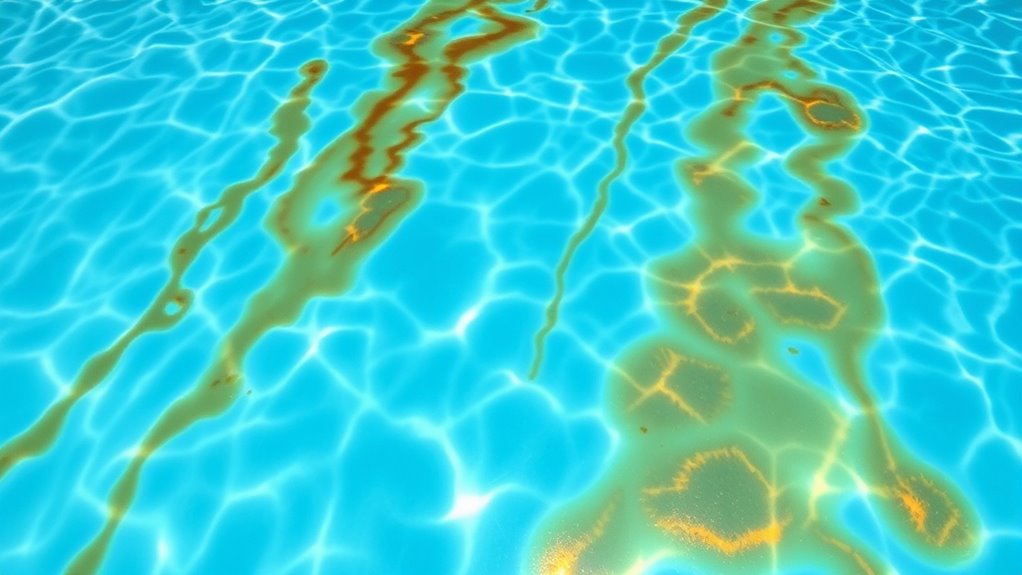

To identify metal stains in your pool, look for distinct colors—rusty brown for iron, green or blue hues for copper, and darker shades for manganese. You can test for metals using a chlorine tablet; stains that fade indicate organic matter, while no change suggests metals. Regular maintenance, stabilizing pH, and using sequestering agents help prevent stains. For stubborn issues, learning more about treatments will help you keep your pool beautiful and clear.

Get pool and patio gear delivered free — and shop member deals
- Fast, free delivery on millions of items
- Access to Prime Big Deal Days deals on October 6–7
- Prime Video, Amazon Music and more included
Key Takeaways
- Identify stain color and pattern to determine if it’s caused by iron, copper, or manganese.
- Test water pH and metal levels regularly to prevent and monitor staining issues.
- Use appropriate treatments like ascorbic acid or citric acid to lighten or remove metal stains.
- Apply metal sequestrants to bind metals and prevent future staining.
- Consult professionals for persistent or deep-set stains, especially on delicate pool surfaces.
Recognizing the Different Colors and Types of Metal Stains
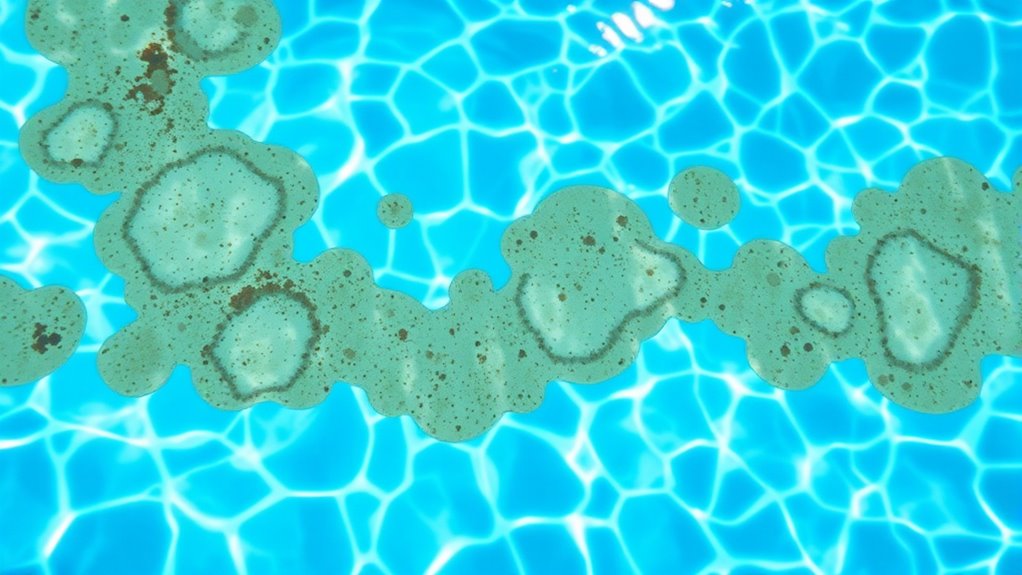
Recognizing the different colors and types of metal stains is essential for accurate diagnosis and effective treatment. Iron stains typically appear as light tan, dark brown, rusty-red, or yellow patches on your pool surfaces. In fiberglass pools, iron can also form black spots. These stains usually aren’t green; their shade varies with water pH and mineral content. Iron stains can manifest as patches, streaks, or broad areas, especially where water circulation is poor or near metal fixtures. They often develop after shocking the pool or chlorine spikes cause metal precipitation. Copper stains, on the other hand, appear as green, blue-tinted, turquoise, or blue-black discolorations. They’re common near pool heaters or after using copper-based algaecides. Manganese stains are typically brownish-black, gray, or purple, and are less common but often more persistent. Metal stains often become more noticeable after chemical treatments or pH adjustments, and understanding the metal type involved can help determine the proper removal method.
Common Metal Sources and How They Enter Your Pool
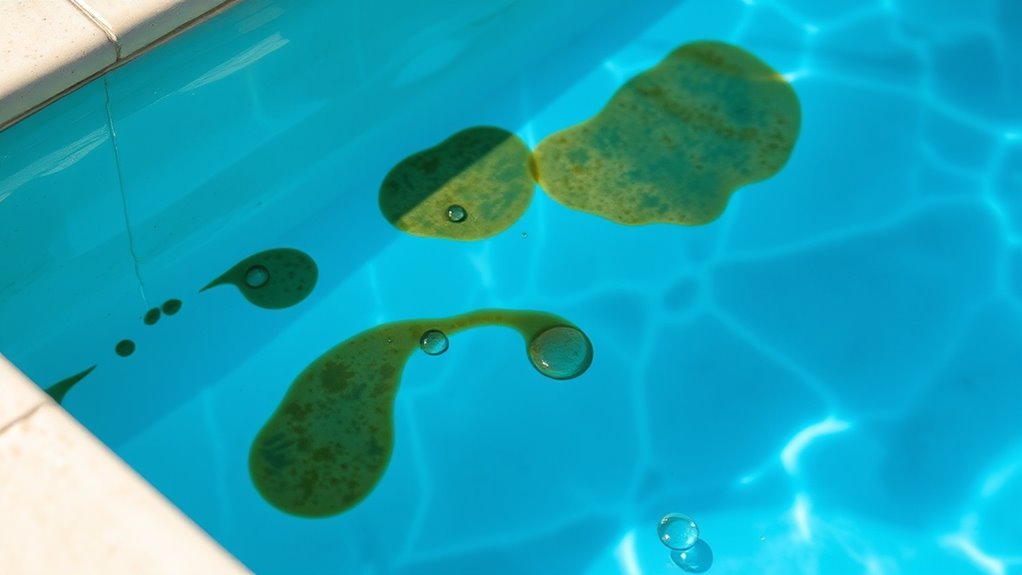
Metals can enter your pool from a variety of sources rooted in your environment and pool infrastructure. Natural water sources like groundwater or surface water often contain iron, copper, manganese, and nickel, which dissolve when rainwater or untreated fill water interacts with soil or rock. Well water and municipal supplies may also have elevated metal levels, especially if the water hasn’t been treated. Pool plumbing and equipment can introduce metals through corrosion or deterioration, especially copper pipes, fixtures, or heat exchangers. Chemical treatments like copper-based algaecides or ionization systems contribute copper directly. Additionally, surrounding materials like marble, granite, and soil can leach metals into your water. Weather events, runoff, and improper chemical balance further increase metal concentrations, leading to staining and discoloration. Monitoring water quality is essential to prevent and address metal-related issues effectively.
Preventive Measures to Minimize Metal Stains

Maintaining proper water chemistry is essential for preventing metal stains in your pool. Regular testing of pH, alkalinity, and metal ion levels helps avoid conditions that cause metals to precipitate. Keeping pH between 7.2 and 7.6 and stabilizing alkalinity reduces oxidation and deposits. Using metal sequestering agents like Pool Magnet® Plus binds metal ions, preventing stains. Weekly application maintains effectiveness. Prevent external contamination by installing filtration on well water, avoiding metal-containing chemicals, and inspecting equipment for corrosion. Proper cleaning—skimming, vacuuming, and filter backwashing—removes metals before they settle. Additionally, controlling water temperature and avoiding sudden pH changes minimize metal oxidation. Implementing these measures ensures your pool stays clear and stain-free. Proper water chemistry is also crucial for maintaining overall mental, emotional, and spiritual well-being, which can enhance your motivation to keep up with pool maintenance routines.
Effective Treatments for Iron, Copper, and Other Metal Stains
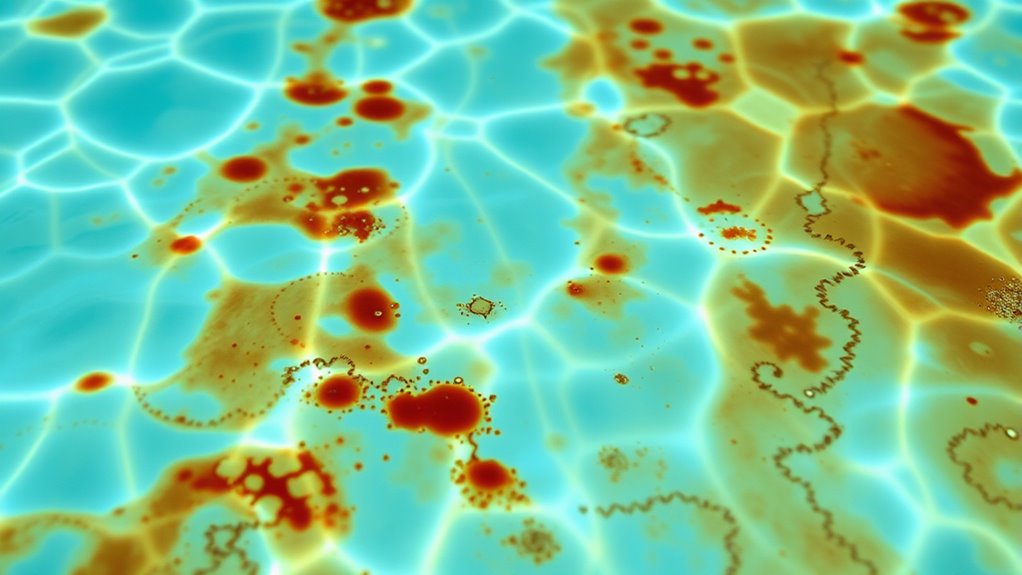
To effectively treat iron, copper, and other metal stains in your pool, start by accurately identifying the type of stain and preparing the water chemistry. Conduct a chlorine tablet test—if the stain lightens, it’s organic; if not, it’s likely a metal stain. Iron stains appear as brown, orange, or green, while copper stains are greenish-blue or teal with a mottled look. Manganese and other metals show as dark brown, black, or purple. Before treatment:
- Balance pH to around 7.2 and adjust alkalinity.
- Reduce chlorine levels below 1 ppm using a neutralizer.
- Turn off the pump and thoroughly brush the stained areas.
- Proper testing is essential to confirm the type of metal causing the stain, ensuring the correct treatment is applied. Use chemical treatments like ascorbic acid, citric acid, or oxalic acid, applying directly or in the water, following recommended soak times and rinsing thoroughly afterward. Additionally, to prevent future staining, consider using metal sequestrants to bind metals and keep them in suspension.
When to Seek Professional Help for Stain Removal

Sometimes, despite your best DIY efforts, stubborn metal stains refuse to fade or disappear altogether. If stains persist after multiple treatments, it’s time to call in a professional. Complex mineral mixes involving iron, copper, and calcium often need specialized analysis and targeted solutions you can’t easily perform yourself. Widespread discoloration or deep-set stains that threaten surface integrity also indicate professional intervention. For pools with fragile surfaces like plaster or pebble finishes, improper handling can cause damage, so experts should evaluate before proceeding. Additionally, ongoing water imbalances linked to stains suggest the need for professional diagnostics. Experts have the right tools and chemicals to identify the stain type accurately, safely handle chemicals, and apply effective treatments, saving you time and preventing costly damage. Professional expertise can also help develop a comprehensive maintenance plan to prevent future stains. Recognizing the limitations of DIY methods ensures you seek appropriate assistance when necessary.
Frequently Asked Questions
Can Metal Stains Be Harmful to Swimmers’ Health?
Metal stains themselves aren’t directly harmful to swimmers, but they can cause skin irritation or discoloration in sensitive individuals. More importantly, stains indicate poor water balance, which can lead to bacterial or algae growth, increasing health risks. If you notice stains, it’s essential to maintain proper water chemistry, use metal sequestrants, and clean your pool regularly. Doing so helps prevent microbial growth and keeps your swimming environment safe and healthy.
How Long Does It Take to Remove Metal Stains Completely?
You wonder how long it takes to fully remove metal stains, and the answer varies. Depending on stain severity, it can take anywhere from 3 days to up to 2 weeks. Light stains lift quickly, but heavy deposits demand patience, ongoing filtration, and multiple treatments. Be prepared for a process that requires consistent effort, testing, and chemical adjustments—success hinges on your commitment to thorough, persistent cleaning.
Are There Eco-Friendly Options for Treating Metal Stains?
Yes, there are eco-friendly options for treating metal stains. You can use natural chemistry products like Metal Free, which sequester metals without harming the environment, or vitamin C-based treatments that dissolve stains naturally. These solutions are biodegradable, non-toxic, and safe for your pool and surroundings. Regular use of eco-friendly sequestrants and proper pool maintenance helps prevent future stains, all while minimizing environmental impact.
Can Metal Stains Reappear After Treatment?
Yes, metal stains can reappear even after treatment. If you don’t tackle the root cause—like ongoing metal sources, improper water chemistry, or insufficient maintenance—the stains will just come back to haunt you. Think of it as putting a band-aid on a bigger problem. To prevent recurrence, you need to regularly test your water, use the right sequestering agents, and reduce metal input from fill water or equipment.
What Are the Costs Associated With Professional Stain Removal Services?
You can expect to pay between $60 and $275 for basic stain removal, which includes chemical application and brushing. For more severe stains, costs range from $300 to $525 for chlorine or acid washes, especially on concrete pools. Additional expenses may include water testing, specialty chemicals ($15–$40), equipment rental, and follow-up treatments. Regional labor rates and pool size also influence the overall price, so be prepared for potential extra charges.
Conclusion
So, now that you’re a metal stain detective, don’t let your pool turn into an abstract art project. Keep those metals in check with regular maintenance, and you’ll avoid turning your backyard oasis into a rusty museum. Remember, a little prevention goes a long way—unless you’re aiming for a modern art masterpiece. Stay vigilant, treat stains early, and your pool will stay sparkling, not stained, for years to come. Cheers to metal-free swimming!
Halloween Picks
halloween
As an affiliate, we earn on qualifying purchases.