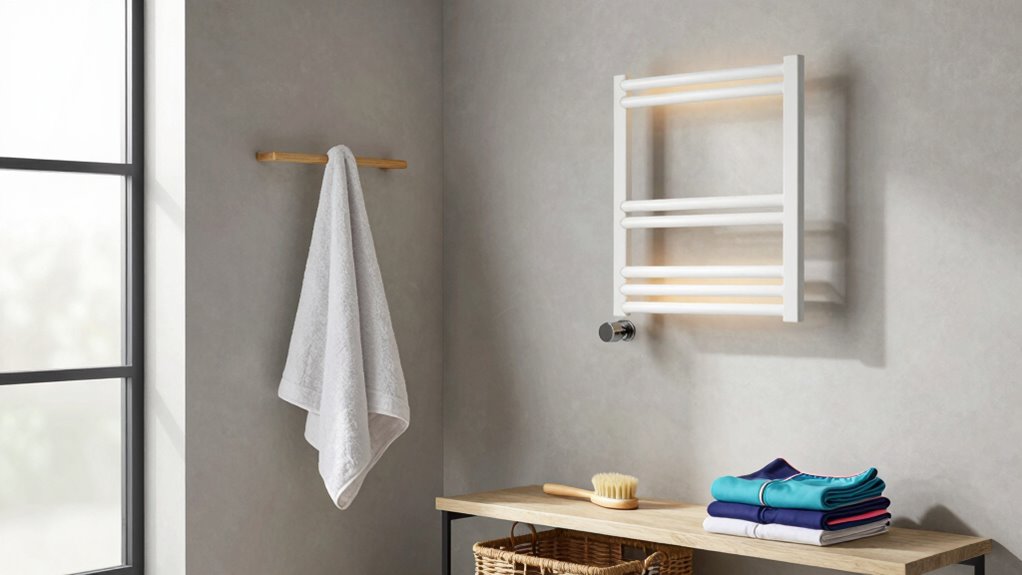

To build a better post-swim drying zone at home, set up wall-mounted racks or hooks near ventilation to keep your swimwear in shape and dry quickly. Use waterproof, easy-to-clean surfaces like tile for the drying area, and add exhaust fans or portable dehumidifiers to promote airflow. Organize towels and accessories nearby, and keep the space clutter-free to make drying faster. Continue exploring smart tips to optimize your space even further.

Get pool and patio gear delivered free with Prime
- Fast, free delivery on millions of items
- Prime Video, Amazon Music and more included
- Member-only deals all year
Key Takeaways
- Install wall-mounted racks or hooks near ventilation for organized, gentle swimwear drying.
- Upgrade or add exhaust fans and portable dehumidifiers to ensure optimal airflow and moisture removal.
- Use waterproof, easy-to-clean surfaces like tile for the drying area, avoiding carpet or fabric flooring.
- Incorporate bright, natural or daylight LED lighting to speed up drying and prevent mold growth.
- Keep the space tidy with dedicated storage for accessories, towels, and swimwear, maintaining organization and efficiency.
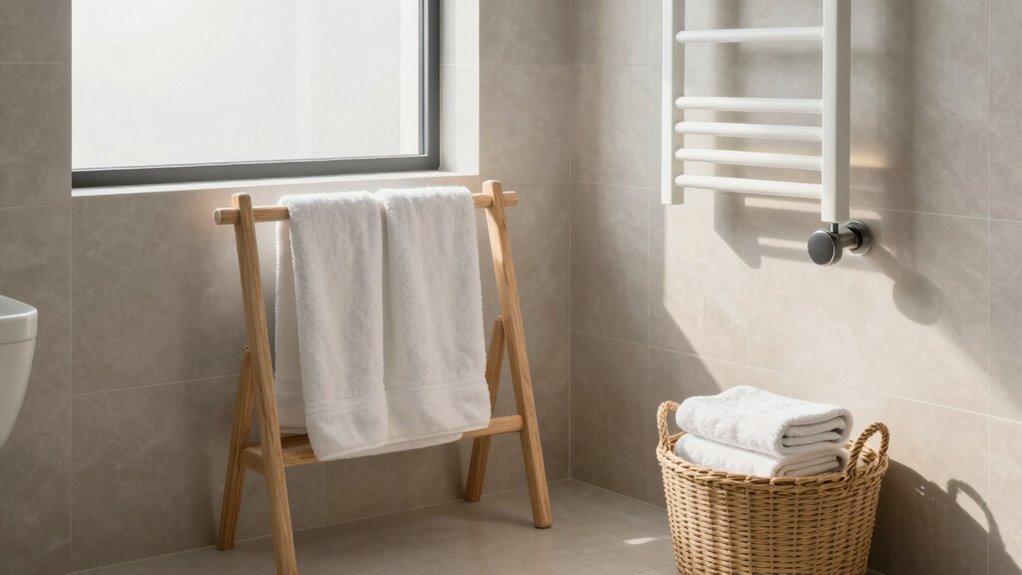
Ever wonder how to make your post-swim routine more efficient and comfortable? Creating an ideal drying zone at home can considerably improve your experience after swimming. The key is designing a space that promotes quick drying, keeps your swimwear in good shape, and minimizes odors. Start by considering how you’ll manage swimwear storage. You want a dedicated spot where your swimsuits can hang freely without getting crushed or stretched. Using a wall-mounted rack or a series of hooks ensures your swimwear stays in shape and dries evenly. Place these near the ventilation system to facilitate airflow, helping your gear dry faster and preventing mold or mildew buildup.
Create a dedicated, well-ventilated space with hooks or racks for optimal swimwear drying and shape retention.
Ventilation improvements are vital to transforming your drying zone into an effective space. If your current setup lacks proper airflow, add a small exhaust fan or upgrade your ventilation system if possible. Good air circulation speeds up moisture evaporation and keeps the area fresh. Position the fan near your swimwear storage so it actively pulls moist air away from your gear. If installing an exhaust fan isn’t an option, consider portable oscillating fans or even a dehumidifier to reduce humidity levels. These additions make a big difference in preventing dampness and unpleasant odors from lingering. Proper ventilation is essential for maintaining a dry and odor-free environment. Additionally, ensuring the space is well insulated can help maintain consistent drying conditions, especially in colder climates. Incorporating microbiome health practices, such as avoiding damp, stagnant air, can also support a healthier environment for your gear and skin.
Next, think about the surface where you’ll place your drying rack or hooks. A tiled or waterproof surface works best because it’s easy to clean and won’t be damaged by water spills. Avoid carpet or fabric flooring that can trap moisture and foster mold. When organizing your drying zone, keep it close to your shower or pool area but away from direct sunlight, which can fade colors or weaken fabrics over time. Proper placement helps you transition smoothly from swimming to drying without dragging wet gear across other parts of your home.
Additionally, choosing a high-quality drying rack made of rust-resistant materials can extend its lifespan and ensure consistent performance over time. Incorporating moisture-absorbing materials like silica gel packets in your storage area can also help keep your space dry and odor-free. Using these materials in conjunction with good airflow creates a more effective drying environment. Lighting also plays a role in making your post-swim routine more pleasant. Bright, natural light helps speed up the drying process and creates a more inviting space. If natural light isn’t available, install bright LED fixtures that simulate daylight. This not only improves visibility but also discourages mold growth by keeping the area well lit and airy. Remember to keep the space clutter-free and organized. Use small baskets for accessories like goggles or caps, and keep your towels nearby but not on top of your swimwear. Proper organization and space management can make your drying process more efficient and enjoyable.
Products Worth Considering

GoPro HERO Compact Waterproof 4K Action Camera

DJI Osmo Action 4 Standard Combo Waterproof Action Camera

DJI Osmo Action 5 Pro Essential Combo Waterproof 4K Action Camera
As an affiliate, we earn on qualifying purchases.
Frequently Asked Questions
What Are the Best Materials for a Post-Swim Drying Area?
For your post-swim drying area, opt for water resistant flooring like tile or vinyl to prevent moisture damage. These materials dry quickly and are easy to clean. Improve ventilation with exhaust fans or open windows, which helps evaporate residual water and reduces mold. Combining durable, water-resistant flooring with good airflow creates a comfortable, functional space that dries quickly and stays fresh after every swim.
How Can I Prevent Mold and Mildew in My Drying Zone?
To prevent mold and mildew, you should improve ventilation strategies by installing exhaust fans or opening windows to keep air circulating. Use mold-resistant paints on walls and surfaces to inhibit growth. Additionally, guarantee your drying zone stays dry by wiping down wet areas and avoiding excess moisture. Regularly cleaning the space and monitoring humidity levels also help, creating an environment that discourages mold and mildew buildup.
What’s the Ideal Size for a Home Drying Station?
The ideal size for your home drying station is about 4×6 feet, giving you enough room to comfortably hang poolside furniture and store towels without clutter. Notably, a well-designed drying zone can cut drying time by 30%. Ensure there’s adequate space for multiple towel racks and hooks, so wet items don’t overlap, and allocate enough room for your poolside furniture to dry without blocking airflow.
Should I Include Heating Elements or Fans?
You should consider adding fans or heating solutions to your drying zone. Fans improve ventilation options, helping air circulate and speed up drying. Heating elements provide consistent warmth, which accelerates moisture evaporation, especially in colder environments. Combining both can create an efficient system—use fans for airflow and heating solutions for added warmth. This setup guarantees your post-swim gear dries faster, stays fresh, and reduces mildew or odor buildup.
How Often Should I Clean and Maintain the Drying Area?
You should clean and maintain your drying area weekly to keep laundry organized and prevent mold. Use air circulation techniques like fans or vents to keep the space dry and fresh. Regularly wipe down surfaces, check for mildew, and guarantee your drying racks or mats are clean. Keeping the area well-maintained encourages quick-drying, reduces odors, and maintains a hygienic environment for your post-swim gear.
Conclusion
Creating a thoughtful post-swim drying zone transforms your space into a sanctuary where water’s chaos settles into calm. It’s more than just a drying spot—it’s your personal oasis, a place to shed the day’s stress and emerge renewed. Like a gentle tide retreating from the shore, your drying zone beckons relaxation and clarity. With every towel and thoughtful detail, you craft a haven where refreshment flows as effortlessly as the water you leave behind.