To teach your kids pool safety like a lifeguard at home, set clear boundaries with sturdy fences and gates, and explain safety signs and signals they need to recognize. Constant supervision is key—stay alert, keep an eye on them, and avoid distractions. Teach safe swimming rules and encourage the use of personal flotation devices when necessary. Practice emergency skills and establish routines to reinforce safety regularly. Keep exploring to learn more ways to guarantee your little swimmers stay safe.
Key Takeaways
- Teach children to understand and follow pool safety signs, signals, and rules through demonstrations and engaging activities.
- Maintain constant supervision and eye contact, avoiding distractions to ensure children’s safety around the pool.
- Install secure barriers with self-latching gates and regularly check safety equipment to prevent unsupervised access.
- Use personal flotation devices appropriately, especially for beginners, and practice emergency response and basic first aid skills.
- Establish and reinforce a consistent pool safety routine, including rule reviews, alarm checks, and safety reminders each day.
pool safety fence with self-latching gate
As an affiliate, we earn on qualifying purchases.
As an affiliate, we earn on qualifying purchases.
Establish Clear Pool Boundaries and Barriers
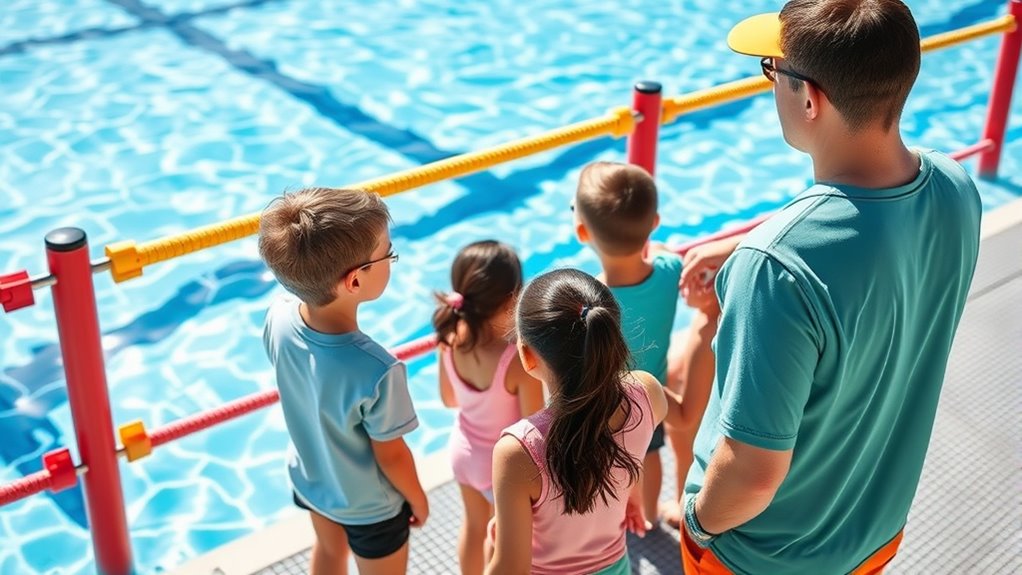
To keep kids safe around the pool, it’s essential to establish clear boundaries and barriers that prevent unsupervised access. Installing a sturdy pool fence creates a physical barrier that keeps children away from the water when you’re not watching. Make sure the fence is at least four feet high and has no gaps or climbable features. A gate lock is equally important to prevent children from opening the gate and slipping through. Use a self-closing, self-latching gate to add an extra layer of security. Always check that the gate lock is functioning properly and consistently secure it after every use. Incorporating proper fencing techniques can further enhance safety by ensuring the barrier is both effective and durable. Additionally, choosing materials that resist weathering helps maintain the integrity of the barrier over time. Understanding the importance of appropriate barrier height ensures the safety measures remain effective as children grow. These measures help guarantee your kids can’t access the pool area without supervision, considerably reducing the risk of accidental drownings.
child pool safety signs and signals
As an affiliate, we earn on qualifying purchases.
As an affiliate, we earn on qualifying purchases.
Teach Children to Understand Pool Safety Signs and Signals
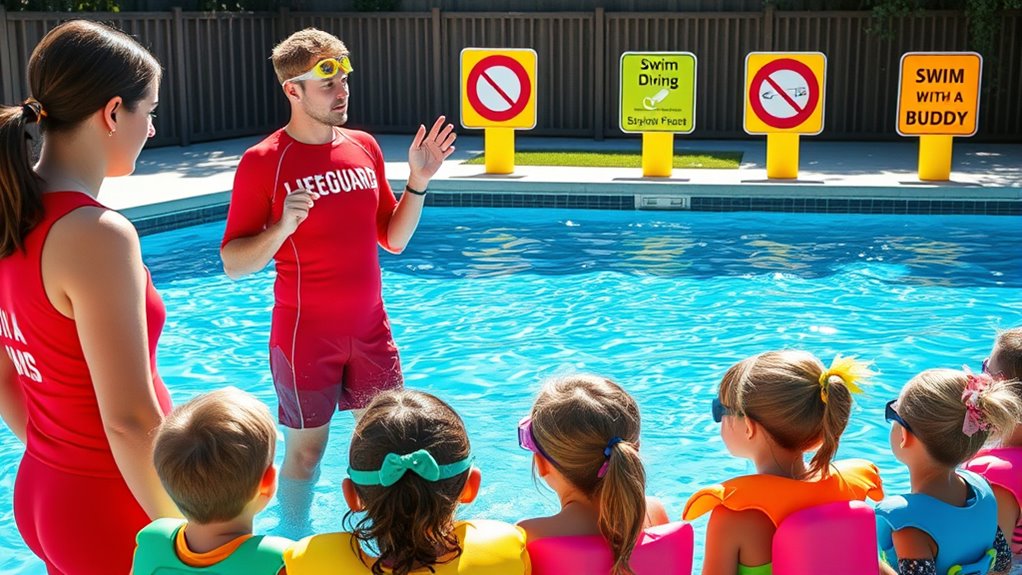
Since children may not always recognize the meaning of pool safety signs and signals, it’s essential to teach them how to understand and respond to these visual cues. Explain that pool safety signs, like “No Diving” or “Stay Out,” provide important rules for their safety. Show them how to read these signs and discuss what actions to take when they see them. Water signals, such as hand gestures from lifeguards or emergency signals, are also fundamental. Practice these signals with your kids so they know how to react calmly and quickly. Reinforcing the importance of paying attention to signs and signals helps children recognize potential dangers and understand how to stay safe around the pool at all times. Recognizing the significance of visual cues can greatly reduce accidents and ensure prompt responses in emergencies, especially when children are aware of emergency procedures and how to follow them. Developing a strong awareness of visual communication can further enhance their safety skills and confidence in emergency situations, which is vital for preventing accidents. Additionally, teaching children to interpret these signals fosters their situational awareness, making them more responsive and responsible in safety situations.
personal flotation devices for kids
As an affiliate, we earn on qualifying purchases.
As an affiliate, we earn on qualifying purchases.
Supervise Children Constantly When Around Water

You need to keep your eyes on kids whenever they’re near water to prevent accidents. Set and enforce clear rules so children understand what’s expected of them. Using barriers like fences and covers adds extra layers of safety when supervision isn’t possible. Incorporating expert voice actors into educational messages can help convey important safety information more effectively. Regularly practicing pool safety drills with children reinforces safe behaviors and quick response in emergencies. Additionally, understanding data privacy challenges that may arise can help caregivers better address concerns and ensure ongoing safety.
Keep Eyes on Kids
Why is it so important to keep a constant watch when kids are around water? Child supervision requires vigilant monitoring to prevent accidents. When you’re actively watching, you’re more likely to notice if a child is struggling or gets too close to danger. Your focused attention minimizes risks and ensures quick intervention if needed. Imagine a scenario where a child slips near the pool edge, or a toy floats out of reach—being alert can make all the difference. Keep these in mind:
- Maintain eye contact and stay within arm’s reach when kids are in or near water
- Avoid distractions like phones or conversations during supervision
- Watch for signs of fatigue or distress, not just active play
- Regularly check water safety equipment to ensure it is accessible and functional
Supervising children effectively also involves understanding child behavior and recognizing potential hazards before they escalate. Supervision techniques play a critical role in creating a safer environment and reassuring both children and adults. Additionally, understanding water safety rules can significantly reduce the risk of accidents during water activities. Being aware of emergency response procedures can further enhance safety and preparedness in case of an incident.
Establish Clear Rules
Establishing clear rules for water safety is essential to prevent accidents and guarantee kids comprehend boundaries. When you set firm pool rules, children understand what’s expected and recognize the importance of staying safe. Make sure your kids know that no running, jumping, or roughhousing around the pool, and always obey adult supervision. Consistent enforcement of these rules reinforces their importance and reduces confusion. Clearly communicate that they should never swim alone and must stay within designated areas. Additionally, understanding the horsepower of electric dirt bikes can help parents appreciate the importance of safety gear when riding or supervising children near water. By establishing and consistently applying pool rules, you create a safer environment and help children develop good water safety habits. Remember, ongoing supervision combined with clear communication about safety guidelines can further enhance children’s understanding and compliance. Maintaining consistent safety practices is key to fostering a secure swimming environment and preventing water-related accidents. Promoting water safety awareness among children reinforces the importance of following rules and staying vigilant around water.
Use Barriers Effectively
Using barriers effectively is essential for maintaining a safe swimming environment. Proper barriers can prevent unsupervised access and reduce accidents. Make certain your pool area has a secure fence with a self-latching gate, making it difficult for children to enter alone. Install a pool alarm that alerts you if someone enters unexpectedly, adding an extra layer of safety. Clearly visible safety signage reminds everyone of pool rules and safety protocols. Regularly check that barriers are intact, gates are latched, and alarms are functioning. physical barriers, such as fences and gates, are most effective when combined with active supervision and safety signs. Incorporating regular maintenance ensures that all safety features are functioning correctly and reduces the risk of failure. Using safety standards for barriers and safety equipment helps ensure the highest level of protection. Combining physical barriers with effective supervision creates a safer environment, giving you peace of mind. Remember, barriers alone aren’t enough; constant supervision and safety signage reinforce safety measures and keep your family protected around water.
As an affiliate, we earn on qualifying purchases.
Educate Kids on Safe Swimming Practices and Rules
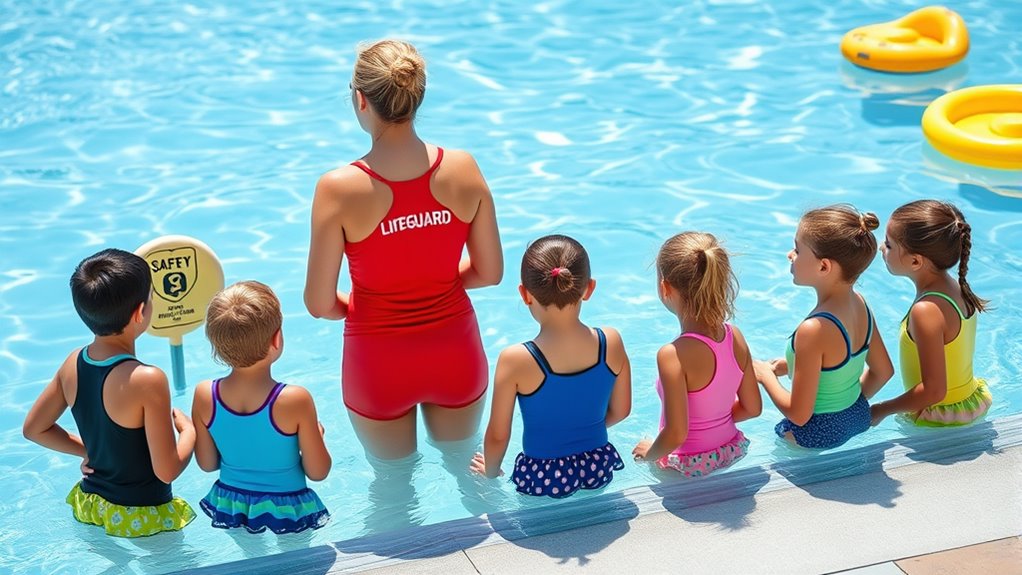
Teaching kids safe swimming practices and rules is essential to prevent accidents and guarantee they enjoy the pool responsibly. You can make learning fun by incorporating water safety games that engage children while teaching important lessons. These games reinforce swimming skill development and help kids understand how to stay safe in the water. Emphasize the importance of never swimming alone, avoiding risky behaviors, and recognizing their limits. Demonstrate proper techniques, like floating and treading water, and encourage questions to ensure they understand the rules. Consistent reinforcement through engaging activities helps kids remember safety guidelines and builds their confidence. Remember, making safety education enjoyable increases the likelihood that kids will follow rules and develop lifelong healthy swimming habits. Using eye patches as a metaphor for protective gear can also help children relate to safety measures in the water.
Encourage Use of Personal Floatation Devices When Necessary
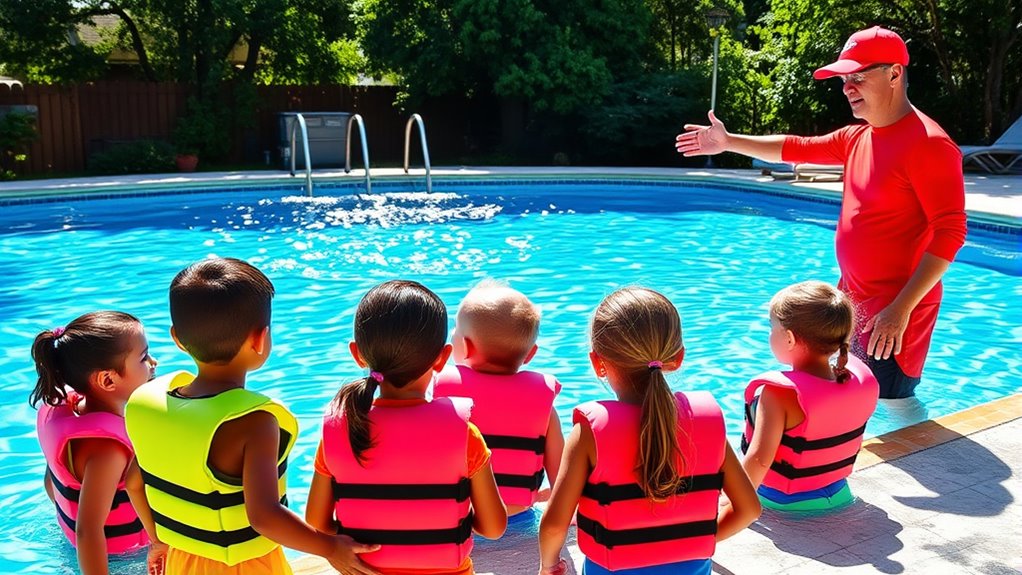
While kids learn important swimming skills and safety rules, it’s equally important to know when to recommend the use of personal flotation devices (PFDs). PFDs, like life jackets, provide vital support and reassurance, especially for beginners or less confident swimmers. Using personal floatation can prevent accidents and save lives in risky situations. Think about these scenarios:
- Kids who are new to swimming or still mastering their skills
- Children with health issues that affect their swimming ability
- Swimmers in deep or unfamiliar water environments
Encouraging the use of life jackets and other personal floatation devices helps reinforce safety and confidence. Make sure kids understand that PFDs are an essential safety tool, not a substitute for supervision or swimming skills. Proper use of personal floatation devices can be lifesaving in challenging situations.
Practice Emergency Response Skills and First Aid
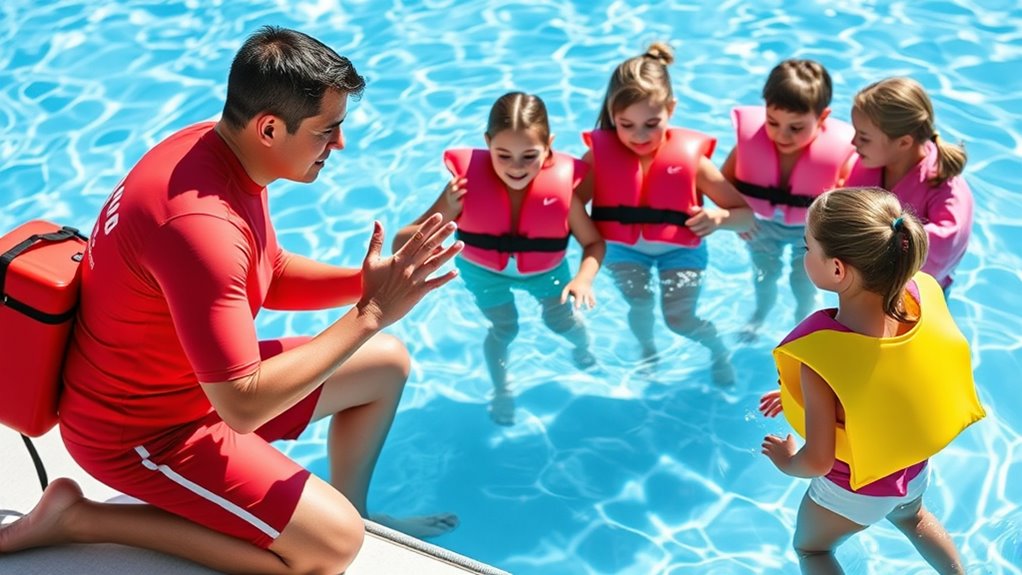
You should practice emergency response skills regularly with your kids to guarantee they’re prepared if something goes wrong. Simulating rescue scenarios helps them understand how to act quickly and confidently. Teaching them basic first aid skills empowers them to respond effectively until help arrives.
Simulate Rescue Scenarios
Practicing rescue scenarios helps kids understand how to respond quickly and effectively in emergencies. By simulating real-life situations, they learn essential rescue techniques and how to use safety equipment confidently.
Imagine a scenario where a child is struggling in the water:
- You spot the trouble, shout for help, and quickly reach for a rescue tube or reaching pole.
- You demonstrate how to throw a floatation device accurately, ensuring it reaches the victim.
- You practice pulling the child safely to the poolside, emphasizing proper rescue techniques to avoid injury.
These drills reinforce the importance of staying calm, using appropriate rescue techniques, and knowing how to handle safety equipment properly. Repeating these scenarios helps kids build muscle memory and confidence in emergency response skills.
Teach First Aid Basics
Learning basic first aid skills is essential because knowing how to respond quickly can make a difference in saving a child’s life during an emergency. Teach your kids CPR techniques so they can help if someone is choking or unresponsive. Show them how to perform chest compressions and rescue breaths confidently. Additionally, emphasize wound care—clean cuts with water, apply antiseptic, and cover with a bandage to prevent infection. Practice these skills through simple drills to build their confidence. Explain the importance of staying calm and acting swiftly. By mastering first aid basics, your kids will be better prepared to handle minor injuries and assist in serious situations until professional help arrives. This knowledge empowers them and creates a safer pool environment for everyone.
Create a Pool Safety Routine and Reinforce It Regularly
Establishing a clear pool safety routine is essential for keeping kids safe and confident in the water. Consistency helps them internalize rules and stay alert. Create a routine that includes checking pool alarm systems before entering, reviewing swimming lesson schedules regularly, and practicing safety drills. Reinforce these habits daily to build familiarity and trust. For example, you might start each day with a quick safety reminder, then check that the alarm system is active, followed by a quick review of rules. Keep safety at the forefront by encouraging kids to ask questions and remind them of their responsibilities. A well-established routine reduces accidents and promotes responsible behavior around the pool. Regular reinforcement ensures safety stays a top priority for everyone.
Lead by Example: Demonstrate Responsible Water Behavior
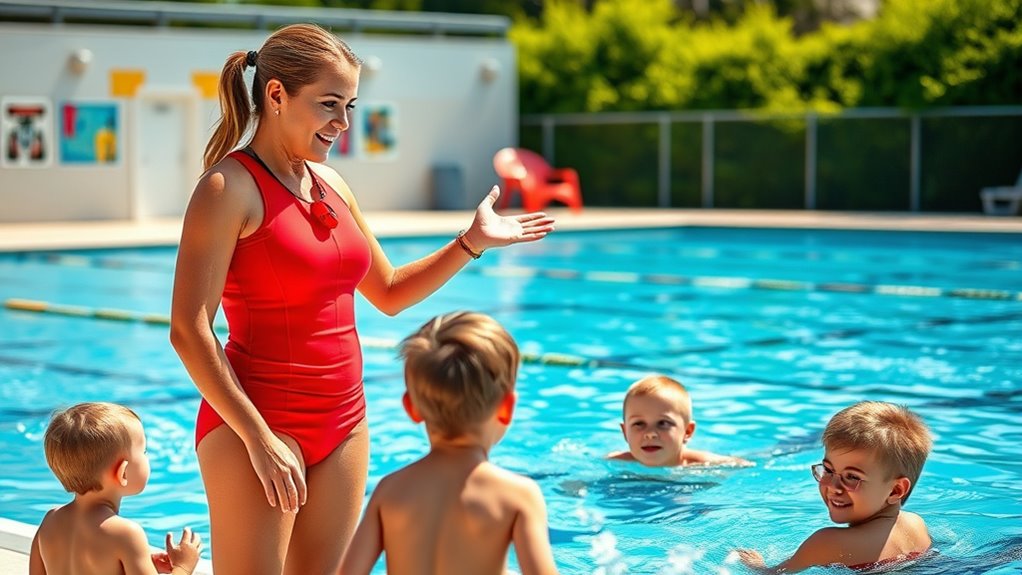
Children often imitate the behavior they see, so as a parent or caregiver, your actions around water set a powerful example. If you demonstrate responsible behavior, such as always supervising children closely, avoiding risky actions, and following water safety rules, your kids will learn to do the same. Show them how to enter and exit the pool safely, and never ignore safety precautions. Your calm and confident attitude around water reinforces the importance of staying alert and cautious. Remember, children look to you for cues about how to behave, especially in potentially dangerous situations. By consistently practicing responsible water safety, you teach your kids to respect water, stay safe, and develop good habits that can prevent accidents. Your behavior truly makes a difference.
Keep Pool Area Clean, Well-Maintained, and Secure
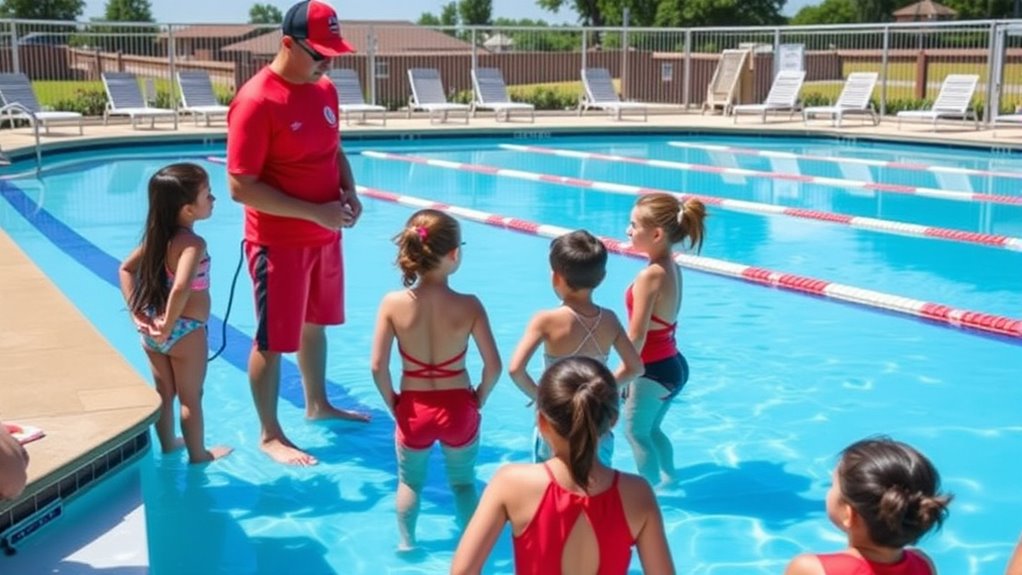
Keeping the pool area clean, well-maintained, and secure is essential to prevent accidents and guarantee a safe environment for everyone. You should regularly check that the pool water stays clear and free of debris, and keep the surrounding area tidy. Proper pool chemical storage is crucial—store chemicals out of children’s reach and follow safety guidelines. Pool equipment maintenance is also vital; inspect filters, pumps, and ladders to ensure they work correctly. Secure fencing and self-locking gates prevent unauthorized access, reducing drowning risks. Additionally, remove any clutter or toys from the pool area after use to prevent slips and falls. By staying vigilant about cleanliness, maintenance, and security, you’ll create a safe, inviting space where your kids can enjoy the pool responsibly.
Frequently Asked Questions
How Can I Teach My Child About Pool Safety Without Scaring Them?
To teach your child about pool safety without scaring them, focus on making it fun. Use colorful safety signs and explain them simply, so they understand the rules easily. Incorporate fun pool games that reinforce safety, like “stop, look, and listen” or “float and go.” Keep the tone positive and encouraging, emphasizing safety as a way to enjoy the pool responsibly, making learning feel like a game rather than a lesson.
What Are Some Signs That Indicate a Child Might Be Struggling in the Water?
Imagine your kid turning into a fish, flailing wildly—sounds fun, right? Sadly, that’s a drowning warning sign. Look for water distress cues like gasping, silent struggling, or floating face down. If they’re panicking, clutching the edge, or suddenly still, they might be in trouble. Recognize these signs early, act fast, and keep a watchful eye—your quick response can save their life.
How Often Should Pool Safety Rules Be Reviewed With Children?
You should review pool safety education with your children regularly, ideally before each swim session. Frequent parental reminders reinforce important rules and keep safety fresh in their minds. Consistent discussions help children understand boundaries and recognize hazards, reducing accidents. Make safety talks engaging and age-appropriate, and encourage questions. This routine guarantees your kids stay aware of pool safety rules, making their swimming experience safer and more enjoyable for everyone.
What Are the Best Child-Friendly Pool Safety Devices Available?
Did you know that proper safety devices can reduce drowning risks by up to 80%? When choosing child-friendly pool safety devices, consider floatation devices like life jackets and arm floats, which provide added buoyancy. Pool alarms are also essential—they alert you instantly if someone enters the water unexpectedly. Combining these devices creates a safer environment and gives you peace of mind while your kids enjoy the pool.
How Can I Ensure My Child Understands the Importance of Pool Safety Signals?
You can guarantee your child understands the importance of pool safety signals by teaching them to recognize visual cues and emergency signals. Use clear, simple explanations and practice these signals regularly with your child so they become familiar. Show them what emergency signals look like, like hand gestures or alarms, and emphasize their significance. Consistent practice and reinforcement will help your child respond quickly and confidently in any situation.
Conclusion
Think of teaching kids pool safety like building a sturdy bridge—they need strong supports and clear signs. When you set firm boundaries, supervise constantly, and lead by example, you create a safe space where kids can enjoy water without fear. I once watched a young boy confidently swim after his mom showed him how to spot safety signs—proof that your active involvement truly keeps them afloat emotionally and physically. Keep guiding, and watch their confidence grow.