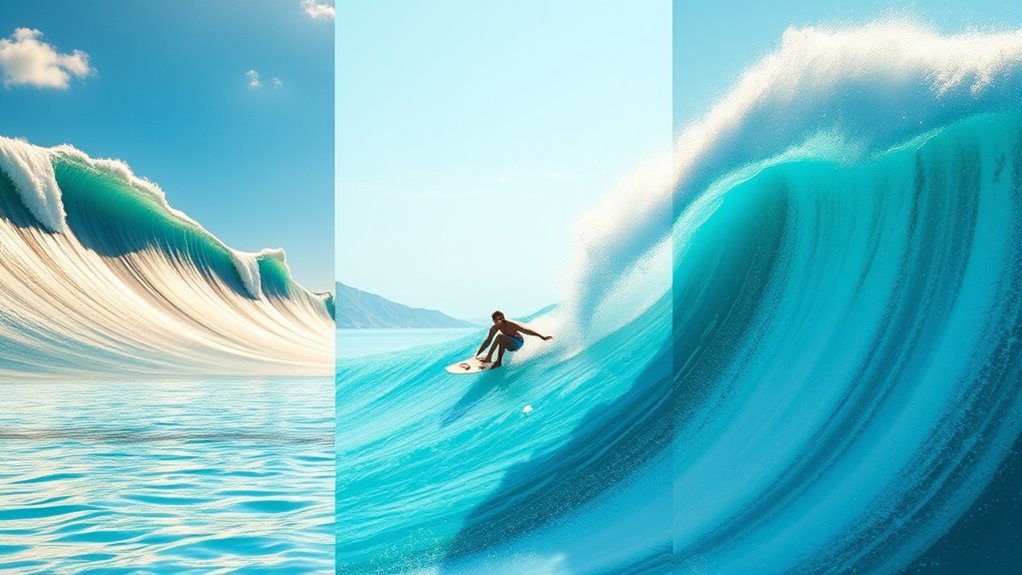

If you’re choosing between a wave pool, surf pool, or FlowRider, think about your goals and space. Wave pools offer realistic, ocean-like waves ideal for advanced surfing and competitions but require large areas and high energy. Surf pools provide consistent, beginner-friendly waves perfect for skill development and smaller spaces. FlowRider systems are compact and fun for quick rides, best suited for casual entertainment. Keep exploring to find the best fit for your surfing needs.

Get pool and patio gear delivered free — and shop member deals
- Fast, free delivery on millions of items
- Access to Prime Big Deal Days deals on October 6–7
- Prime Video, Amazon Music and more included
Key Takeaways
- Wave pools generate ocean-like, customizable waves suitable for advanced surfing, while surf pools offer consistent, idealized waves for skill development.
- FlowRider systems produce smaller, stationary waves ideal for quick, fun rides and entertainment, but are less suitable for serious surfing.
- Wave pools often require larger space and higher energy, whereas surf pools and FlowRider setups are more compact and energy-efficient.
- Surf pools mimic natural ocean conditions for competitive surfing, while FlowRider emphasizes casual, skate-style riding experiences.
- Choice depends on space, budget, and desired experience, with wave pools for realism, surf pools for practice, and FlowRider for entertainment.
As an affiliate, we earn on qualifying purchases.
Overview of Wave Pool Technologies and Sizes
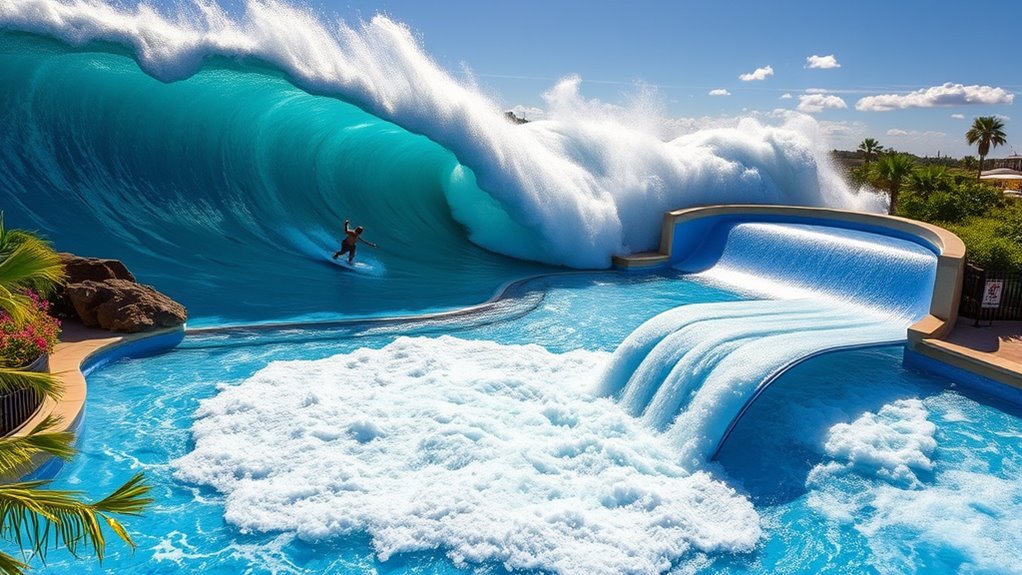
Wave pool technologies vary widely, each designed to create different types of waves suited for various surfing experiences. You’ll find systems like air pressure chambers, hydrofoils, mechanical paddles, water plungers, and hydraulics. Air pressure systems, such as PerfectSwell, use compressed air to displace water, producing ocean-like waves ideal for paddle-in surfing. Hydrofoil tech drags a foil along a track underwater, generating long, barreling waves that last 30 to 45 seconds. Mechanical paddles push water out with pistons, creating consistent waves, while water plungers push water vertically or horizontally for versatile wave shapes. Wave pool sizes range from compact, smaller setups to large resort-scale pools. Longer pools offer extended ride times, with wave lengths from 5 to over 45 seconds depending on technology and design. Wave pool technology continues to evolve, incorporating innovations that improve wave quality and sustainability.
As an affiliate, we earn on qualifying purchases.
Characteristics of Surf Pools and Their Wave Quality
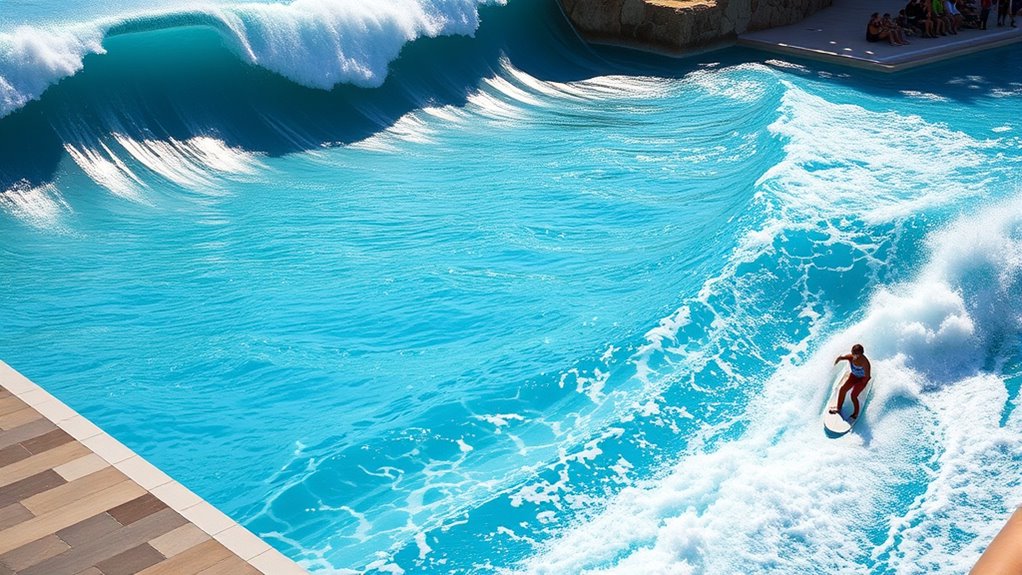
Understanding the qualities of surf pools involves examining how their wave characteristics are measured and optimized. You’ll notice wave height varies from 2 to over 6 feet, tailored to different skill levels and pool sizes. Top facilities generate up to 17 waves per minute, providing continuous riding opportunities. Good quality waves feature a well-defined face, with measurable peel rates and steepness angles that support a variety of maneuvers. Some pools offer sizable tube sections with rideable barrels, adding challenge and authenticity. Ride length depends on the pool’s size and technology, ranging from 5 seconds to more than 25 seconds in advanced setups. Additionally, programmable systems allow real-time wave shape customization, adjusting parameters like height, speed, and turbulence to match skill levels and surf conditions. Wave quality metrics play a crucial role in evaluating and improving surf pool performance, especially as advancements in wave generation technology continue to evolve.
As an affiliate, we earn on qualifying purchases.
The Mechanics Behind Wave Generation Methods
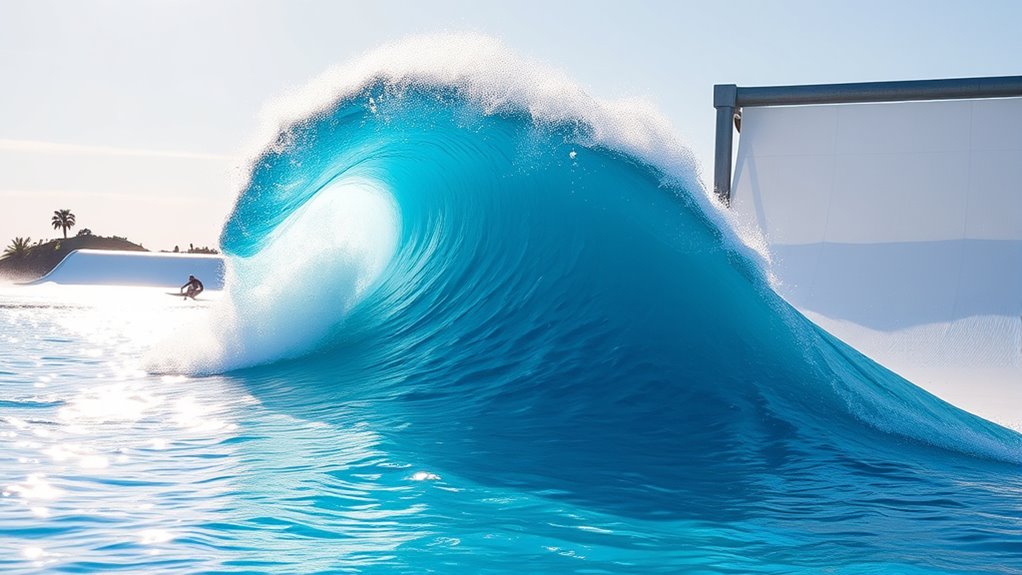
Different methods power wave generation in surf pools, each leveraging unique physical principles to produce desirable riding conditions. Pneumatic systems use compressed air to displace water, creating customizable waves with adjustable shapes and frequencies. Electro-mechanical systems employ motors and paddles to move water precisely, generating high-frequency, reliable waves. Hydrofoil generation pulls a foil through water, forming long, high-quality waves, but it’s limited to fewer riders. Gravity displacement uses large chambers filled with water, then releases it via gravity, producing consistent but moderate waves. FlowRider’s stationary wave relies on a continuous water flow over a shaped ramp, creating a standing wave ideal for beginners. Here’s a comparison:
| Method | Principle | Key Feature |
|---|---|---|
| Pneumatic | Air pressure displaces water | Customizable waves |
| Electro-mechanical | Moving paddles/machinery | High wave frequency |
| Hydrofoil | Foil creates bow wave | Long, high-quality waves |
| Gravity displacement | Water released by gravity | Moderate, reliable waves |
| FlowRider | Continuous water flow | Compact, adjustable height |
Additionally, wave consistency is an important factor in choosing a wave generation method, as it impacts rider experience and safety.
As an affiliate, we earn on qualifying purchases.
Comparing Wave Heights and Adjustability Features
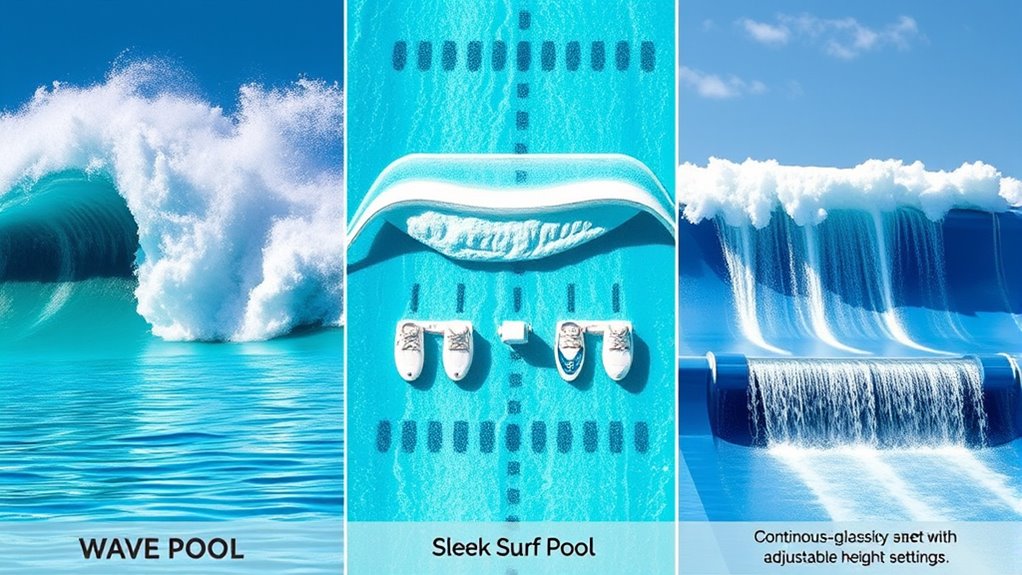
When comparing wave heights across various surf and wave pools, it’s clear that each system offers distinct capabilities suited to different skill levels and experiences. Wave pools typically produce waves from 0.5 to 2 meters, with advanced systems like Murphys Waves reaching over 3 meters. These pools often feature multiple height settings for beginners to experts, with some adjusting in real-time for different wave styles. Surf pools, such as Wavegarden Cove, can generate waves up to 3 meters or even 4 meters for barreling waves, also offering adjustable wave heights and shapes to suit various skill levels. FlowRider waves are smaller, ranging from 0.075 to 1.6 meters, with height adjustments via programming buttons, focusing on continuous flow rather than large waves. Modern wave pools utilize innovative technology that allows for rapid and precise adjustments of wave size and shape to match specific surfing conditions. Additionally, the adjustability features of these systems enable operators to customize the surfing experience for all levels, from beginners to advanced surfers.
Types of Boards and Rider Experience in Different Setups
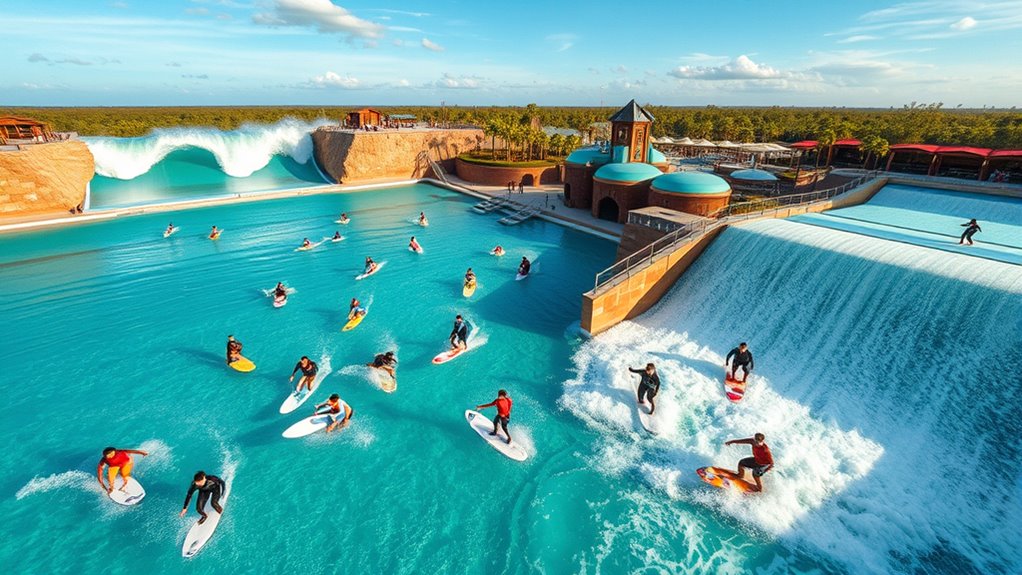
The type of boards used in wave, surf, and FlowRider setups considerably influences your riding experience. Wave pools and surf pools typically use traditional surfboards with fins, mimicking ocean conditions. In contrast, FlowRider employs specialized, finless boards resembling skateboards, designed for sheet waves. These boards are wider, shorter, and softer, promoting sliding over the water’s surface rather than carving. The table below highlights key differences:
| Feature | Wave/Surf Pools | FlowRider |
|---|---|---|
| Board Type | Traditional surfboards with fins | Finless, skate-style boards |
| Size & Shape | Longer, narrower, with fins | Shorter, wider, soft |
| Riding Style | Carving, turning, aerials | Sliding, balancing, quick reflexes |
Your choice of board shapes your skills and how you experience each setup. Understanding board types is essential for selecting the best setup for your riding style.
Space, Cost, and Construction Requirements for Each System
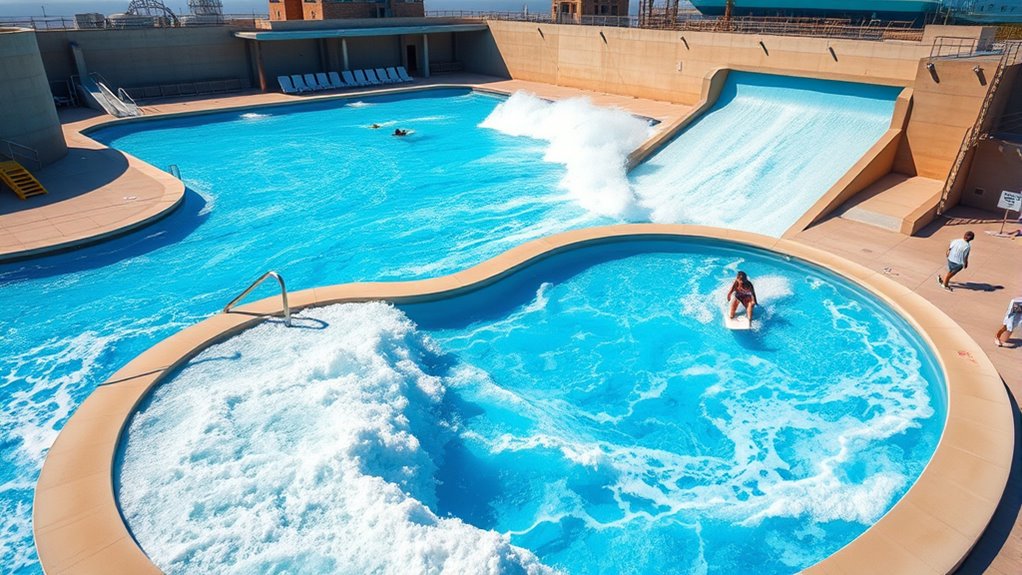
Evaluating space, cost, and construction needs reveals significant differences among wave pools, surf pools, and FlowRider systems. Wave pools demand large footprints—around 40m x 150m with nearly 6m depth—requiring extensive site work and structural engineering. Surf pools are more scalable; starting at about 30 feet wide, they can expand in stages to fit available space, with construction varying from indoor to outdoor setups. FlowRider systems are compact, needing as little as 2,000 sq ft, making them suitable for indoor or outdoor venues, especially when integrated into existing pools or floating platforms. Cost-wise, wave pools are the most expensive upfront, while FlowRiders are more affordable, especially the Edge model that uses existing infrastructure. Construction complexity decreases from wave pools to FlowRiders, which feature quick, modular installation. Additionally, advancements in advanced manufacturing techniques contribute to the durability and efficiency of these systems, impacting overall construction and maintenance considerations.
Suitability for Recreation, Training, and Competitive Events
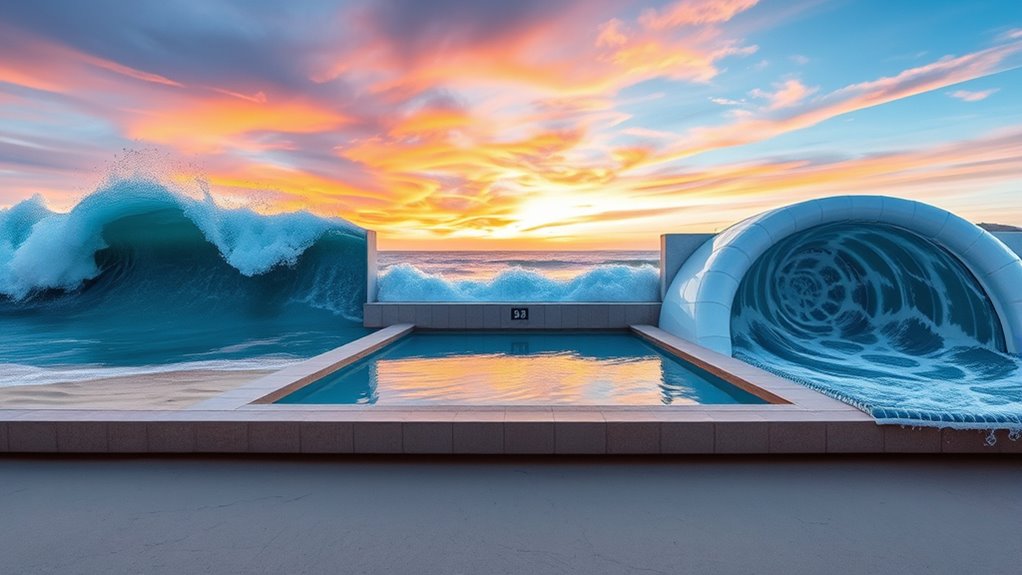
Wave pools excel in recreation by offering a wide range of wave sizes that suit all skill levels, making them ideal for families and casual surfers. Their naturalistic, paddle-in waves replicate ocean surfing, helping beginners and experienced surfers practice in a familiar environment. Surf pools also excel by providing consistent, idealized waves that support friendly competitions and social practice, often accommodating multiple surfers simultaneously. FlowRider systems are better suited for quick, fun rides, primarily targeting entertainment and youth activities, with adjustable wave heights for beginners and intermediate users. Standing wave pools create stationary waves that promote social interaction and easier learning, though they don’t mimic ocean surfing dynamics as closely. Each system serves different recreational needs, from casual fun to skill development and competitive events.
Benefits and Limitations of Each Wave-Making Approach

Each wave-making approach offers distinct benefits and faces specific limitations that influence their suitability for different uses. Wave pools generate realistic, ocean-like waves ideal for advanced surfing but consume substantial energy and require large spaces, increasing costs. Wave pools can produce highly customizable wave patterns, enhancing user experience, but their infrastructure demands are significant. Additionally, wave pools often require extensive energy consumption, which impacts operational expenses. Surf pools produce stationary waves with lower water volumes, making them more energy-efficient and easier to install in smaller or indoor locations, though they lack the dynamic movement of ocean waves. They are particularly suitable for beginner training and controlled environments. FlowRider systems are compact and versatile, fitting into smaller venues, but are highly energy-intensive and create sensations more akin to skateboarding than surfing. While modern tech improves energy efficiency across all approaches, traveling wave pools still demand significant infrastructure. Each method balances operational costs, wave quality, and spatial needs, shaping their advantages and constraints for different environments.
Choosing the Right System for Your Surfing Goals
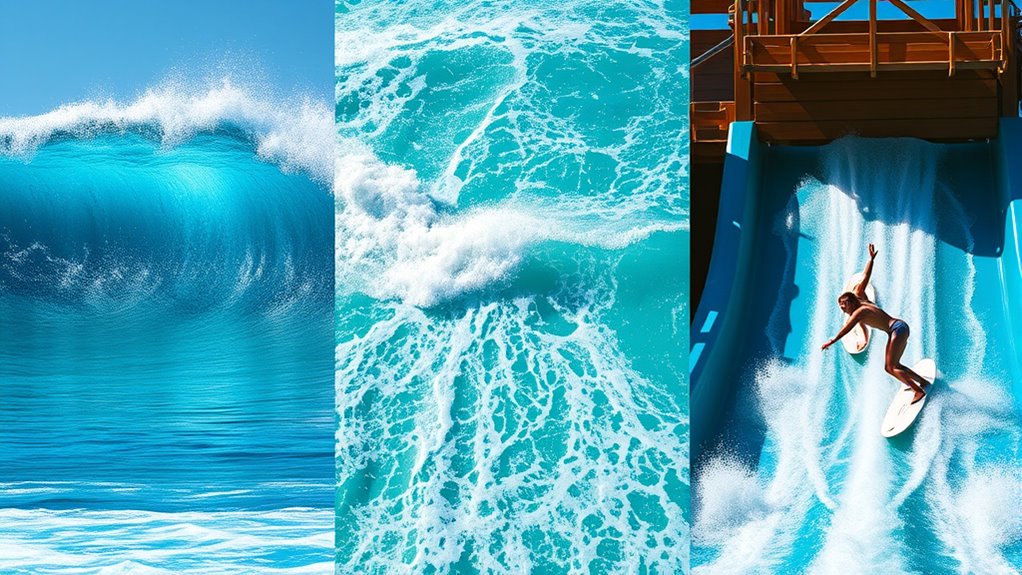
Choosing the right surfing system depends on your specific goals and the environment you’re working with. If you want ocean-like waves for long rides and realistic breaks, a wave pool suits you, especially if you’re focused on improving your ocean surfing skills or training for competitions. Adjustability lets you tailor wave size and difficulty, making it ideal for all skill levels. For targeted technique practice and frequent sessions, surf pools with precise wave control are excellent. If you prefer a compact setup for quick, accessible rides, a FlowRider offers stationary waves perfect for carving, spins, and short maneuvers, especially in urban or resort settings. Your choice hinges on space, budget, and whether you prioritize realistic ocean conditions, skill development, or convenience for casual riding. Additionally, understanding water chemistry is crucial for maintaining safe and enjoyable surf environments across all these systems.
Frequently Asked Questions
How Do Maintenance and Operational Costs Compare Across Wave Pool Types?
You’ll find that maintenance and operational costs vary by pool type. Large wave pools demand high energy for wave generation, plus costly upkeep on filtration and mechanical parts. Surf lagoons balance initial costs with steady ongoing expenses for energy and maintenance, focusing on durability. FlowRider systems usually cost less to operate, with simpler mechanics, lower water and energy use, and easier maintenance. Overall, smaller, simpler systems tend to be more budget-friendly.
What Are the Environmental Impacts of Each Wave Generation Technology?
You’ll find that wave generation technologies vary in environmental impact. Wavegarden Cove uses considerably less energy, operates on renewable power, and offers energy regeneration, reducing carbon footprint. In contrast, pneumatic and FlowRider systems consume more energy and often require more materials, increasing emissions and resource use. Saltwater systems pose corrosion challenges, leading to higher material waste. Overall, eco-friendly systems minimize water use, energy consumption, and ecological disruption, making them more sustainable choices.
Can These Systems Be Integrated Into Existing Recreational Facilities?
You can integrate these systems into your facility, but options vary. FlowRiders fit in small spaces, even indoors, and connect easily to existing water systems, making installation quick and cost-effective. Surf pools, like UNIT, are modular and floating, with zero water use, ideal for lakes or reservoirs. Wave pools require large land areas, significant water, and energy, making retrofits challenging unless you have ample space and resources.
How Does Wave Consistency Affect Training and Competitive Surfing?
Wave consistency considerably impacts your training and competitive surfing by influencing the number and quality of waves you get. Consistent waves let you practice maneuvers repeatedly, boosting skill development and confidence. In competitions, higher consistency allows for better timing and positioning, reducing stress and fatigue. When waves are unpredictable, your rhythm and performance suffer, making it harder to improve or score well. Thus, consistent waves are key to faster progress and better competition results.
Are There Safety Considerations Unique to Each Wave Pool System?
Did you know that in 2019, a wave pool malfunction caused injuries to 44 people? Safety considerations vary across systems. Wave pools pose drowning and injury risks from large waves and rough surfaces, especially for kids and weak swimmers. Surf pools require careful wave control to prevent collisions and injuries, while FlowRiders demand strict safety measures due to fast-moving water and falls. Each system needs tailored supervision and safety protocols to prevent accidents.
Conclusion
So, whether you’re chasing giant surf waves, perfecting your tricks on a flowrider, or just craving a backyard wave, choosing the right system can totally transform your surfing life. Think of it as upgrading from a kiddie pool to an Olympic-sized ocean—your skills will skyrocket and your thrill levels will hit new highs! Plunge into the right wave tech, and you’ll feel like a surfing legend every day, no matter where you are!
Fall Picks
fall essentials
As an affiliate, we earn on qualifying purchases.