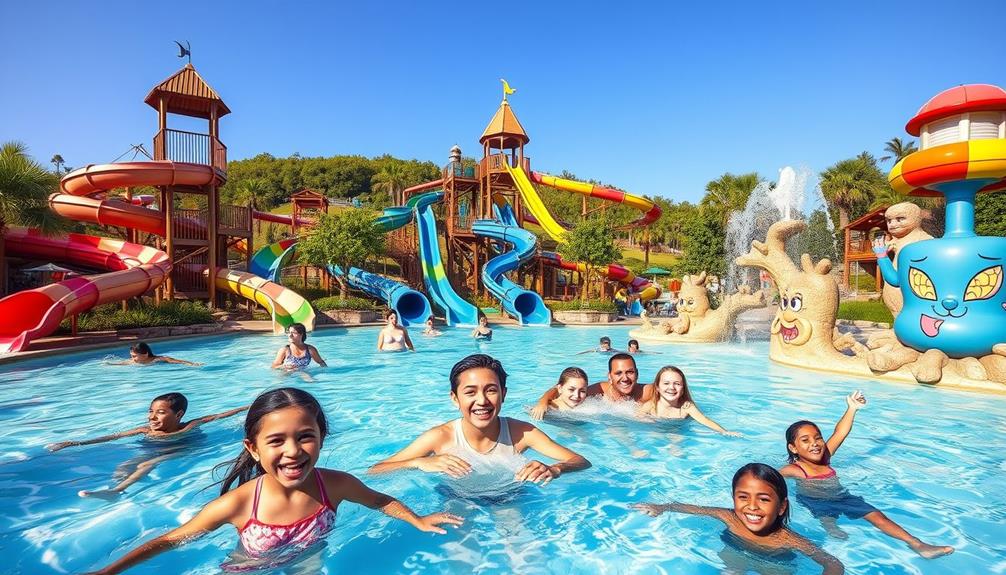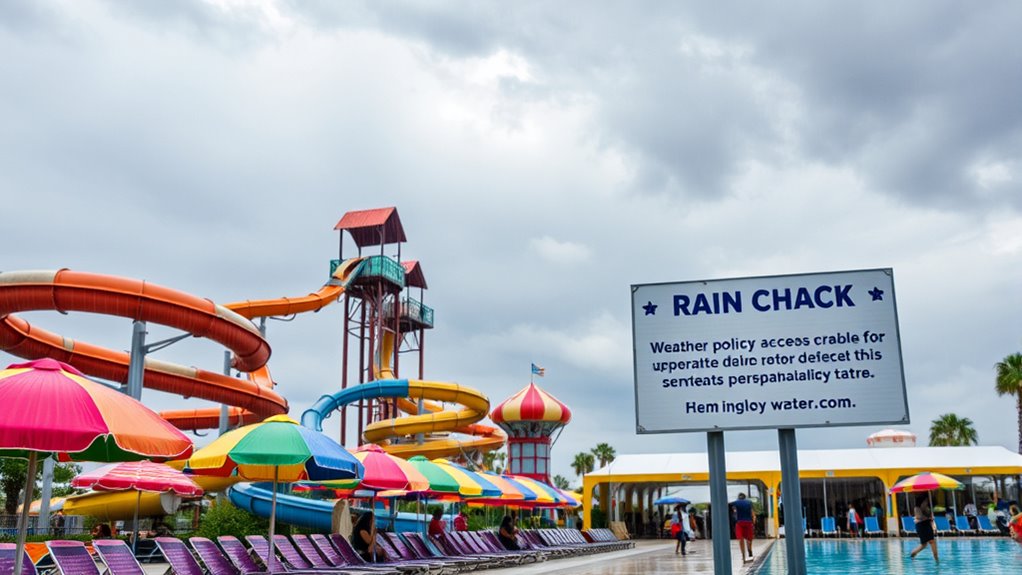

At water parks, rain checks are typically issued if the park closes for weather reasons for at least 2 hours, often requiring you to be inside the park less than 2-3 hours for eligibility. Weather closures can happen due to storms, lightning, or unsafe temperatures, and policies vary by region. To make sure you’re prepared, check the specific park’s guidelines—more details will guide you through the essentials.
Key Takeaways
- Rain checks are typically issued if the park closes early due to weather, often within the first 1-2 hours of visit.
- Closure durations of 2 hours or more generally qualify guests for rain checks or refunds.
- Weather policies vary by region, with some parks staying open during rain and others closing rides for safety.
- Valid rain checks usually require original tickets and are valid for up to a year, depending on the park’s policy.
- Parks use multiple communication channels to inform guests about weather conditions, closures, and rain check procedures.

DreamWorks Water Park Admission Tickets, 2 All Access Passes for Full Day of Fun
✅THE GIFT BOX OFFERS: 2 daily admission tickets for Dreamworks Water Park, offering a full day of splashy…
As an affiliate, we earn on qualifying purchases.
As an affiliate, we earn on qualifying purchases.
Conditions for Rain Check Eligibility
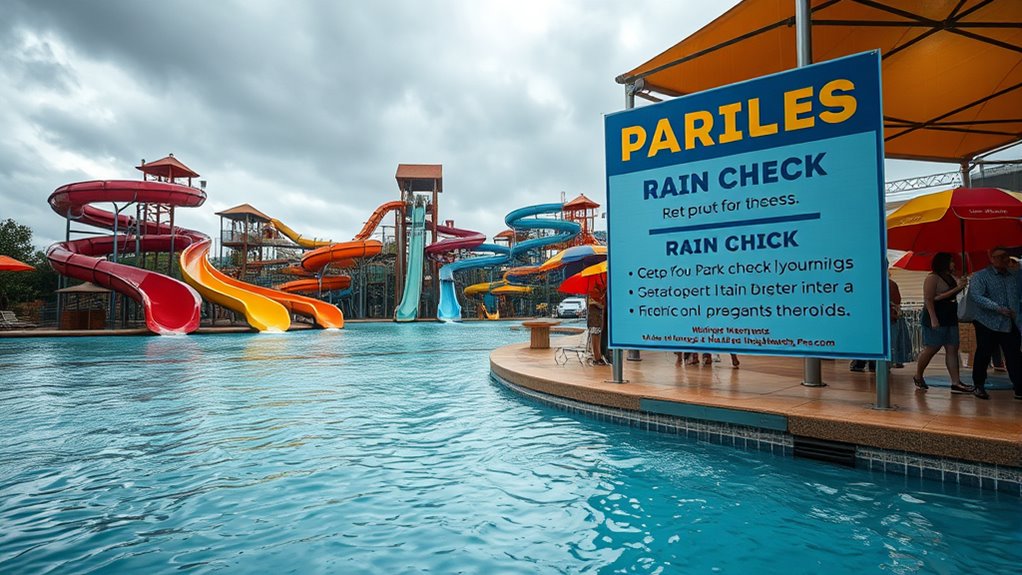
To be eligible for a rain check, you typically need to have been in the water park for less than a specified amount of time, usually between 2 and 3 hours, depending on the park’s policy. If you’ve been there longer, you likely won’t qualify. Temporary weather closures that last under 2 hours usually don’t count for rain checks, and you’ll need to show proof of your time spent, like a timestamped receipt. If the park closes within the last 90 minutes of your visit, rain checks often aren’t issued. Early exits due to weather also require proper documentation to qualify. Make sure you’re present for the official closure announcement and have your ticket or receipt ready. Meeting these conditions guarantees you can receive a rain check for a future visit. Refer to the weather policies to understand how recent weather events might affect your eligibility.

L LAVAREDO Mens Digital Watch Sports Military Watches Waterproof Outdoor Chronograph Wrist Watches for Men with LED Back Ligh/Alarm/Date
Multifunctional: Digital display, LED Back light, Date, Alarm, Shock Resistant, Stopwatch. Perfect for both outdoor and indoor sports,…
As an affiliate, we earn on qualifying purchases.
As an affiliate, we earn on qualifying purchases.
Weather-Related Closure Procedures
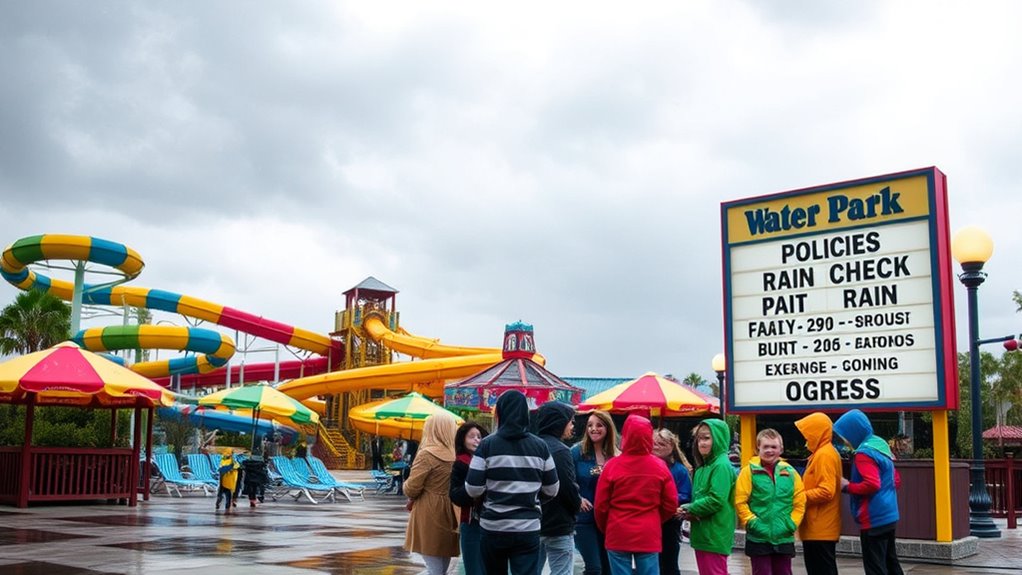
When weather conditions threaten guest safety, water parks follow specific closure procedures to guarantee everyone stays protected. If thunder or lightning occurs, the pool deck is cleared immediately, and a 30-minute closure begins after the last thunder or lightning. The timer resets with each new event, and reopening times are posted at the admissions window. If delays exceed 120 minutes, the park may close for the day. Water parks may also close if the forecast predicts temperatures below 70°F or if outdoor air temperatures drop below 60°F (sunny) or 65°F (cloudy). Heavy rain that reduces visibility can lead to clearing swimmers, but light rain alone doesn’t trigger closure. Staff monitor conditions closely, updating signage and communicating closure status via signs, social media, and websites to keep guests informed. Incorporating data-driven strategies helps parks optimize safety protocols and improve guest communication during weather emergencies.

National Park Water Bottle Stickers – All 63 Parks, 1.5 inch Vinyl – Waterproof, Fade-Resistant Decals for Water Bottles, Laptops, Journals, Gear – for Travelers, Students, and Outdoor Enthusiasts
🏞️ Creative Travel Stickers Of High Aesthetic Value: With bright colors and vinyl finishing, these aesthetic water bottle…
As an affiliate, we earn on qualifying purchases.
As an affiliate, we earn on qualifying purchases.
Redeeming Rain Checks and Return Policies
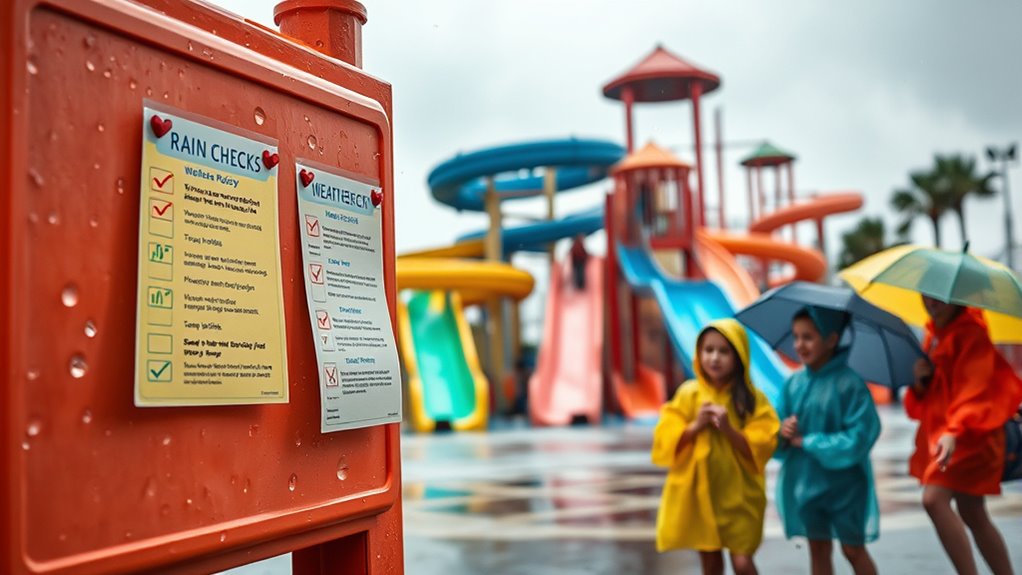
Rain checks are typically issued if a water park closes due to weather within a certain period after opening, often during the first 60 to 90 minutes of your visit. To redeem a rain check, you’ll usually need your original ticket or receipt and a valid ID, then visit Guest Services or the box office. Validity varies—from 7 days up to a year—and some parks restrict rain checks to the current season or specific ticket types. Rain checks are only honored for the current season.
Rain checks are issued if the water park closes early due to weather, valid from 7 days to a year.
- Rain checks often grant free or discounted future visits if the park closes early because of weather.
- Electronic coupons or store credits may be issued for online ticket purchases.
- Restrictions might include blackout dates or exclusions for group or annual passes.
- Understanding the lifestyle implications of weather policies helps visitors plan more effectively for their trips.

FosPower NOAA Emergency Weather Radio A1 7400mWh Portable Power Bank, AM/FM, USB/Solar/Hand Crank Charging, Battery Operated, SOS Alarm & Flashlight for Indoor/Outdoor Emergency – Orange
[7400mWh (2000mAh) POWER BANK WILL KEEP DEVICES POWERED] The FosPower FOSPWB-2376 emergency radio incorporates a 7400mWh (2000mAh) power…
As an affiliate, we earn on qualifying purchases.
As an affiliate, we earn on qualifying purchases.
Communicating Weather Policies to Guests
Effective communication of weather policies guarantees guests understand what to anticipate during inclement conditions and helps maintain safety. To do this, you should proactively share information through multiple channels like social media, websites, digital signage, and park-wide announcements. Encourage guests to use mobile apps, text alerts, and dedicated hotlines for real-time weather updates. Clear signage and maps at entrances and throughout the park should explain shelter locations, safety procedures, and weather policies. Provide printed or digital materials at ticketing and guest services that clarify what constitutes severe weather and the criteria for attraction closures or delays. Consistent, unambiguous messaging emphasizes safety as the top priority, reducing confusion and ensuring guests are well-informed about park procedures during weather disruptions. Incorporating voiceover narration into announcements can further enhance clarity and engagement with guests.
How Weather Affects Your Park Experience

Storms and severe weather can quickly disrupt your day at the park, leading to ride and park closures. These safety measures are necessary to protect guests and staff but can be disappointing when plans are interrupted. Being aware of weather conditions helps you stay flexible and make the most of your visit. Recent industry data shows that adverse weather can significantly impact attendance and in-park spending, so staying informed allows you to adapt your plans accordingly. Additionally, understanding weather policies can help you navigate unexpected closures more effectively.
Impact of Storms
Severe weather can abruptly alter your water park experience, forcing cancellations, ride closures, and safety evacuations. Lightning and thunderstorms require immediate removal from rides and shelters, while heavy rain makes pathways slippery and dangerous. High winds threaten the stability of outdoor attractions, risking structural safety. Additionally, extreme heat can lead to dehydration and heat-related illnesses if shaded areas and hydration stations aren’t available. Storms also create chaotic environments, demanding quick responses from staff to protect guests. Heavy rainfall can also increase runoff, carrying pollutants that may affect water quality in nearby lakes or streams. Moreover, unpredictable weather patterns can impact the effectiveness of safety protocols and delay emergency responses. Here’s how storms impact your visit:
- Increased safety risks from lightning, slick surfaces, and strong winds
- Disruptions due to ride closures and evacuations
- Environmental effects like water quality issues and infrastructure damage
Ride and Park Closures
Weather conditions directly influence whether you can enjoy your favorite rides and attractions. Lightning and thunder prompt immediate closures of outdoor rides and pools, with safety checks requiring 20 to 30 minutes after the last strike before reopening. Indoor water parks usually stay open during storms unless lightning threatens enclosed slides. Strong winds can cause debris hazards, leading to ride shutdowns or evacuations. Heavy rain reduces visibility and increases drowning risks, causing temporary closures until conditions improve, while light rain often doesn’t stop operations. Temperature thresholds also matter; rides may shut down if temperatures fall below certain points to prevent cold exposure or discomfort. Parks closely monitor weather, adjusting operations quickly. Some parks offer rain checks or refunds if weather forces extended closures, ensuring guests are protected and satisfied. Outdoor waterparks close promptly when lightning is detected. Additionally, weather monitoring systems enable parks to respond swiftly to changing conditions, minimizing inconvenience for visitors.
Regional Variations in Water Park Policies
Regional water park policies vary markedly, reflecting local climate patterns and operational priorities. In the Midwest, rain checks are issued if all attractions close for at least two hours, but season pass holders often aren’t eligible. The Northeast tends to stay open during rain, issuing rain checks only if operations are suspended for two or more hours, often requiring a receipt. Southeast parks generally stay open during rain but provide rain checks if all attractions close for two or more hours, sometimes limited to guests in the park less than three hours. On the West Coast, parks stay open during rain, offering rain checks if rides close for two hours, excluding season pass holders. Southwest parks follow similar rules, with rain checks valid for a year and sometimes requiring a ticket stub. Understanding weather policies can help guests plan their visits more effectively.
Frequently Asked Questions
Can I Get a Rain Check if I Arrive After Park Closure?
No, you can’t get a rain check if you arrive after park closure. Parks generally don’t provide rain checks or refunds when guests arrive after official closing time. To qualify, you need to present your same-day ticket or stub before leaving, and you must arrive while the park is still open. If you arrive after closure, you’re no longer eligible for a rain check or voucher.
Are Rain Checks Valid Across Multiple Park Locations or Only at the Original Park?
You can only use your rain check at the original water park where you purchased it. They generally don’t transfer between multiple locations, even within the same company. If you visit a different park, your rain check won’t be valid there. Make sure to check the specific policies of your water park, as some may have unique rules, but most keep rain checks tied to the initial location.
Do Rain Checks Cover Additional Expenses Like Parking or Food?
No, rain checks don’t cover additional expenses like parking or food. When a park issues a rain check, it’s only for re-entry or admission on another day, not for extra costs incurred during your visit. You’ll need to pay separately for parking, food, rentals, or other services. Keep in mind, these expenses aren’t reimbursed or included in the rain check, so plan accordingly to avoid surprises.
How Are Refunds Handled if the Park Closes Early Due to Weather?
If the park closes early due to weather, most major water parks won’t give you a refund or rain check. Your ticket is usually non-refundable, and you can’t get a cash refund or credit. Some parks might offer a return voucher if you meet specific conditions, but generally, all sales are final. To avoid disappointment, check the park’s weather policies before your visit and consider add-on insurance if available.
Are There Any Restrictions on Using Rain Checks During Special Events or Holidays?
You should know that restrictions on using rain checks during special events or holidays are quite strict. Parks typically don’t offer exceptions, even during peak times, and require you to meet standard criteria like park closure duration and ticket validity. In fact, rain checks are usually only issued if the entire park closes for at least 60 minutes, regardless of whether it’s a holiday or a busy event day.
Conclusion
Remember, weather can be as unpredictable as a summer storm on the horizon. By understanding rain checks and water park policies, you guarantee your day stays as smooth as a well-oiled machine. Just like sailors rely on their charts, you can navigate weather hiccups confidently. So, keep these tips in mind, stay flexible, and enjoy your adventure—rain or shine—making memories that will outlast even the most persistent clouds.