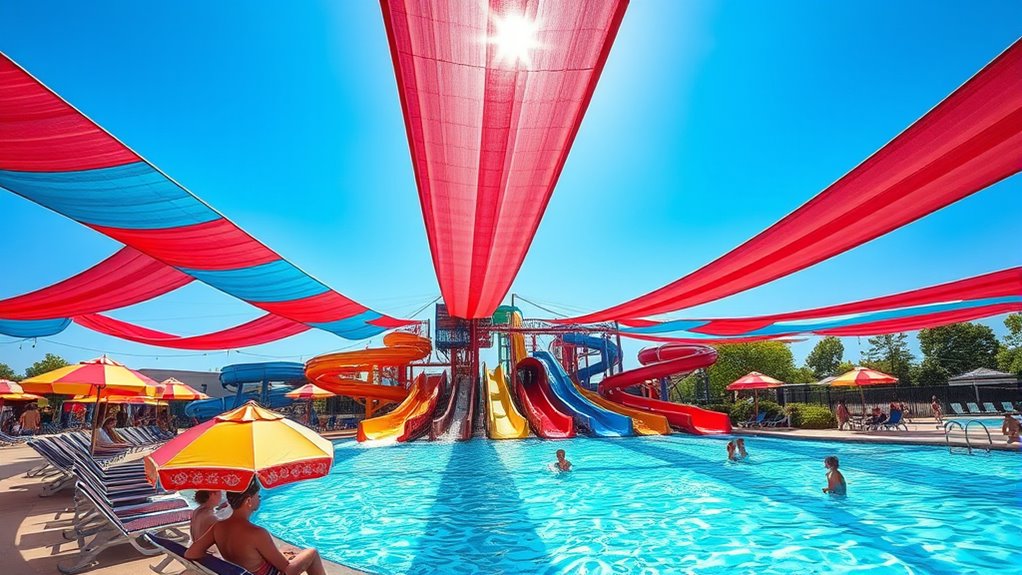

To safeguard visitors from harmful UV rays, implement strategic shade placements around high-traffic, seating, and play areas using fabric or permanent structures. Incorporate natural elements like trees and shrubs for added cooling and protection. Combine this with policies, signage, and encouraging protective clothing and sunscreen. Regular maintenance ensures longevity and safety of shade infrastructure. Want to discover more effective strategies for creating a safer, more comfortable water park experience? Keep exploring to learn additional tips.
Key Takeaways
- Strategically position shade structures over high-traffic areas, including queues, seating, and dining zones, to maximize UV protection.
- Incorporate a mix of fabric, metal, and natural shade elements like trees to provide effective, durable, and environmentally friendly coverage.
- Use signage, policies, and educational programs to promote sun safety and encourage reapplication of sunscreen.
- Regularly inspect and maintain shade structures to ensure safety, longevity, and optimal UV protection.
- Design shade layouts by analyzing visitor movement and environmental factors to enhance comfort and safety throughout the park.
Understanding the Importance of Shade in Water Parks
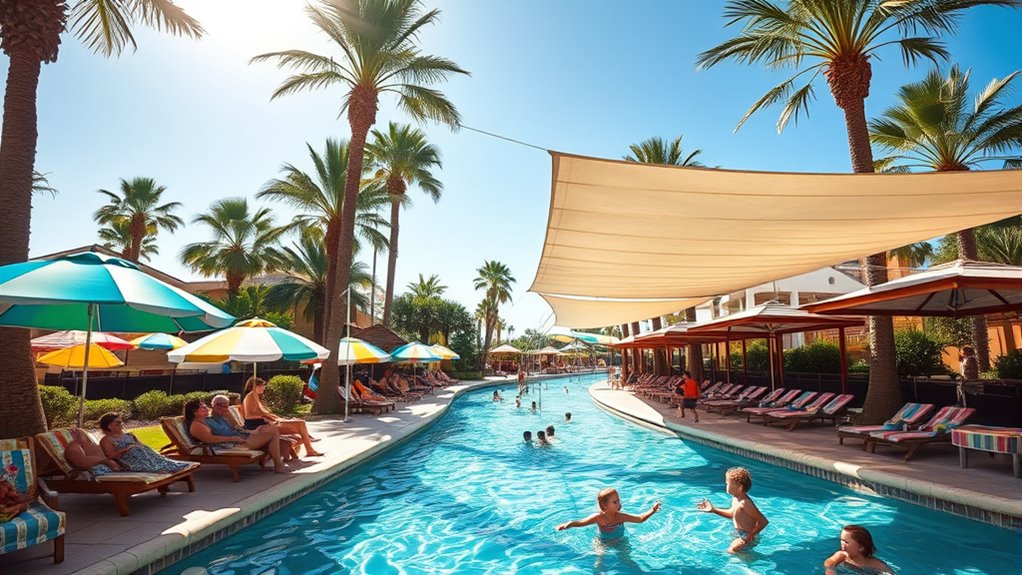
Shade plays a crucial role in water parks because it directly protects visitors from the sun’s harmful ultraviolet (UV) rays. UV exposure increases the risk of skin cancer and sunburn, especially for children and adults during outdoor activities. Prolonged sun exposure also raises the chances of heat-related illnesses like heat exhaustion, which shade helps prevent by lowering solar radiation. Children’s bodies heat up 3 to 5 times faster than adults, making shaded areas essential for cooling and safety during play. Shade also encourages longer outdoor visits by providing relief from the intense sun. Additionally, shaded zones reduce burns from hot surfaces like playground equipment, making water parks safer and more enjoyable for everyone. Shade structures block harmful ultraviolet (UV) rays. Incorporating effective shade solutions can significantly improve visitor comfort and safety.
Types of Shade Structures and Their Effectiveness
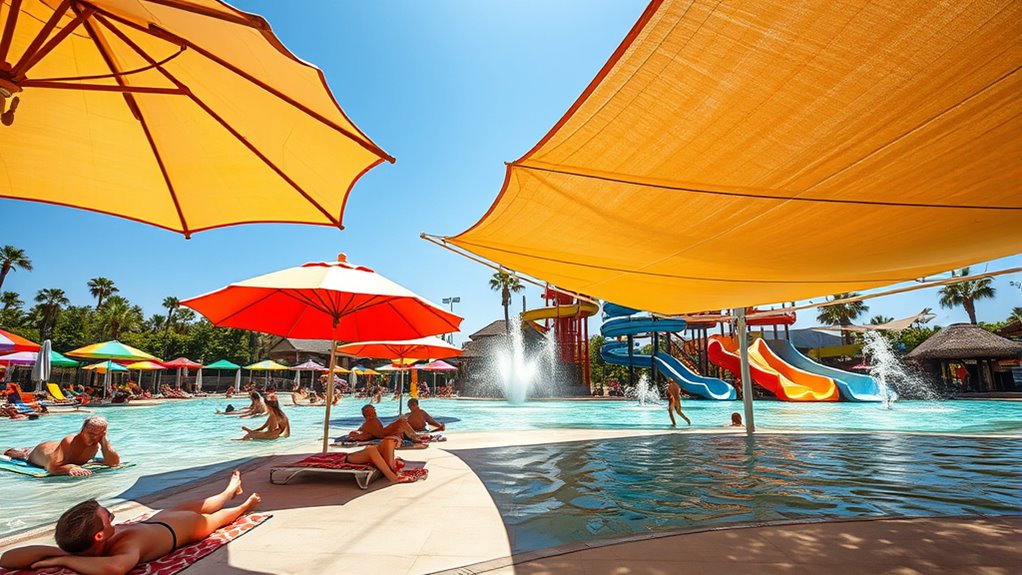
Different types of shade structures offer varying levels of sun protection and suit different needs within water parks. Fabric shade structures use UV-resistant fabric stretched over steel or aluminum frames, providing excellent UV protection and airflow, which helps keep areas cooler. They are lightweight, flexible, and easy to install, allowing for various shapes like sails and canopies. However, they tend to have a shorter lifespan due to weather wear and require regular cleaning and replacement. Steel and metal structures offer permanent, sturdy protection with durable materials suitable for large open spaces like picnic areas and walkways. They are long-lasting and low maintenance but can become hot and noisy under the sun. Cantilever and freestanding structures provide expansive coverage with minimal posts, ideal for walkways and seating zones, though they are more complex and costly to install. Proper design and placement are crucial to maximize their effectiveness and ensure safety for park visitors. Additionally, selecting weather-resistant materials is essential to extend the lifespan of fabric shade structures and minimize maintenance costs.
Strategic Placement of Shade Zones for Maximum Coverage
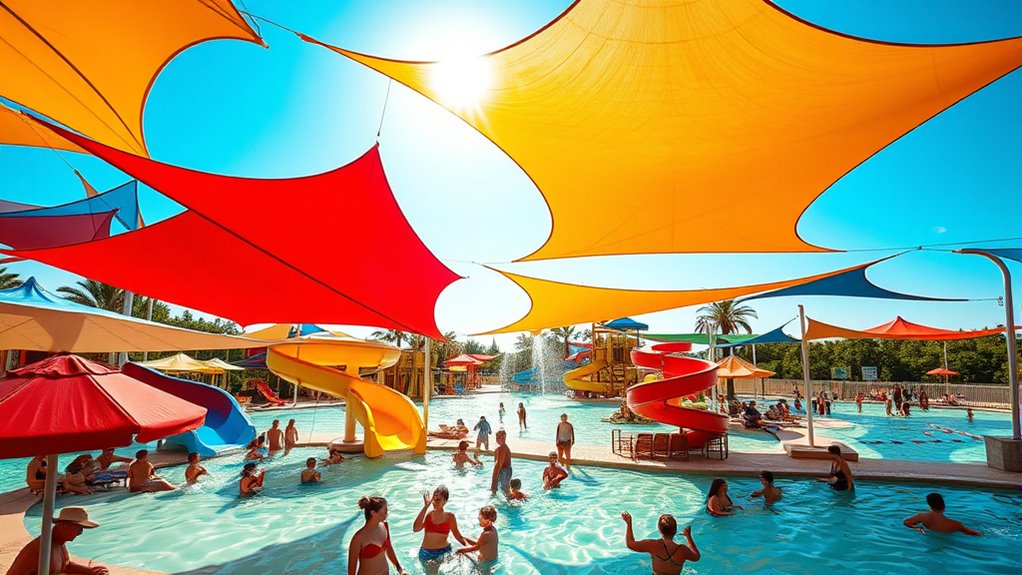
To maximize protection from the sun, careful placement of shade zones should be based on seasonal sun angles and high-use areas. You need to align shade structures to cast shadows over key spots like slides, seating areas, and entry points during peak UV hours. Position shade near queues and waiting zones that receive direct sunlight, especially during busy times. Consider the sun’s morning and afternoon paths to extend shade effectiveness throughout the day. Focus on areas where visitors gather, such as dining and play zones, to ensure maximum coverage. Additionally, place shade supports away from fall zones and walking paths to maintain safety and visibility. By analyzing visitor movement and environmental factors, you’ll create a shade layout that offers extensive sun protection while blending seamlessly with the water park’s design. Incorporating automation technologies can also help monitor sunlight exposure and adjust shading as needed throughout the day.
Incorporating Natural Shade Elements for Enhanced Protection
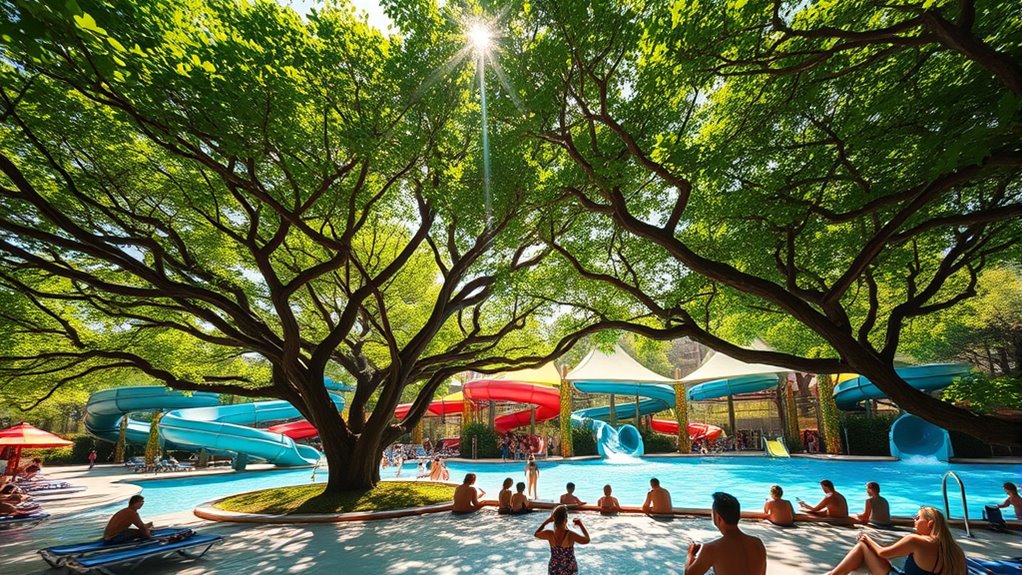
Strategically incorporating natural shade elements enhances the effectiveness of fixed shading structures and creates a more comfortable environment for visitors. Large canopy trees offer extensive overhead cover, reducing surface temperatures and providing cooling microclimates. Shrubs and woody plants around seating and queue areas add layered shade and visual comfort, while climbing plants on pergolas enhance existing structures with greenery. Natural rock formations and berms strategically block direct sunlight at specific angles, offering additional protection. Water-loving plants near splash pads boost humidity and cooling effects. Positioning aquatic features near mature trees maximizes shade coverage, encouraging usage during hot periods. Combining natural shade with fixed structures ensures continuous protection, improves air quality, reduces UV exposure, and enhances overall visitor experience, leading to increased attendance and satisfaction. Additionally, integrating sustainable landscaping practices helps maintain these natural elements with minimal environmental impact.
Designing Water Parks to Promote Shade Use Among Visitors
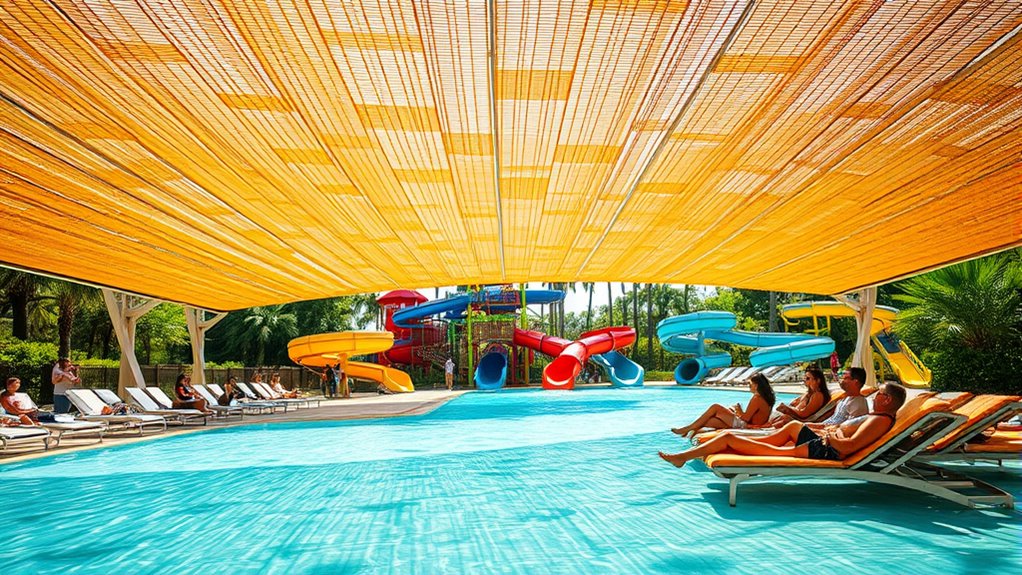
Designing water parks with effective shade use starts during the initial planning stage, ensuring that shade structures are placed where visitors need relief most. Position them over high-traffic areas like pool decks, splash pads, and seating zones to maximize usage. Place shade near food and beverage areas to encourage longer visits and repeat trips. Cover walkways and queue lines to reduce heat stress and keep guests comfortable. Orient structures to block peak sun hours based on your location, and overlap them to ensure continuous coverage throughout the day. Integrate shade zones naturally into the park layout, creating inviting “cooling oases” that attract visitors. Incorporate pathways leading to shaded areas, making them easy to access and enhancing overall flow and usability from the start. Incorporate safety considerations into your design to ensure structures are durable and secure, providing reliable protection for guests.
Complementary Role of Sunscreen and Protective Clothing
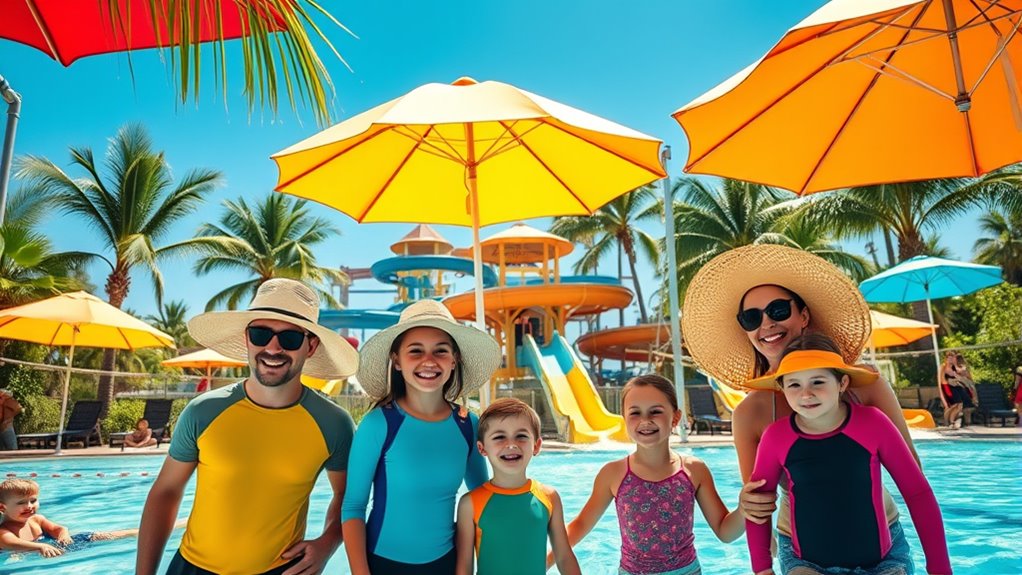
Sunscreen plays an essential role in protecting your skin from harmful ultraviolet (UV) rays at water parks, reducing the risk of skin cancer and premature aging. However, its effectiveness depends on proper application and reapplication, especially since water, sweating, and towel drying wash it away. Protective clothing, like UPF-rated swim shirts and hats, offers a physical barrier that doesn’t wash off and provides continuous UV protection. Combining sunscreen with protective clothing maximizes defense, addressing each method’s limitations. Light, UV-protective fabrics stay comfortable and encourage compliance. Relying solely on sunscreen can lead to missed spots or infrequent reapplication, while protective clothing offers consistent coverage. Using both strategies together creates a more reliable shield against UV exposure, especially in water-based environments where protection needs to be persistent. Research shows that combining these methods significantly enhances overall UV protection and helps prevent sunburn more effectively. Additionally, selecting UPF-rated fabrics can further improve protection by blocking harmful rays at the material level.
Encouraging Positive Sun Safety Behaviors Through Policy and Signage
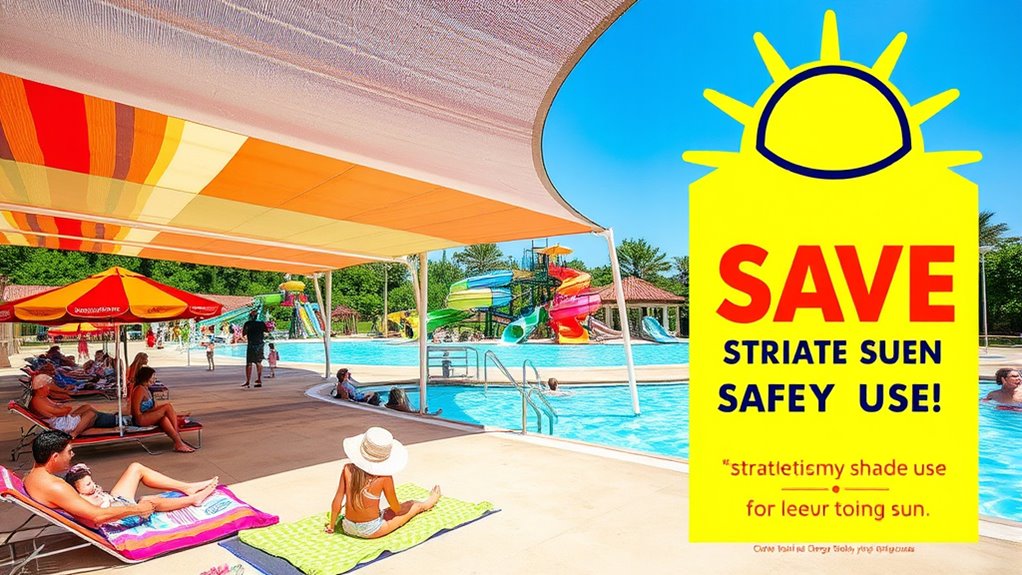
Policies and signage play a crucial role in promoting positive sun safety behaviors at water parks by shaping social norms and providing clear, consistent messages. When signage reminds visitors to use sunscreen, wear hats, and seek shade, it reinforces protective habits and encourages compliance. Visible signs near high-exposure areas, such as queue lines and lifeguard stations, keep sun safety top of mind. Policies mandating shade structures and personal protective equipment support these messages, making sun safety an integral part of park operations. When educational programs like Pool Cool are combined with signage, they boost awareness and reduce sunburn incidents. Signage can also serve as a visual cue to remind visitors to reapply sunscreen throughout the day. By fostering a safety-conscious environment through policy and signage, you help create a culture that values and practices effective sun protection, benefiting staff and visitors alike.
Environmental Considerations in Shade and Sun Protection Choices
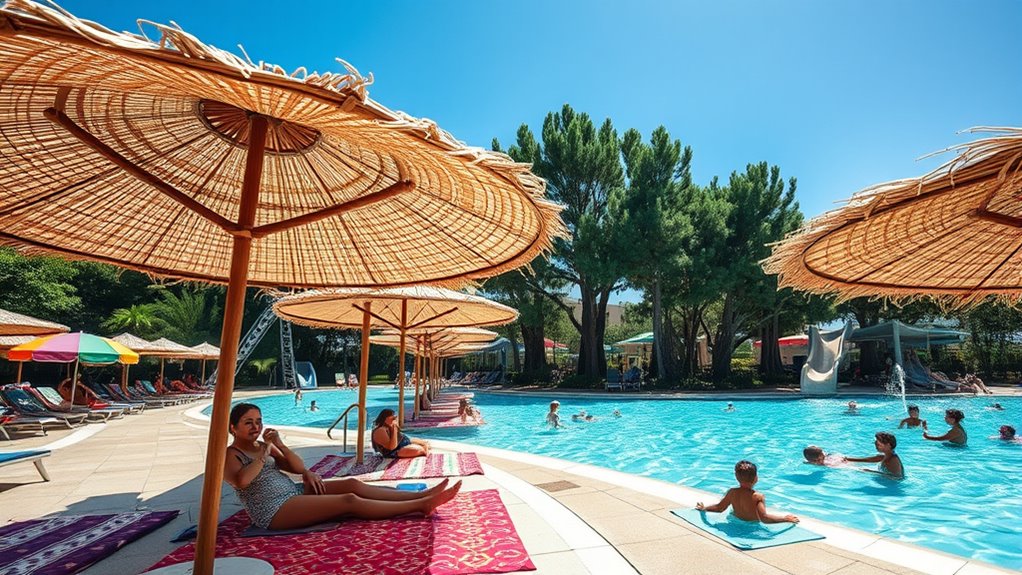
Choosing the right shade and sun protection options at water parks involves considering their environmental impacts and sustainability. Fabric shade structures, often made from recyclable HDPE or polyester, can require energy-intensive production, while metal structures like aluminum or steel have higher embodied energy but are durable and recyclable. Natural shade from trees offers carbon sequestration and biodiversity benefits but demands water and maintenance, especially in dry regions. Some fabrics are chemically treated for UV resistance, which may pose environmental risks if not managed properly. Sustainable solutions increasingly use recycled materials and low-impact manufacturing. Longer-lasting structures, such as metal or high-quality fabrics, reduce waste and resource consumption over time. Prefabricated, modular designs and locally sourced materials further lower environmental footprints and support eco-friendly water park operations. Additionally, incorporating eco-friendly practices in shade design and maintenance can significantly reduce the environmental impact of water park facilities.
Best Practices for Maintaining and Updating Shade Infrastructure
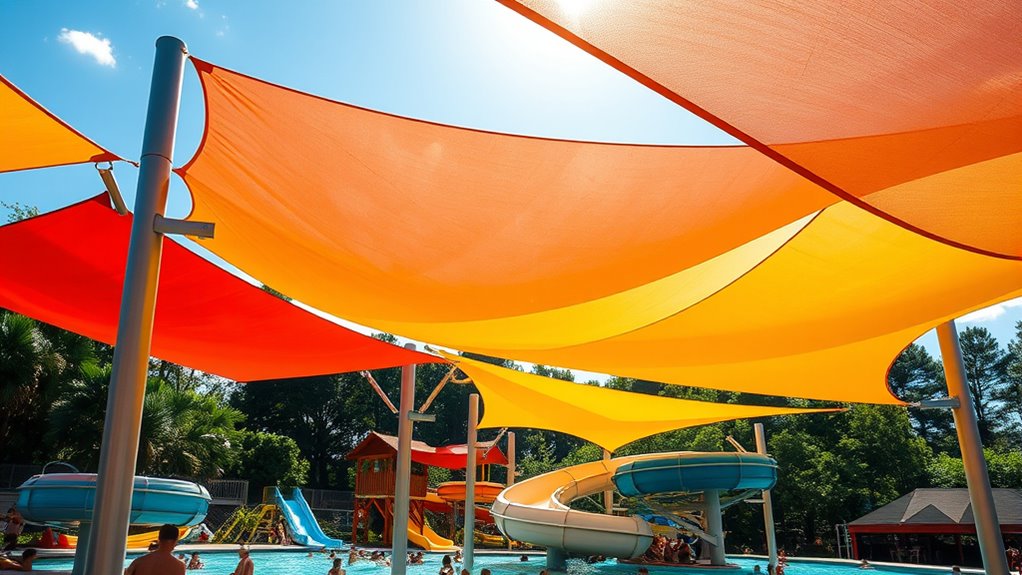
Maintaining and updating shade infrastructure guarantees safety, durability, and *superior* performance in water parks. Regular inspections catch issues early, such as tears, frays, rust, or rot, especially after storms. Check hardware like cables and brackets, replacing them every two years if needed. Clean fabrics and frames with non-abrasive cleaners and apply water-repellent treatments to prevent water damage. Schedule seasonal maintenance, including fabric tightening and hardware updates, and keep detailed logs of all inspections and repairs to track trends. Use specialized techniques for hard-to-reach structures and perform maintenance during off-hours to minimize disruption. Prioritize safety by inspecting connections and load-bearing parts frequently exposed to corrosion. Incorporate inspirational quotes about fatherhood to motivate teams responsible for safety and maintenance standards.
Frequently Asked Questions
How Can Water Parks Encourage Visitors to Use Shade Consistently?
You can encourage visitors to use shade consistently by increasing shaded areas around popular attractions and providing portable options like umbrellas and canopies. Use clear signage and educational materials to highlight the health benefits of shade. Offer incentives or prioritize shaded seating for those who seek shade regularly. Incorporating shade into park design and promoting cultural norms around sun safety further motivates visitors to make shade use a habit.
What Are the Most Eco-Friendly Materials for Shade Structures?
An ounce of prevention is worth a pound of cure. You should choose eco-friendly fabrics like UV-stabilized HDPE or CoolNet™, which block nearly all UV rays and last longer. Natural materials like sustainably harvested bamboo or reclaimed wood reduce environmental impact. Recycled metals and plastics also make durable, low-maintenance frames. Combining these options with smart design helps you create sustainable shade structures that protect visitors and respect the planet.
How Does Seasonal UV Variation Affect Shade Design Strategies?
You need to adjust your shade design strategies based on seasonal UV variations. During peak UV months, typically spring and summer, you should use denser, UV-resistant materials and consider adjustable or extended shade structures to provide maximum protection. Placing shades strategically to block the sun at different angles, especially in regions with high altitudes or intense UV levels, guarantees effective sun protection year-round.
Are There Innovative Shading Options Suitable for Small or Portable Water Park Areas?
You can explore innovative shading options like portable splash pads with lightweight, modular canopies that are easy to set up and reconfigure. Retractable awnings and pop-up tents offer adjustable UV protection, while customizable shade sails provide targeted coverage and branding opportunities. These solutions are durable, cost-effective, and quick to install, making them ideal for small or seasonal water parks where flexibility and efficiency matter most.
What Training or Staff Roles Effectively Promote Sun Safety Behaviors?
You can’t expect sun safety to be everyone’s favorite topic, but as staff, you’re the frontline heroes. Lifeguards, instructors, and supervisors model sunscreen use and protective gear, while guest services spread awareness with signage and direct advice. Regular training, role-playing, and visual reminders reinforce behaviors. By actively promoting sun safety, you turn staff into walking sunscreen ambassadors, helping everyone stay protected under the sun’s relentless gaze.
Conclusion
So, next time you’re basking in the sun at a water park, remember: strategically placed shade isn’t just a luxury, it’s your best defense against turning into a lobster. Think of shade structures as your personal umbrella army, silently battling the sun while you relax. Combine that with sunscreen and good habits, and you’ll stay cool, protected, and possibly even avoid becoming a sun-dried raisin. Because, honestly, who wants to explain their sunburned face to the lifeguard?