Parks test chlorine and pH using simple tools like test strips, liquid test kits, and digital sensors for quick, accurate results. You collect water samples from below the surface to avoid false readings, then compare color changes or use electronic meters for precise measurements. Regular calibration and proper storage guarantee consistent data. To maintain water safety, it’s essential to follow best practices—keep exploring to master these techniques.
Key Takeaways
- Parks collect water samples from 12–18 inches below the surface to avoid disturbances and ensure accurate chlorine and pH testing.
- They use liquid test kits with reagent drops, comparing color changes to standard charts within 15 seconds under good lighting.
- Digital sensors and online monitors can provide real-time chlorine and pH measurements, reducing human error.
- Proper storage, handling, and timely testing of reagents and test strips maintain accuracy and reliability.
- Regular calibration and consistent procedures, including multiple samples from different locations, help ensure accurate water quality assessments.
Common Methods for Testing Chlorine in Parks
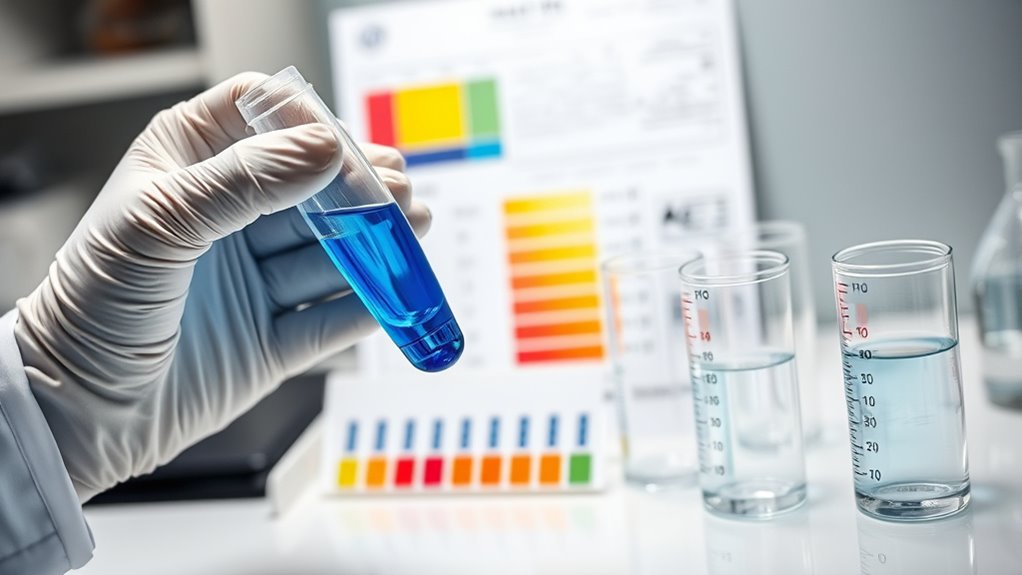
There are several common methods for testing chlorine levels in parks, each suited to different monitoring needs. Digital colorimeters and photometers use portable electronic devices to measure chlorine through light absorbance, offering objective, precise results. They can determine free chlorine, total chlorine, and sometimes pH, making them ideal for frequent testing. However, they require calibration and routine maintenance to stay accurate. Proper calibration is essential for reliable measurements. The FAS-DPD titration method is known as the gold standard, providing high-accuracy measurements, especially for free chlorine. It’s more time-consuming and needs chemical expertise. Liquid reagent test kits, like Taylor K-2005, use reagent drops to produce a color change, which is then compared visually or measured by a photometer. These kits balance accuracy with ease of use for routine park water testing.
Using Test Strips for Quick Chlorine Checks
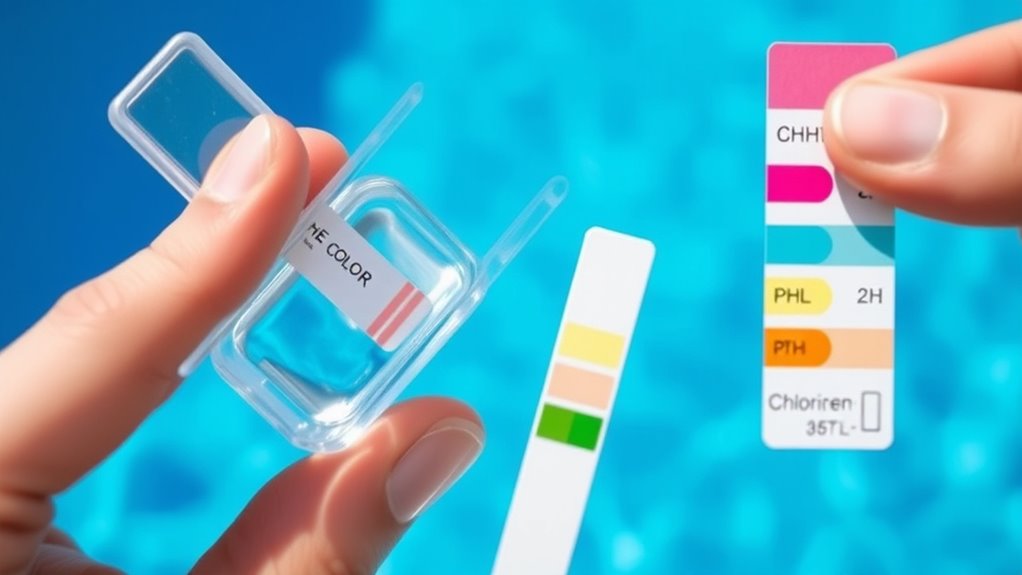
To get accurate results with test strips, you need to collect water samples properly by submerging the strip briefly and avoiding surface water. Make sure to interpret the color changes carefully, under good lighting and by comparing them closely to the legend. Regularly check and store your test kits properly to maintain their reliability over time. Testing frequency should be adjusted based on pool usage and weather conditions to ensure consistent water quality. Proper storage and handling are essential for maintaining the accuracy of test results over time.
Proper Sample Collection Techniques
For accurate quick chlorine checks using test strips, proper sample collection is essential. Begin by collecting water from 12 to 18 inches below the pool surface, avoiding areas near return jets, skimmers, or chemical dispensers to prevent skewed readings. Focus on mid-pool or center locations, especially in large pools, testing both shallow and deep ends to get an average. Before sampling, circulate the water on high pump setting for at least one hour to ensure even distribution of chemicals. Use a clean, dry container, and handle test strips with dry hands, avoiding contact with the pads. Dip the strip for 2 to 5 seconds as per manufacturer instructions, then remove and wait 15 to 40 seconds for results. Proper technique guarantees reliable, representative chlorine measurements. Additionally, accurate sampling helps prevent false readings that could lead to improper chemical adjustments and compromised water quality. Ensuring proper sample collection practices aligns with water quality management principles, promoting safer swimming environments.
Interpreting Color Changes Accurately
Accurately interpreting the color changes on test strips is key to getting reliable chlorine readings. Match the pad color to the legend within the recommended 15 seconds, ensuring you’re in good lighting—natural daylight works best. Be aware that color perception can vary due to lighting, age of strips, or vision differences. Here’s a helpful guide:
| Color Change | Meaning |
|---|---|
| Yellow to Blue/Green | Increasing chlorine levels |
| Faint or uneven | Possible contamination or error |
| Proper match | Accurate reading |
Always hold the strip flat, compare under good lighting, and avoid touching the pads. These steps reduce errors, providing clear, dependable chlorine measurements. Proper sampling ensures the test results truly reflect the pool’s water chemistry. Additionally, understanding the testing procedures can further improve accuracy and help maintain a safe swimming environment.
Regular Test Kit Maintenance
Regular maintenance of your test kits is vital to guarantee reliable chlorine and pH readings. Store test strips in a cool, dry place, away from heat, moisture, and sunlight, to preserve their accuracy. Always seal the container tightly after use to prevent exposure to air and humidity, which can degrade the test pads. Handle strips with clean, dry hands to avoid contamination, and use them before their expiration date for accurate results. Keep the strips in their original packaging or designated container. When testing, fully dip the strip for the recommended time, then shake off excess water and hold it level. Read the results within the specified time window using natural light. Regularly inspect the container for damage and replace strips if they show signs of deterioration or inconsistent results. Proper storage helps maintain the integrity of your test strips over time.
Liquid Test Kits: How They Work and When to Use Them

Liquid test kits are a popular choice for pool owners because they provide quick, accurate readings of chlorine and pH levels. You collect a water sample about 18 inches below the surface, then add reagent drops directly into the sample bottle, mixing gently. The chemicals cause a color change that you compare to a reference chart to determine chemical levels. These kits measure multiple parameters simultaneously and allow for precise dosing, making them more accurate than strips. They don’t require batteries or calibration, and they’re affordable for regular use. However, color interpretation can vary based on lighting and eyesight. Proper storage extends reagent shelf life, usually six months. Use the table below to understand key features:
| Parameter | Reagent Type | Best Use Case |
|---|---|---|
| Chlorine | Liquid | Precise, regular testing |
| pH | Tablets/Powder | Easy, quick assessments |
| Shelf Life | 6 months | When to replace reagents |
| Accuracy | High | Detecting small changes |
| Convenience | Moderate | Not ideal for professional labs |
Liquid test kits are especially valued for their accuracy in detecting small changes in chemical levels, which is essential for maintaining safe and balanced pool water.
Digital and Electronic Devices for Accurate Chlorine Measurement
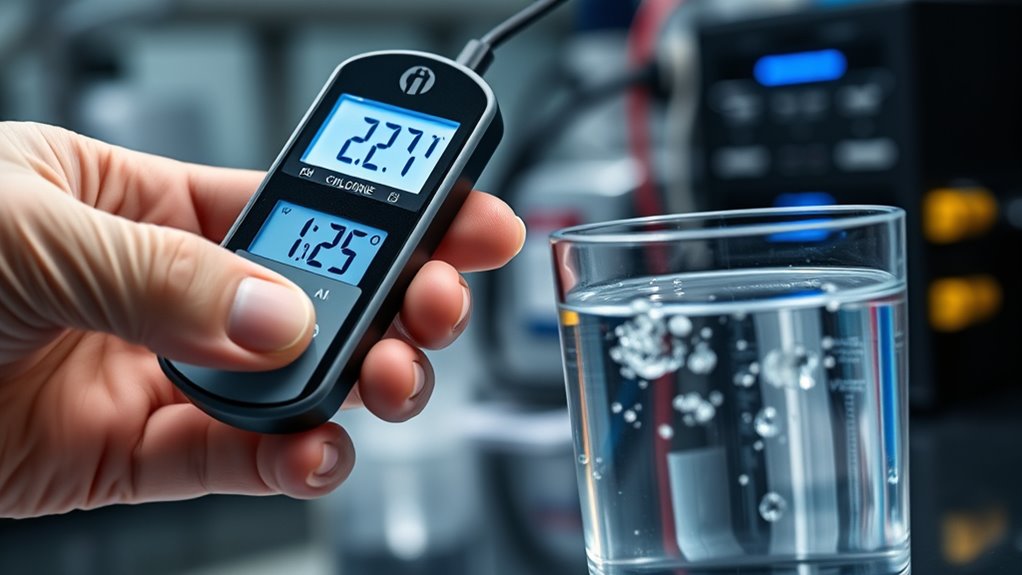
Digital and electronic devices have revolutionized chlorine measurement by providing quick, precise, and reliable results. These tools include handheld DPD colorimeters, photometers, amperometric analyzers, and online monitors, each suited for different testing needs. Handheld DPD colorimeters are popular for field testing, offering real-time readings for pools and drinking water. Photometers like Milano MW11 deliver results within minutes and boast high accuracy, often up to ±0.03 ppm. Amperometric analyzers measure free and total chlorine electrochemically, ideal for continuous, in-pipe monitoring without reagents. Additionally, online analyzers provide real-time data for water treatment plants. Features such as auto-calibration, backlit displays, and connectivity options make these devices easy to operate, maintain, and integrate into your water management system. These devices are often equipped with advanced sensors and digital interfaces, making data collection and analysis more efficient than traditional methods. Modern digital sensors enhance measurement accuracy and reduce the likelihood of human error, further improving water quality monitoring.
Titration Techniques for Precise Chlorine Quantification

Titration techniques are essential for achieving accurate and reliable chlorine measurements in water analysis. Amperometric titration is the top choice for total residual chlorine because it offers high sensitivity and minimal interference from substances like iron or turbidity. You need to perform this on-site immediately, as chlorine reacts quickly and can’t be preserved. DPD/FAS titration is widely used for routine testing, effectively distinguishing free and total chlorine with a linear response over a broad concentration range. Iodometric titration works well for higher chlorine levels above 1 mg/L but isn’t suitable for low concentrations. Advanced methods like membrane introduction mass spectrometry (MIMS) provide even greater specificity, differentiating chlorine species with lower detection limits. These titration approaches guarantee precise, dependable chlorine quantification in various water samples. Additionally, understanding the different water pollutants helps in selecting the most appropriate testing method for accurate results.
Approaches to Testing Water Ph Levels in Recreational Areas
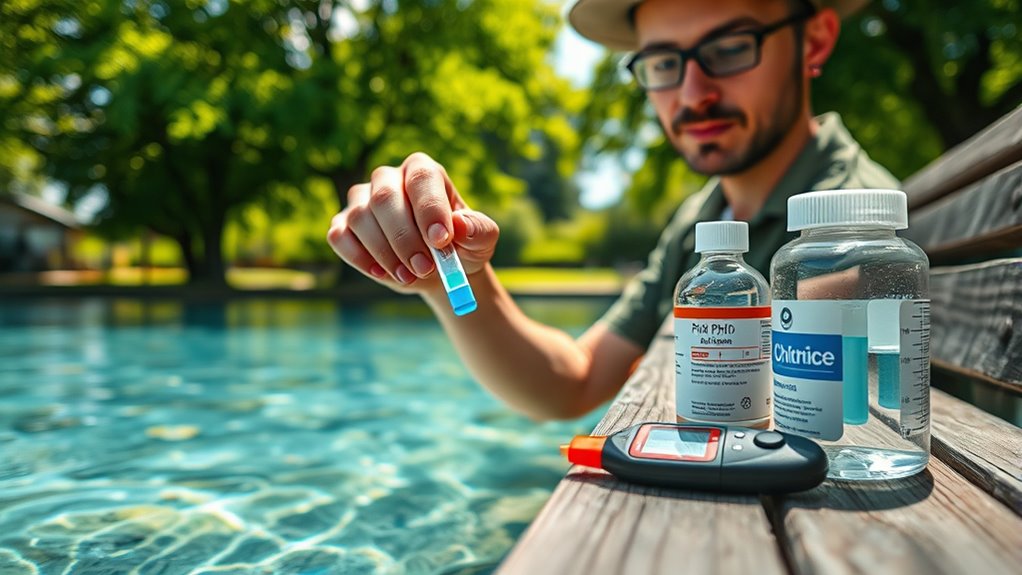
When testing water pH levels in recreational areas, choosing the right method is essential for accurate and reliable results. You can select from several approaches:
- pH test strips: Dip into water, match color to a scale—quick and inexpensive but less precise.
- Digital pH meters: Provide highly accurate digital readings, ideal for professional or detailed monitoring.
- Colorimetric titration: Use reagents and color matching for precise routine checks, though more involved.
Each method varies in complexity, cost, and accuracy. Test strips are useful for quick assessments, while digital meters are best when precision matters. Titration offers accuracy but requires more steps. Tailor your choice to your specific needs, ensuring consistent and reliable pH monitoring. Proper calibration and maintenance of equipment are crucial for obtaining trustworthy results across all testing methods.
Interpreting Test Results and Maintaining Water Balance

Once you have your test results, you need to interpret them correctly to keep water balanced and safe. If chlorine levels are too low or high, or pH is outside the ideal range, adjustments are necessary to restore proper chemistry. Consistently monitoring and adjusting these levels guarantees the water remains clean, safe, and comfortable for swimmers. Regular testing ensures that deviations are caught early, preventing potential issues like algae growth or equipment damage. Understanding water chemistry is essential for effective maintenance and ensuring a safe swimming environment.
Reading Accurate Levels
Accurate interpretation of test results is essential for maintaining proper water chemistry in your pool. Proper reading guarantees you keep chlorine and pH levels within safe and effective ranges. To achieve this, focus on several key points:
- Ensure your sample is taken correctly: from the main pool body, 12–18 inches below the surface, away from jets, skimmers, or foam.
- Use proper lighting and a white background when comparing colors on the test kit to avoid misreading pH or chlorine levels.
- Read results immediately after testing, especially for free chlorine, to prevent color fading or changes that could lead to inaccuracies.
- Proper technique during testing minimizes human error, ensuring your water chemistry remains balanced for safe swimming. Additionally, understanding how narcissistic traits such as manipulation can impact relationships emphasizes the importance of accurate assessment and interpretation, whether in water testing or personal interactions.
Adjusting for Balance
Maintaining proper water balance requires careful interpretation of your test results and timely adjustments. If pH is outside the ideal 7.2–7.8 range, add pH decreasers like muriatic or dry acid to lower it, or alkaline substances such as soda ash to raise it. Retest after a few hours to check progress. For total alkalinity, adjust with sodium bicarbonate to raise or dry acid to lower, aiming for 80–150 ppm. Proper alkalinity stabilizes pH and reduces fluctuation. Keep chlorine levels between 1–3 ppm; if levels drop, add sanitizer and wait for circulation. Always test regularly—at least two to three times weekly—and make incremental adjustments, allowing sufficient time between treatments. Consistent monitoring and precise adjustments keep your pool safe, balanced, and equipment protected. Understanding water chemistry is essential for effective pool maintenance and ensuring a safe swimming environment.
Challenges and Best Practices for Reliable Testing
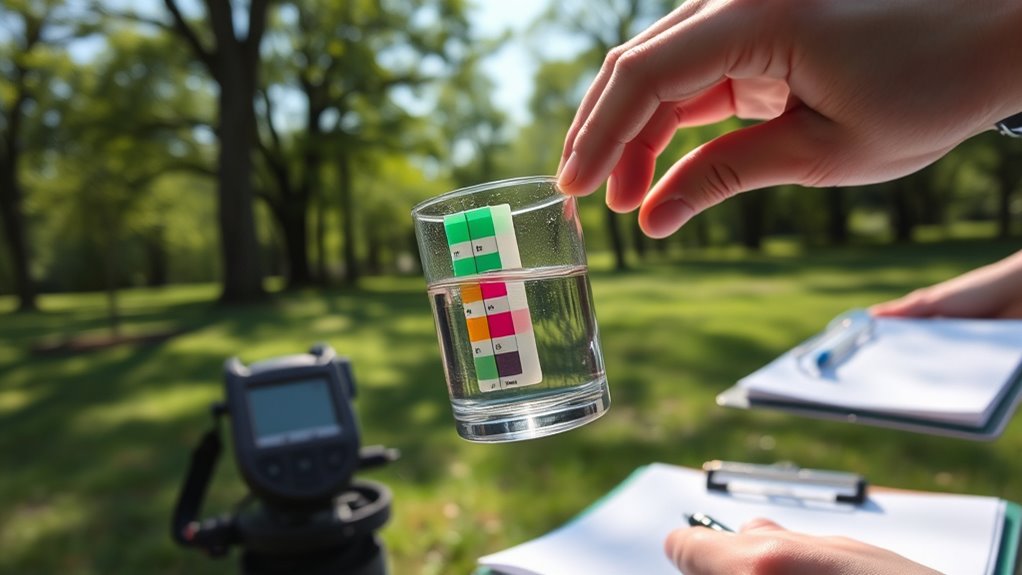
Ensuring reliable chlorine and pH testing in parks presents several challenges that can affect data accuracy and consistency. Sampling bias can skew results if water isn’t collected from representative spots. Rapid changes in water chemistry make it hard to capture true levels at a single moment. Additionally, variability between labs and test kits can lead to inconsistent readings. To overcome these issues, focus on best practices such as:
Accurate testing requires representative sampling, consistent procedures, and proper equipment maintenance.
- Regular calibration and maintenance of testing equipment
- Using standardized protocols and certified test kits
- Collecting multiple samples from different locations to account for spatial variability
Proper training of staff ensures accurate sample collection, which is essential for reliable results. These steps help improve reliability and guarantee your data accurately reflects water quality. Staying vigilant about equipment upkeep and following consistent procedures will help you navigate common testing challenges effectively.
Safety Guidelines for Handling Testing Chemicals and Equipment

Handling testing chemicals and equipment safely is vital to safeguard yourself and guarantee accurate water quality results. Always wear chemical-resistant gloves, safety goggles, and protective clothing to prevent skin and eye contact with pool reagents. Keep chemicals in their original, labeled containers, stored in a cool, dry, well-ventilated area away from sunlight and incompatible substances. Follow manufacturer instructions and Safety Data Sheets carefully, measuring chemicals precisely and avoiding mixing reagents unless specified. Confirm proper ventilation to minimize fumes and rinse equipment thoroughly after use to prevent contamination. Keep spill kits nearby and train staff on spill response protocols. Regularly clean and calibrate testing devices, store tools properly, and wash your hands thoroughly after handling chemicals to maintain safety and accuracy. Proper storage and handling procedures are essential to prevent accidents and ensure the integrity of test results. Additionally, maintaining consistent testing practices helps ensure reliable water quality assessments over time.
Monitoring Frequency and Data Management Strategies
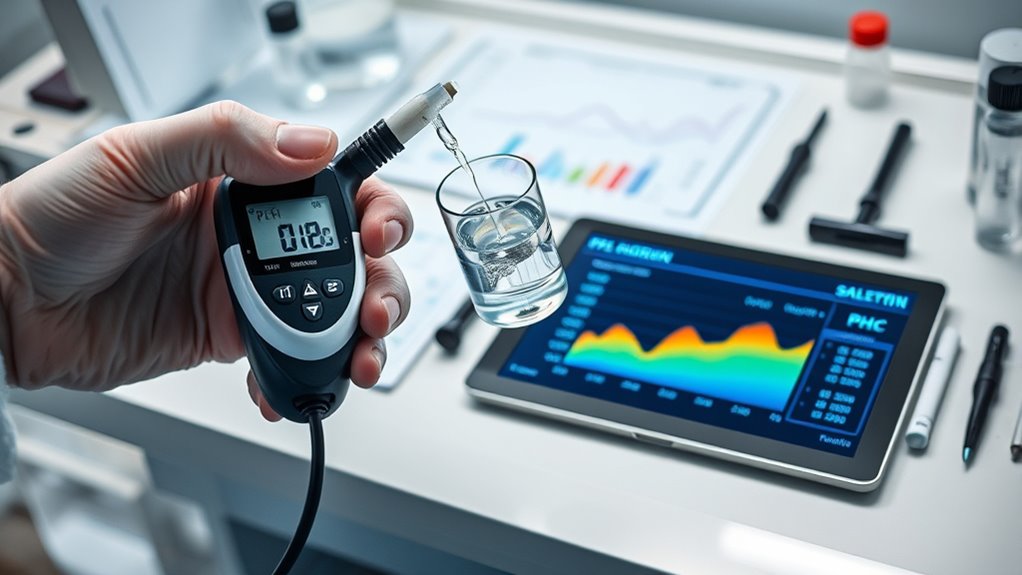
Monitoring the frequency of chlorine and pH testing is key to maintaining safe recreational water environments. You should test at least twice daily during operating hours, but high-use facilities or after heavy rainfall may require tests every 1–2 hours. Automated systems can provide continuous data, reducing manual effort. To stay compliant and ensure water safety, consider these strategies:
- Increase testing frequency during peak usage or after weather events
- Use automated sensors for real-time monitoring and alert generation
- Maintain detailed digital logs for easy access, trend analysis, and regulatory review
- Implementing regular calibration of testing equipment ensures accurate readings.
Regularly updating testing procedures helps maintain consistency and reliability in water quality assessment.
Consistently managing data helps you identify patterns, respond swiftly to deviations, and meet health department standards. Proper data management supports ongoing safety, operational efficiency, and regulatory compliance.
Frequently Asked Questions
How Often Should Parks Test Chlorine and Ph Levels?
You should test chlorine and pH levels at least two to four times daily, especially during peak hours or heavy bather loads. It’s important to test more frequently after events like heavy rain or contamination. Regular testing helps keep the water safe, balanced, and compliant with regulations, ensuring a pleasant experience for swimmers. In high-traffic parks, sticking to this schedule maintains water quality and prevents potential health issues.
What Are the Common Errors in Park Water Testing?
You often encounter errors like neglecting regular sensor cleaning, which skews readings. Failing to calibrate sensors properly causes drift and false results. Using incorrect sensors or testing under poor lighting conditions leads to inaccuracies. Testing immediately after chemical treatments or outside recommended ranges can give unreliable data. Additionally, misinterpreting ORP as chlorine levels, not following manufacturer instructions, and not accounting for environmental factors also contribute to common testing mistakes.
How Do Environmental Factors Affect Test Accuracy?
Environmental elements exert essential effects on your testing efforts. Elevated temperatures accelerate reactions, skewing chlorine and pH readings, while fluctuating flow rates influence sample representativeness. Stagnant, still water fosters stratification, skewing results. Seasonal shifts alter chemical stability, and sudden storms stir up samples, causing variability. You must monitor environmental conditions closely, select representative sites wisely, and follow standardized sampling protocols to secure accurate, reliable chlorine and pH test results despite environmental influences.
Which Testing Method Is Best for Large Park Pools?
You should use digital photometers for large park pools because they’re the most accurate and reliable. They use reagents and light transmission to give precise readings of chlorine and pH levels, making them ideal for large-scale monitoring. Although they cost more upfront, their accuracy reduces the need for retests or corrections, ensuring safe, well-maintained pools. This method is preferred by professionals for consistency and compliance.
How Should Testing Reagents Be Stored to Ensure Reliability?
You can’t afford to let your testing reagents go bad—it’s like risking the entire pool’s safety! Store them in a stable, dry environment between 2°C to 29°C (36°–85°F), avoiding temperature swings or exposure to sunlight. Keep caps tight, use original or approved containers, and label everything clearly. Refrigerate special reagents if needed, and never freeze unless instructed. Regularly verify expiration dates to ensure accuracy and reliability.
Conclusion
So, now you’re basically a chlorine and pH testing guru—ready to combat algae, bacteria, and questionable water quality with your arsenal of test strips, kits, and gadgets. Just remember, the real skill lies in interpreting those results without turning into a chemist or a water wizard. Keep your tests regular, handle chemicals responsibly, and maybe, just maybe, you’ll keep that pool sparkling and algae-free—no magic required, just good old science.