

To understand height and weight limits on slides, consider the age group using the equipment. Younger children need smaller slides, platforms under 3 feet, and gentle slopes, while older kids can handle taller, steeper designs. Materials and safety features, like guardrails and impact surfacing, are essential for durability and protection. Proper maintenance guarantees ongoing safety, reducing risks. If you want to learn more about matching slide features to different ages and sizes, keep exploring this topic.
Key Takeaways
- Height limits vary by age group, with infants requiring lower slides under 3 feet and older children handling taller slides up to 8 feet.
- Weight capacity is age-appropriate, with residential slides typically supporting 250-300 pounds, ensuring safety during use.
- Proper slide design, including incline and platform height, prevents hazards and aligns with safety standards for different age groups.
- Regular inspections and maintenance ensure structural integrity and that weight limits are maintained over time.
- Safety zones and impact-absorbing surfacing are essential to accommodate maximum weight and prevent injuries from falls.
Age Group Guidelines for Slides

Understanding age group guidelines for slides is essential to guarantee children play safely and comfortably. Different age groups require specific equipment designed for their developmental stage. Infants and toddlers under 2 years need minimal height slides with padded surfaces and simple designs that support limited mobility and balance. Preschool children aged 2–5 benefit from low-to-the-ground slides with safety barriers, encouraging climbing and coordination. School-aged children, 5–12 years old, can handle more complex, taller slides, including those with steeper slopes and larger platforms. Play areas are usually separated by age, with clear signage to indicate suitability. These guidelines ensure that each child engages with age-appropriate equipment, minimizing injury risks and promoting safe, enjoyable play experiences tailored to their developmental needs. Additionally, standardized safety protocols recommend regular inspections and maintenance to ensure the structural integrity of slides across all age groups, including the use of aesthetic wall organization to keep play areas tidy and safe.
Determining Appropriate Slide Heights for Different Ages
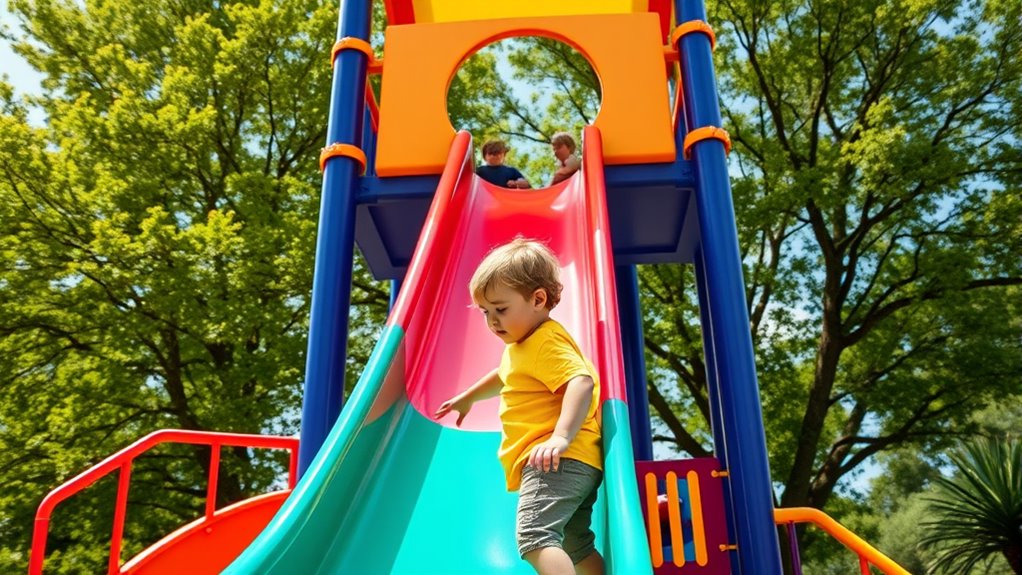
Choosing the right slide height for different age groups is essential to guarantee safety and appropriate play experiences. For toddlers aged 2–5, keep slide heights between 3 and 4 feet to prevent falls and ensure safe landings. Preschoolers should have slides no taller than 4 feet, aligning with their developmental abilities and safety standards. School-aged children, from 5 to 12, can handle slides ranging from 6 to 8 feet, providing a more exciting experience while maintaining safety. Slides for children under 2 should be minimal, usually under 3 feet. Always match the slide height to the platform height and ensure the fall zones, exit zones, and guardrails are suitable for each age group. Proper height guarantees safe access, descent, and landing, minimizing injury risks. Proper slide height also ensures compliance with safety guidelines and helps reduce the risk of falls and injuries during play. Incorporating age-appropriate design principles can further enhance safety and enjoyment for all users.
Understanding Incline and Design Specifications

You need to pay close attention to the incline angles to guarantee slides are safe and fun for kids. Proper design measures, like preventing entrapment hazards, are essential to avoid injuries. By understanding these specifications, you can help create a safer play environment for children. Additionally, the maximum slope for toddlers should not exceed 24 degrees, ensuring the slide is manageable and reduces the risk of falling. Ensuring proper installation and maintenance of the slide components also plays a crucial role in safety.
Incline Angle Limits
Incline angles play an essential role in ensuring slide safety and functionality. Regulatory guidelines specify maximum incline angles to prevent excessive speeds and injuries. The U.S. CPSC recommends no section should exceed 50°, with an average slope around 30°. British standards allow up to 37°, while German standards permit 40°, and curved sections up to 50°. Australian standards limit preschool slides to 40°. Designers often choose slopes near 30° for a safe, enjoyable ride, though some accept steeper inclines up to 40°. Proper slide design balances height, run length, and incline to control speed. Steeper angles increase risk, particularly for younger children, while controlled inclines help maintain safety without sacrificing fun. Surface curvature and slide type further influence permissible incline limits. The maximum allowable incline varies depending on the specific safety standards and intended age group, ensuring that slides remain safe for all users.
Entrapment Prevention Measures
Proper slide design incorporates specific features to prevent entrapment risks. You need to verify platforms are level, with widths matching the slide chute, and guardrails or barriers surround them, except at entry and exit points. For toddlers, platforms should be at least 19 inches deep, while preschool and school-age ones require a minimum of 14 inches. No gaps should exist on platforms to eliminate entrapment sites. Guardrails for platforms over 30 inches must have openings smaller than 3½ inches, and barriers over 48 inches should be at least 27 inches high, with taller barriers for higher platforms. Side and chute designs must prevent openings that could trap children. Regularly inspect surfacing and surroundings to keep the use zone clear and safe, reducing entrapment hazards during play. Additionally, ensuring that all slide components are securely fastened and free of sharp edges further enhances safety and minimizes entrapment risks. Incorporating Effective safety standards helps maintain compliance with regulations and promotes safe play environments.
Weight Capacity and Durability Standards

Understanding weight capacity and durability standards is essential for safe slide use. ASTM load testing guarantees equipment can handle the maximum expected forces, while material strength requirements certify long-lasting performance. Age-appropriate weight limits help you select slides that match users’ safety needs and structural integrity. Proper design and manufacturing standards ensure slides are built to withstand typical usage and environmental conditions.
ASTM Load Testing Standards
ASTM load testing standards set rigorous criteria to guarantee playground slides are safe, durable, and capable of withstanding the forces they encounter during regular use. These standards, like ASTM F1487, require equipment to endure live loads with safety factors at least twice the maximum expected loads, ensuring structural integrity. During testing, slides must show no cracks, deformation, or breaks after applying static and dynamic loads that simulate user weight and movement. Some components, like decks, are tested beyond 2,600 pounds, surpassing typical building codes. The standards also specify load distribution to prevent localized overstress. Additionally, load testing includes durability assessments, confirming that materials retain strength under repeated stress and environmental exposure, guaranteeing long-term safety and performance of your playground slide. Understanding material resilience is essential to ensure that the equipment maintains safety over time.
Material Strength Requirements
Choosing materials that meet safety and quality standards helps ensure longevity and reliable support for users. High-density polyethylene (HDPE) is popular for its durability and versatility, while Ultra-High Molecular Weight Polyethylene (UHMW-PE) offers superior stiffness and smoothness for demanding outdoor use. Acetal (POM) provides high dimensional stability, wear resistance, and strength, making it ideal for harsh conditions. ABS combines impact resistance, rigidity, and UV stability, ensuring long-lasting performance. Wood slides, though natural, require significant maintenance due to moisture and insect damage, which can affect their durability and weight support. Selecting materials with proper impact absorption, environmental resistance, and structural strength ensures your slide can handle dynamic loads and maintain safety standards over time. Regular inspections and maintenance further help preserve material integrity. Choosing materials that meet safety and quality standards helps ensure longevity and reliable support for users. Additionally, selecting materials with proven durability is crucial for maintaining the safety and performance of your playground equipment over time.
Age-Appropriate Weight Limits
Most playground slides are designed with age ranges in mind, which serve as practical guidelines for safe use rather than strict weight limits. These age recommendations reflect typical child sizes and behaviors, helping guarantee safe play. While public slides often don’t specify exact weight limits, they focus on age zones, like 2–10 or 2–12 years, as proxies for weight. Residential slides usually list maximum capacities, often between 250–300 lbs, to manage liability and safety. Commercial slides are engineered for heavier loads but rarely publish specific weight limits. Regular inspection and proper installation are crucial, as wear or improper use can reduce safe weight capacity over time. Additionally, the design standards for playground equipment ensure that slides are capable of supporting intended weight ranges safely. Always supervise children and adhere to manufacturer guidelines to prevent accidents.
Safety Zones and Protective Surfacing Requirements
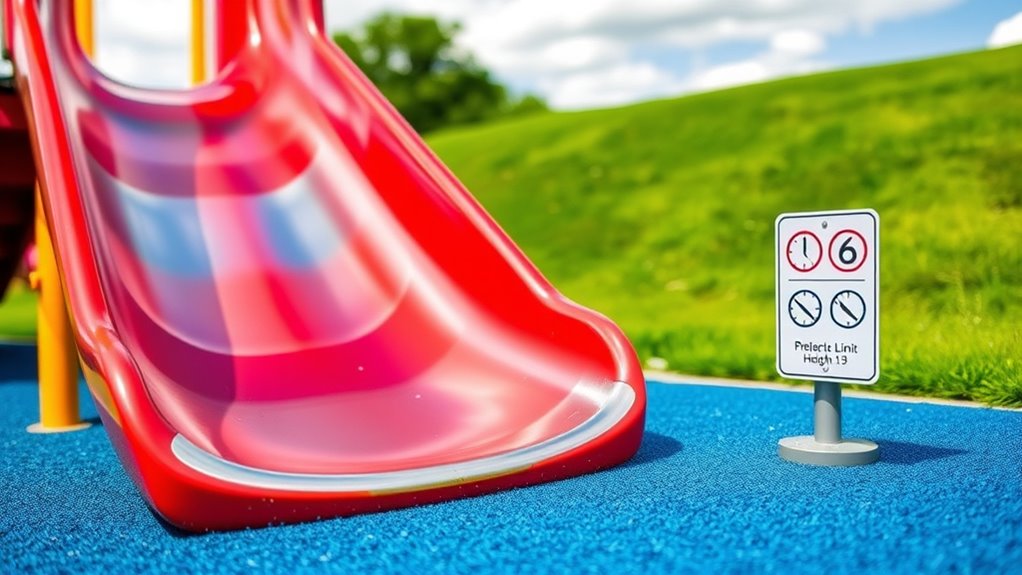
Ensuring safety zones and protective surfacing around slides is essential for preventing injuries during play. You should extend use zones at least 6 feet from all sides and access points, with exit zones from 6 to 8 feet depending on slide height. These zones must not overlap with other equipment to prevent collisions. For taller slides over 4 feet, extend the surfacing beyond the slide end by adding 4 feet to the height above ground. The entire use zone needs impact-absorbing surfacing like poured-in-place rubber or bonded rubber; hard surfaces such as concrete are unsafe. Always guarantee surfacing covers the sides and access points, providing children a cushioned landing and reducing fall injury risks. Properly measured and maintained use zones are vital for safe slide operation. Additionally, the spacing of equipment should be at least 12 feet apart to prevent overcrowding and collisions, especially for structures over 24 inches high. Incorporating proper surfacing materials can further enhance safety and reduce injury severity in case of falls.
Features to Enhance Safety for Various Age Groups

Designing playground equipment that aligns with different age groups enhances safety and supports proper development. For toddlers, keep platforms under 32 inches high, with at least 19-inch-deep standing areas and gentle slopes—no steeper than 24 degrees—to prevent falls and control speed. Preschool and school-age children can enjoy higher platforms up to 6 feet, with deeper or shallower platforms based on age, and slides with steeper inclines of up to 30 degrees for added challenge. Use durable, cool-to-the-touch plastic materials to reduce burn risk and ensure weather resistance. Incorporate guardrails and barriers for younger kids to prevent falls, while older children benefit from more complex equipment like climbing walls and spiral slides. Properly matching features to age groups minimizes injury risk and promotes safe play. Regular inspection and maintenance are essential to ensure safety features remain effective over time. Additionally, selecting high-quality materials that are weather-resistant and durable can further enhance safety and longevity of playground equipment.
Maintenance and Inspection for Safe Use

Regular inspections are essential to keep playground slides safe and functional. You should inspect slides at least monthly, increasing frequency for heavily used equipment. Every 3-6 months, perform detailed checks for wear, corrosion, and structural integrity, ideally with trained staff. Document all inspections and repairs to track the slide’s condition over time. Use a standardized checklist to examine fasteners, joints, and surrounding surfacing. Immediately remove any slide with entanglement risks, broken parts, or significant wear until fixed. Check the slide bedway and side walls for smoothness and debris, and ensure attachment points are crack-free and secure. Inspect bolts, nuts, and plastic components for damage or deformity. Maintain the impact-absorbing surfacing and use zone, replacing material as needed, and keep the area free of obstacles. Regular maintenance and early detection of issues help ensure the ongoing safety of playground slides.
Recognizing and Preventing Entrapment Hazards
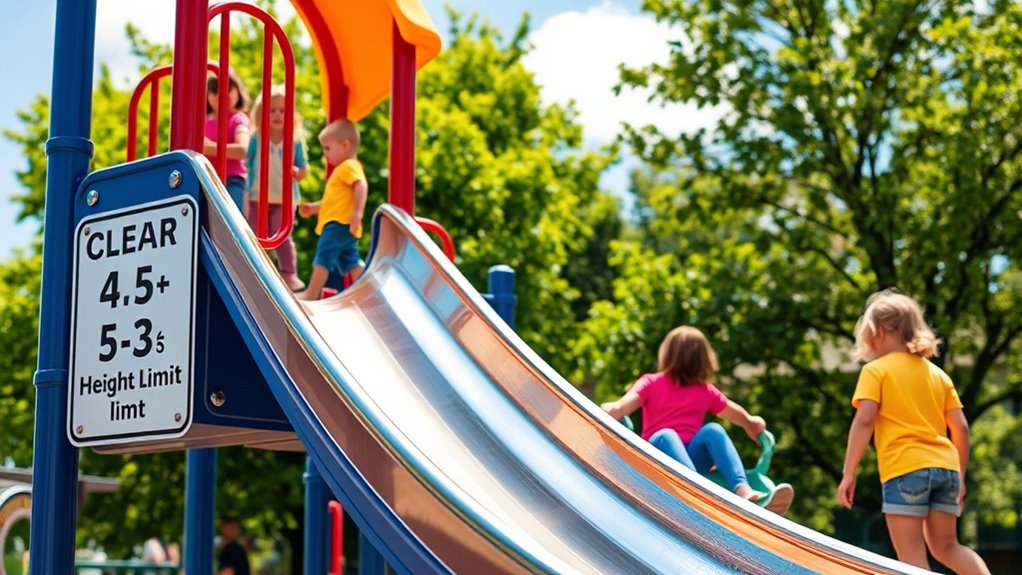
Recognizing and preventing entrapment hazards on playground slides is essential for keeping children safe. You should regularly check for gaps or openings at slide entrances, platforms, and between rungs, as these are common entrapment zones. Be alert to broken or warped equipment that may create unexpected spaces. Avoid adding foreign objects like ropes or strings that can cause strangulation or entanglement. Guarantee guardrails and barriers are secure at slide tops and transition areas to prevent unsafe access. Also, verify that equipment complies with safety standards for opening sizes, reducing head and limb entrapment risks. Regular inspections, prompt repairs, and supervision help prevent accidents. Being familiar with safety standards ensures that safety measures are correctly implemented and maintained. By understanding these hazards, you can create a safer environment where children can play freely without fear of entrapment. Adhering to safety standards significantly reduces the risk of injuries caused by entrapment hazards.
Frequently Asked Questions
How Do I Know if a Slide’s Weight Limit Is Appropriate for My Child?
To know if a slide’s weight limit is right for your child, first check the specific weight capacity listed by the manufacturer. Compare it to your child’s weight, ensuring they fall within the safe range. Also, consider their height and size, as some slides have platform or entry restrictions. Always follow safety guidelines, supervise your child during play, and avoid exceeding the posted limits to keep them safe.
Are There Signs to Check if a Slide’s Weight Capacity Has Been Exceeded?
Think of weight capacity signs as your playground’s version of a “Keep Off” sign from an old comic strip. They don’t monitor in real time, but they’re your best guide. Check the signs at the slide’s entrance or top; they show the maximum weight allowed. If you notice signs are missing, damaged, or unclear, it’s best to avoid the slide or ask an adult to verify safety.
Can a Slide Designed for Older Children Support Younger Kids Safely?
Yes, a slide designed for older children can support younger kids safely if their size and coordination match the equipment’s requirements. Just make sure the platform height, slope, and safety features suit the child’s age and ability. Always supervise, guarantee the child uses the slide properly, and follow manufacturer guidelines. If in doubt, choose age-appropriate equipment to prevent falls or injuries, keeping play safe and fun.
How Does Weight Capacity Affect the Durability of Playground Slides Over Time?
You might find that sticking to weight limits helps your slide stay in great shape longer. When you go over, it puts extra stress on the materials, which can cause tiny cracks or weaken the structure over time. This means you’ll need more repairs and maintenance. By respecting weight capacities, you guarantee the slide remains safe, durable, and fun for everyone, avoiding early wear and tear that can lead to bigger issues down the line.
What Are the Consequences of Using a Slide Beyond Its Recommended Weight Limit?
When you use a slide beyond its recommended weight limit, you risk damaging the equipment and compromising safety. Excess weight causes material stress, leading to cracks, fractures, or bending of components. This increases the chance of structural failure, which can result in sudden collapses, falls, and serious injuries. Overloading also accelerates wear, raising maintenance costs and reducing the slide’s lifespan. Always follow weight limits to make certain of safe, durable play.
Conclusion
By following age, height, and weight guidelines, you guarantee a safe and fun play experience. Did you know that properly maintained slides can reduce injury risk by up to 50%? Regular inspections and adherence to safety standards are vital. Always prioritize safety zones and protective surfacing, especially for younger children. When you understand these limits, you help prevent accidents, making playtime enjoyable for everyone and confirming kids stay safe while having fun.