For premium hiking boots, my best overall pick is the Salomon Quest 4 GTX, which pairs substantial support with a design suited to demanding, loaded hikes. The Asolo TPS 520 GV Evo is a standout for rugged backpacking, while the Danner Mountain 600 offers a more flexible option for day hikes and mixed terrain. The central tradeoff is between durable structure and all-day comfort: heavier, stiffer boots can feel more protective under a pack, while lighter models are easier to wear but offer less support for rough routes. Fit, waterproofing, and break-in needs can matter as much as the name on the boot. Read on for the full comparison and a pick matched to your hiking style.

Get pool and patio gear delivered free with Prime
- Fast, free delivery on millions of items
- Prime Video, Amazon Music and more included
- Member-only deals all year
Complete the kit


Key Takeaways
- The Salomon Quest 4 GTX leads for demanding hikes: its supportive, protective approach makes it a stronger match for loaded trips than lighter, less structured options.
- Asolo’s TPS 520 GV Evo models occupy the rugged end of the lineup: their backpacking focus favors durability and support over an easy, flexible feel.
- The Danner Mountain 600 is the more versatile comfort-oriented choice: it suits day hikes better than the stiffer Asolo boots, though it is not the same kind of heavy-duty backpacking pick.
- Waterproofing appears across many entries, but does not make every boot interchangeable: cut, support, and intended terrain still separate models such as the KEEN Targhee 4 Mid and Columbia Newton Ridge Plus II.
- The lineup includes both premium-focused and budget-minded designs: models from NORTIV 8 and Timberland offer accessible trail options, while buyers should compare their support and construction against the more specialized Salomon and Asolo choices.
| La Sportiva Makalu Mountaineering and Hiking Boots |  | Best for Technical Mountaineering | Boot type: Mountaineering/Hiking | Upper material: Idro-Perwanger Roughout Leather | Sole material: Rubber | VIEW ON AMAZON | See Our Full Breakdown |
| Asolo Men’s TPS 520 GV Evo Wide Boots |  | Best for Wide-Fit Backpacking | Fit: Wide | Upper material: Water-resistant full-grain leather | Waterproof lining: GORE-TEX | VIEW ON AMAZON | See Our Full Breakdown |
| Timberland Men’s Flume Mid Waterproof Hiking Boot |  | Best for Straightforward All-Season Hiking | Upper material: Waterproof Timberland leather | Shaft height: Mid (ankle) | Shaft circumference: 9.25 in | VIEW ON AMAZON | See Our Full Breakdown |
| NORTIV 8 Men’s Ankle High Waterproof Hiking Boots |  | Best Lightweight-Flex Option | Shaft height: Ankle | Shaft circumference: 29.4 cm | Outer material: Nylon, faux leather | VIEW ON AMAZON | See Our Full Breakdown |
| Ariat Men’s Terrain H2O Hiking Boot |  | Best for Hiking and Workday Versatility | Fabric type: 100% leather | Waterproof upper: Waterproof PRO leather | Shaft height: Ankle-high | VIEW ON AMAZON | See Our Full Breakdown |
| Danner Mountain 600 Men’s Hiking Boots |  | Best for Wet, Rugged Day Hikes | Waterproof: Yes; Danner Dry barrier | Upper material: Full-grain leather or suede | Shaft height: Ankle | VIEW ON AMAZON | See Our Full Breakdown |
| KEEN Men’s Targhee 4 Mid Height Waterproof Hiking Boots |  | Best for Protective, All-Day Trail Comfort | Shaft height: Mid height | Shaft circumference: 8.66 inches | Waterproof: Yes | VIEW ON AMAZON | See Our Full Breakdown |
| NORTIV 8 Men’s Waterproof PRO Hiking Boots |  | Best for Lightweight, Cushioned Trail Support | Weight: 16.58 oz per boot, size 9 | Waterproof technology: PRO tech tested with SGS | Outer material: Nylon and TPU | VIEW ON AMAZON | See Our Full Breakdown |
| Timberland Men’s White Ledge Mid Waterproof Hiking Boots | 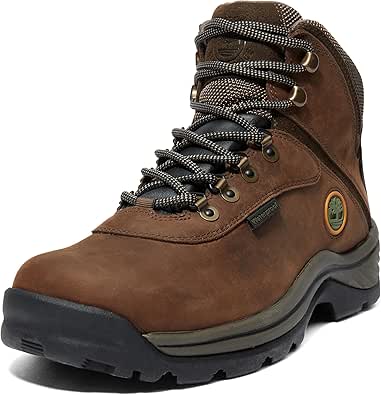 | Best for Classic Leather Trail Use | Shaft height: Ankle | Shaft circumference: 9.75 inches | Upper material: Waterproof Timberland leather | VIEW ON AMAZON | See Our Full Breakdown |
| Salomon X Ultra 5 Mid GTX |  | Best for Lateral Stability on Varied Terrain | Origin: Imported | Outer material: Leather | Inner material: Leather | VIEW ON AMAZON | See Our Full Breakdown |
| Columbia Men’s Newton Ridge Plus II Waterproof Hiking Shoe |  | Best Value Pick | Sole material: Rubber | Shaft height: Ankle | Shaft circumference: 1 inch | VIEW ON AMAZON | See Our Full Breakdown |
| Danner Mountain 600 Men’s Hiking Boots |  | Best for Wet-Trail Grip | Origin: Imported | Sole material: Leather | Shaft height: Ankle | VIEW ON AMAZON | See Our Full Breakdown |
| Salomon Quest 4 GTX® |  | Best for Long Trekking Days | Sole material: Rubber | Shaft height: Ankle | Shaft circumference: 10.5 inches | VIEW ON AMAZON | See Our Full Breakdown |
| Columbia Men’s Transverse Hike Waterproof |  | Best Lightweight Day-Hike Option | Sole material: Rubber | Shaft height: Ankle | Shaft circumference: 1 inch | VIEW ON AMAZON | See Our Full Breakdown |
| Asolo Men’s TPS 520 GV Evo Waterproof Round Toe Backpacking Boots |  | Best for Demanding Backpacking | Sole material: Rubber | Shaft height: Ankle | Shaft circumference: 13 inches | VIEW ON AMAZON | See Our Full Breakdown |
| premium hiking boot | Shaft height | Sole material | Shaft circumference | Midsole |
|---|---|---|---|---|
| La Sportiva Makalu Mountaineer | — | Rubber | — | — |
| Asolo Men’s TPS 520 GV Evo Wid | — | Rubber | — | Dual-density PU |
| Timberland Men’s Flume Mid Wat | Mid (ankle) | Rubber | 9.25 in | — |
| NORTIV 8 Men’s Ankle High Wate | Ankle | — | 29.4 cm | Lightweight EVA |
| Ariat Men’s Terrain H2O Hiking | Ankle-high | Rubber | — | — |
| Danner Mountain 600 Men’s Hiki | Ankle | — | 29.5 cm | Vibram SPE |
| KEEN Men’s Targhee 4 Mid Heigh | Mid height | — | 8.66 inches | — |
| NORTIV 8 Men’s Waterproof PRO | Ankle | — | — | Dual-density EVA |
| Timberland Men’s White Ledge M | Ankle | — | 9.75 inches | EVA |
| Salomon X Ultra 5 Mid GTX | — | Rubber | — | EVA foam |
| Columbia Men’s Newton Ridge Pl | Ankle | Rubber | 1 inch | — |
| Danner Mountain 600 Men’s Hiki | Ankle | Leather | — | Rubberized EVA |
| Salomon Quest 4 GTX® | Ankle | Rubber | 10.5 inches | — |
| Columbia Men’s Transverse Hike | Ankle | Rubber | 1 inch | — |
| Asolo Men’s TPS 520 GV Evo Wat | Ankle | Rubber | 13 inches | Dual-density polyurethane |
More Details on Our Top Picks
La Sportiva Makalu Mountaineering and Hiking Boots
The La Sportiva Makalu is the most specialized boot here: its all-leather build, full steel shank, aggressive lugs, and crampon suitability favor rugged, demanding routes over everyday trail comfort. The resolable construction also gives it a longer-use case than lighter, less repairable options such as the Timberland Flume Mid. That durability comes with a clear cost in feel: at 980 g per boot, it is heavy, and its stiff platform may take time to break in. The leather upper and protective rand make sense for rocky terrain and snow, but they are more boot than most casual hikers need. I would choose it for technical outings and long-term serviceability, not for fast, low-mileage walks.
Pros:- All-leather construction and protective Vibram rubber rand suit hard use on rugged terrain.
- Full steel shank supports a stiff platform and crampon use.
- Aggressive lugs provide traction on challenging ground.
- Resole-compatible construction can extend the boot’s working life.
Cons:- At 980 g per boot, it is heavy compared with less technical hiking boots.
- Stiff construction can require a substantial break-in period.
- Its mountaineering-focused build is less comfortable for casual or fast hiking.
Best for: Experienced hikers and mountaineers who need a stiff, crampon-compatible boot for rugged terrain and value resoling for long-term use.
Not ideal for: Day hikers seeking a lightweight, flexible boot or anyone who wants an easy break-in; its weight and stiff construction are excessive for casual trails.
- Boot type:Mountaineering/Hiking
- Upper material:Idro-Perwanger Roughout Leather
- Sole material:Rubber
- Weight:34.57 oz / 980 g
- Closure:Lace-up
- Support:Full steel shank
- Additional features:Vibram rubber rand; removable paddle tongue protector; EZ rollerball lace hardware
- Resoleable:Yes
Our verdict“Choose the Makalu for technical terrain, crampon use, and resolable durability, but skip it if low weight and easy flexibility matter more.”
Asolo Men’s TPS 520 GV Evo Wide Boots
The Asolo TPS 520 GV Evo Wide pairs a wide-fit design with full-grain leather, a GORE-TEX lining, and a Vibram outsole with Triple Power Structure shock absorption. That combination makes it a strong choice for backpackers who want weather protection and support over long distances, while its cushioned construction is less mountaineering-stiff than the La Sportiva Makalu. It is still a substantial leather boot, though, so it will not suit hikers prioritizing a light, quick-moving feel. The anatomical Lite 2 footbed and dual-density PU midsole target comfort under sustained use; the tradeoff is a more involved lace-up fit that may need adjustment. I’d put it ahead of the Makalu for long backpacking days, but not for crampon-focused routes.
Pros:- Wide-fit design offers an option for hikers who find standard boot lasts restrictive.
- GORE-TEX lining adds waterproof protection for wet conditions.
- Full-grain leather upper and rubber toe cap provide durable coverage.
- Vibram T.P.S. outsole and dual-density PU midsole combine traction with shock absorption.
Cons:- Leather construction and supportive sole make it heavy for fast hiking.
- Lace-up closure may need readjustment during extended outings.
- Its substantial build can feel excessive on easy trails or short walks.
Best for: Backpackers with wider feet who need waterproof leather support and cushioning for long hikes over mixed or technical terrain.
Not ideal for: Fast-and-light hikers or mountaineers seeking a crampon-oriented, especially stiff platform; this boot remains comparatively substantial and is not specified as crampon-compatible.
- Fit:Wide
- Upper material:Water-resistant full-grain leather
- Waterproof lining:GORE-TEX
- Outsole:Vibram with Triple Power Structure (T.P.S.)
- Midsole:Dual-density PU
- Insole:Lite 2 footbed with anatomical construction
- Toe cap:Rubber
- Sole material:Rubber
Our verdict“Pick the Asolo for wide-fit, waterproof backpacking support, but look elsewhere if your priority is low weight or mountaineering stiffness.”
Timberland Men’s Flume Mid Waterproof Hiking Boot
The Timberland Flume Mid takes a more accessible, everyday approach than the technical La Sportiva Makalu: a waterproof leather upper, gusseted tongue, cushioned EVA footbed, and multi-directional lugs cover the practical needs of regular trail use. The mid-height shaft helps keep debris out, while rustproof speed-lace hardware makes tightening simpler than a traditional all-eyelet setup. Its comfort-oriented cushioning and less specialized construction suit hikers who want a dependable boot for varied conditions rather than crampon-ready stiffness or resoling. The tradeoff is that the Flume may still feel heavy on long hikes, and its specs do not establish the same technical support as the Makalu or the backpacking-focused Asolo TPS 520 GV Evo. I’d favor it for general outings, not demanding alpine objectives.
Pros:- Waterproof leather upper is suited to wet-weather hiking.
- Gusseted tongue helps limit debris entering the boot.
- EVA footbed adds cushioning for everyday trail use.
- Multi-directional rubber lugs provide grip on varied surfaces.
Cons:- May feel heavy during long-distance hikes.
- Does not offer the stated steel-shank, crampon-oriented support of the La Sportiva Makalu.
- The supplied product data lists limited color options.
Best for: Hikers who want a waterproof leather mid boot for regular all-season trails, with cushioning and a gusseted tongue to help keep debris out.
Not ideal for: Technical mountaineers or fast hikers who need a crampon-compatible platform or the lowest possible boot weight.
- Upper material:Waterproof Timberland leather
- Shaft height:Mid (ankle)
- Shaft circumference:9.25 in
- Lining:Mesh
- Insole:EVA footbed
- Sole material:Rubber
- Outsole tread:Multi-directional lugs
- Hardware:Rustproof speed-lace hardware with lace hooks
Our verdict“Choose the Flume for practical waterproof comfort on regular trails, but opt for a more technical boot for alpine routes or extended backpacking.”
NORTIV 8 Men’s Ankle High Waterproof Hiking Boots
The NORTIV 8 Ankle High is the flexible, comfort-led choice in this group, with an EVA midsole, shock-absorbent insole, and rubber traction sole. Its nylon and faux-leather upper contrasts with the full-grain leather Asolo TPS 520 GV Evo and the all-leather La Sportiva Makalu: it aims for a lighter, less rigid feel rather than long-term resolability or technical mountaineering support. That makes it more appealing for casual hikes, camping, and mixed outdoor chores than for heavy backpacking or crampon use. The listing describes the boots as waterproof, but the supplied specs do not identify a membrane or waterproofing technology, so buyers wanting a specific tested barrier may prefer the Asolo’s named GORE-TEX lining. A break-in period may also be needed.
Pros:- EVA midsole and shock-absorbent insole prioritize cushioning.
- Flexible construction is less rigid than the La Sportiva Makalu.
- Rubber sole is described as slip-proof for traction on challenging terrain.
- Ankle-height shaft provides more coverage than a low-cut hiking shoe.
Cons:- Nylon and faux-leather construction is less substantial than the Asolo’s full-grain leather upper.
- The supplied specs do not identify a waterproof membrane or technology.
- May require a break-in period before extended wear.
Best for: Casual hikers and campers who prioritize a flexible, cushioned ankle boot for day outings and varied outdoor activities.
Not ideal for: Backpackers carrying heavy loads or hikers who need leather durability, a named waterproof membrane, or a stiff mountaineering platform.
- Shaft height:Ankle
- Shaft circumference:29.4 cm
- Outer material:Nylon, faux leather
- Sole materials:EVA, rubber
- Midsole:Lightweight EVA
- Insole:Shock-absorbent
- Waterproofing:Described as waterproof; specific membrane not listed
Our verdict“Choose the NORTIV 8 for flexible, cushioned casual outings, but favor the Asolo or Makalu for demanding backpacking and technical support.”
Ariat Men’s Terrain H2O Hiking Boot
The Ariat Terrain H2O is the crossover pick for buyers who want one waterproof leather boot for hiking, riding, and ranch work. Its waterproof PRO leather, moisture-wicking lining, and ATS comfort technology point toward all-day wear across different tasks, a broader use case than the trail-focused Timberland Flume Mid. Shock absorption adds comfort over uneven ground, but the Terrain is not the lightest option, and its leather can feel stiff at first. Unlike the Asolo TPS 520 GV Evo, the supplied specs do not name a waterproof membrane or specify a technical backpacking outsole design, so I would not rank it ahead of that boot for long, demanding treks. Its strength is versatility—not specialist mountain performance.
Pros:- Waterproof PRO leather and moisture-wicking lining support use in wet conditions.
- ATS technology and shock absorption target comfort over a full day.
- Rubber outsole suits varied terrain and work settings.
- Versatility across hiking, riding, and ranch work sets it apart from the trail-focused Timberland Flume.
Cons:- Leather may feel stiff during the initial break-in period.
- Potentially heavy for extended walking or fast hiking.
- The supplied specs do not identify a membrane technology or detailed outsole tread design.
Best for: Riders, ranch workers, and hikers who want a waterproof leather ankle boot with cushioning for mixed work and outdoor use.
Not ideal for: Fast hikers or backpackers seeking a lightweight, purpose-built trail boot with a specified technical outsole and waterproof membrane.
- Fabric type:100% leather
- Waterproof upper:Waterproof PRO leather
- Shaft height:Ankle-high
- Sole material:Rubber
- Comfort technology:ATS technology
- Lining:Moisture-wicking
- Additional feature:Shock absorption
- Origin:Imported
Our verdict“Choose the Terrain H2O for waterproof comfort across hiking and work, but select a more trail-specialized boot for long, technical backpacking routes.”
Danner Mountain 600 Men’s Hiking Boots
The Danner Mountain 600 earns its place for hikers who want confident traction and cushioning without stepping up to a heavier backpacking boot. Its Vibram Fuga outsole with Megagrip is suited to wet and dry surfaces, while the Danner Dry barrier adds protection when trails are damp. The lightweight Vibram SPE midsole and triple-density Ortholite footbed make this a more comfort-focused choice than the Salomon X Ultra 5 Mid GTX, whose molded chassis puts more emphasis on lateral stability. The tradeoff is that the Danner may feel stiff at first, so allow time for break-in before a long outing. Its leather or suede upper also calls for more care than the synthetic-heavy NORTIV 8 Men’s Waterproof PRO. I’d choose it for demanding day hikes, not for buyers seeking a no-break-in boot.
Pros:- Vibram Fuga Megagrip outsole is designed for traction across wet and dry ground.
- Danner Dry waterproof barrier helps protect feet in damp conditions.
- Lightweight Vibram SPE midsole pairs cushioning with support.
- Triple-density Ortholite footbed adds underfoot comfort.
Cons:- May feel stiff initially and require a break-in period.
- Leather or suede construction needs more care than a synthetic upper.
- Premium positioning may not suit buyers seeking a simple casual-use boot.
Best for: Day hikers who regularly encounter wet, uneven trails and want premium outsole grip with cushioned support.
Not ideal for: Hikers who need a soft, comfortable fit straight from the box or want a low-maintenance synthetic upper.
- Waterproof:Yes; Danner Dry barrier
- Upper material:Full-grain leather or suede
- Shaft height:Ankle
- Outsole:Vibram Fuga with Megagrip compound
- Footbed:Ortholite triple-density polyurethane
- Midsole:Vibram SPE
- Shaft circumference:29.5 cm
- Lace options:Two sets included
Our verdict“Choose the Mountain 600 for wet, rugged day hikes where dependable grip and cushioning matter more than an immediate broken-in feel.”
KEEN Men’s Targhee 4 Mid Height Waterproof Hiking Boots
The KEEN Targhee 4 Mid is the lineup’s protection-minded comfort pick, combining a waterproof membrane with a bruise plate and high-abrasion rubber toe guard. Those details suit rocky, muddy routes where impacts and debris are a regular nuisance. Its removable Luftcell footbed gives owners the option to adjust their underfoot setup, unlike the fixed EVA footbed listed for the Timberland White Ledge Mid. Recycled PET laces and a breathable mesh lining add practical material choices, though they do not make the boot especially light: KEEN notes that its weight may bother some hikers. Compared with the Danner Mountain 600, the Targhee 4 puts more emphasis on shielding the foot than on a named premium-grip outsole compound. I’d favor it for varied trails, but skip it if you prefer a lower-cut, lighter-feeling boot.
Pros:- Waterproof, breathable construction is suited to extended use in wet conditions.
- Bruise plate and high-abrasion rubber toe guard add protection on rocky trails.
- Removable Luftcell footbed allows a more adaptable underfoot setup.
- Recycled PET laces and breathable mesh lining use recycled materials.
Cons:- May feel heavy compared with lighter hiking footwear.
- Mid-height shaft may not suit hikers who prefer less ankle coverage.
- Long-term durability can vary with terrain and frequency of use.
Best for: Hikers who spend full days on rocky or muddy trails and value toe protection, waterproofing, and a removable footbed.
Not ideal for: Fast-moving hikers who prioritize a light, low-profile boot or dislike mid-height ankle coverage.
- Shaft height:Mid height
- Shaft circumference:8.66 inches
- Waterproof:Yes
- Outsole:KEEN.ALL-TERRAIN rubber
- Laces:Recycled PET
- Lining:Breathable mesh
- Footbed:Removable Luftcell
- Protection features:Bruise plate and high-abrasion rubber toe guard
Our verdict“Pick the Targhee 4 Mid if foot protection and adjustable comfort matter more to you than minimizing boot weight.”
NORTIV 8 Men’s Waterproof PRO Hiking Boots
The NORTIV 8 Waterproof PRO stands apart with a listed weight of 16.58 ounces per boot in size 9 and a dual-density EVA midsole designed to soften the step. Its high-top support, reinforced toe and heel, and full-length rubber outsole give it more structure than a casual walking shoe, while the deep lugs are intended for muddy ground. Compared with the leather-built Danner Mountain 600, this model uses nylon and TPU, which can be a simpler fit for buyers who want a lighter synthetic construction. That choice has tradeoffs: waterproof materials may limit breathability, and the outsole may wear faster on very rough terrain. The product data also names PRO tech tested with SGS but does not specify a membrane construction. I’d consider it for mixed trail and everyday use, rather than repeated abrasive backcountry routes.
Pros:- Listed weight is 16.58 ounces per boot in size 9.
- Dual-density EVA midsole and supercritical foam insole provide cushioned support.
- High-top design and reinforced toe and heel add structure and protection.
- Full-length rubber outsole with deep lugs is suited to muddy terrain.
Cons:- Waterproof materials may feel less breathable in warm conditions.
- Outsole may wear more quickly on very rough, abrasive trails.
- Nylon and TPU construction may not appeal to buyers seeking a traditional leather boot.
Best for: Hikers seeking a cushioned, lighter-feeling waterproof boot for muddy trails and occasional city wear.
Not ideal for: Frequent hikers tackling highly abrasive terrain or people who prioritize maximum breathability in warm weather.
- Weight:16.58 oz per boot, size 9
- Waterproof technology:PRO tech tested with SGS
- Outer material:Nylon and TPU
- Shaft height:Ankle
- Midsole:Dual-density EVA
- Outsole:Full-length rubber with deep lugs
- Insole:Supercritical foam and Strobel insoles
- Support:High-top ankle support
Our verdict“Choose the NORTIV 8 PRO for cushioned support and a lighter synthetic build on mixed-use trails, but look elsewhere for sustained rough-terrain mileage.”
Timberland Men’s White Ledge Mid Waterproof Hiking Boots
The Timberland White Ledge Mid is the straightforward leather option in this group: its waterproof Timberland leather upper, gusseted tongue, and rustproof speed-lace hardware focus on keeping out moisture and trail debris without a complicated feature set. The EVA footbed and midsole offer basic cushioning, but the supplied specs do not identify a specialized chassis or technical outsole compound like the Salomon X Ultra 5 Mid GTX’s Advanced Chassis and Contagrip. That makes the White Ledge a better match for moderate hikes and general outdoor wear than for buyers choosing footwear around demanding traction or stability needs. It also may feel heavy, and leather asks for more upkeep than the synthetic NORTIV 8 Waterproof PRO. I’d pick it for someone who prefers a familiar leather boot; technical hikers should compare the more explicitly trail-focused alternatives.
Pros:- Waterproof leather upper offers protection in wet conditions.
- Gusseted tongue helps limit debris entering the boot.
- Rustproof speed-lace hardware is suited to repeated outdoor use.
- EVA footbed and midsole provide cushioning.
Cons:- May feel heavy during longer hikes.
- Leather requires more care than synthetic uppers.
- Supplied specifications do not identify a specialized traction outsole or stability chassis.
Best for: Occasional hikers who prefer a waterproof leather boot for moderate trails and general outdoor use.
Not ideal for: Technical hikers who need specified high-grip outsole technology, strong chassis support, or a lighter boot.
- Shaft height:Ankle
- Shaft circumference:9.75 inches
- Upper material:Waterproof Timberland leather
- Lining:ReBOTL fabric
- Footbed:EVA
- Midsole:EVA
- Hardware:Rustproof speed lace with lace hooks
Our verdict“Choose the White Ledge Mid for familiar leather construction and moderate outings, not for technical routes where specialized traction and support lead your priorities.”
Salomon X Ultra 5 Mid GTX
The Salomon X Ultra 5 Mid GTX is the stability-led choice here. Its molded Advanced Chassis is designed to support the foot laterally, while the All Terrain Contagrip outsole targets traction across changing surfaces. That combination gives it a more explicitly structured trail focus than the Timberland White Ledge Mid, whose listed construction centers on leather, EVA cushioning, and hardware. The Salomon also differs from the Danner Mountain 600: Danner specifies a Vibram Megagrip compound and a triple-density footbed, while Salomon’s supplied details emphasize chassis support and broad-terrain traction. The tradeoff is a leather build that may need maintenance and may feel heavy to some hikers. The provided specs do not state waterproofing, despite the GTX name, so I would verify the exact version before relying on it for prolonged wet conditions.
Pros:- Molded Advanced Chassis is designed to improve lateral support and stability.
- All Terrain Contagrip outsole is intended for traction across varied surfaces.
- EVA foam midsole provides cushioning.
- Leather outer material offers a durable upper construction.
Cons:- May feel heavy to some hikers.
- Leather may require ongoing care.
- Provided product data does not specify waterproofing details.
Best for: Hikers who prioritize lateral support and traction across varied terrain and are comfortable maintaining a leather boot.
Not ideal for: Buyers who need confirmed waterproof specifications, want the lightest possible boot, or prefer low-maintenance synthetic materials.
- Origin:Imported
- Outer material:Leather
- Inner material:Leather
- Sole material:Rubber
- Midsole:EVA foam
- Chassis:Advanced Chassis molded insert
- Lining:Textile
- Outsole:All Terrain Contagrip
Our verdict“Choose the X Ultra 5 Mid GTX for structured support and varied-terrain traction, but confirm the waterproof details if wet-weather protection is a priority.”
Columbia Men’s Newton Ridge Plus II Waterproof Hiking Shoe
The Newton Ridge Plus II is the straightforward choice for hikers who want waterproof coverage and dependable grip without moving into a more specialized backpacking boot. Its full-grain leather and mesh upper balances durability with some breathability, while the lightweight midsole helps soften everyday trail miles. Compared with the more structured Asolo TPS 520 GV Evo, this Columbia is a less demanding option for moderate day hikes, but it does not offer the same heavy-duty backpacking construction or detailed support features. The tradeoff is a potentially heavier feel than its lightweight cushioning suggests, along with fit that may take some lace adjustment to dial in. I’d shortlist it for maintained trails and changeable weather, not for buyers seeking a highly technical boot for repeated loads on rugged terrain.
Pros:- Waterproof leather-and-mesh construction balances weather protection and breathability
- Rubber traction sole suits varied trail surfaces
- Lightweight midsole provides cushioning for day hikes
- Adjustable lace-up closure allows a more secure fit
Cons:- May feel heavy to hikers who prioritize a light, fast-moving shoe
- Fit may require sizing adjustments to achieve a comfortable hold
Best for: Day hikers who want an ankle-height, waterproof leather-and-mesh boot for maintained trails and mixed weather
Not ideal for: Backpackers carrying heavy loads over rugged terrain who need the more substantial support and construction of a dedicated backpacking boot
- Sole material:Rubber
- Shaft height:Ankle
- Shaft circumference:1 inch
- Waterproof:Yes
- Closure:Lace-up
- Upper material:Full-grain leather and mesh
Our verdict“Choose the Newton Ridge Plus II for practical waterproof protection on day hikes, but look to the Asolo TPS 520 GV Evo for more demanding backpacking.”
Danner Mountain 600 Men’s Hiking Boots
The Danner Mountain 600 earns its place for hikers who put traction and weather protection ahead of keeping footwear as light as possible. Its Vibram Fuga outsole with Megagrip is the clearest point of difference: it is built to grip on wet as well as dry surfaces, while the Danner Dry barrier and leather or suede upper add protection in damp conditions. The Ortholite triple-density footbed and rubberized EVA midsole give it a comfort-focused setup compared with the more demanding Asolo TPS 520 GV Evo, which is aimed at heavier-duty backpacking. The Danner’s tradeoffs are its sturdy, potentially heavy feel and the upkeep leather needs to retain its water-repellent performance. I’d choose it for varied trails where sure footing matters, rather than for hikers whose first priority is minimum weight.
Pros:- Vibram Fuga Megagrip outsole is designed for traction on wet and dry surfaces
- Danner Dry waterproof barrier protects against wet conditions
- Ortholite triple-density footbed adds underfoot support
- Leather or suede upper offers a durable construction
Cons:- Sturdy build may feel heavy on long, fast-moving hikes
- Leather requires care to maintain its water-repellent performance
Best for: Hikers who regularly encounter wet or mixed-surface trails and want a supportive boot with high-grip tread
Not ideal for: Weight-conscious fast hikers or buyers who prefer low-maintenance synthetic uppers
- Origin:Imported
- Sole material:Leather
- Shaft height:Ankle
- Outer material:Leather
- Waterproof:Yes; Danner Dry barrier
- Lace options:Two
- Insole:Ortholite triple-density polyurethane
- Midsole:Rubberized EVA
- Outsole:Vibram Fuga with Megagrip compound
Our verdict“Pick the Mountain 600 if dependable grip in damp conditions matters more than low weight or minimal leather maintenance.”
Salomon Quest 4 GTX®
The Salomon Quest 4 GTX is the lineup’s comfort-and-stability pick for hikers planning long days on trail. Its lightweight, cushioned design is intended to reduce fatigue, a useful contrast with the heavier, more traditional Asolo TPS 520 GV Evo, which emphasizes full-grain leather and rugged backpacking construction. The Quest’s stated strength is a smoother-feeling ride with support for extended trekking, rather than maximum armor for the roughest terrain. That distinction matters: its own product details warn that it may be less suited to very rugged ground, and the available specifications here do not spell out waterproofing or upper materials. I’d favor it when all-day comfort and stability lead the decision, but choose a more explicitly rugged option if demanding terrain and clearly documented waterproof construction are the priority.
Pros:- Lightweight, cushioned design targets comfort over long distances
- Stability features support extended trekking
- Fatigue-reduction focus suits long days on trail
Cons:- May be less suited to very rugged terrain than the Asolo TPS 520 GV Evo
- Product details provided do not specify waterproofing or upper material
- Limited color options
Best for: Trekking hikers who value cushioning, stability, and reduced fatigue over extended days on established routes
Not ideal for: Hikers tackling very rugged terrain or buyers who require clearly specified waterproofing and upper materials
- Sole material:Rubber
- Shaft height:Ankle
- Shaft circumference:10.5 inches
- Design:Lightweight, cushioned hiking boot
- Support:Enhanced stability for long treks
Our verdict“Choose the Quest 4 GTX for long trekking days where cushioning and stability lead, not for maximum rugged-terrain protection.”
Columbia Men’s Transverse Hike Waterproof
The Columbia Transverse Hike Waterproof suits day hikers who want weather protection and cushioning without the heavier, more demanding feel associated with backpacking-focused boots. Its waterproof, breathable leather-and-mesh construction is paired with lightweight impact absorption and multi-terrain traction, making it a practical match for varied recreational trails. Compared with the Columbia Newton Ridge Plus II, the Transverse description puts more emphasis on lightweight impact absorption, while the Newton Ridge provides clearer detail about its full-grain leather construction and adjustable lace-up closure. The main tradeoff here is limited fit information: buyers have less product detail to judge sizing and comfort before choosing. I’d consider it for moderate hikes where cushioning and wet-weather coverage matter, but not if a precisely documented fit or a more technical backpacking build is essential.
Pros:- Waterproof, breathable leather-and-mesh upper
- Lightweight impact absorption supports day-hike comfort
- Multi-terrain traction suits a variety of trail surfaces
Cons:- Limited sizing and fit information makes selection less certain
- Product details do not specify the waterproofing system or cushioning materials
Best for: Recreational day hikers seeking a lightweight, waterproof option for varied trails and changing weather
Not ideal for: Buyers who need detailed sizing and fit guidance or hikers seeking a highly specified boot for demanding backpacking
- Sole material:Rubber
- Shaft height:Ankle
- Shaft circumference:1 inch
- Waterproof construction:Waterproof and breathable
- Upper:Leather and mesh
- Traction:Multi-terrain
Our verdict“Pick the Transverse Hike for lightweight cushioning and waterproof coverage on recreational trails, but prefer the Newton Ridge if you want more construction detail.”
Asolo Men’s TPS 520 GV Evo Waterproof Round Toe Backpacking Boots
The Asolo TPS 520 GV Evo is the most purpose-built backpacking choice in this group, with full-grain leather, a GORE-TEX Performance Comfort lining, and a Vibram outsole designed with self-cleaning tread. Its dual-density polyurethane midsole and micro pulley lacing system point toward a secure, supportive setup for tough, loaded hikes. Compared with the comfort-focused Salomon Quest 4 GTX, this Asolo leans more toward durable materials and demanding terrain than a lightweight, fatigue-reducing feel. That ruggedness brings real tradeoffs: it may feel heavy, and the full-grain leather construction requires a break-in period before it reaches its best comfort. I’d select it for challenging backpacking where protection and a customized fit matter more than immediate flexibility; it is excessive for casual walks or short, easy trails.
Pros:- Full-grain leather upper offers durable construction for rugged use
- GORE-TEX Performance Comfort lining provides waterproof, breathable protection
- Vibram outsole has self-cleaning tread for trail grip
- Micro pulley lacing system supports a customized fit
Cons:- May feel heavy compared with the Salomon Quest 4 GTX
- Full-grain leather requires a break-in period
- Premium materials come with a higher price point
Best for: Backpackers tackling demanding terrain who want full-grain leather construction, waterproof protection, and a secure adjustable fit
Not ideal for: Casual day hikers and weight-conscious trekkers who want a light boot with little or no break-in period
- Sole material:Rubber
- Shaft height:Ankle
- Shaft circumference:13 inches
- Upper material:Full-grain leather
- Waterproofing:GORE-TEX Performance Comfort
- Midsole:Dual-density polyurethane
- Outsole:Vibram with self-cleaning tread
- Lacing system:Micro pulley system
Our verdict“Choose the TPS 520 GV Evo for demanding backpacking and durable protection, but skip it if low weight and quick comfort are your priorities.”
How We Picked
I compared the 15 boots by the jobs buyers are likely to ask them to do: day hiking, wet-weather trail use, carrying a pack, and handling rough or extended routes. The main criteria were support and stability, outsole and upper construction, waterproof protection where specified, likely comfort demands, and versatility across terrain. I also treated fit options and boot height as practical differences, since a boot that does not suit a buyer’s foot or gait is a poor match regardless of its feature list.
The order favors models that balance trail capability, support, and usable comfort for a broad range of hikers, then places more specialized or simpler designs according to their intended audience. That is why the Salomon Quest 4 GTX ranks ahead as an all-around demanding-trail choice, while the Asolo TPS 520 GV Evo earns a more focused role for rugged backpacking. Lighter, entry-oriented options remain useful for casual routes, but they do not outrank boots built for heavier loads and tougher terrain. The two Danner Mountain 600 listings are the same model, so I treat them as one distinct option rather than inventing a difference between duplicates.
| premium hiking boot | Sole material | Shaft height |
|---|---|---|
| La Sportiva Makalu Mountaineer | Rubber | — |
| Asolo Men’s TPS 520 GV Evo Wid | Rubber | — |
| Timberland Men’s Flume Mid Wat | Rubber | Mid (ankle) |
| NORTIV 8 Men’s Ankle High Wate | — | Ankle |
| Ariat Men’s Terrain H2O Hiking | Rubber | Ankle-high |
| Danner Mountain 600 Men’s Hiki | — | Ankle |
| KEEN Men’s Targhee 4 Mid Heigh | — | Mid height |
| NORTIV 8 Men’s Waterproof PRO | — | Ankle |
| Timberland Men’s White Ledge M | — | Ankle |
| Salomon X Ultra 5 Mid GTX | Rubber | — |
| Columbia Men’s Newton Ridge Pl | Rubber | Ankle |
| Danner Mountain 600 Men’s Hiki | Leather | Ankle |
| Salomon Quest 4 GTX® | Rubber | Ankle |
| Columbia Men’s Transverse Hike | Rubber | Ankle |
| Asolo Men’s TPS 520 GV Evo Wat | Rubber | Ankle |
Factors to Consider When Choosing Premium Hiking Boots
Premium hiking boots are not automatically the right boots for every hike. I would start with the demands of your routes and pack, then use fit and construction to narrow the field. These broader checks can help prevent paying for stiffness, height, or weather protection you will not use.
Match support to pack weight and terrain
A stiff, supportive boot can help when a loaded pack and uneven ground put more demand on your feet and ankles. That added structure can feel excessive on maintained paths, where a lighter boot may be more comfortable over a long day. Think about the roughest route you hike regularly, not just the most ambitious trip you might take someday. Buyers often overestimate how much boot they need and end up with unnecessary weight or a long break-in period. If your hiking spans easy trails and occasional rough sections, a middle-ground design may be more useful than a dedicated heavy backpacking boot. Choose the stiffer option when the extra structure solves a real problem, not simply because it sounds more capable.
Treat fit as a performance feature
Boot length is only one part of fit: heel hold, toe room, forefoot width, and volume around the instep all affect comfort on descents. Try boots with the socks you expect to hike in, and leave enough room for toes to move without letting the heel lift excessively. A roomy wide-fit option can help some hikers, but extra width is not a substitute for a secure heel or a well-matched shape. Common mistakes include choosing a snug fit in the store or assuming the same size will work across brands. When possible, try boots later in the day, when feet may be larger than in the morning. A premium build cannot compensate for pressure points that appear after hours on trail.
Choose waterproofing for your climate, not the label
A waterproof membrane can be useful in persistent rain, wet grass, and cold conditions, but it can also reduce ventilation compared with a less weather-sealed boot. For hot, dry hikes or frequent stream crossings, consider whether faster drying and airflow matter more than keeping splash and rain out. Waterproofing also has limits: water can enter over the boot collar, and wet interiors take time to dry. Do not select a boot on the membrane name alone; check the height, closure, and intended conditions too. If most trips are in damp shoulder seasons, weather protection may earn its weight. If your routes are usually dry, a less sealed design may feel more comfortable over long distances.
Balance durability against weight and break-in
Heavier materials and more substantial construction can make sense for repeated use on rocky trails, but they usually bring extra weight and may take longer to feel natural. Lighter boots can reduce fatigue for day hikes, yet may offer less structure or wear differently under frequent heavy loads. Consider how often you hike, how rough your usual routes are, and whether you are willing to break in a stiffer pair gradually. A common buying mistake is treating maximum durability as the same thing as maximum value; unused toughness still costs you comfort and weight. Pay more for construction that matches repeated demands, not for a rugged appearance alone. Before a long trip, wear any new boots on short walks and progressively longer outings.
Look beyond the boot to long-term care
Boot care affects how well uppers and weather protection hold up, so check the manufacturer’s cleaning and treatment guidance before choosing a material. Mud and grit left on a boot can wear surfaces, while drying boots beside direct heat can damage some materials and adhesives. Removable insoles may make it easier to use a preferred footbed, but they do not fix a poor underlying fit. Also think about how you will dry boots between wet outings and whether replacement laces or compatible insoles are easy to source. Frequent hikers may benefit from a boot that can handle routine maintenance without special effort. A premium purchase pays off best when its care requirements fit your habits.
Frequently Asked Questions
Should I choose the Salomon Quest 4 GTX or an Asolo TPS 520 GV Evo for backpacking?
Start with the weight of your pack, the roughness of your routes, and how much stiffness you prefer. The Quest 4 GTX is the more balanced pick for hikers wanting strong support without narrowing the choice to a traditional heavy-duty boot. The Asolo TPS 520 GV Evo models suit buyers prioritizing a rugged backpacking build and substantial structure. That can be an advantage on demanding trips, but it may feel like more boot than needed on casual day hikes. Compare fit and break-in demands in person if you can, since these are not styles to choose by feature lists alone.
Are premium hiking boots worth it if I mostly hike easy trails?
Not necessarily: easy, maintained trails may not call for the stiffness and durable construction found in the most rugged boots here. A lighter or more straightforward option can be easier to wear and may better match occasional day hikes. The premium step makes more sense if you hike often, carry a pack, or regularly encounter rocky, wet, or uneven routes. Think about how often you will use the added support rather than assuming a higher-end build will feel better everywhere. For occasional outings, fit and comfort should come before maximum protection.
Do I need waterproof boots if I already hike in wet conditions?
Waterproof boots help with rain, damp vegetation, and shallow exposure, but they cannot stop water entering over the collar. They may also feel warmer and take longer to dry if water gets inside. For cold, persistently wet routes, a waterproof model can be a sensible choice; for hot weather or frequent deep crossings, airflow and drying speed may matter more. Consider the weather you encounter most often rather than choosing based on a rare trip. Socks and gaiters can help with some conditions, but they do not replace a boot suited to your route.
How should I choose between a mid-height boot and the Columbia Newton Ridge Plus II?
First, check the exact model and fit: the Newton Ridge Plus II is listed here as a waterproof hiking shoe, while many other options in this roundup are mid-height boots. A lower-cut shoe can feel less restrictive on easier day hikes, but it offers less coverage around the ankle. Mid-height designs may appeal to hikers who want more upper coverage or who prefer a boot-like feel on rougher trails. Neither height guarantees protection from a twisted ankle, so do not use collar height as a substitute for stable footing and suitable support. Match the cut to your terrain, comfort preference, and load.
Why are there two Danner Mountain 600 entries, and should I treat them as different boots?
The list contains the Danner Mountain 600 twice with the same product name, so this roundup treats them as one distinct model rather than assigning separate strengths. A repeated listing does not establish a meaningful difference in construction or performance. If you are comparing versions, verify the exact product details, including generation, materials, and features, before choosing. Do not assume that two listings represent different fits or capabilities just because they appear as separate entries. For this comparison, the Mountain 600’s role is its more flexible day-hiking position against the heavier backpacking options.
Conclusion
For the broadest mix of support and demanding-trail usefulness, I recommend the Salomon Quest 4 GTX as best overall. The Timberland White Ledge Mid or NORTIV 8 Waterproof PRO can make more sense for buyers focused on accessible, straightforward trail use, while the Danner Mountain 600 is my pick for day hikers who want a less heavy-duty feel. For beginners, I would prioritize a comfortable fit and a manageable boot over the stiffest construction in the lineup. Choose an Asolo TPS 520 GV Evo when rugged backpacking support is the specific need; choose a wide-fit Asolo version if that shape suits your foot. The right premium boot is the one whose support, weather protection, and weight match the hikes you actually take.
Halloween Picks
halloween
As an affiliate, we earn on qualifying purchases.