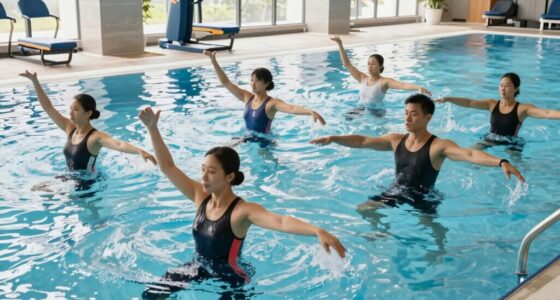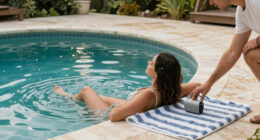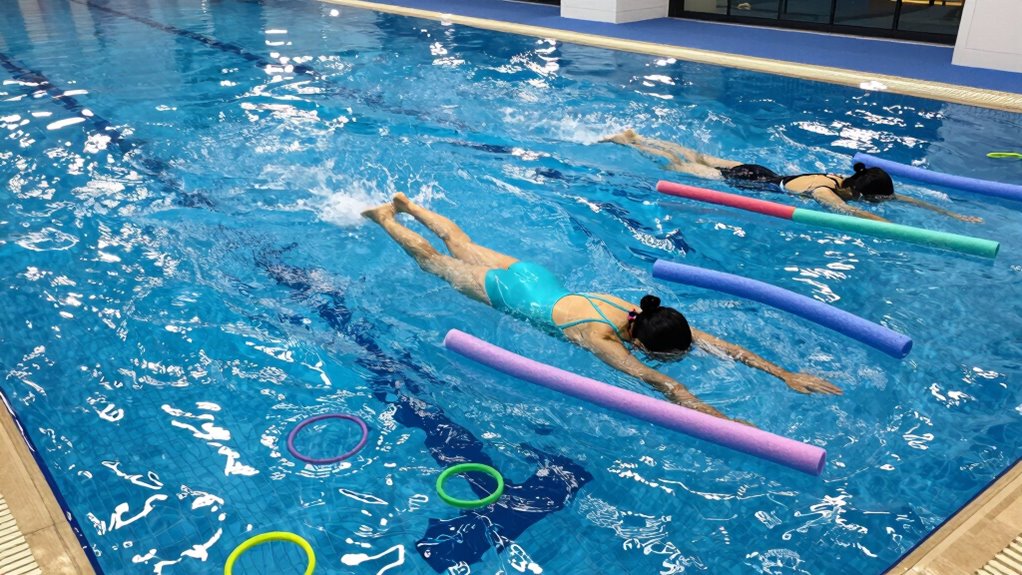
To build a 30-minute aqua fitness session, start with 3-5 minutes of gentle warm-up like water jogging to get your blood flowing. Follow with 15-20 minutes of cardio exercises such as water jogging or jumping jacks, incorporating resistance tools like noodles or weights for added challenge. Finish with 5-10 minutes of gentle stretching and cool-down in the water. Keep safety in mind, focus on proper technique, and you’ll create an effective, enjoyable workout plan. If you continue exploring, you’ll discover even more ways to optimize your session.

Get pool and patio gear delivered free with Prime
- Fast, free delivery on millions of items
- Prime Video, Amazon Music and more included
- Member-only deals all year
Key Takeaways
- Structure the session into warm-up, main workout, and cool-down phases, totaling around 30 minutes.
- Incorporate varied cardiovascular and resistance exercises using water tools for full-body engagement.
- Control intensity by focusing on proper technique and gradually decreasing effort towards the end.
- Include stretching in the water post-workout to enhance flexibility and reduce soreness.
- Prioritize safety with proper equipment, pool maintenance, and seeking guidance from a fitness professional.
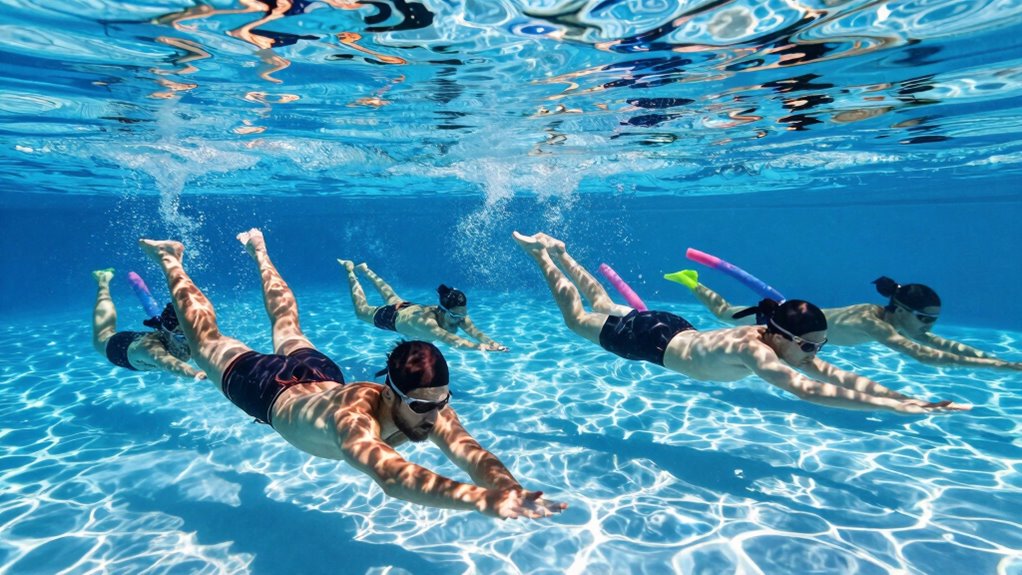
If you’re looking to maximize your workout in a short amount of time, a well-structured 30-minute aqua fitness session can be incredibly effective. The key is to combine targeted movements that elevate your heart rate while leveraging the unique benefits of water exercise. Aqua fitness offers notable hydrotherapy benefits, helping to reduce joint stress, improve circulation, and promote muscle recovery. To fully enjoy these benefits, it’s essential to follow pool safety tips, ensuring a safe and enjoyable workout environment. Always check that the pool is clean and well-maintained, and never push yourself beyond your comfort zone. Wearing appropriate gear like waterproof shoes and a proper swimsuit can help prevent slips and chafing, making your session safer and more comfortable.
Start your session with a quick warm-up to prepare your muscles and joints. Gentle walking or jogging in the water for 3-5 minutes gets your blood flowing and helps prevent injuries. Hydrating before and after your workout supports your body’s recovery, especially considering the resistance water provides. Once warmed up, move into your main workout, which should include a mix of cardiovascular, strength, and flexibility exercises. For example, you can perform water jogging, high knees, or jumping jacks to boost your heart rate. Incorporate resistance movements using water weights or noodles to strengthen your muscles, paying attention to proper form to avoid strain. Remember, water’s resistance makes even light movements effective, so focus on maintaining good technique rather than speed alone. Engaging in water resistance training can significantly enhance muscle strength and endurance. Additionally, integrating natural pools or other eco-friendly features into your workout space can provide a more refreshing environment and promote overall well-being.
As you near the end of your session, lower your intensity gradually to allow your heart rate to decrease smoothly. Conclude with some gentle stretching in the water, targeting muscles you’ve worked — hamstrings, calves, shoulders, and back. This helps improve flexibility and reduces soreness. Incorporating mindfulness techniques during your stretching can further enhance relaxation and mental clarity. Additionally, understanding the benefits of water exercise can motivate you to stay consistent and mindful of your progress. Throughout your workout, stay mindful of pool safety tips, like avoiding running on wet surfaces around the pool and never swimming alone. If you’re new to aqua fitness, consider consulting a trainer who can guide you on proper techniques and help design a personalized plan.
water exercise resistance weights
As an affiliate, we earn on qualifying purchases.
As an affiliate, we earn on qualifying purchases.
Frequently Asked Questions
What Equipment Is Necessary for Aqua Fitness?
For aqua fitness, you mainly need minimal equipment like aqua resistance gloves or dumbbells to enhance your workout. These tools boost resistance and muscle engagement. Always prioritize pool safety by using equipment that’s non-slip and designed for water use. You might also consider kickboards or pool noodles for stability and support. Keep safety in mind, guarantee equipment is clean, and stay aware of your surroundings to avoid slips and falls.
Can Beginners Participate in Aqua Fitness Classes?
Absolutely, beginners can dive right into aqua fitness classes—ironic, isn’t it? These classes are designed with beginner-friendly routines and beginner safety tips, making it easy for newcomers to start safely and confidently. You won’t feel out of place; instead, you’ll find a supportive environment that encourages gradual progress. So, no need to hesitate—grab your swimsuit and enjoy the invigorating, low-impact workout tailored just for beginners!
How Do I Prevent Injuries During Aqua Exercises?
To prevent injuries during aqua exercises, focus on injury prevention and follow safety tips. Always warm up before starting, and listen to your body to avoid overexertion. Maintain proper form, and don’t push through pain. Use appropriate equipment and stay within your skill level. Staying hydrated and practicing controlled movements also help reduce risks. By prioritizing safety tips, you’ll enjoy your workout while minimizing injury chances.
What Is the Ideal Water Temperature for Aqua Workouts?
You might think the perfect water temperature is a mystery, but it’s actually 83-88°F (28-31°C). This range maximizes hydrotherapy benefits while providing enough water resistance levels for a challenging workout. Too cold, and you risk muscle stiffness; too hot, and you could overheat. Staying within this range guarantees you enjoy the therapeutic effects and effective resistance, making your aqua workout both safe and invigorating.
Are There Specific Health Conditions That Restrict Aqua Fitness?
Certain health conditions, like severe heart issues, open wounds, or infections, can restrict your participation in aquatic therapy. Hydrotherapy benefits are significant, but you should consult your healthcare provider before starting aquatic therapy. If you have joint problems, arthritis, or balance issues, aqua fitness can be very helpful, yet it’s crucial to get medical clearance to ensure safety and maximize the benefits of your session.
As an affiliate, we earn on qualifying purchases.
Conclusion
So, there you have it—just 30 minutes to turn yourself into a water warrior. Who knew that splashing around could be so effective? Just remember, all that effort isn’t just about fitness; it’s about having fun while pretending you’re a fish. So next time you’re feeling lazy, plunge into the pool and prove that even a quick swim can make waves. Irony? Sometimes, the shortest workouts make the biggest splash!
waterproof swim shoes for exercise
As an affiliate, we earn on qualifying purchases.
As an affiliate, we earn on qualifying purchases.
As an affiliate, we earn on qualifying purchases.
Halloween Picks
halloween
As an affiliate, we earn on qualifying purchases.