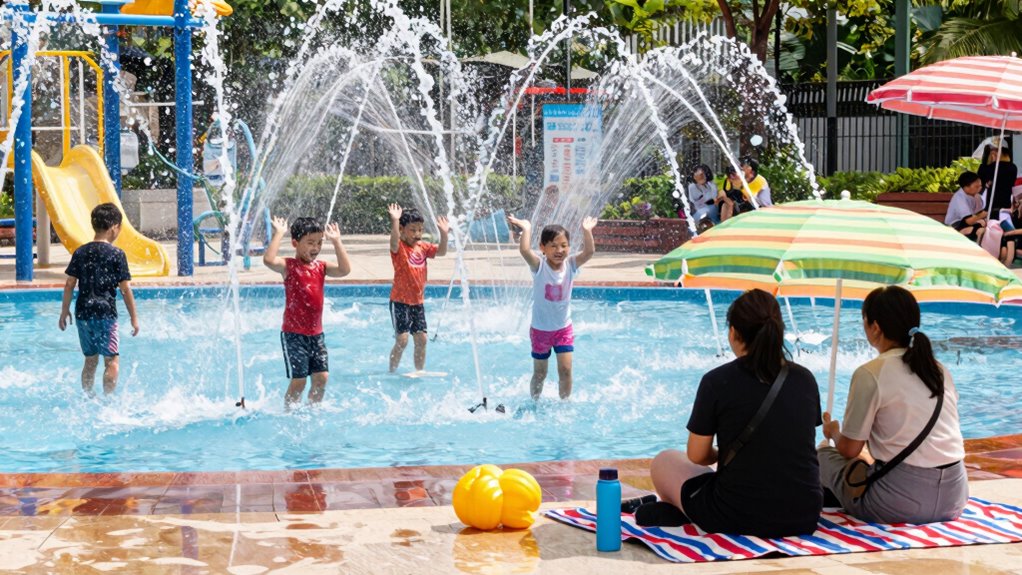
Hygiene rules at splash pads are essential for keeping your family safe and healthy. By washing hands before and after playing, avoiding outside shoes, and using proper swimwear, you reduce the risk of bacteria, viruses, and waterborne illnesses spreading. Not bringing in unclean toys or snacks also helps keep the area safe for everyone. Following these simple measures protects your loved ones and maintains a clean, fun environment. Keep going to discover more ways to stay safe during water play.

Get pool and patio gear delivered free with Prime
- Fast, free delivery on millions of items
- Prime Video, Amazon Music and more included
- Member-only deals all year
Key Takeaways
- Prevents the spread of infections and waterborne illnesses among children and families.
- Maintains a clean and safe environment for all splash pad visitors.
- Ensures water quality remains safe and free from harmful bacteria and viruses.
- Promotes good personal hygiene habits that protect children’s health.
- Reduces contamination risks by controlling outside dirt, germs, and unclean objects.
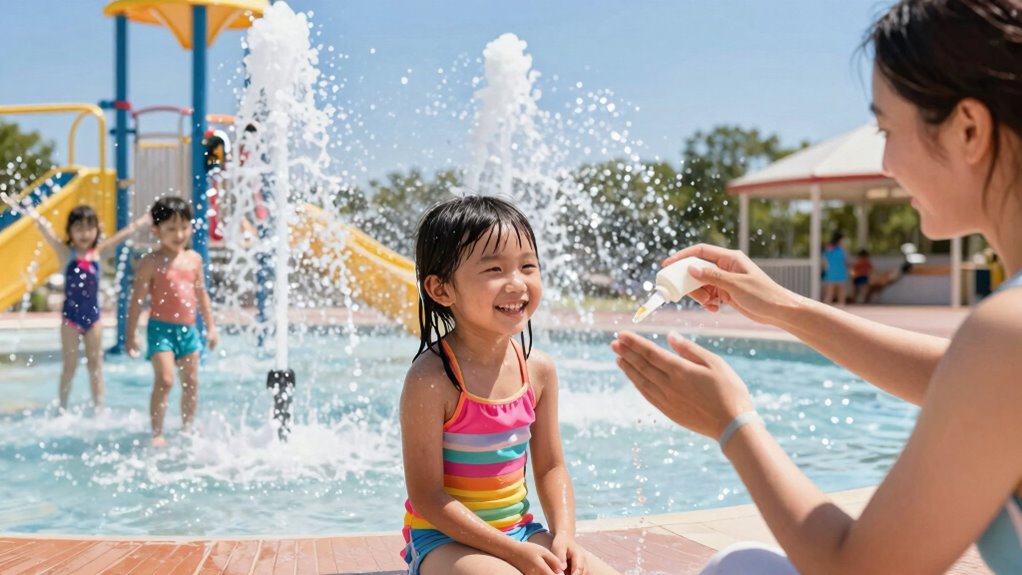
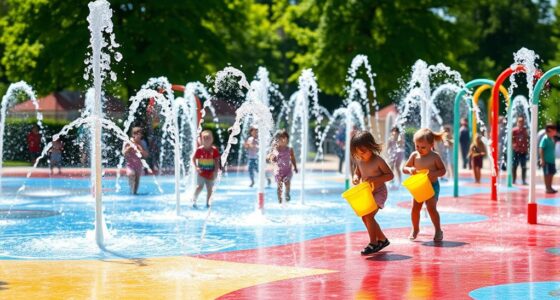
When visiting a splash pad with your family, maintaining good hygiene is crucial to guarantee everyone stays safe and healthy. Splash pads are fun, but they can also be breeding grounds for germs if proper hygiene isn’t followed. That’s why understanding and adhering to splash pad hygiene rules is so important. It helps prevent the spread of infections and ensures a safe environment for all visitors. Water safety is a top priority, especially since children are often more vulnerable to waterborne illnesses. Keeping the splash pad clean and following hygiene protocols reduces the risk of bacteria and viruses spreading through the water. This means encouraging your kids to wash their hands before and after playing, and making sure they don’t ingest water from the splash pad. Also, it’s essential to be aware of clothing requirements. Many splash pads have rules about appropriate attire, such as wearing swimsuits that are specifically designed for water play. Avoid baggy or non-waterproof clothing, as it can trap bacteria and dirt, making hygiene harder to maintain. Some facilities might require children to wear waterproof swimwear to help keep the water clean and reduce contamination.
You should also pay attention to your child’s clothing when entering and leaving the splash pad. Showering before entering helps remove any dirt, sweat, or bacteria on the skin, reducing the likelihood of contaminating the water. Once your family is finished playing, it’s equally important to rinse off thoroughly. Changing into clean clothes after leaving the splash pad can limit the spread of germs to your car or home. Wearing proper swimwear isn’t just about following rules; it’s about protecting everyone’s health. It’s a simple step that can make a significant difference in maintaining water safety and hygiene standards. Additionally, avoid bringing in outside shoes, snacks, or toys that haven’t been cleaned, as these can introduce germs into the area. Encourage your kids not to splash water outside designated areas or share toys without cleaning them first. Being aware of waterborne illnesses and how to prevent them can further enhance your family’s safety at splash pads. Incorporating hygiene practices such as rinsing off with clean water after play can also help reduce the transmission of germs. Moreover, understanding proper protocols can help ensure that everyone follows best practices to keep the environment safe and sanitary for all visitors. Remember, staying informed about water safety rules can make a big difference in your family’s overall experience.
As an affiliate, we earn on qualifying purchases.
Frequently Asked Questions
How Often Should Splash Pad Water Be Tested for Contaminants?
You should have the splash pad water tested regularly, at least once a day during peak usage, to guarantee water quality and contamination prevention. Frequent testing helps catch contaminants early and maintains a safe environment for everyone. If the splash pad is heavily used or after rain, testing might need to be more frequent. Consistent water quality checks are essential to keep the water safe and prevent the spread of germs and bacteria.
Are There Specific Hygiene Products Recommended for Children at Splash Pads?
Yes, there are specific hygiene practices you should follow for children at splash pads. Make certain they practice proper hand sanitation before and after playing to prevent germs spread. Apply waterproof sunscreen generously to protect their skin from sun damage. These steps help keep your kids safe and healthy while enjoying the splash pad fun. Always bring hand sanitizer and sunscreen with you to guarantee quick, effective hygiene and sun protection during your visit.
What Should Parents Do if a Child Shows Signs of Illness After Visiting?
If your child shows signs of illness after visiting, you should immediately remove them from the splash pad to prevent spreading germs. Contact your healthcare provider for guidance and keep your child home to support illness prevention. Follow hygiene protocols by encouraging hand washing and disinfecting any items they brought. Reporting symptoms to the splash pad staff helps maintain a safe environment for everyone and reinforces the importance of hygiene protocols.
How Do Splash Pads Ensure Water Recirculation Stays Sanitary?
Splash pads keep water sanitary through continuous water filtration, which removes debris and contaminants effectively. They also maintain proper sanitizer levels, like chlorine or bromine, to kill germs and prevent bacteria growth. You should check signs or ask staff about water quality, ensuring filtration systems run correctly and sanitizer levels are maintained. This way, you can enjoy the splash pad safely, knowing the water stays clean and hygienic for everyone.
Are There Age Restrictions Related to Hygiene Rules at Splash Pads?
While splash pad etiquette encourages everyone to follow hygiene compliance, age restrictions are often in place to protect younger children. You should guarantee your little ones adhere to these rules, as they’re designed for safety and cleanliness. Age restrictions help prevent the spread of germs, making the splash pad experience enjoyable for all ages. So, be mindful of these limits to keep the environment safe and fun for everyone involved.
As an affiliate, we earn on qualifying purchases.
Conclusion
By following splash pad hygiene rules, you create a safe oasis where kids can splash and giggle without worries. Think of these guidelines as the invisible shields guarding your little ones from germs, turning the splash pad into a sparkling haven of fun. When you prioritize cleanliness, you’re not just protecting their health—you’re ensuring every splash is filled with joy and carefree laughter. So, keep these rules close; they’re the keys to a safe, bubbly adventure.
As an affiliate, we earn on qualifying purchases.
As an affiliate, we earn on qualifying purchases.
Halloween Picks
halloween
As an affiliate, we earn on qualifying purchases.