At the water park, protect your skin by wearing UPF-rated clothing like rash guards and long-sleeved shirts, and seek shaded areas during peak hours. Reapply broad-spectrum sunscreen with at least SPF 30 every two hours, especially after swimming or towel drying. Combining good clothing choices, shade use, and timely reapplication helps prevent sunburn and long-term damage. If you want to know more about making your water park outing safer, keep exploring this guide.
Key Takeaways
- Wear UPF-rated clothing like rash guards and swim shirts for reliable UV protection during water park activities.
- Seek shaded areas and use portable umbrellas or shade structures to minimize direct sun exposure.
- Reapply broad-spectrum sunscreen every two hours, especially after swimming or towel drying.
- Maximize shade by visiting early or late in the day and choosing less crowded, shaded zones.
- Combine clothing, shade, and sunscreen reapplication for comprehensive sun safety and skin protection.
The Importance of Sun-Protective Clothing at Water Parks
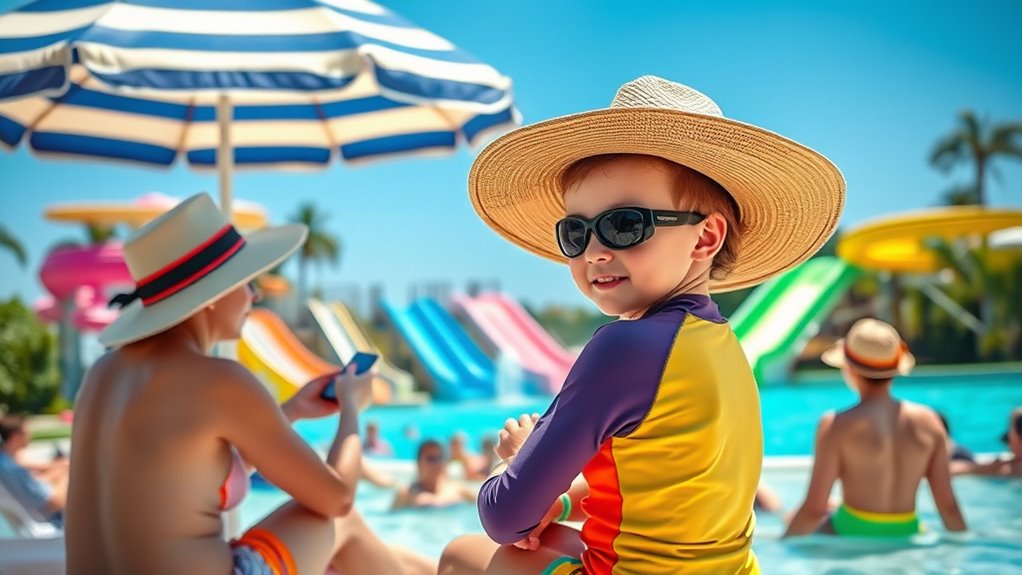
Wearing sun-protective clothing at water parks is one of the most effective ways to shield your skin from harmful UV rays. UPF-rated garments, especially those with UPF 50+, block about 98% of UV radiation, providing continuous protection without reapplication. Unlike typical non-UPF clothing, such as a thin cotton T-shirt, which may only have UPF 5 and allow 20% of UV rays through, UPF clothing offers reliable defense even when wet. The fabric type, weave density, and wetness affect protection, but specially designed water-resistant UPF garments maintain their UV-blocking qualities. Scientific studies confirm that high-UPF clothing markedly reduces UV exposure during outdoor activities like water park visits, helping protect your skin from damage, premature aging, and skin cancer risks. Additionally, choosing clothing with UV protection technology can further enhance your sun safety measures.
Best Clothing Options for Sun Safety and Comfort
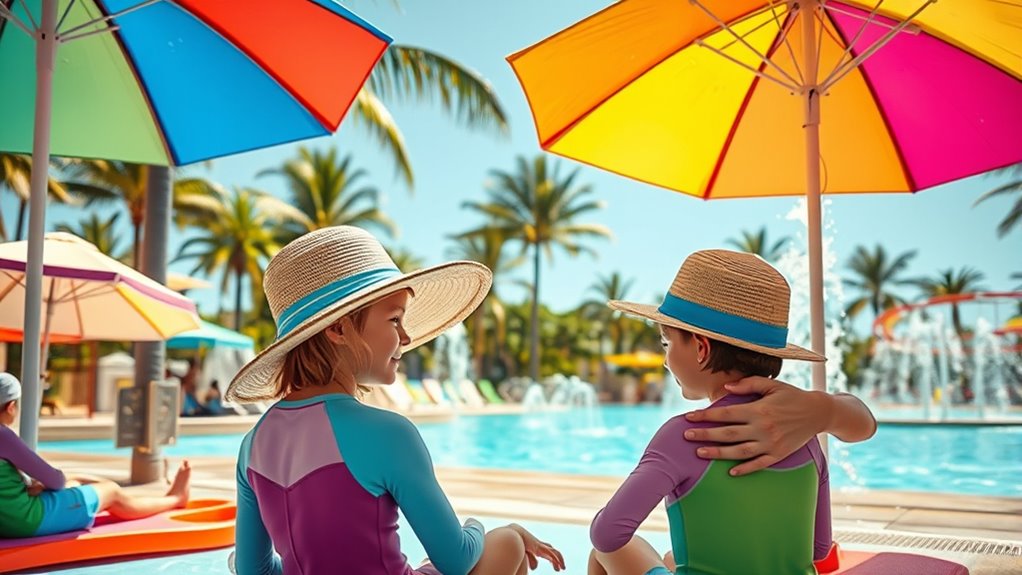
Choosing the right clothing for water park visits guarantees you stay protected from UV rays while remaining comfortable. Opt for UPF 50+ rated apparel, which blocks 98% of UVA and UVB rays, offering maximum protection. Look for fabrics like polyester, nylon, or spandex, which are densely woven and often treated with UV absorbers, enhancing their effectiveness. Long-sleeved rash guards, swim shirts, and sun hoodies provide full coverage, especially around vulnerable areas like the neck and shoulders. Select loose-fitting designs to maintain protection and comfort. Bright or dark colors are better at blocking UV than light shades. Quick-drying, moisture-wicking fabrics help you stay comfortable during water activities. Durable, water-resistant clothing retains its UPF rating even when wet, ensuring ongoing protection throughout your visit. Densely woven fabrics are essential for effective UV protection. Additionally, choosing clothing made with sustainable and eco-friendly materials can contribute to environmental conservation efforts.
How to Maximize Shade Coverage During Your Visit
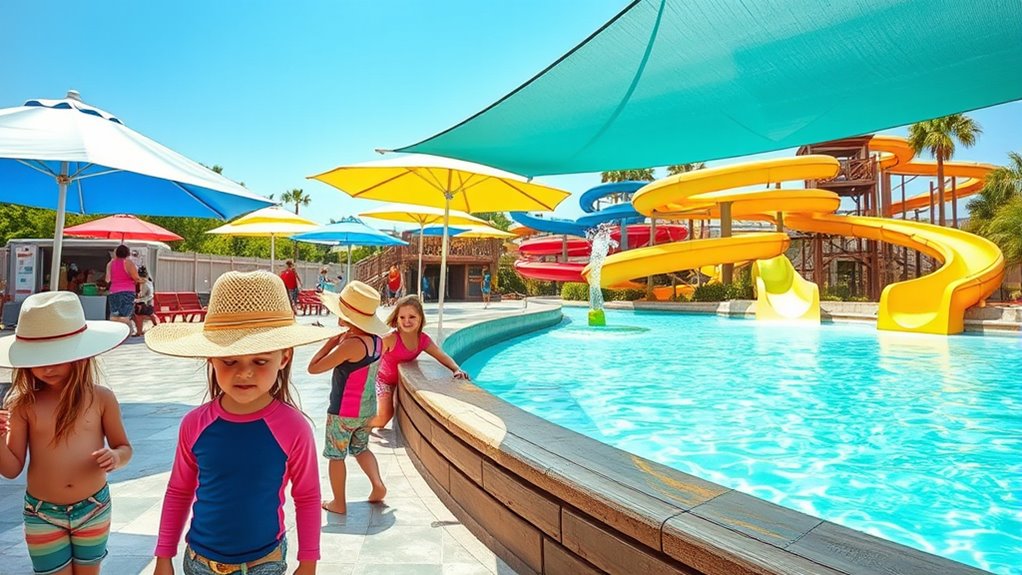
To get the most shade, look for designated shaded areas like pavilions and trees before settling in. Bring portable devices such as umbrellas or sunshades to cover yourself during peak sun hours. Planning your visit during off-peak times can also help you enjoy the water park with less direct sun exposure. Additionally, shade structures like fabric or steel shelters can significantly lower temperatures and provide a cooler, safer environment. Incorporating sustainable shading options can also reduce environmental impact while keeping you protected.
Seek Out Shaded Areas
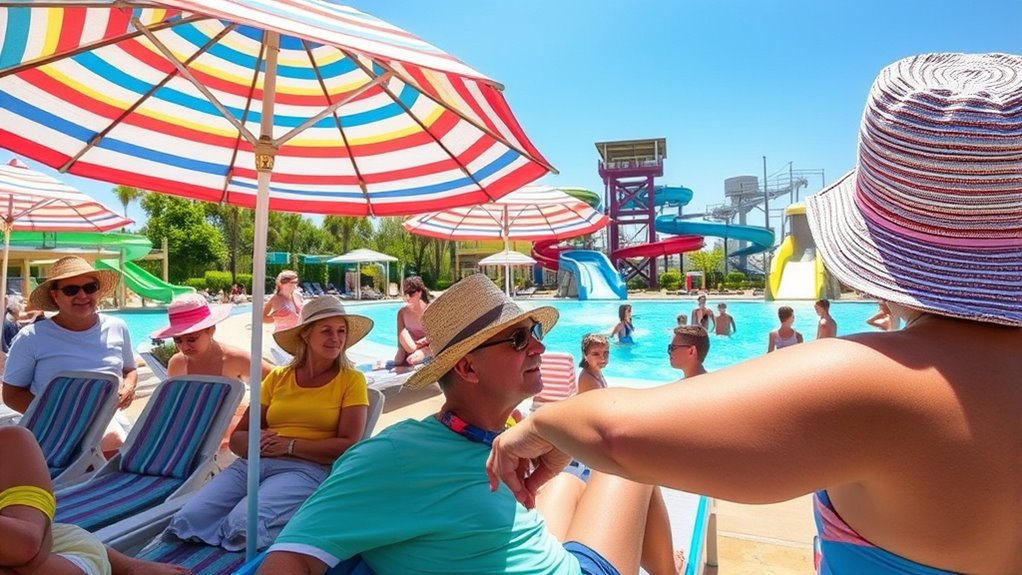
Maximizing shade coverage during your water park visit guarantees you stay comfortable and protected from the sun’s harmful rays. Look for designated shaded areas near pools, splash pads, and water attractions—these spots are often equipped with permanent structures like sail shades, fabric canopies, or pergolas. Seek out shaded seating and dining zones to rest and hydrate, especially during peak heat times. Use shaded walkways and pathways to move between attractions without unnecessary sun exposure. Many parks have interconnected shaded zones and layered protection, combining trees with fabric shades for maximum coverage. By consciously choosing shaded spots for relaxing, eating, and waiting in line, you reduce your risk of heat-related illnesses and skin damage, making your visit safer and more enjoyable. Researching the park’s layout beforehand can help you identify the best shaded areas to maximize sun protection throughout your day. Incorporating shade coverage into your planning ensures comprehensive protection and a more comfortable experience.
Use Portable Shade Devices
Using portable shade devices effectively can substantially increase your shaded areas at the water park, giving you flexible protection from the sun. Combine fixed shading like awnings with mobile options such as umbrellas or shade sails to adapt to changing sun angles. Choose adjustable canopies or tents to customize shade size and direction as needed. Deploy larger tents or several smaller ones to create communal shaded zones for groups or families. Secure devices with stakes, sandbags, or weights to prevent tipping in windy conditions. Position shade near high-traffic spots like water entry points, seating, or play areas to shield high-use zones. Proper setup and strategic placement guarantee maximum coverage, comfort, and protection throughout your visit. Proper placement enhances overall shade effectiveness and visitor satisfaction, and considering UV protection standards when selecting shade devices can further improve your sun safety.
Schedule Visits During Off-Peak
Visiting the water park on weekdays considerably enhances your chances of finding ample shaded areas, as crowd levels are generally lower. Fewer visitors mean less competition for natural and constructed shade like trees, umbrellas, and shaded seating. With shorter lines and smaller crowds, you have more time to relax under shaded spots during breaks. Arriving early in the morning allows you to enjoy cooler temperatures and longer natural shadows from structures and trees, reducing UV exposure. Late afternoon visits also offer less crowded shaded areas, with longer shadows and fewer people occupying shaded seating. By reviewing park schedules and using data, you can pick the best days and times for shade availability. Scheduling your visit during off-peak hours maximizes your comfort and sun safety throughout your day at the water park. Additionally, checking crowd patterns can help you plan your trip for optimal shade coverage.
Strategies for Using Shade Effectively in Water Park Settings
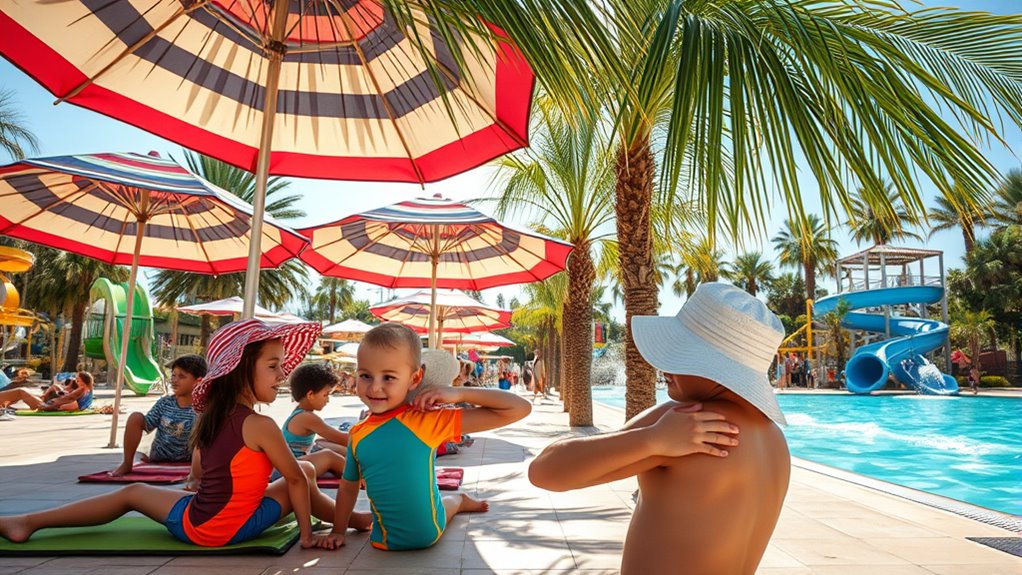
Effective shade strategies in water parks start with thoughtful placement and selection of shading options that meet both safety and aesthetic goals. You should prioritize natural shade through strategically clustered native trees, which filter sunlight, lower ground temperatures, and enhance guest experience. Regular maintenance like pruning and watering helps keep trees effective and healthy. Native trees provide not only shade but also support local ecosystems and biodiversity. Fabric shade structures, such as sails and canopies, offer customizable UV protection, reduce temperatures, and add visual appeal with vibrant colors. Structural options like pergolas, cabanas, and umbrellas provide versatile, movable coverage, creating inviting retreats and protecting against overheating. To maximize shade benefits, consider these approaches:
Prioritize natural trees, fabric sails, and movable structures to create safe, appealing shaded areas in water parks.
- Position natural and fabric shades to cover high-traffic and lounging areas.
- Use durable, weather-resistant materials for structures.
- Integrate shade design with park aesthetics to improve guest satisfaction.
When and Why to Reapply Sunscreen During Water Activities
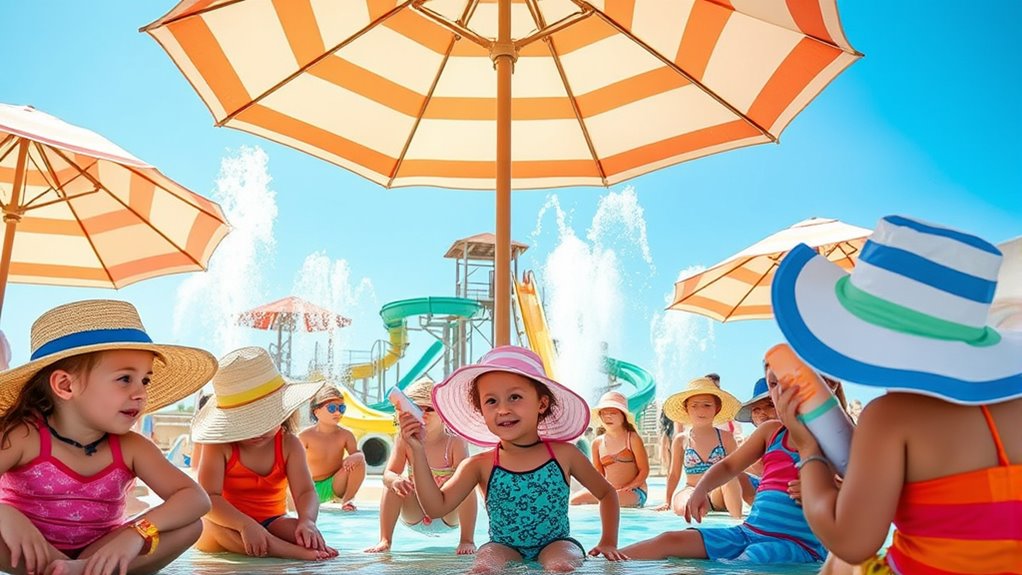
You need to reapply sunscreen every two hours, especially after swimming, toweling off, or sweating, since water and physical activity quickly diminish its effectiveness. Water-resistant sunscreens aren’t waterproof, so even with them, you should reapply immediately after water contact. Regular reapplication ensures you stay protected from UV damage, no matter how active you are in the water. To maximize protection, consider the indoor air quality of your environment, as poor air quality can exacerbate skin sensitivities and affect overall health.
Reapplication Frequency Importance
During water activities, reapplying sunscreen more frequently than the standard two-hour interval is essential to maintaining effective protection. Water exposure, sweating, towel drying, and friction can quickly diminish sunscreen’s effectiveness, even if it’s labeled water-resistant. Reapplication helps prevent sunburn and UV damage, which can occur despite high SPF. You should reapply:
- Immediately after leaving the water, regardless of time elapsed
- After towel drying or vigorous activity that rubs off sunscreen
- When sweating heavily or on high UV index days
Even water-resistant formulas lose their protective power after swimming or sweating. All sunscreens should be reapplied at least every two hours regardless of water resistance claims, to ensure continuous protection. Remember, no sunscreen is completely waterproof, so frequent reapplication ensures continuous protection during water park fun.
Impact of Water Exposure
Water exposure directly removes sunscreen from your skin, even if it’s labeled water-resistant. Water washes away the protective film, and physical contact like toweling further strips it off. Plus, UV rays are stronger underwater and reflected off water, increasing your risk of sun damage. To maintain protection, reapply immediately after swimming or toweling off. Additionally, using an eye patch with added protective ingredients can help shield the delicate skin around your eyes during water activities.
Selecting the Right Sunscreen: Broad-Spectrum and High SPF
Selecting the right sunscreen involves more than just choosing a product with a high SPF; it’s essential to guarantee it offers broad-spectrum protection. This means your sunscreen shields against both UVA and UVB rays, preventing sunburn, skin aging, and skin cancer. Look for labels that specify “broad spectrum” and an SPF of at least 30 for extended outdoor activities like water parks. Consider these key points:
- Physical filters like zinc oxide and titanium dioxide reflect UV rays, offering comprehensive protection.
- Chemical filters such as avobenzone absorb UV radiation, enhancing broad-spectrum coverage.
- Higher SPF primarily blocks UVB but doesn’t necessarily improve UVA protection unless labeled broad spectrum.
- Proper application and reapplication are crucial to maintaining effective protection throughout your water park visit.
- Regularly checking sunscreen expiration dates helps ensure the product remains effective in providing protection.
Choosing wisely ensures your skin stays protected during water fun and beyond.
Overcoming Barriers to Reapplication and Shade Use
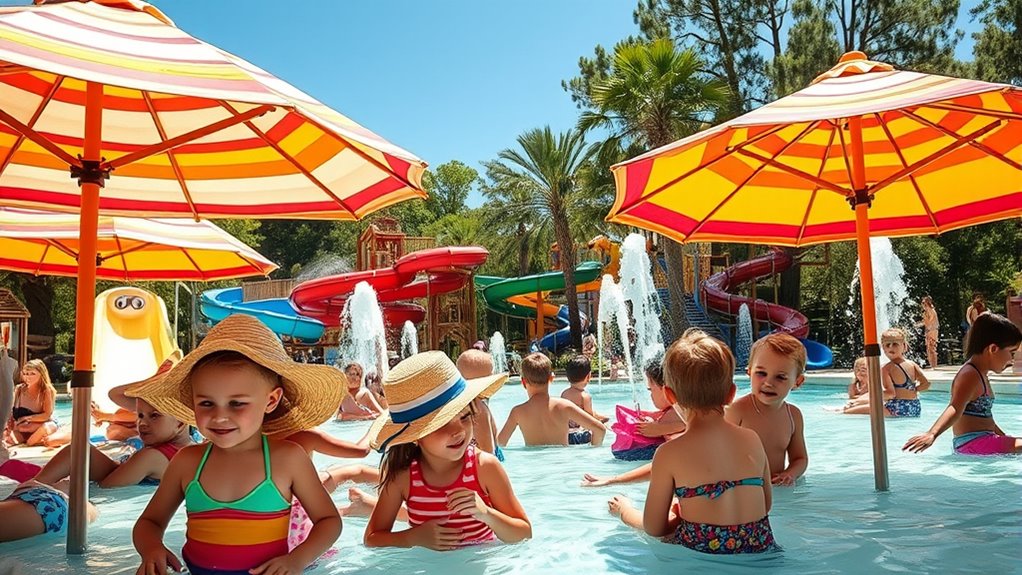
Reapplication of sunscreen and use of shade are often hindered by practical and behavioral barriers, especially in aquatic environments. Water, sweating, and towel drying wash away sunscreen quickly, making timely reapplication essential but often overlooked. People may forget or delay reapplying, especially during active water play, where focus is on fun. Shade use is limited by uneven coverage and perceptions of inconvenience or low risk, despite its proven benefits. Many visitors prioritize sunscreen and hats over seeking shade, while structural issues like sparse shade structures and poorly designed layouts reduce options. Seasonal changes and dynamic environments further discourage shade use. Overcoming these barriers requires accessible, visible reminders for reapplication, better shade infrastructure, and education on the importance of combining sun protection methods for effective, sustained protection. Additionally, integrating sound healing science principles can help reinforce positive behaviors and improve compliance with sun safety practices.
Combining Clothing, Shade, and Sunscreen for Optimal Protection
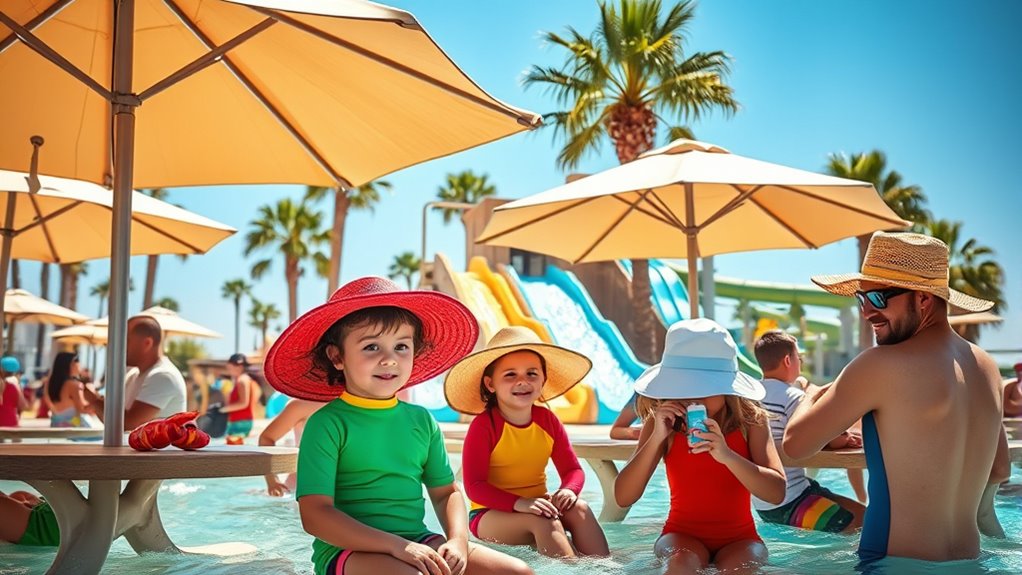
To maximize sun protection at water parks, combining clothing, shade, and sunscreen is essential. Wearing UPF-rated clothing, like long sleeves and light-colored fabrics, provides reliable coverage, especially on areas missed by sunscreen. Using shade structures strategically over high-traffic areas reduces UV exposure and encourages breaks from direct sun. Proper timing of sunscreen application, reapplying every two hours or after water contact, ensures continuous protection. Additionally, choosing Kia Tuning modifications that do not compromise the fabric integrity can help maintain effective sun protection gear.
Maximize water park sun safety with UPF clothing, shade, and timely sunscreen reapplication.
Remember:
- UPF clothing blocks 95%+ of UV rays and covers often-missed skin.
- Shade reduces UV exposure, lowering the need for excessive sunscreen.
- Correct sunscreen use and timely reapplication maintain protection during water activities.
Integrating these methods creates a comprehensive barrier, boosting sun safety and reducing the risk of burns and long-term skin damage.
Creating a Culture of Sun Safety for Staff and Visitors
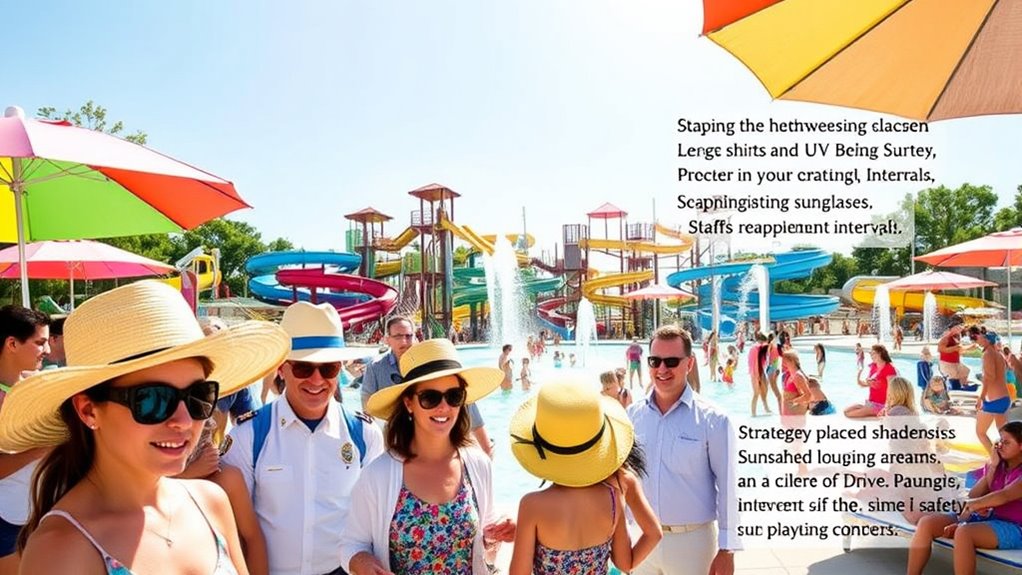
Creating a culture of sun safety in a water park requires clear policies, supportive environments, and active engagement from both staff and visitors. Establishing educational programs that inform about UV risks and protection methods encourages informed decision-making. Implement strong policies that enforce regular sunscreen use, shade breaks, and protective clothing, which directly reduce UV risks. Use visible signage and reminders to boost compliance with sun safety practices. Provide onsite sunscreen dispensers to encourage frequent reapplication, especially in high-exposure areas. Incorporate sun safety rules into visitor orientation to foster awareness and personal responsibility. Promote social norms by encouraging peer support, modeling safe behaviors, and recognizing staff who exemplify best practices. Regular staff training on UV risks and protective measures, combined with environmental supports like shaded areas and informative displays, creates an environment where sun safety becomes a shared priority. Additionally, understanding divorce statistics can help staff recognize the importance of effective communication and support, which parallels fostering a supportive environment for visitors.
Frequently Asked Questions
How Can Water Parks Encourage Guests to Wear Protective Clothing?
You can encourage guests to wear protective clothing by prominently displaying colorful signs and infographics highlighting UPF benefits. Offer easy access to UPF-rated swimwear and sun hats at retail and rental stations. Train your staff to recommend sun-safe attire and organize engaging safety talks. Provide incentives like discounts or badges for guests who wear protective clothing, and feature photos on social media to promote sun-smart behavior.
What Are Effective Ways to Promote Shade Use Among Visitors?
Promote shade use by highlighting its health benefits and creating compelling cues. Clearly mark shaded zones with colorful signs, and consistently communicate their comfort during peak sun hours. Use social media and staff to spotlight “cool zones,” and craft catchy campaigns encouraging guests to seek shelter. Incorporate shaded spaces into park maps and marketing materials, making them more memorable and motivating visitors to linger longer in safe, shaded spots.
How Often Should Sunscreen Be Reapplied During Water Park Activities?
You should reapply sunscreen every 40 to 80 minutes during water park activities. Water exposure washes off the product quickly, so reapply immediately after swimming, sweating, or towel drying. Use water-resistant formulas and apply generously, about one ounce for full coverage. Set reminders to reapply regularly, especially during peak sun hours, to guarantee continuous protection. Combining frequent reapplication with shade and protective clothing maximizes your sun safety.
Are There Specific Clothing Materials Best for Sun Protection at Water Parks?
Imagine slipping into a sleek, tight-weave polyester or nylon shirt that feels cool against your skin, yet blocks nearly all harmful UV rays. These synthetic fabrics, with UPF 50+ ratings, are your best choice for sun protection at water parks. They resist water, dry quickly, and keep UV rays at bay even when wet. Layered with treated cotton or merino wool, you’ll stay comfortably protected all day long.
What Policies Can Water Parks Implement to Improve Sun Safety Compliance?
You can enhance sun safety compliance by implementing clear policies that require or strongly promote protective clothing, hats, and SPF sunscreen use. Make sunscreen easily accessible and remind guests to reapply every two hours or after water contact. Provide shaded areas and enforce their use, train staff to monitor and encourage sun-safe behaviors, and communicate these policies prominently. Regularly review and adjust policies based on guest feedback and UV conditions to guarantee effectiveness.
Conclusion
Just like the heroes of old guarded their treasures, guard your skin with smart clothing, shade, and sunscreen. By staying vigilant, you guarantee your water park adventure remains fun and safe, not marred by sun damage. Remember, the Sun’s relentless gaze waits for no one—so take proactive steps to protect yourself. Embrace these strategies, and you’ll be the hero of your own sun safety story, shining brightly without the toll of the sun’s fiery wrath.