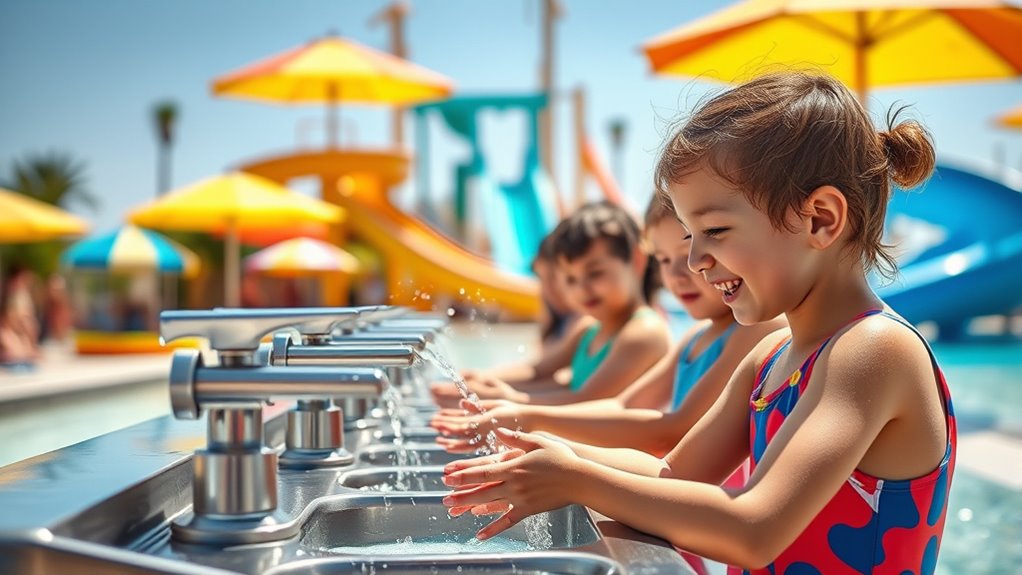

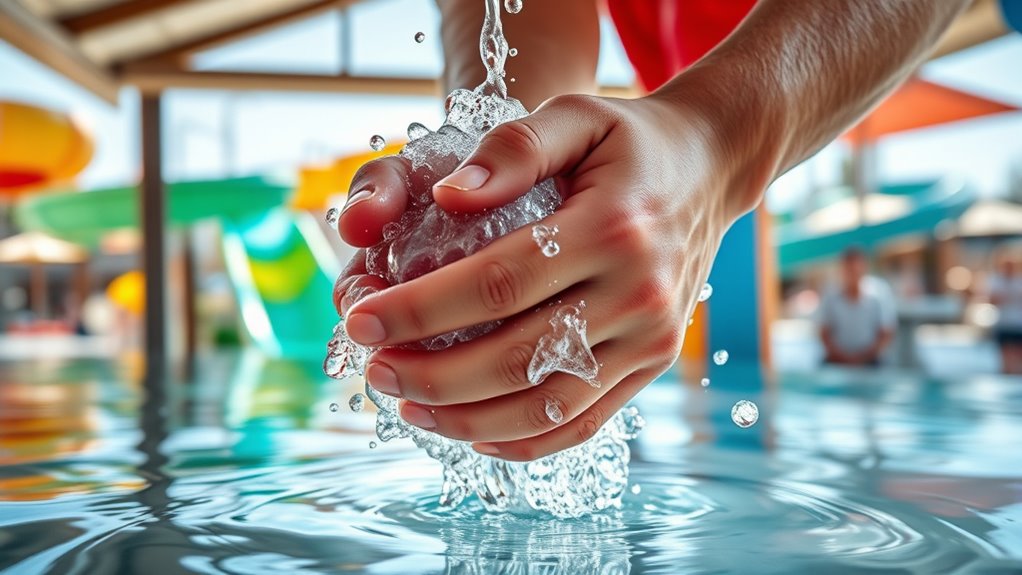
On water park days, washing your hands with soap and water for at least 20 seconds is key to stopping germs from spreading, especially after restroom visits or before eating. Avoid sharing utensils and use clean, sanitized surfaces when handling food. Follow park policies about outside food and beverages, and always use handwashing stations and sanitizers nearby. By practicing good hygiene and food safety, you help protect yourself and others — keep exploring to learn more.
Key Takeaways
- Encourage guests and staff to wash hands with soap and water for at least 20 seconds before eating and after restroom use.
- Maintain clean, sanitized food contact surfaces and utensils, avoiding reuse without proper cleaning.
- Keep hot foods at 135°F or higher and cold foods at 41°F or lower to prevent microbial growth.
- Install touchless handwashing fixtures and signage to promote hygiene and reduce germ spread.
- Restrict outside food and beverages, allowing only medically necessary items in approved containers.
The Importance of Proper Hand Hygiene in Water Parks
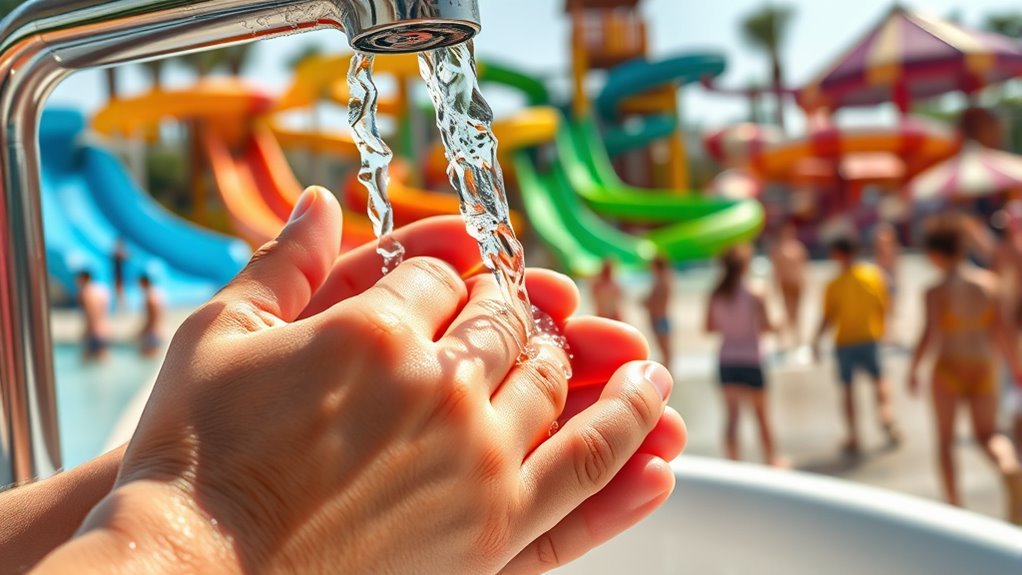
Proper hand hygiene is essential in water parks because it substantially reduces the spread of germs and prevents illness among guests and staff. When you wash your hands with soap and water for at least 20 seconds, you significantly lower the risk of transmitting diarrheal and respiratory diseases, which are often spread through contaminated hands. Despite its importance, only around 65% of women and 31% of men wash their hands after using public restrooms, highlighting the need for better compliance. Splashing from faucets can spread bacteria like Pseudomonas aeruginosa, so using anti-splash baffles and avoiding objects near faucet outlets is crucial. Ensuring access to proper handwashing facilities and encouraging regular hand hygiene can protect everyone, reducing illness and maintaining a safe, healthy environment in water parks. Incorporating hand hygiene protocols and promoting their consistent practice further enhances safety measures.
Recognizing Food Safety Risks in High-Traffic Water Environments
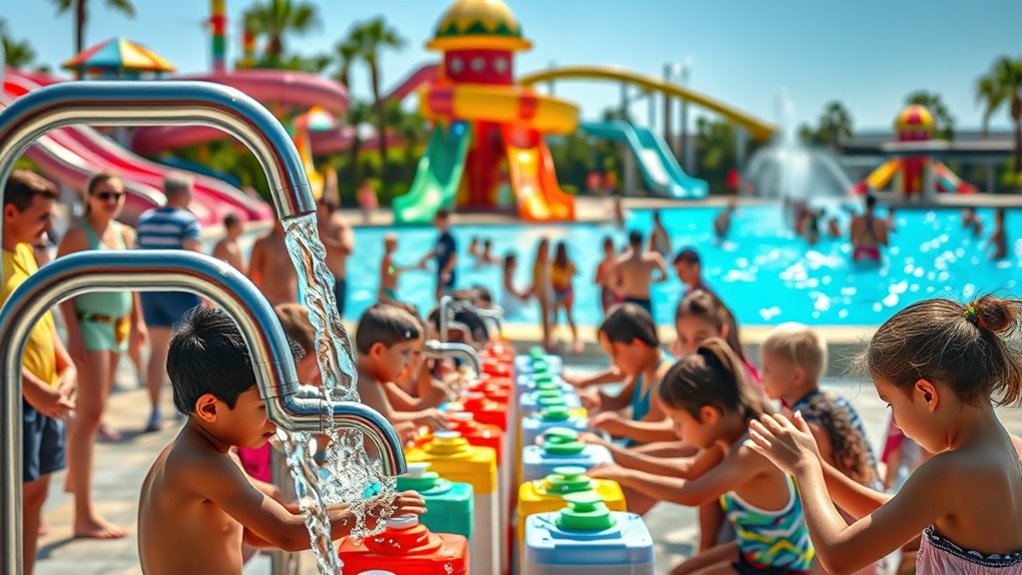
In high-traffic water environments, your hands can easily transfer germs to food, especially when shared surfaces or utensils are involved. Temperature and humidity fluctuations can also create ideal conditions for bacteria to grow on surfaces and in food. By recognizing these risks, you can better prevent cross-contamination and keep food safe for everyone. Contaminated water sources increase the likelihood of pathogen transfer, making proper hygiene practices even more critical. Additionally, understanding projector technology can help in creating an optimal viewing environment that minimizes glare and enhances image clarity.
Cross-Contamination From Hands
Have you ever considered how easily pathogens can transfer from hands to food in busy water parks? When you touch surfaces or handle food after water play, you risk spreading germs like *Cryptosporidium*, *E. coli*, or norovirus. These pathogens can linger on your hands after contact with contaminated water, especially in splash pads or pools where fecal matter may be present. The risk increases during peak times when hand contact with shared surfaces is constant. Here’s a look at common contamination pathways:
| Surface Type | Pathogen Risk |
|---|---|
| Water play equipment | *Cryptosporidium*, *Giardia* |
| Food contact surfaces | *Salmonella*, *Shigella* |
| Benches and tables | Viral and bacterial pathogens |
| Restroom fixtures | Fecal-oral transmission risk |
Proper hand hygiene is essential to prevent cross-contamination and protect everyone’s health. Regular cleaning of hands reduces transmission of harmful germs and is crucial in high-traffic water park environments.
Temperature and Humidity Effects
Temperature and humidity levels in waterpark environments directly influence food safety by affecting microbial growth and survival. Pathogenic microorganisms thrive in the “Danger Zone” between 40°F and 140°F, so higher temperatures accelerate their growth, increasing the risk of foodborne illnesses during waterpark days. While lower air temperatures (60°F to 72°F) can slow microbial proliferation, they may complicate food holding and temperature control practices. Humidity fluctuations, from 24% to 100%, impact pathogen persistence; higher humidity helps viruses like hepatitis A survive longer on food surfaces, raising contamination risks. Additionally, water activity interacts with temperature and humidity, influencing microbial growth. Managing these environmental factors is essential to minimize hazards and maintain food safety in your waterpark. Incorporating environmental monitoring can help identify and control these risks more effectively.
Shared Surfaces and Utensils
Shared surfaces and utensils in waterparks pose considerable food safety risks, especially during peak times when many patrons come into contact with the same items. Contaminated surfaces like handrails, tables, and food areas can harbor pathogens such as *Shigella*, *E. coli*, *Cryptosporidium*, and *Salmonella*. These microbes survive on wet surfaces, increasing the chance of fecal-oral transmission. Even chlorinated water systems don’t fully eliminate these risks, particularly with high bather loads and poor hygiene. Reusing or sharing utensils without proper cleaning spreads bacteria and viruses, heightening illness chances. Regular disinfection of shared surfaces and the use of single-use utensils markedly reduce contamination. Maintaining strict sanitation and hygiene practices is essential to prevent outbreaks linked to environmental surfaces and shared items in waterpark settings.
Water Park Policies on Outside Food and Beverage Restrictions
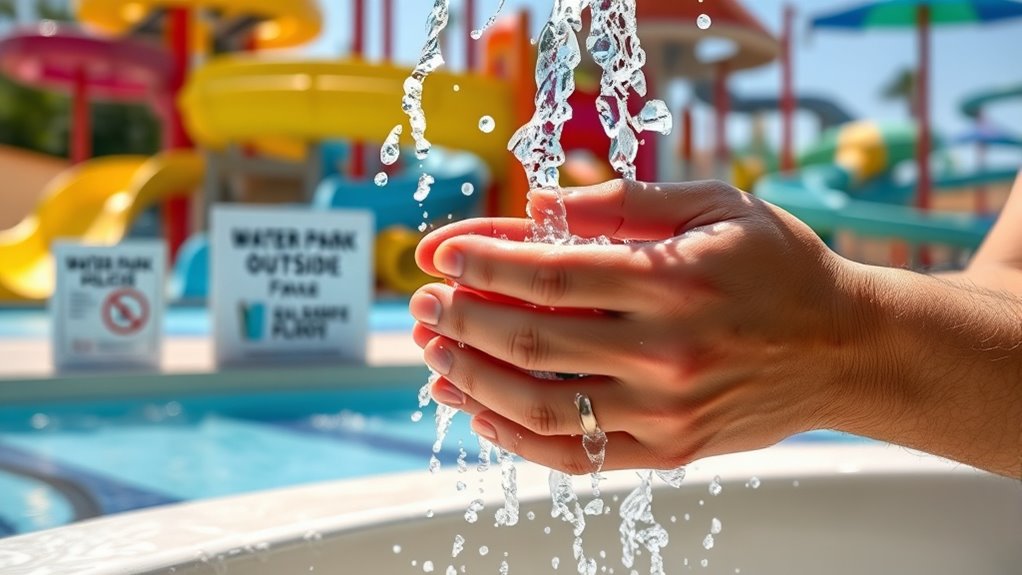
Most water parks restrict outside food and beverages to maintain safety and hygiene standards. Exceptions are usually made for medical reasons, but you must provide documentation and follow strict limits. Understanding these policies helps you plan better and stay compliant during your visit. Park policies are designed to ensure all guests enjoy a clean and safe environment for everyone. Additionally, many parks have food allergy protocols to protect guests with dietary restrictions.
Outside Food Exceptions
Have you ever wondered why water parks often restrict outside food, and what exceptions they make? Most parks prohibit bringing outside food, citing safety, hygiene, and supporting in-park vendors. However, they usually allow baby food, formula, and food for guests with medical or dietary needs, as long as it’s in non-glass containers. Some parks permit a small amount of sealed water bottles, but alcohol and other drinks are banned. You might find designated picnic areas outside the gates for eating your own food, with re-entry allowed afterward. Enforcement is strict: bags are checked, and unauthorized items are confiscated or must be discarded. Parks aim to balance safety and guest satisfaction, offering exceptions mainly for infants and those with special dietary requirements. Additionally, vertical storage solutions can help organize your belongings when preparing for a day at the water park.
Beverage Policy Restrictions
Water parks implement strict beverage policies to guarantee guest safety and maintain cleanliness. Most prohibit outside beverages, including alcohol and soft drinks, to prevent spills and contamination. Glass containers are universally banned to avoid breakage and injuries. Hard coolers, soft coolers, and insulated bags with food or drinks are generally not allowed or require a fee if permitted. Some parks, like Wild Rivers and Rapids Water Park, restrict outside beverages to sealed water bottles only. Entry points often perform bag checks to enforce these rules, with items not meeting criteria confiscated or stored in vehicles. Medical exceptions for allergy or dietary needs are usually allowed, but with verification. These restrictions help promote safety, hygiene, and a family-friendly environment while supporting on-site sales. Strict policies are also enforced to prevent injuries caused by broken glass or spills. Additionally, many water parks promote hygiene practices by encouraging guests to use designated trash and recycling bins.
Best Practices for Concession Stand Food Safety and Handling
Maintaining food safety at concession stands requires strict adherence to best practices that prevent contamination and guarantee proper handling. Ensure hot foods stay at or above 135°F and cold foods remain at or below 41°F to prevent bacterial growth. Rapidly reheat leftovers to 165°F, avoiding slow devices like crock pots. Store all food and equipment at least 6 inches off the ground to prevent contamination. Use certified sanitation equipment to keep temperatures safe and equipment clean. Handle ready-to-eat foods with utensils, gloves, or deli papers, and wash hands frequently, especially after touching money or surfaces. Use approved, reputable sources for food and avoid leftovers. Clean and sanitize surfaces and utensils regularly, and install effective sneeze guards to protect food from pests and contamination. Water safety practices are essential to prevent waterborne illnesses and ensure a safe environment for guests.
Guest Facilities and Their Role in Promoting Hygiene
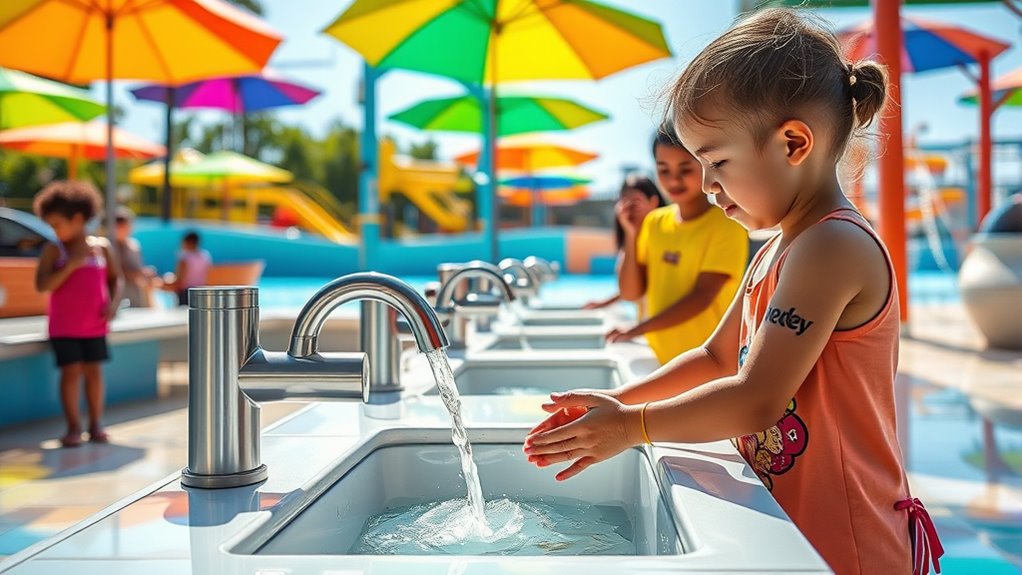
Guest facilities like restrooms, showers, and handwashing stations play an essential role in promoting hygiene at water parks. Properly maintained and accessible handwashing stations are required by health regulations in most areas, encouraging guests to clean their hands frequently. Signage near restrooms and food areas reminds visitors of the importance of handwashing, especially after swimming and restroom use. Many parks install multiple stations strategically to reduce congestion and boost usage. Restrooms are regularly cleaned, stocked with soap and paper towels, and monitored for hygiene standards. Modern facilities often feature touchless fixtures to minimize germ spread. Staff members play a key role by maintaining cleanliness, restocking supplies, and encouraging guests to practice good hygiene. These measures help reduce illness risk and promote a safe water park environment, and implementing touchless fixtures can significantly improve hygiene practices by reducing contact points.
Strategies to Prevent Illness Outbreaks During Water Park Visits
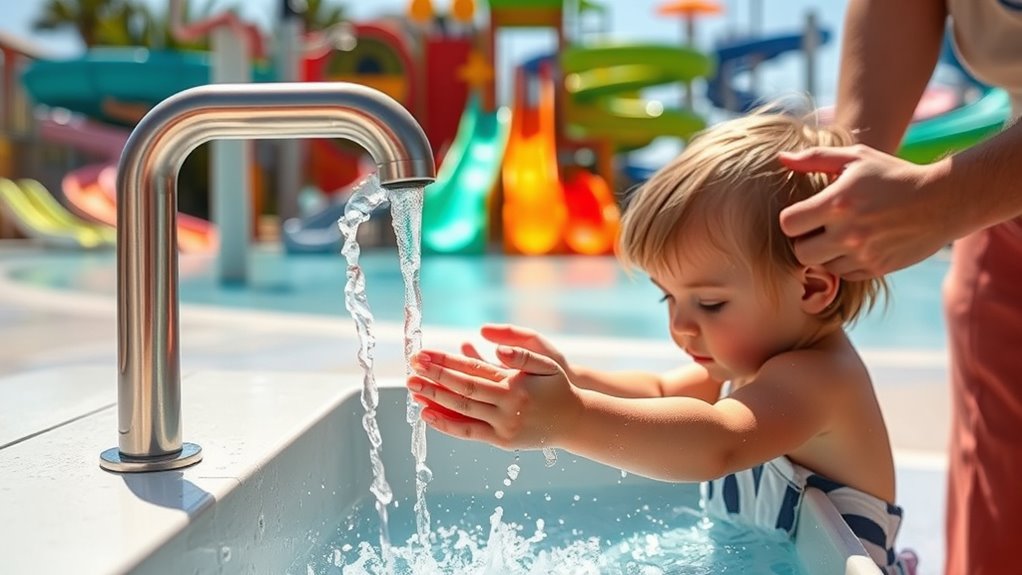
To prevent illness outbreaks during your visit, it is vital to follow specific health and safety strategies. Always shower before water activities to remove dirt and contaminants that can reduce disinfectant effectiveness. Never swim with diarrhea, and wait at least two weeks after Crypto diagnosis before returning to the water. Avoid swallowing pool or splash pad water to lower infection risk. Practice frequent handwashing, especially before eating or touching your face. Take children for regular bathroom breaks and use leak-proof swim diapers. Confirm water quality by verifying proper disinfectant levels and pH balance, and watch for cloudy water or strong chemical smells. Staff training and visible hygiene reminders support safe practices. Additionally, understanding the importance of water quality can help you better recognize signs of unsafe conditions. By following these measures, you help protect yourself and others from waterborne illnesses during your water park visit.
Frequently Asked Questions
Are There Specific Handwashing Techniques Recommended at Water Parks?
You should wet your hands thoroughly with clean water, then apply soap and lather well, covering all surfaces including backs of hands, between fingers, under nails, and wrists. Scrub for at least 20 seconds, rinse completely, and dry with a clean towel or air dryer. Use a towel to turn off the faucet to avoid recontamination. Proper technique guarantees effective removal of germs and reduces illness risk.
How Often Are High-Touch Surfaces in Water Parks Disinfected?
You should disinfect high-touch surfaces in water parks every 1–2 hours during peak times. This frequency can cut norovirus infection risk by over 83%, making it highly effective. Common surfaces like handrails, restroom fixtures, and lounge chairs need regular cleaning. Some parks disinfect after each shift or at closing, especially during busy days or outbreaks, to guarantee visitor safety and reduce pathogen spread efficiently.
Can Guests Bring Their Own Hand Sanitizers or Disinfectant Wipes?
Yes, you can bring your own hand sanitizer and disinfectant wipes to water parks. While parks provide stations, carrying personal supplies guarantees you can maintain hygiene between those moments. Just check the park’s policies beforehand, as restrictions on outside containers or certain chemicals might exist. Use your hand sanitizer with at least 60% alcohol, and disinfectant wipes carefully, avoiding damage to park surfaces, to stay safe and clean during your visit.
What Training Do Staff Receive Regarding Food Safety Protocols?
You’re trained on essential food safety protocols, focusing on preventing contamination and ensuring proper handling. Your training covers proper handwashing techniques, wearing appropriate attire, avoiding cross-contamination, and safe storage practices. You learn to respond quickly to outbreaks and conduct investigations. Ongoing assessments keep your skills sharp, ensuring compliance with industry standards. This exhaustive training helps you maintain a safe environment, safeguarding guests and staff alike during water park days.
Are There Penalties for Guests or Staff Who Don’T Follow Hygiene Rules?
You won’t face specific legal penalties if you don’t follow hygiene rules at water parks, as enforcement mainly involves park policies like denial of entry or removal. Staff, however, can face disciplinary action, fines, or even loss of license if they neglect hygiene protocols. While violations by guests rarely lead to legal consequences, repeated or severe non-compliance could lead to health violations or civil liabilities for the park.
Conclusion
By practicing good hand hygiene and following water park food safety rules, you’re the gatekeeper of your health. Think of it as your personal shield against germs, turning a day of fun into a safe adventure. Remember, a little effort now keeps illness at bay, so wash those hands and choose safe snacks. With these habits, you’ll sail through your water park day like a well-oiled machine, making memories without the unwanted guests of sickness.