
Outside floaties are usually not allowed in pools due to safety regulations that favor approved, U.S. Coast Guard–certified devices. In indoor pools, only approved devices like life jackets are permitted, and floaties such as water wings or inflatable rings are generally prohibited. To keep everyone safe, always follow your pool’s rules and use certified equipment. If you want to learn more about safety standards and proper device choices, keep exploring for helpful tips.
Key Takeaways
- Indoor pools typically only permit U.S. Coast Guard–approved life jackets, not personal floaties or inflatable toys.
- Outside floaties are generally not allowed indoors due to safety regulations and pool policies.
- Approved devices include properly fitted, certified life jackets with clear safety labels, not generic floaties.
- Regulations prioritize safety standards that personal floaties or inflatable toys often do not meet.
- Always check specific pool rules, as policies may vary, but approved devices are preferred indoors.

Onyx A/M-24 Automatic/Manual Inflatable Life Jacket, U.S. Coast Guard Approved, Low Profile, Compact Design, Manual Convertible Inflation Option
U.S. COAST GUARD APPROVED: This USCG-approved Inflatable Life Jacket inflates automatically upon water immersion or manually pulling the…
As an affiliate, we earn on qualifying purchases.
As an affiliate, we earn on qualifying purchases.
Regulations Governing Outside Floaties and Floatation Devices
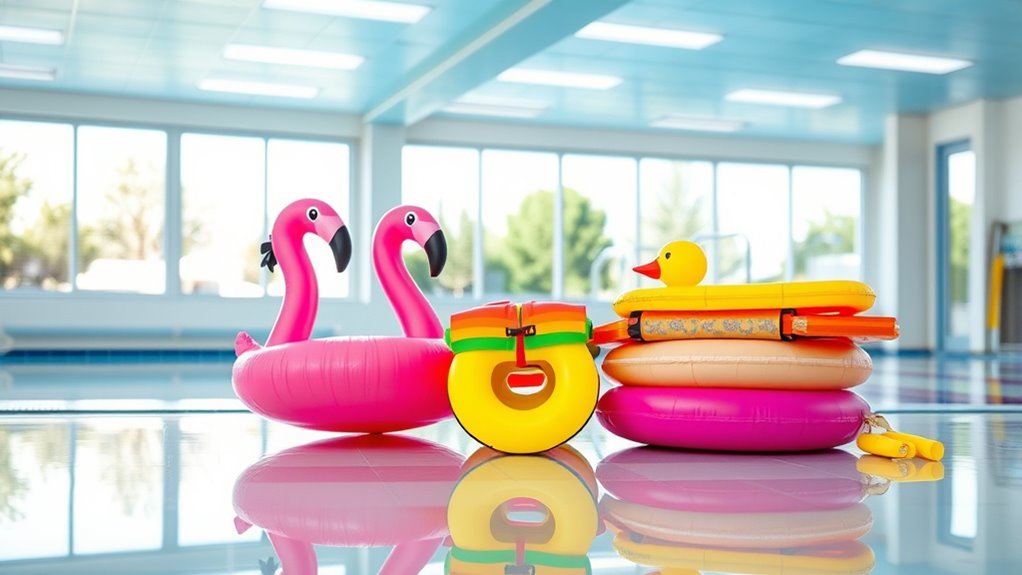
Regulations governing outside floaties and flotation devices in public swimming pools are primarily established by state and local authorities, often enforced by health departments. You’ll find rules that differentiate between public pools—like municipal or commercial facilities—and private residential pools, with public pools typically having stricter standards. Most public pools prohibit personal floatation devices not provided by the facility, especially inflatables, water wings, and toys. Approved devices usually include only U.S. Coast Guard–approved life jackets, which are clearly labeled. Devices with built-in flotation, such as foam suits, are often banned unless explicitly permitted. These restrictions aim to reduce drowning risks, prevent obstructions, and simplify supervision. Enforcement varies by jurisdiction, so checking with local authorities is essential to understand specific rules and compliance requirements. In addition, some jurisdictions allow certain approved devices indoors under specific conditions, but generally, floaties are discouraged or prohibited to ensure swimmer safety. It is also important to recognize that safety standards often evolve, and staying informed about the latest regulations helps maintain compliance.
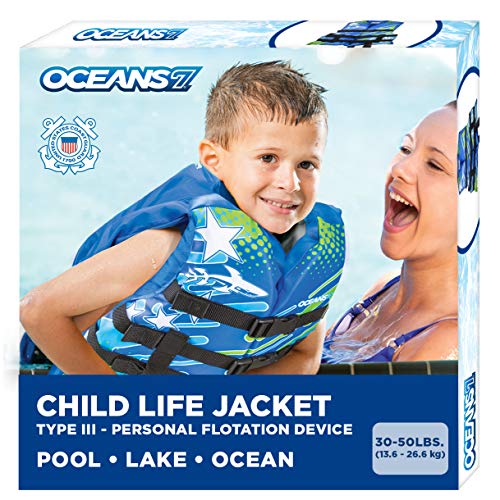
Oceans7 US Coast Guard-Approved, Type III – Kids Life Jacket – Personal Flotation Device with Comfortable Flex-Form-Fit Open-Sided Design – Blue/White
US Coast Guard-approved: Personal flotation device (PFD) passes highest USCG standards and testing; life jackets are labeled for…
As an affiliate, we earn on qualifying purchases.
As an affiliate, we earn on qualifying purchases.
Safety Standards for Neck Floats and Their Compliance
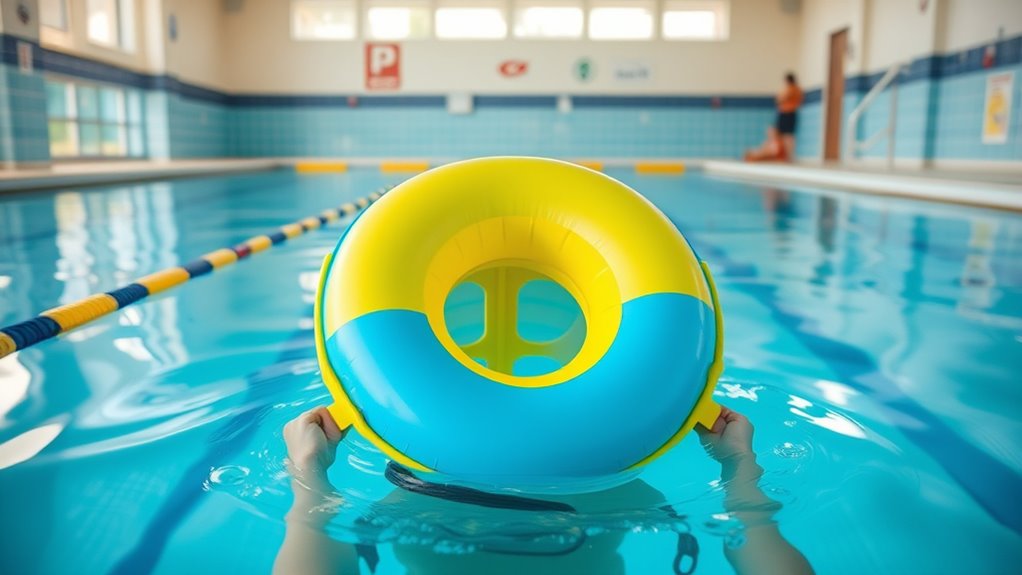
Ensuring the safety of neck floats requires strict adherence to new standards established by the U.S. Consumer Product Safety Commission (CPSC). These standards focus on preventing drowning and injuries by implementing specific safety features. You must guarantee neck floats pass buoyancy tests, providing at least 30% upward buoyancy based on expected weight. Materials used should not lose more than 5% of their initial buoyancy after testing. Clear labeling with warning symbols and instructions on assembly and maintenance are mandatory. Fastening systems must be secure to prevent slipping or accidental release. Neck floats undergo thermal conditioning, leak testing, and restraint system evaluations to verify performance under various conditions. The standards are part of a broader regulatory framework that aims to improve overall product safety. Compliance involves costs for redesign, testing, and certification, impacting small manufacturers and retailers alike. Additionally, understanding the buoyancy requirements helps manufacturers develop products that meet these strict safety standards effectively.

Funscape Pool Floats Chairs Adult, 2 Packs Heavy Duty Inflatable Swimming Pool Lounges, Fabric Floating Hammock Seat, Kid Blow Pool Noodle Lake Raft Floaties, Fun Summer Beach Water Party Game-Stripe
【Upgraded Heavy Duty Materials】Crafted with premium PVC and reinforced by double-stitched Oxford fabric, our pool floats ensure long-lasting…
As an affiliate, we earn on qualifying purchases.
As an affiliate, we earn on qualifying purchases.
Indoor Pool Policies: Approved Flotation Devices and Usage Rules
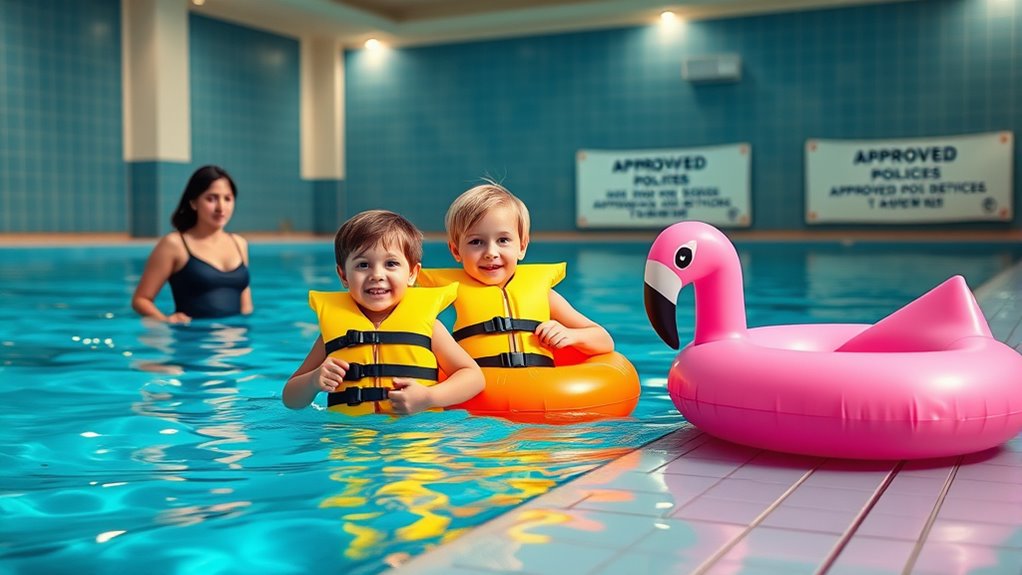
Indoor pool policies specify which flotation devices are approved for use and outline essential safety rules to protect swimmers. Typically, only U.S. Coast Guard-approved life jackets are permitted, and they must be used under adult supervision. Devices like water wings, swim rings, and inflatable toys are not approved substitutes and are generally prohibited. Make sure the life jackets are in good condition, fit properly, and meet safety standards. Always supervise children closely when they wear approved flotation devices, and follow any pool-specific rules, such as designated days for device use. Remember, even with approved devices, never leave children unattended. Regular inspections and proper education on device use help ensure safety and compliance with indoor pool policies. Additionally, understanding approved flotation devices can help prevent accidents and promote safe swimming experiences indoors.

GoFloats Safety Orange Adult Water Wing Floaties – Own The Pool (Novelty USE ONLY)
FLOAT IN STYLE: Turn heads at any pool party
As an affiliate, we earn on qualifying purchases.
As an affiliate, we earn on qualifying purchases.
Risks Associated With Using Floaties in Swimming Pools
While approved flotation devices like life jackets are designed for safety, relying on floaties in swimming pools introduces significant risks. Floaties often give you a false sense of security, making you less vigilant and causing children to overestimate their swimming abilities. Caregivers might reduce supervision, assuming floaties alone prevent drowning. Kids can easily slip out of or remove floaties unnoticed, increasing the chance of submersion. Importantly, floaties do not prevent drowning—they only provide temporary buoyancy. Neck floats have even caused serious injuries and fatalities, leading to stricter safety standards. Relying solely on floaties can delay children’s development of proper swimming skills and water confidence. Plus, floaties can deflate or slip, creating unexpected hazards. Floaties do not provide reliable protection, and constant supervision remains the most effective measure for keeping children safe in pools. Recognizing the importance of water safety education helps prevent accidents before they happen.
Proper Use and Selection of Baby Swim Floats

Choosing the right float size for your baby’s age and weight is essential for safety and comfort. Proper positioning guarantees your infant stays supported and reduces the risk of accidents. Keep water temperature safe and comfortable to help your baby enjoy the experience safely. Additionally, always verify that the float has appropriate safety certifications to ensure it meets safety standards. Ensuring the float’s design quality aligns with safety guidelines can further protect your infant during swim time.
Correct Float Sizing
Selecting the correct size and fit for your baby’s swim float is essential for safety and comfort. Make sure the float matches your child’s age and weight, checking the manufacturer’s guidelines. Adjust straps to ensure a snug fit without being too tight, preventing slips or discomfort. Look for floats with adjustable features, so you can modify the fit as your baby grows. A properly fitting float should support your baby securely and allow free movement without restricting breathing or circulation. Regularly inspect the float for signs of wear, leaks, or damage, and replace it if needed. Always follow the recommended age and weight limits to prevent accidents. Proper sizing ensures your baby remains safe, comfortable, and confident during water play. Additionally, choosing a float with quality materials can help prevent punctures and leaks, ensuring durability and safety.
Proper Positioning Techniques
Proper positioning is essential when using baby swim floats to guarantee safety and effective water learning. Support your baby’s head slightly tilted back to keep their face above water and maintain an open airway. Avoid gripping the head tightly; instead, support lightly under the shoulder blades to allow natural movement without strain. Resting their head gently on your shoulder provides stability during floating exercises. Keep the chin elevated to prevent water intake and promote relaxed breathing. Maintain a horizontal body position from head to toe to ensure buoyancy and natural water flow. Support under the hips and abdomen in a face-down position for practicing front glides and kicks. Consistently positioning your baby flat and extended helps them feel weightless, encouraging relaxation and confidence in the water. Proper positioning techniques are vital for developing water safety awareness and motor skills from an early age. Additionally, understanding water safety principles can further enhance your child’s comfort and security during aquatic activities.
Water Temperature Safety
Ensuring your baby’s safety during water activities starts with paying close attention to water temperature. You should always check the water with your hand before getting in to confirm it’s within a safe range. For infants, pool water should be between 90°F to 100°F to prevent chills and overheating. Cold water can cause rapid heat loss, leading to cold shock, which affects breathing, heart rate, and blood pressure. For babies under six months, pools should be heated to around 86-90°F for comfort. Be aware that public pools are often cooler, so always verify the temperature before entry. Maintaining proper water temperature helps guarantee a safe, comfortable swimming experience and reduces risks associated with temperature extremes. Proper water temperature is crucial in preventing hypothermia or overheating during water activities. Children should learn to swim from a young age to build confidence and safety skills around water.
Safe Practices for Supervision and Equipment in Pool Environments
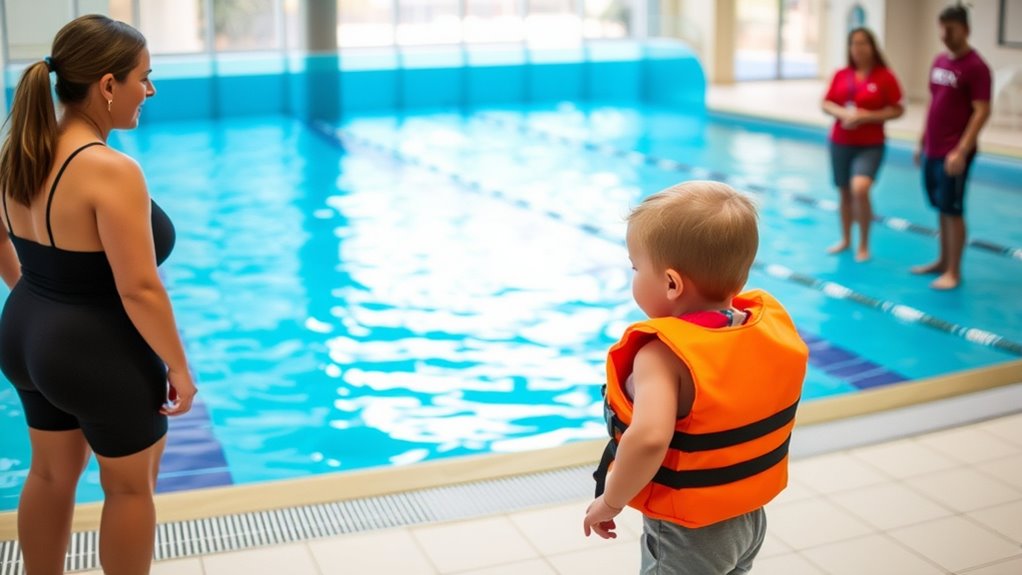
You need to prioritize adult supervision to keep everyone safe in indoor pools, as even brief distractions can lead to accidents. Using approved safety equipment that meets industry standards is essential to prevent injuries and guarantee effectiveness. Regularly monitoring and maintaining your pool environment helps minimize risks and keeps safety measures reliable. Supervision ratios are a key consideration in ensuring safety, even though specific numbers may vary depending on circumstances. Incorporating protective styling benefits into safety protocols can also help ensure that children are less likely to be distracted or harmed by loose or inappropriate accessories.
Adult Supervision Essential
Adult supervision is a critical factor in preventing accidents and ensuring safety around pools. Constant, vigilant monitoring helps reduce drowning risks, especially for children under nine. Whether you’re a parent, grandparent, or caregiver, staying attentive and actively watching swimmers is essential. Designated water watchers can help maintain focus and prevent lapses in supervision. Remember, no one should swim alone, and even adults need oversight. Legal standards vary by location, but most authorities emphasize the importance of continuous supervision. Programs like “Water Watcher” encourage active engagement. By maintaining constant vigilance, you help prevent injuries and fatalities. Data from the Louisiana Department of Health shows that effective supervision, combined with community awareness and proper training, creates a safer environment for everyone enjoying the pool. Additionally, understanding the safe practices for supervision can further enhance pool safety measures and reduce the risk of accidents.
Approved Equipment Standards
Approved equipment standards play a vital role in maintaining safety in pool environments by providing reliable barriers and detection systems. These standards specify the types of fencing, gates, covers, and alarms that are legally accepted. For example, pool barriers must be at least five feet tall, with openings no larger than 4 inches, and gates that open outward, self-close, and self-latch. Safety pool covers must meet ASTM F1346-23 standards, supporting at least 485 pounds to prevent accidental drownings. Exit alarms on doors and windows must comply with UL 2017, alerting you if someone accesses the pool area. Pool alarms must be certified to ASTM F2208, reliably detecting water entry. Ensuring your equipment meets these standards helps protect swimmers and maintain a safe pool environment. Regular maintenance and inspection of safety devices further ensure their effectiveness over time.
Recommendations for Ensuring Child Safety During Water Activities
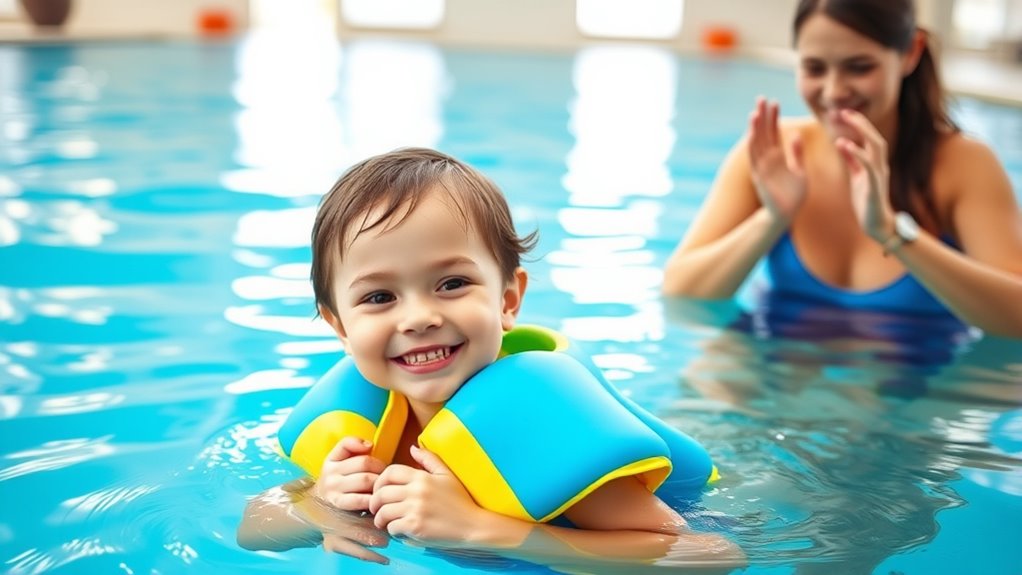
Ensuring child safety during water activities requires proactive measures and vigilant supervision. Always keep a dedicated Water Watcher, an adult responsible for supervising children in the water, and never leave kids unattended. Teach children how to swim, as this markedly reduces drowning risks. Install proper safety barriers, like 4-sided fencing around pools, and use pool alarms and gate alarms to alert you of unauthorized access. Use only U.S. Coast Guard-approved personal flotation devices; avoid relying on outside floaties or inflatables, which are for recreation, not safety. Educate your family about water dangers and community programs that promote water safety skills. Prepare for emergencies by knowing CPR and rescue procedures. These steps create layers of protection, making water activities safer for children. Drowning is the leading cause of injury-related death among children 1-4 years old, so staying vigilant and prepared is crucial for preventing tragedies. Incorporating proper safety equipment significantly enhances overall water safety and peace of mind.
Frequently Asked Questions
Are Floaties Considered Personal Flotation Devices by Safety Authorities?
No, floaties are not considered personal flotation devices by safety authorities. They don’t meet the strict standards required for PFDs, such as certification by organizations like the U.S. Coast Guard. Floaties are mainly used in pools for fun and are not designed for safety in open water or emergencies. For proper water safety, you should use approved PFDs, especially when boating or in open water situations.
Can Floaties Be Used in Public Outdoor Pools Legally?
You can generally use floaties in public outdoor pools if they are U.S. Coast Guard-approved and fit properly. However, many pools have specific rules banning inflatables, including floaties, to guarantee safety and clear visibility for lifeguards. Always check the pool’s posted regulations before bringing floaties, and follow staff instructions. Non-compliance can lead to ejection or loss of swimming privileges, so it’s best to use approved, permitted devices.
What Are the Age Restrictions for Using Neck Floats?
You should think of age restrictions for neck floats as a tightrope walk—balancing safety and development. These devices are typically meant for babies aged 6 weeks to 18 months. During this delicate period, you must closely follow guidelines, ensuring your infant’s safety. Never use them outside this age range, as risks increase markedly. Always supervise, and consider safer alternatives, like parent-supported water play, to keep your baby safe and happy.
Do Approved Floaties Meet Federal Safety Standards?
Yes, approved floaties meet federal safety standards. The U.S. Consumer Product Safety Commission (CPSC) enforces strict requirements for certain aquatic devices, including neck floaties, guaranteeing they perform safely and include proper labeling and instructions. However, not all floaties are federally approved, so you should always check for certification labels. Using certified devices helps protect your child from potential risks and ensures compliance with safety regulations.
Are There Specific Brands Certified for Indoor Use?
Yes, there are specific brands certified for indoor use. Brands like Mustang Survival, Hyperlite, and NRS offer USCG or UL-certified PFDs designed for controlled environments, ensuring safety and compliance. When choosing, look for certification labels indicating suitability for indoor use. These devices pass strict safety tests, making them reliable for indoor pools, aquatic facilities, or any regulated indoor water activity where safety standards are essential.
Conclusion
While some believe outside floaties are banned indoors, many pools allow approved devices for safety. Always check your pool’s policies and verify your floatation device meets safety standards. Proper supervision and correct use are essential for your child’s safety. Trust the guidelines and avoid unapproved floaties to prevent accidents. When in doubt, stick to approved, indoor-safe devices—because the best way to keep your little one safe is by following proven safety practices.