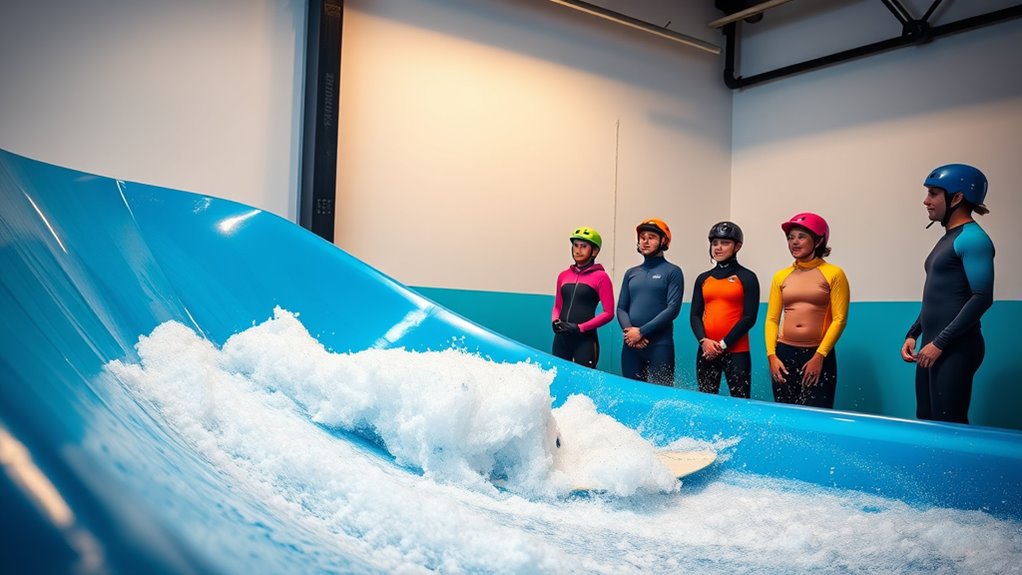

Indoor surf simulators like the FlowRider create a continuous wave by pumping water at high flow rates over a curved surface, mimicking ocean waves. To get started, wear snug swimwear, follow safety checks, and listen to instructions. Maintain proper body position with knees bent, weight on your back foot, and focus ahead. Once comfortable, you can learn basic movements and progress to tricks—keep exploring more tips for a safe and fun ride.
Key Takeaways
- Understand how the FlowRider creates a continuous wave using high water flow for beginner surfing.
- Wear proper, snug-fitting swimwear and use safety gear like wristbands before riding.
- Maintain a centered stance with knees bent, weight on the back foot, and proper body positioning for balance.
- Practice basic movements such as controlled carving, keeping shoulders parallel and extending legs for steering.
- Follow safety checks, listen to safety briefings, and ensure equipment and surfaces are properly maintained for safe fun.
Understanding How the FlowRider Works
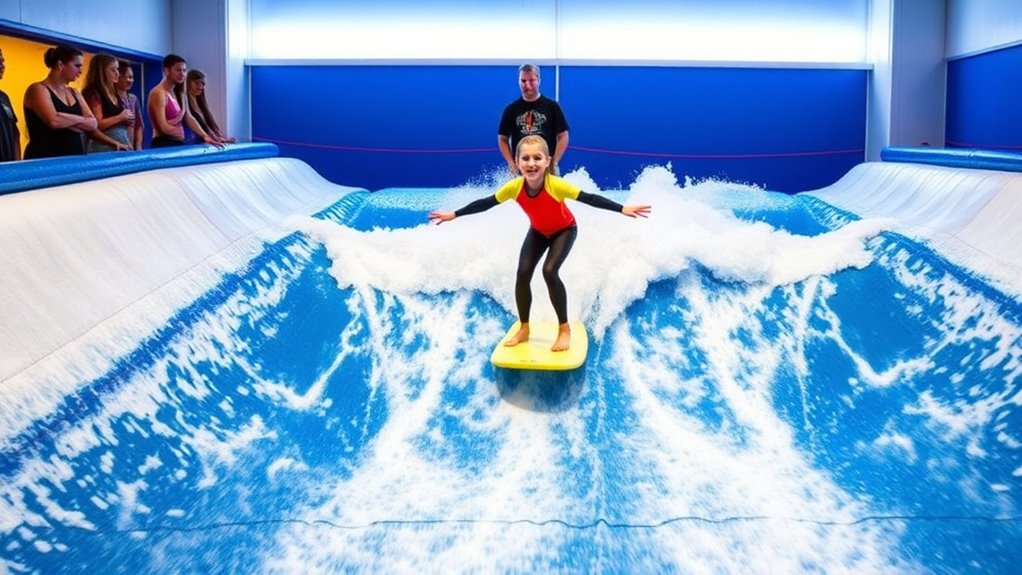
Understanding how the FlowRider works begins with its core technology, which creates a continuous wave by pumping large volumes of water at a high flow rate. It moves 326 gallons of water per minute through a specially designed system, forming a thin sheet over a hill-like shape that mimics an ocean wave. This wave surface can be made from fiberglass or inflatable material, depending on the model. The system requires a power supply of 37-75 kW to operate efficiently. As the water flows over the wave, it generates a smooth, consistent ride that challenges your balance and skill. The water volume in the Snohomish Aquatic Center’s FlowRider, for example, holds over 39,000 gallons, ensuring a steady, engaging experience. This setup provides the foundation for all the exciting riding possibilities. The FlowRider® uses a powerful pump system to circulate water continuously, creating an endless wave for riders to enjoy. Maintaining a high flow rate is essential for sustaining the wave’s shape and ride quality.
Getting Ready: Gear and Safety Tips

Before you hit the surf, make sure you’re dressed in proper swimwear that stays in place and meets safety requirements. Check that you have all necessary safety gear, like wristbands, and confirm your equipment is free of sharp objects or accessories. Taking a few quick safety checks guarantees you’re prepared and can enjoy your ride confidently. Additionally, ensure that your surf simulator equipment has been inspected and is functioning correctly to prevent any unexpected issues during your session for safe operation. Regular maintenance and understanding the optimal angles can help improve your experience and keep you safe while enjoying your time on the simulator.
Proper Attire and Gear
To guarantee a safe and enjoyable experience on indoor surf simulators, it’s essential to wear the right attire and gear. Choose a one-piece swimsuit if you’re female for full coverage and to prevent wardrobe malfunctions. Board shorts are recommended for everyone, with tighter fit preferred for males to avoid losing them during rides. Performance swimwear keeps you secure against waves and wipeouts, while rash guards or quick-drying t-shirts offer extra stability and coverage. Avoid bathing suits with plastic or metal ornaments, as they’re prohibited for safety reasons. Make certain your swimwear fits snugly and comfortably, avoiding loose clothing or accessories that could entangle you. Remember to remove shoes and jewelry before entering the ride zone, and have a towel ready for after your session. Proper attire enhances safety and performance on the simulator. Wearing the correct attire also helps prevent injuries and ensures compliance with safety regulations. Additionally, being aware of precautionary safety measures can further enhance your safety during the activity.
Safety Equipment Essentials
Ensuring you have the right safety equipment is essential for a secure and smooth ride on indoor surf simulators. Proper gear minimizes injury risk and helps you stay safe throughout your session. You’ll need to wear suitable swimwear without sharp objects, and all jewelry or loose items must be removed or secured. Protective footwear isn’t allowed, so go barefoot or wear grip-compatible swim gear. Only one rider is typically permitted on the wave at a time unless divided by a barrier. Here’s a quick overview:
| Safety Gear | Purpose |
|---|---|
| Secure swimwear | Prevents damage and injury |
| Removed jewelry and loose items | Avoids hazards during falls |
| No footwear or grip gear | Ensures proper board control |
| Supervised instruction | Guides safe riding and handling |
Following these essentials safeguards your experience. Safety guidelines also recommend that riders familiarize themselves with the posted rules and listen carefully to safety instructions provided before riding. Additionally, understanding industry trends can help you stay informed about best practices and new safety innovations.
Pre-Ride Safety Checks
Preparing for your indoor surf session starts with a thorough pre-ride safety check to guarantee all equipment and conditions are ideal. Begin by inspecting the ride surface for tears, delamination, or dirt, and address any issues immediately. Check the nozzle flaps for tears, cuts, or frayed seams, reporting problems to professionals. Ensure the tension of the ride surface is correct; a “crown” or bump indicates proper tension. Confirm that the exit area is soft and safe, with well-protected water exit points. Verify that the wave operator is competent and trained. Finally, review safety procedures with staff and ensure all safety equipment is in place. Conducting these checks helps prevent accidents and ensures a smooth, safe experience for everyone. Regular visual inspections help identify minor issues early, reducing the risk of larger problems during your session. Additionally, performing preventative maintenance on equipment can extend its lifespan and maintain optimal performance.
Entry Techniques for Beginners

To start riding, focus on your drop-in technique by placing the board just ahead of the wave’s curve and staying close to the current for better control. Keep your body centered and bent at the knees, with most weight on your back foot, to maintain balance and stability. Remember, smooth movements and proper positioning are key to shifting confidently from entry to riding. Understanding how the Wave operates during your initial practice can help you anticipate the flow and improve your overall control. Paying attention to wave dynamics can enhance your ability to adapt to different surf conditions and boost your confidence on the FlowRider.
Proper Drop-in Technique
Mastering the proper drop-in technique is essential for beginners to ride confidently and safely. To do this, start by positioning your feet correctly: front foot square on the board’s edge and back foot at the tail for control. Keep knees slightly bent and feet spread for shock absorption. Align the board with the wave’s crest to prevent catching downhill edges, and face shoulders forward, parallel to the water jet. Approach steadily, either by pushing from a squat or stepping onto the board from the side. Dive forward, landing stomach-first, with weight balanced—more on the back foot to avoid nosediving. Maintain elbows on the sides for control. Practice this sequence to build fluidity and confidence. Understanding proper body positioning is crucial for maintaining balance and safety on the FlowRider.
Body Positioning Essentials
Approaching the board with proper body positioning sets the foundation for a safe and controlled ride. Keep your board held evenly, with both hands gripping firmly and elbows resting comfortably. Stay centered, avoiding leaning too far forward or back, and keep your head up, eyes focused straight ahead to anticipate flow. Extend your legs straight back, letting your feet touch the water, serving as rudders for steering. Engage your arms without locking elbows to allow flexibility for shifting weight. When entering, bend your knees slightly, face directly into the flow, and lower onto the board gradually. Distribute your weight evenly across your chest, hips, and thighs. Maintain a steady gaze forward to help with balance, and make small, gentle movements to steer and control your direction. Being aware of water flow dynamics can help you better anticipate how to adjust your stance and movements for a smoother ride.
How to Find Your Balance on the Wave
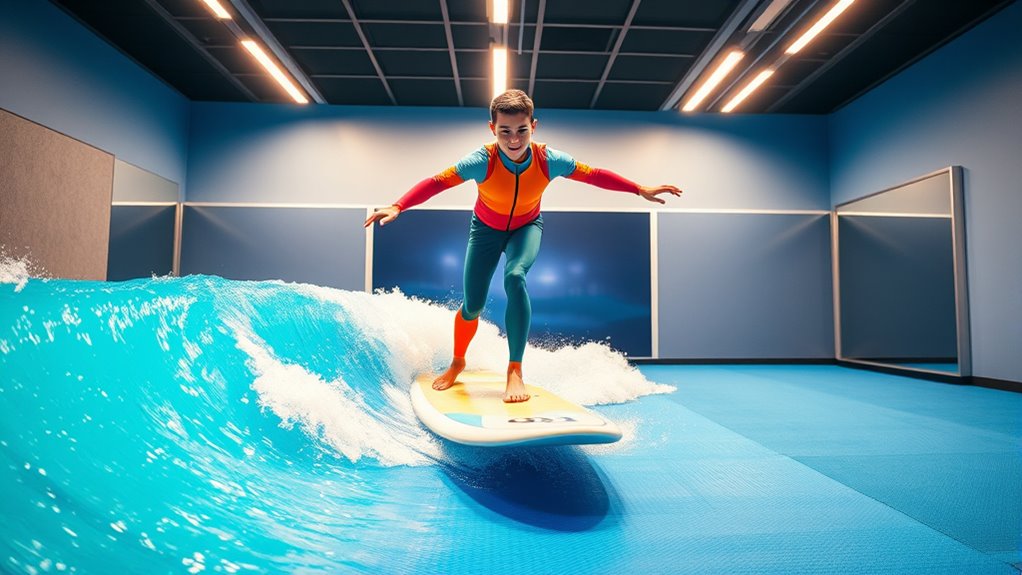
Finding your balance on the Wave requires paying close attention to how you distribute your weight and position your body. You should keep about 80% of your weight on your back foot for stability, and keep your shoulders parallel to the water flow to avoid falling. Once balanced, rotate your shoulders slightly to initiate turns. To move backward, lower your center of gravity by sitting back on your heels; to go forward, shift weight onto your toes and stand taller. Focus on engaging your core and stabilizer muscles, which helps react to the wave’s shifting surface. Maintain visual focus on a distant point, and keep your body relaxed yet responsive. Use these key ideas to find and stay in the wave’s “sweet spot” for better control. Paying attention to your body positioning ensures you stay balanced and agile on the wave.
Basic Movements and Riding Positions

To ride effectively on an indoor surf simulator, you’ll need to adopt proper basic movements and riding positions. Start with a shoulder-width stance for stability, keeping most of your weight on the back foot to maintain control. Your body should be aligned with your shoulders parallel to the water flow, and your front foot should be positioned forward, near the nose of the board, with the back foot near the edge for better control. Use your hands for balance and steering. Focus on steering by shifting your feet, leaning into turns, and adjusting your stance for speed and balance. Remember, relaxing helps maintain control. Here’s a quick guide:
| Movement/Position | Key Point |
|---|---|
| Stance | Shoulder-width, stable |
| Weight Distribution | Mostly on back foot |
| Body Alignment | Shoulders parallel to water flow |
A proper stance enhances stability and control on the simulator.
Progressing to Advanced Tricks and Turns
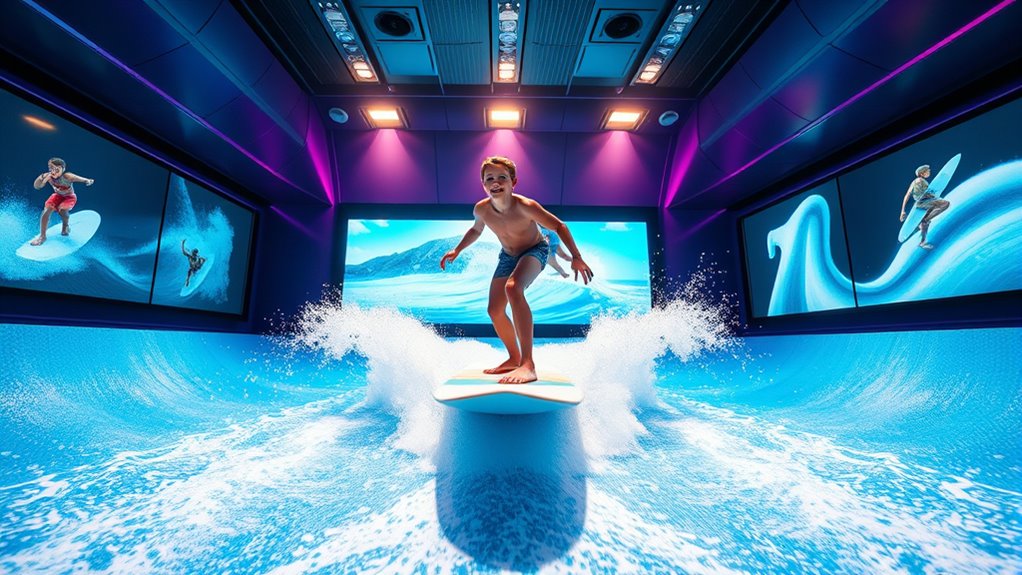
Mastering advanced tricks and turns on an indoor surf simulator requires you to develop precise control and smooth execution. To progress, focus on mastering carving techniques by making controlled, flowing turns that balance speed and control. As you improve, explore trick variety, including ollies, tail slides, kickflips, and aerials. Proper body positioning is essential; keep knees low and use your hands to guide the board. Consistent practice helps build muscle memory, making tricks feel more natural. Additionally, adaptability is key—adjust to different wave conditions and board behaviors to execute tricks confidently.
- Practice carving with gradual intensity
- Experiment with various tricks like ollies and flips
- Maintain proper body positioning
- Repetition to build muscle memory
- Adjust to wave and board variations
Tips for Enjoying Your Ride Safely
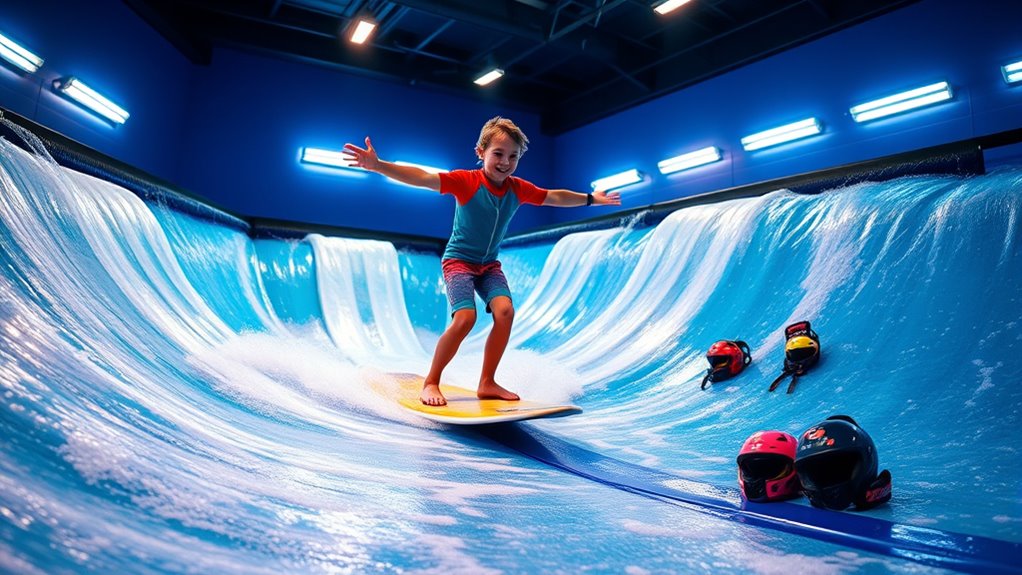
Ensuring a safe and enjoyable ride on an indoor surf simulator involves paying close attention to safety equipment and proper procedures. Before riding, check that the pillow padding and tensioned surface are in good condition, and inspect nozzle flaps for damage. Always wear proper swimwear to prevent injuries from zippers or buckles. Follow all venue rules, including height, weight, and health restrictions, and listen carefully to safety briefings from ride attendants. Make sure you’re physically capable of handling the activity, and consider taking instruction if you’re a beginner. During your ride, stay alert, avoid sudden movements, and respect the single rider policy to prevent collisions. Proper preparation and attentiveness help reduce risks, ensuring a fun, safe experience on the FlowRider. Additionally, understanding personal safety management strategies can help you stay mindful of your limits and enjoy the activity responsibly.
Frequently Asked Questions
What Is the Minimum Age to Try the Flowrider?
The minimum age to try the FlowRider varies by location but is generally 4 years old at some land-based venues and 6 years old on Royal Caribbean ships. You should check the specific venue’s policies before your visit, as rules may differ. Remember, children under 13 on Royal Caribbean need an adult’s supervision, and everyone must attend a safety briefing before riding.
How Long Can I Typically Ride on One Session?
You can typically ride on a FlowRider session for about 45 seconds to 2 minutes, depending on your skill level. Sessions often last between 30 minutes and an hour, giving you multiple rides within that time. Keep in mind, the exact duration varies by venue. During your session, you’ll get instructions and safety briefings to make sure you have a fun, safe experience on the water.
Are There Any Health Considerations or Restrictions?
You should consider your health before riding, especially if you have heart issues, recent surgeries, nervous disorders, or joint problems. Pregnant women are advised against participating due to physical stress and injury risk. If you have back or neck issues, or if you’re not a confident swimmer, it’s best to avoid the FlowRider. Always follow safety guidelines, and get medical clearance if you’re unsure about your health suitability.
Can I Use My Own Surfboard or Bodyboard?
You generally can’t use your own surfboard or bodyboard on a FlowRider. These simulators provide their own boards designed specifically for safety and compatibility. Personal boards may not fit properly or could pose safety risks. Plus, using the provided equipment guarantees everyone adheres to safety standards. So, stick to the boards supplied at the venue to enjoy your experience safely and without issues.
How Do I Progress From Beginner to Advanced Tricks?
Are you ready to take your flowboarding to the next level? To progress from beginner to advanced tricks, focus on mastering fundamental skills first. Practice combining tricks in sequences, experiment with different wave zones, and learn advanced turns like spins and drop knees. Watch other riders, seek coaching, and push your limits safely. Consistent practice and patience will help you develop your unique style and unleash new tricks confidently.
Conclusion
Now that you know the basics, you’re ready to hit the FlowRider with confidence. Remember, nearly 70% of beginners improve their balance within the first few sessions, so practice makes perfect. Keep safety in mind, enjoy every ride, and don’t be afraid to try new tricks as you gain confidence. With dedication, you’ll be surfing those indoor waves like a pro in no time. Happy riding!