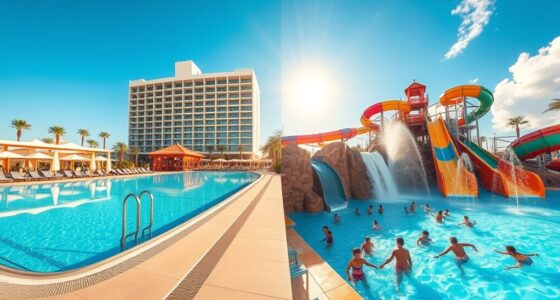

At resort water parks, you can usually take personal photos but need approval for professional shots. Cameras and phones are restricted on rides for safety, and equipment like tripods or selfie sticks may be banned. Always follow signage and staff instructions to avoid safety issues or privacy violations. Permits are required for commercial photography, with certain restrictions on drone use and private areas. If you want to know more, continue exploring the rules and guidelines to keep your experience safe and fun.
Key Takeaways
- Personal photography is generally permitted, but commercial shoots require prior approval and permits with insurance documentation.
- Cameras, smartphones, and recording devices are not allowed on rides for safety reasons; equipment restrictions include selfie sticks and drones.
- Resort staff enforce privacy and safety rules, prohibiting photography in private areas like restrooms and locker rooms.
- Use of professional equipment or drones needs written permission and may involve processing fees and insurance requirements.
- Guests automatically consent to being photographed or recorded for promotional use, with restrictions in certain areas to protect privacy.
General Guest Photography Policies
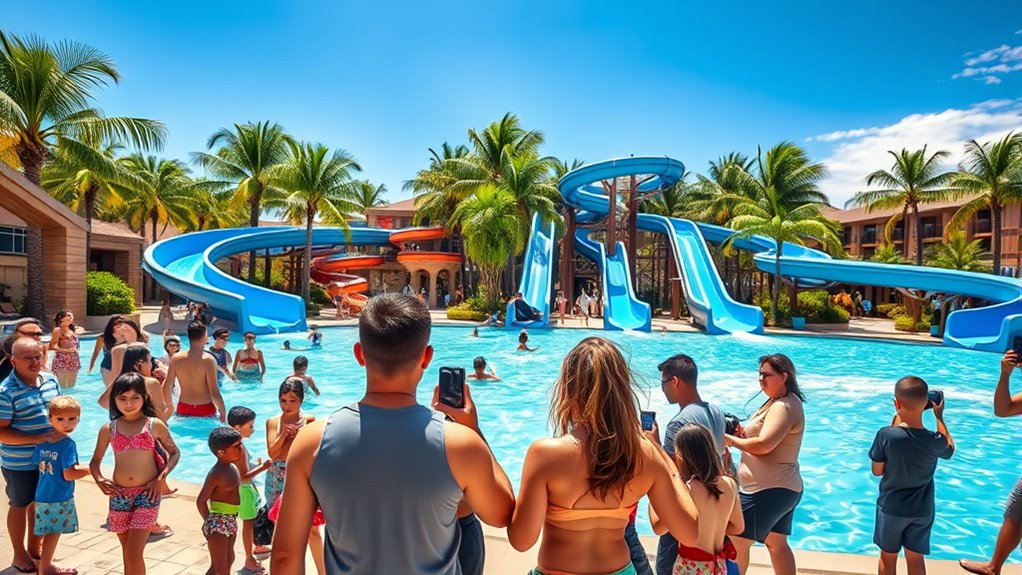
When visiting resort water parks, it’s important to understand their guest photography policies to avoid any issues. Most resorts allow you to take photos and videos for personal use, but commercial photography is usually off-limits without prior approval. Equipment restrictions are common—tripods, monopods, and detachable lenses may be prohibited to guarantee safety and smooth operations. Resorts like Island H2O reserve the right to use guest images for promotional purposes without compensation, so be aware your photos might be used in marketing materials. Each resort has its own rules; for example, Disney World permits large cameras but with some limitations. Always check specific policies before taking photos to respect the rules and avoid potential expulsion or other consequences. Be aware that privacy and cookie policies may also affect how your images are handled and used by the resort.
On-Ride Photography Restrictions
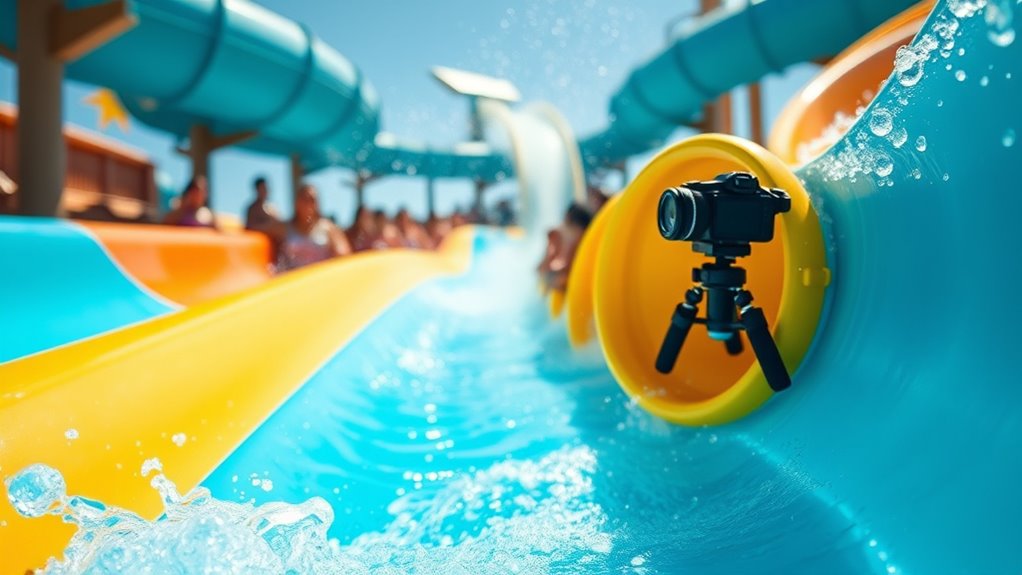
On-ride photography restrictions are strictly implemented at major theme and water parks to guarantee guest safety and prevent accidents. You aren’t allowed to bring cameras, phones, or recording devices onto rides, including GoPros or mounted cameras, because loose articles can become dangerous projectiles during high-speed or water rides. Violating these rules often results in immediate removal from the park, no refunds, and even legal consequences. Parks enforce these bans consistently, regardless of ride type or duration, focusing on safety and liability. While some slow or non-intense rides may permit limited photography if devices are secured, high-intensity rides strictly forbid on-ride filming. Park staff actively monitor and enforce these policies to prevent injuries, ride disruptions, and ensure a safe environment for everyone. Safety protocols are emphasized to protect guests from potential hazards posed by unsecured devices during rides.
Equipment Limitations and Safety Protocols
To guarantee guest safety and smooth park operations, water parks strictly regulate the types of equipment allowed and enforce specific safety protocols. Cameras mounted on vehicles, drones, carts, or scooters are strictly prohibited. No cameras of any kind, including smartphones, are allowed on rides at any time—this rule has no exceptions. Selfie sticks, monopods, and extension poles are also forbidden to prevent obstructions and injuries. Recreational devices like drones, remote-controlled gadgets, and laser pointers are banned for safety reasons. If you wish to use personal photography equipment, it must be within park rules—tripods and monopods are permitted if they fit inside a backpack and don’t block pathways, but not on rides. Unauthorized use of professional gear may lead to removal without a refund. Adherence to safety protocols is essential to ensure a secure environment for all visitors.
Commercial Photography Regulations
Obtaining a written permit is a mandatory step before conducting any commercial photography at resort water parks. You should submit your application at least three working days in advance, and be prepared to pay processing fees ranging from $45 to $150, depending on the park’s policies. Special permits are required for videography or other activities, often involving similar fees. Some parks issue annual photographer badges for easy verification, but approval is not guaranteed. Final decisions depend on potential impacts on guests, safety, and resources. You must also provide a Certificate of Insurance with at least $1 million in liability coverage, naming the park as an additional insured. Use of drones, large equipment, or filming on rides typically requires explicit approval and strict adherence to content restrictions. Insurance requirements vary depending on the park’s specific regulations and the scope of the project. Additionally, parks may have specific restrictions on acceptable content to ensure guest enjoyment and safety.
Privacy and Security Considerations
Guest privacy and security are top priorities at resort water parks, and understanding the policies around photography and recording is essential. When you enter the park, you automatically agree that the park can photograph, record, or video you without additional consent, often for promotional use worldwide and in perpetuity. This includes minors, with guardians also granting rights. The park may broadcast live or near-live footage that includes you without prior notice. Restrictions are common in private areas like restrooms and locker rooms, and the use of drones or aerial devices is typically prohibited. Safety is a priority—restrictions on equipment during rides prevent injuries, and staff enforce rules to protect everyone’s well-being. Always be mindful of other guests’ privacy and avoid obstructing views or capturing images without permission. Park policies are regularly reviewed to ensure the safety and comfort of all visitors. Additionally, understanding payment processing security measures can help you recognize legitimate transactions and protect your financial information during purchases at the park.
Permissions for Professional and Event Photography
Before you hire a photographer or plan an event, you need to get prior approval from the resort. They’ll also require credential verification to guarantee the photographer is authorized to work on-site. All commercial photography and videography, including event coverage, must be approved in advance by the Sea Island Marketing team. Failing to follow these procedures can result in potential side effects such as denied access or removal from the premises.
Prior Approval Required
Most resort water parks require you to secure a special use or photography permit before conducting any professional or event photography. You must submit a formal application several weeks in advance, including detailed location plans, shoot descriptions, and proposed dates and times. Application fees typically range from $45 to $150 and are usually non-refundable. Many parks also require a Certificate of Liability Insurance with at least $1 million coverage, naming the park as an additional insured. If your shoot involves tents, lighting, scaffolding, or staging, additional approvals are often necessary. Commercial photography generally requires prior approval, especially if it involves payment or profit. Without proper authorization, your shoot could be disallowed or interrupted, so always secure the necessary permits beforehand. Recent changes in filming regulations now make it easier for small crews to film without permits, but these exceptions typically do not apply to professional or commercial shoots at water parks. It is also important to familiarize yourself with permit application procedures to ensure compliance and avoid potential issues during your shoot.
Credential Verification Needed
To conduct professional or event photography at water parks, you need to validate your credentials with the park’s management first. You’ll be required to present valid professional credentials or a portfolio showcasing experience in water park or event photography. Verification often involves submitting a business license, proof of insurance, and references from similar venues. Some parks may demand third-party agreements or contracts confirming your authorization to shoot commercially. Additionally, verifying memberships or certifications related to professional photography helps help ensure compliance. Permissions also include obtaining explicit approval from park management, especially for commercial shoots, and clarifying licensing terms for image use. For large events, proof of event insurance and understanding of guest privacy rules are scrutinized. Outside photographers must provide proper documentation and authorization to work at the venue. Obtaining the necessary permits is essential to avoid legal complications and ensure a smooth photography session. Furthermore, understanding ethical standards in photography is crucial to maintain professionalism and respect guest privacy during shoots.
Tips for Enjoying Personal Photography Safely
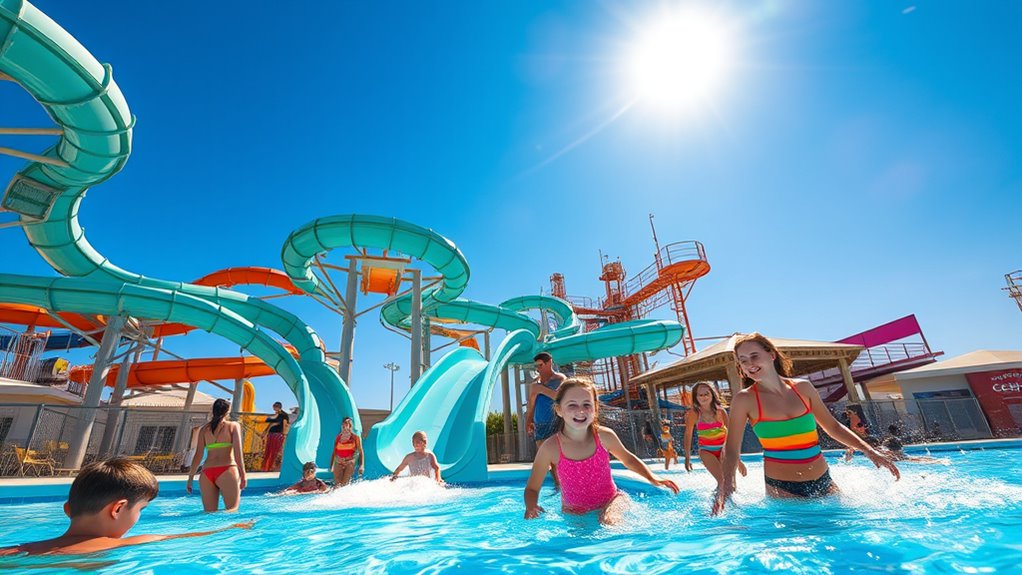
Enjoying personal photography at water parks can be fun, but it’s important to prioritize safety and respect park rules. Always avoid recording in areas like wave pools or near water rides where slips or falls are common. Leave selfie sticks and large equipment at home—many parks ban these to prevent injuries and water damage. Be mindful of attire; avoid slides with zippers or rivets that could cause injuries during photos. Remember, park staff can refuse photography if safety or privacy is at risk. Keep a close eye on your camera gear to prevent dropping it into water or causing distractions. Follow signage and staff instructions, especially regarding ride photography restrictions. Many parks also have specific policies regarding photography, so checking these beforehand can help avoid misunderstandings. By staying cautious and respectful, you can capture memories safely and enjoy your day without incident. Being aware of personal safety considerations can help ensure a fun and secure experience for everyone.
Frequently Asked Questions
Can I Use a Gopro on Water Rides With Management Approval?
Yes, you can use a GoPro on water rides if you get management approval. Make sure your camera is securely fastened with safety straps or mounts to prevent losing it or causing injuries. Always check specific park policies beforehand, as rules vary. Remember, even with approval, staff may enforce restrictions depending on safety concerns. Confirming in advance guarantees you can capture your experience without issues.
Are Drone Cameras Allowed in the Water Park for Photography?
Drones are generally not allowed in water parks, like an uninvited guest crashing a private party. You won’t find permission to fly a drone camera there, as safety and privacy concerns take precedence. Most parks enforce strict bans, and attempting to use one could lead to removal or legal issues. Instead, enjoy taking photos with your smartphone or camera in designated areas—it’s a safer, more respectful way to capture your fun.
What Happens if I Violate On-Ride Camera Restrictions?
If you violate on-ride camera restrictions, you risk being ejected from the park, facing staff intervention, and having your device confiscated. Repeated violations could lead to legal action or fines, depending on the park’s policies. To avoid these consequences, follow all posted rules and listen to staff instructions. Respecting the restrictions helps guarantee your safety and a positive experience for everyone.
Do Guests Need Permission to Take Photos During Special Events?
Yes, you typically need permission to take photos during special events. It’s important to check with the event organizers or venue management beforehand, as they often have specific rules and may require permits. Taking photos without authorization could disrupt the event or violate privacy rules. Always coordinate with staff, respect restrictions, and follow their guidance to ensure you capture memories legally and without issues.
Are There Designated Areas for Photography Within the Park?
Yes, there are designated spots for photography—because apparently, capturing your epic slide wipeout or perfect sunset shot isn’t enough without a curated backdrop. You’ll find these spots marked on park maps or apps, often featuring themed backgrounds or scenic vistas. Stick to these zones, or risk the wrath of privacy guards or park staff. Use the right lens, and enjoy snapping memories without crashing the official photo party.
Conclusion
Remember, respecting the water park’s photography rules keeps everyone safe and happy—no need to channel your inner paparazzi or break out a vintage Polaroid in the splash zone. Follow the guidelines like a trusty knight guarding the kingdom, and you’ll capture memories without causing chaos—think of it as avoiding an unintended “Jurassic Park” chaos scene. By staying mindful, you’ll enjoy snapping photos as effortlessly as a modern smartphone, making your day memorable and fuss-free.