To shock your saltwater pool, first test and adjust the water chemistry, ensuring proper pH, alkalinity, and salt levels. Clean debris from the pool and select a chlorine or non-chlorine shock suitable for saltwater systems. Dissolve the shock in warm water and pour it evenly around the pool while the pump runs. Keep monitoring chlorine levels and adjust as needed, and if you want to learn more about safe and effective shocking techniques, continue exploring detailed steps.
Key Takeaways
- Test and adjust salt levels to ensure proper salt concentration before shocking the pool.
- Choose an appropriate chlorine shock (e.g., calcium hypochlorite) compatible with saltwater systems.
- Dissolve the shock in warm water and pour it slowly around the pool perimeter, keeping the pump running.
- Calculate the correct amount of shock needed based on your pool’s volume and target chlorine levels.
- After shocking, run the filter and test chlorine levels to ensure they are safe for swimming (below 3 ppm).
Assessing Water Chemistry and Pool Volume
To effectively shock your saltwater pool, you first need to assess its water chemistry and volume accurately. Start by testing salt levels with strips, digital meters, or reagent kits designed for salt measurement, ensuring readings are in ppm. Check other key parameters like pH, alkalinity, calcium hardness, and cyanuric acid, using appropriate testing methods at a consistent depth—around 18-20 inches below the waterline—and avoiding surface contamination. Accurate salt measurement is vital: too low hampers chlorine production, while too high risks equipment damage. Properly maintaining water chemistry helps prevent issues like scaling or corrosion and ensures your pool operates efficiently. Next, determine your pool’s volume by measuring length, width, and depth, then applying the correct formula for its shape. Precise volume calculation ensures you add the right amount of chemicals, making your shock treatment effective and safe. Additionally, properly measuring salt levels helps maintain the longevity of your salt chlorine generator and ensures optimal chlorination.
Cleaning and Preparing Your Pool
Start by removing any debris from the pool surface and bottom to keep the water clean and prevent clogs. Make sure your water chemistry is balanced by testing and adjusting pH, alkalinity, and other levels as needed. Once your pool is clear and balanced, you’ll be ready to shock and sanitize effectively. Additionally, ensure your pool’s filtration system is functioning properly to maintain optimal water quality during the shocking process, which can be supported by appropriate filtration units.
Remove Debris Thoroughly
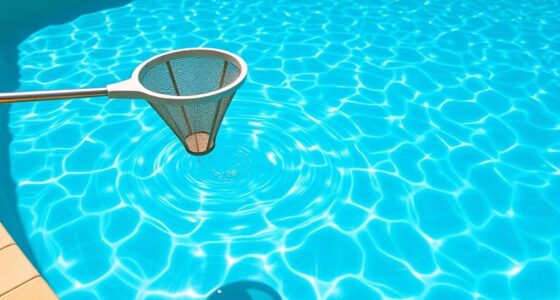
Wondering how to guarantee your shock treatment works effectively? The key is thorough debris removal. Begin by skimming the pool surface with a net or skimmer to eliminate leaves, insects, and floating debris. Clean out skimmer and pump baskets to maintain ideal circulation. Use a leaf rake or net to clear larger debris, preventing clogging of your filtration system. Next, brush the pool walls, steps, and floor to dislodge algae and dirt, especially in areas with visible stains. After brushing, vacuum the pool bottom to remove loosened organic material and prevent it from consuming chlorine. Proper debris removal enhances chemical effectiveness and prevents clogging, which is crucial for a successful shocking process. Rinsing accessories and removing floating objects also help prevent chemical interference, ensuring your shock treatment is as effective as possible.
Balance Water Chemistry
Maintaining proper water chemistry is essential before shocking a saltwater pool, as it guarantees that your chemicals work effectively and safely. To do this, you need to test and adjust key parameters:
- Regularly test water for pH, alkalinity, chlorine, cyanuric acid, calcium hardness, and salt levels using test kits or strips.
- Keep pH between 7.4 and 7.6 to optimize chlorine efficiency and swimmer comfort.
- Maintain total alkalinity between 80 and 120 ppm to buffer pH and protect your salt cells.
- Monitor cyanuric acid levels, aiming for 30-50 ppm, and ensure calcium hardness stays within 200-400 ppm. Proper balance prevents scaling, corrosion, and ineffective sanitation.
- Accurate chemical balance helps ensure the shock treatment is effective without causing damage to pool equipment or water quality. Regularly checking and adjusting these parameters can also extend the lifespan of your pool’s salt cells and other equipment.
Choosing the Right Shock Treatment for Saltwater Pools
When choosing a shock treatment, you need to think about whether chlorine or non-chlorine options best fit your pool’s needs. Specialty shocks can target specific issues like scale or organic buildup, helping you customize your approach. Additionally, the level of contamination determines which type of shock will be most effective and safe to use. Heavy usage or contamination levels also influence your choice, as more severe issues may require a more potent or specialized shock treatment. Incorporating tuning techniques can further optimize your pool’s chemical balance and overall performance.
Chlorine vs. Non-Chlorine
Choosing the right shock treatment for your saltwater pool depends on understanding the differences between chlorine and non-chlorine options.
- Chlorine shocks like sodium dichlor add chlorine, stabilize it with cyanuric acid, and quickly combat algae and bacteria. They dissolve fast, don’t leave residue, and require about 24 hours before swimming. They also contribute to increasing cyanuric acid levels over time, which may necessitate additional water balancing.
- Non-chlorine shocks (MPS) oxidize organic contaminants without introducing chlorine or affecting salt levels. They act swiftly, often allowing swimming in just 15 minutes, and leave no chemical odor.
- Chlorine shocks such as calcium hypochlorite are generally not recommended for saltwater pools due to calcium buildup and potential equipment damage.
- Non-chlorine shocks help maintain water clarity without raising CYA or salt levels, making them safer for frequent use and equipment longevity.
Specialty Shock Options
Maneuvering the world of saltwater pool shocks can be confusing, especially since there are no specific “saltwater” shock products on the market. Most shocks are designed for traditional pools, so choosing the right option depends on your pool’s chemistry. Calcium Hypochlorite (Cal-Hypo) isn’t recommended because it can cause calcium scaling, damaging your salt cell. Sodium Dichlor shock is a better choice—it dissolves quickly, leaves no residue, and contains stabilizer to protect chlorine from UV breakdown, making it compatible with salt systems. Potassium Monopersulfate (MPS) offers rapid oxidation without adding chlorine, CYA, or calcium, making it ideal for quick fixes and minimal impact on your saltwater chemistry. Always test water before and after shocking to maintain suitable balance and system health. Understanding the chemical interactions can help prevent issues like scale buildup or corrosion and ensure your saltwater system remains in optimal condition. Additionally, proper maintenance is essential for avoiding long-term damage to your pool components.
Contamination Level Considerations
Contamination levels in your saltwater pool directly influence the amount of shock needed to restore water quality. The severity of contamination determines the chlorine target you should aim for. Proper chemical monitoring is essential for assessing these levels accurately. 1. For routine maintenance, a chlorine level of 1–3 ppm handles typical contaminants like sweat and organic debris. 2. Foul-smelling or irritating water requires about 10 ppm to restore clarity and comfort. 3. To prevent algae growth, keep chlorine between 3–5 ppm proactively. 4. Severe issues like algae, chloramines, or pathogens demand around 30 ppm for breakpoint chlorination. Additionally, understanding oxidation-reduction potential (ORP) can help gauge the effectiveness of your shock treatment. Adjust shock dosage based on contamination severity, always testing water before and after to guarantee proper sanitization. Following these guidelines helps maintain clear, safe water in your saltwater pool.
Properly Applying the Shock Product
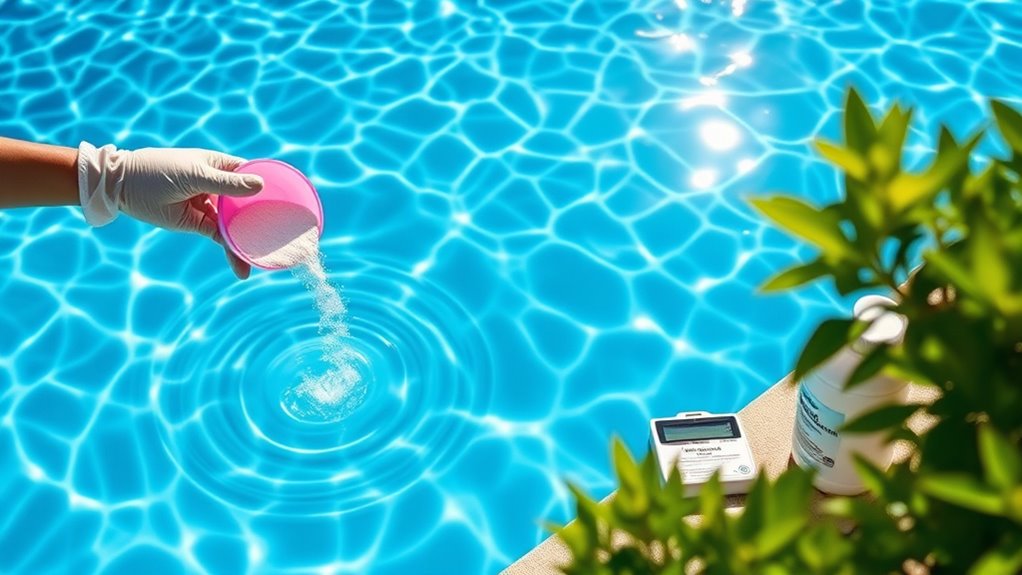
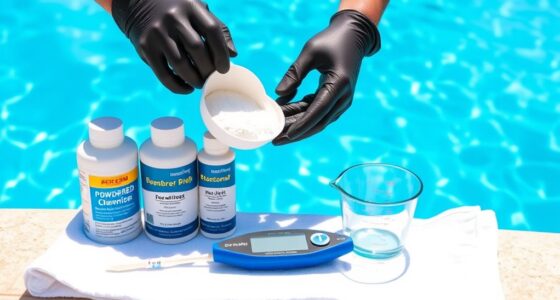
To properly apply the shock product, start by reviewing the manufacturer’s instructions carefully to guarantee correct usage. Some shock products require pre-dissolving in warm water; others can be added directly to the pool. For pre-dissolving, fill a bucket three-quarters full with warm water, add the shock, and stir until dissolved. If adding directly, pour the product slowly around the pool’s perimeter, walking evenly to ensure uniform distribution. Avoid adding shock directly to the skimmer to prevent equipment damage. Make sure the pool pump and filter are running during and after application—typically 6–12 hours for chlorinated shocks. Proper chemical balancing is essential to ensure the shock works effectively and to prevent any damage to your pool equipment. Additionally, maintaining proper water chemistry can help maximize the effectiveness of shock treatment and maintain a healthy pool environment. Always wear protective gear, and ensure pH levels are balanced beforehand for maximum effectiveness. Follow manufacturer guidelines on when the pool is safe to swim again.
Calculating the Correct Shock Dosage

Accurately calculating the right shock dosage guarantees your pool gets properly disinfected without wasting chemicals or risking swimmer discomfort. To do this effectively:
Proper shock dosing ensures effective disinfection without chemical waste or swimmer discomfort.
- Determine your pool’s volume using its dimensions and the appropriate formula for rectangular or round pools.
- Test your CYA level and calculate the target free chlorine (FC) level—about 40% of CYA for shocking.
- Decide on your shock product’s strength, whether granular or liquid, and note its chlorine percentage.
- Use a shock calculator or formula to find the precise amount of chlorine needed to reach your target FC level, based on your pool volume and product strength. Accurate measurements are essential to ensure proper sanitation and avoid over- or under-treatment. Additionally, understanding proper shock application techniques can help maximize effectiveness and safety.
Following these steps ensures a safe, effective shock treatment every time.
Timing and Frequency for Shocking

Maintaining the right shocking schedule is essential for keeping your saltwater pool clean and balanced. Generally, shock every 2 to 4 weeks to prevent bacteria and algae buildup. During peak season, shock weekly to ensure sanitizer effectiveness. Adjust based on usage: weekly for daily swimmers, biweekly for occasional use. Remember to shock at opening and closing to start and end with clean water. After heavy rain, windstorms, or heatwaves, shock again to remove contaminants and restore balance. Use the following schedule as a guide: safety precautions.
| Frequency | When to Shock | Additional Shocks |
|---|---|---|
| Every 2-4 weeks | Regular maintenance | After heavy weather or events |
| Weekly (peak season) | During high use | When water shows signs of contamination |
| Opening/Closing | Start and end of season | After contamination incidents |
Ensuring Safe Post-Shock Conditions

After you’ve completed shocking your saltwater pool, it’s important to make certain the water is safe for swimming before anyone gets back in. First, test the free chlorine level using test strips or liquid kits; it should be 3 ppm or less. Second, check your pH and alkalinity, ensuring pH is around 7.4-7.6 and alkalinity is between 100-150 ppm for proper water balance. Third, verify calcium hardness and adjust if necessary to avoid damage to the pool surfaces. Fourth, run your pump and filter continuously until chlorine levels drop to safe levels, and keep filters clean. This process helps prevent skin and eye irritation, respiratory issues, and damage to your pool equipment. Additionally, monitoring water temperature can help ensure the chlorine residual stabilizes properly and that the water remains comfortable for swimmers. Regular testing of water parameters ensures the overall pool health remains optimal for safe swimming conditions.
Maintaining Water Balance After Shocking

Because shocking can temporarily disrupt your pool’s chemical balance, it’s essential to re-establish proper water chemistry promptly. First, test your pH immediately after shocking and regularly check it over the next few hours or days. Adjust pH using sodium carbonate to raise or muriatic acid or sodium bisulfate to lower it, aiming for 7.4 to 7.6. Keep an eye on total alkalinity, which should stay between 80 and 120 ppm; add baking soda if too low or acid if too high. Retest calcium hardness, keeping it between 200 and 400 ppm, and adjust with calcium chloride if needed. Finally, check cyanuric acid levels, maintaining 30–100 ppm. Properly balanced water guarantees effective shocking, prevents equipment damage, and maintains a healthy, clear pool. Monitoring chemical levels regularly helps ensure your pool remains safe and inviting after shocking. Regular testing of water chemistry is crucial for maintaining optimal pool conditions.
Frequently Asked Questions
Can I Shock My Saltwater Pool During the Day?
You can shock your saltwater pool during the day, but it’s not ideal. Sunlight, especially UV rays, breaks down chlorine quickly, making the shock less effective. To get the best results, do it early morning or late evening when sunlight is weaker. This helps maintain chlorine levels longer, keeps your water balanced, and reduces waste of chemicals. Always test your water afterward and follow safety precautions.
How Long Should I Wait Before Swimming After Shocking?
You should wait at least 12 hours after shocking your saltwater pool before swimming. During this time, keep the pump and filter running continuously to guarantee even distribution. Test the chlorine levels; wait until they drop to 1-3 ppm, indicating the water is safe. Avoid swimming if chlorine smells strong. Always follow manufacturer instructions and test before jumping in to prevent irritation and ensure safety.
Is It Safe to Use Non-Chlorine Shock in a Saltwater Pool?
Yes, using non-chlorine shock in your saltwater pool is safe and gentle. It’s designed to work seamlessly with your pool’s natural balance, breaking down organic impurities without harsh chemicals or damage. You can confidently add it, knowing it won’t harm your liner, equipment, or swimmers. Just follow the recommended dosage and keep your filtration system running, and your water will stay clear, fresh, and inviting for everyone.
What Are Signs the Shock Treatment Was Effective?
You’ll know your shock treatment worked when the water clears up, and the cloudiness disappears quickly. The chlorine smell should fade, and the pool’s sparkle returns. You’ll notice no slimy surfaces or algae buildup, and your swimmer’s skin and eyes feel comfortable afterward. Additionally, the salt cell runs smoothly, the filter stays clear, and chlorine levels reach 1-3 ppm with low combined chlorine. Regular testing confirms the water’s chemistry is balanced.
Can I Shock My Pool if Algae Is Present?
Yes, you can definitely shock your pool if algae are present. When you notice algae, it’s essential to increase chlorine levels quickly to kill it off. Use a proper saltwater-compatible shock, evenly distribute it, and run your pump. Remember to brush the surfaces thoroughly, vacuum dead algae, and maintain proper water chemistry before and after shocking. This approach guarantees effective algae removal and keeps your pool clean and clear.
Conclusion
Think of shocking your saltwater pool as tending a delicate garden. When you carefully add the right treatment at the right time, you’re nurturing its health and clarity. Properly balancing and maintaining your pool after shock is like tending to a resilient tree—standing strong against the storms of bacteria and algae. With patience and precision, you’ll keep your pool a sparkling oasis, symbolizing the harmony between nature and your diligent care.