
During the swimming season, test your pool water 2-3 times weekly to keep chemical balance and guarantee safety. After heavy use, storms, or hot weather, increase testing frequency. For new pools, test daily in the first week, then weekly. Regular checks of pH and chlorine levels help prevent issues. If you want to maintain perfect water quality and avoid problems, keep exploring how to optimize your testing routine.
Key Takeaways
- Test pool water at least once weekly during the swimming season for basic safety.
- Increase testing frequency to 2-3 times weekly during heavy use or hot weather.
- Test immediately after rainstorms or storms to address dilution and chemical shifts.
- For new pools, test daily during the first week, then reduce to weekly.
- Adjust testing frequency based on usage, weather, and seasonal changes to maintain water quality.
Regular Testing During the Swimming Season

During the swimming season, regular water testing is essential to keep your pool safe and inviting. During peak months, test your water 2 to 3 times weekly to catch chemical imbalances caused by heat and heavy use. At a minimum, test once a week to maintain basic water quality and safety. After heavy usage, pool parties, or swimming lessons, increase testing to monitor rapid chemical shifts. Always test immediately after rainstorms, which can alter pH and chlorine levels. If you have a new pool, test daily during the first week as water stabilizes, then gradually reduce frequency. Regular testing helps maintain proper pH, chlorine, alkalinity, calcium hardness, and metal levels, preventing issues like algae, staining, or equipment corrosion, and ensuring a safe swimming environment. Frequent testing minimizes potential health risks by promptly identifying and correcting imbalances before they become serious. Incorporating water chemistry understanding can further optimize your testing routine and keep your pool in top condition.
Adjusting Testing Frequency for Weather and Usage
Weather conditions and pool usage can quickly disrupt water balance, making it essential to adjust your testing schedule accordingly. Heavy rainfall dilutes chemicals like chlorine and pH, so you should test immediately after storms—daily or multiple times if needed—to restore balance and prevent algae growth. Intense sunlight rapidly depletes chlorine, requiring more frequent testing every 2-3 days during heat waves. Elevated temperatures accelerate chemical changes, so testing more often helps maintain proper levels. Increased usage, such as during holidays or weekends, introduces contaminants that consume sanitizer faster; testing 2-3 times weekly or daily becomes necessary. Seasonal shifts also impact testing needs—more frequent checks in summer and less in cooler months, with adjustments after storms or significant weather changes to keep your pool safe and balanced.
Monitoring Chemical Parameters for Safe Swimming
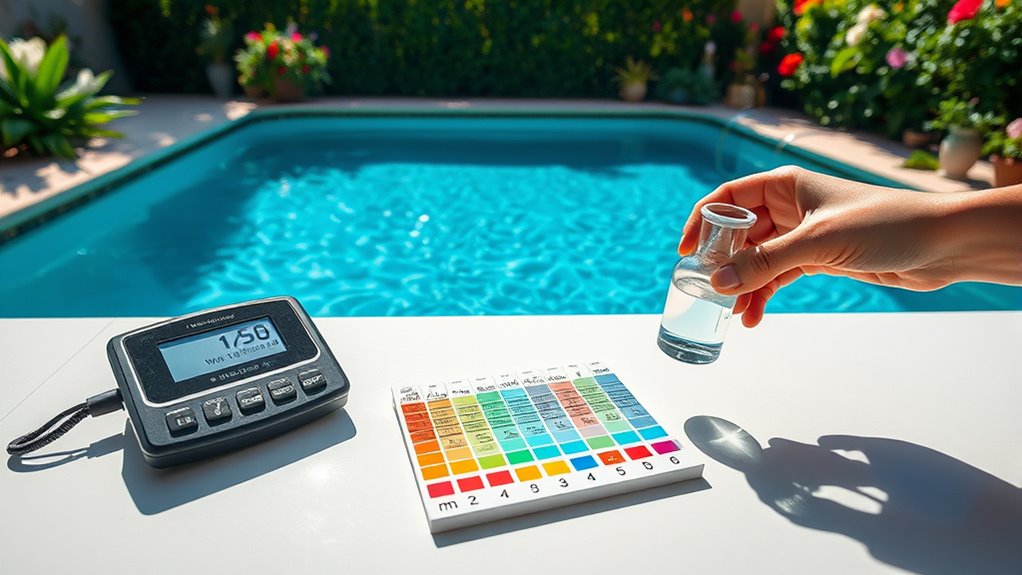
Monitoring chemical parameters is essential to keep your pool safe and comfortable. You should regularly check pH and chlorine levels to guarantee they stay within ideal ranges for swimmers’ safety. Consistent testing helps prevent issues like irritation, equipment damage, and regulatory violations. Regular testing also allows you to detect and correct imbalances before they become serious problems, ensuring a consistently healthy swimming environment. Additionally, understanding water chemistry can help you maintain proper balance and avoid common pool issues.
Ph and Chlorine Balance
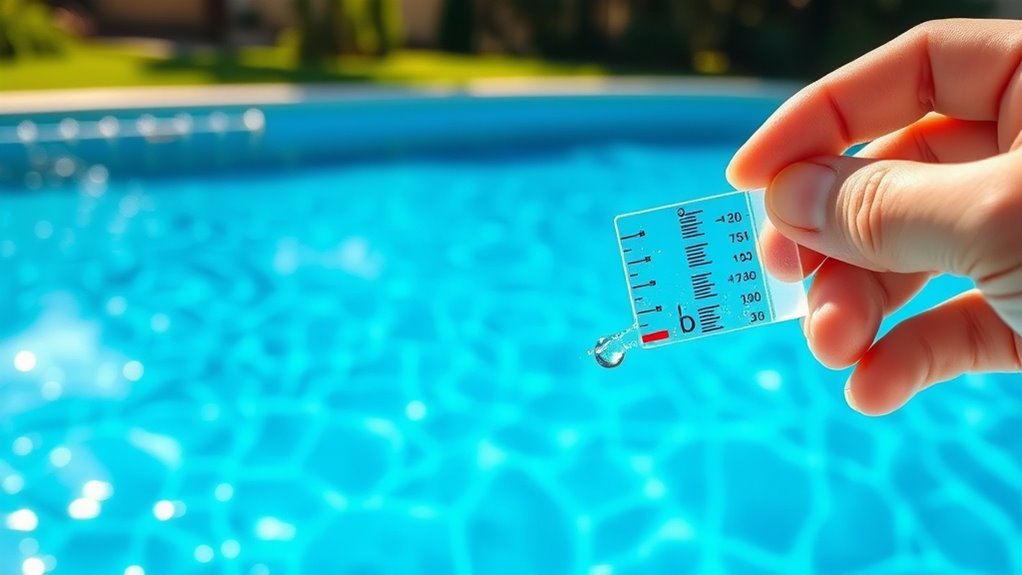
Maintaining proper pH and chlorine balance is essential for safe and effective pool operation. You should regularly test your water’s pH using a phenol red reagent, collecting samples from elbow-depth to avoid surface contamination. Proper mixing and immediate reading against a white background ensure accurate results. Chlorine levels, measured with OTO or DPD reagents, must stay between 1-3 ppm for safe disinfection. Be aware that high residual chlorine can skew pH readings, so adjust chlorine before testing pH. Total alkalinity, ideally between 80-120 ppm, buffers pH and prevents swings. Regular testing of both parameters ensures swimmer comfort, prevents corrosion, and reduces algae growth. Using liquid test kits provides more precise measurements, while rinsing equipment maintains accuracy over time. Staying on top of these balances keeps your pool safe and inviting. Consistent testing helps identify chemical imbalances early, reducing the risk of costly repairs and health issues. Testing frequency should be at least once a week to promptly detect any imbalances and maintain a healthy swimming environment.
Testing Frequency Guidelines
To guarantee your pool remains safe and inviting, you need to test chemical parameters at appropriate intervals based on usage and environmental conditions. Heavily used pools or those exposed to sunlight and rain require more frequent testing—up to 2-3 times weekly for chlorine and pH. New pools demand daily testing initially, then weekly once stabilized. After storms, test more often to check for dilution or contamination. Use this table to guide your schedule:
| Pool Usage | Testing Frequency | Parameters |
|---|---|---|
| Heavy use/sunny | 2-3 times weekly | Chlorine, pH |
| Light use/cool | Biweekly | Chlorine, pH |
| New pools | Daily first week, then weekly | All chemical levels |
| Post-storm | More frequent as needed | Chlorine, pH, alkalinity |
Adjust testing based on conditions for safe swimming. Regular testing of chemical parameters ensures proper sanitation and prevents health hazards.
Special Considerations for New and Seasonal Pools

New and seasonal pools require tailored testing routines to guarantee water safety and ideal conditions. For new pools, test daily during the first week to monitor rapid chemical fluctuations caused by leaching surfaces and initial sanitization. As water stabilizes over subsequent weeks, testing frequency can decrease to weekly, focusing on pH, chlorine, alkalinity, and calcium hardness. Seasonal pools demand increased testing during peak usage, with 2-3 tests weekly, especially after heavy use, storms, or environmental changes like rain or heat. In heavily used pools, testing may need to be more frequent, even daily in extreme cases. Regularly checking pH and sanitizer levels is essential, while alkalinity and calcium hardness should be monitored weekly. Proper testing ensures safe, balanced water and prevents damage to pool surfaces and equipment. Consistent testing helps maintain proper sanitizer effectiveness and prevents issues like algae growth or cloudy water. Incorporating mindfulness techniques into pool maintenance routines can reduce stress and promote a calm, focused approach to water care.
Common Mistakes That Can Impact Water Quality
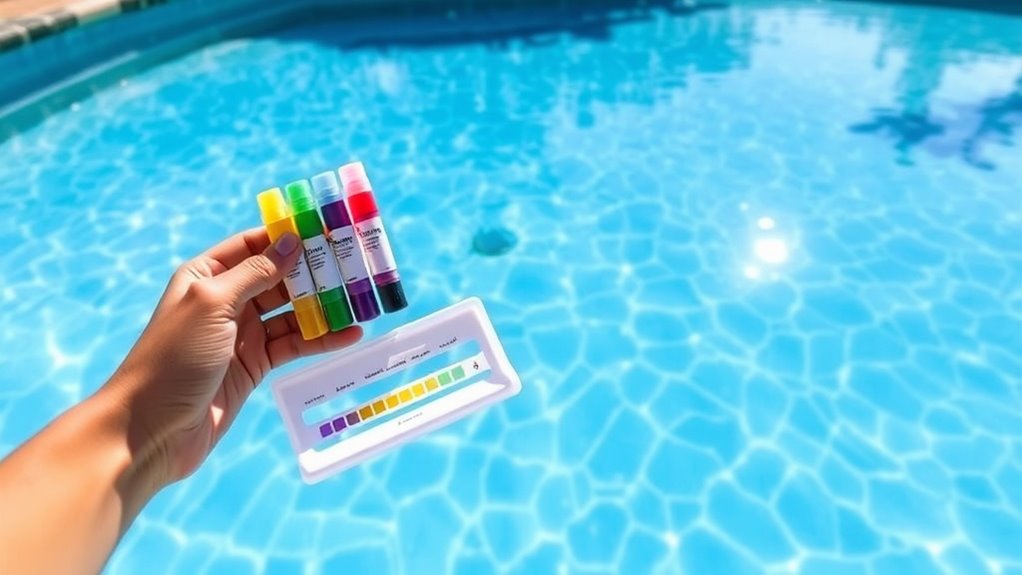
Sampling errors can considerably compromise water quality accuracy if samples are taken from the wrong locations or under poor conditions. If you collect water from surface areas or near returns, your results may not reflect the entire pool’s chemistry. Sampling in corners, steps, or areas with poor circulation skews results and can hide issues. Always sample around elbow depth (~18 inches below the surface) for the most accurate reading. Using dirty or inappropriate containers contaminates samples, leading to False test outcomes. Delays between sampling and testing allow reactions with air and sunlight, causing inaccurate results.
Proper sampling depth and location are crucial for accurate water quality results.
Be mindful of these common mistakes:
- Using expired or contaminated test materials
- Rinsing equipment improperly
- Ignoring proper sample collection depth
- Delaying testing after sampling
Best Practices for Maintaining Optimal Water Balance

Maintaining ideal water balance requires consistent monitoring and prompt adjustments to keep chemical levels within recommended ranges. Test chlorine 2–3 times weekly, especially when usage is high or weather is hot. Check pH every two weeks for routine maintenance. For commercial pools, test chlorine and pH at least twice daily during peak hours. Test alkalinity weekly in commercial settings and every 2–4 weeks for residential pools. Monthly testing of calcium hardness and cyanuric acid ensures stability. Use reliable test kits or calibrated electronic testers, following manufacturer instructions carefully. Record results consistently to identify trends and issues. Testing at consistent times each day helps detect fluctuations and maintain accurate records for trend analysis. Proper testing and adjustments prevent imbalances that cause irritation, equipment damage, and unsanitary conditions, extending your pool’s lifespan. Regular testing helps detect issues early, enabling timely corrective actions to maintain optimal water quality.
When to Seek Professional Testing Services
Knowing when to call in professionals guarantees your pool stays safe and properly balanced. You should seek expert testing when you notice recurring issues like algae, cloudy water, or swimmer irritation, which home tests might miss. After heavy rain, storms, or major chemical treatments, professional analysis confirms water safety. Seasonal changes, especially opening and closing, also warrant professional testing to ensure proper adjustments. If your pool has a saltwater system or complex setup, expert guidance helps maintain ideal conditions. Additionally, when water parameters become difficult to balance or you want detailed insights into metals, cyanuric acid, or calcium hardness, professionals provide accurate, thorough results. Regular water testing protocols are essential for maintaining a healthy and inviting pool environment.
Call in professionals for persistent issues, post-storm testing, or complex system adjustments to keep your pool safe and balanced.
- Persistent algae or cloudiness that defy home treatments
- Major environmental events affecting water quality
- Transition periods like opening or closing season
- Complex systems needing specialized testing
Frequently Asked Questions
How Do I Know if My Testing Frequency Is Sufficient?
You know your testing frequency is sufficient if you don’t see signs of algae, cloudy water, or skin irritation after testing and adjusting chemicals. Regular testing helps catch imbalances early, especially during heavy usage or after weather changes. If you notice these issues or equipment damage, increase your testing. Using reliable digital testers or test kits and following seasonal schedules guarantees your water stays balanced, keeping swimmers safe and happy.
What Are Signs That I Need to Test More Often?
You need to test your pool water more often if you notice cloudy or green water, which indicates chemical imbalance. If swimmers experience eye or skin irritation or if there’s a strong odor, it’s a sign to increase testing. Heavy rainfall, intense sunlight, or high usage also demand more frequent checks. Additionally, after adding chemicals, making repairs, or refilling your pool, test immediately to guarantee proper water chemistry.
Can Over-Testing Harm My Pool or Water Quality?
Think of over-testing as playing too many rounds of a game—you might wear out the equipment without gaining extra benefits. Over-testing doesn’t directly harm your pool or water quality, but it can lead to unnecessary chemical adjustments, increased costs, and more wear on testing equipment. Keep a balanced testing schedule, and only test as often as needed to maintain proper water chemistry, avoiding excessive handling or expense.
How Does Testing Frequency Differ for Saltwater Pools?
You should test your saltwater pool’s salt levels once a month, especially after heavy rain, high bather load, or water additions. Chlorine and pH should be checked at least twice weekly during peak use and weekly during quieter periods. Regular testing guarantees the salt chlorinator works effectively and maintains proper chemical balance, preventing issues like scaling or corrosion. Always monitor based on weather, usage, and seasonal changes for ideal pool health.
Is There a Preferred Time of Day to Test My Pool Water?
Ever wonder when your pool water is most stable? The best time to test it is between 9 and 11 AM, when external factors like sunlight and bather load are minimal. Testing at this time helps you obtain accurate readings and maintain chemical balance. Make it a routine to test at the same time daily to ensure consistency. Morning testing keeps your pool safe, clear, and inviting all day long.
Conclusion
By staying consistent with your testing schedule, you guarantee your pool remains safe and inviting. Remember, weather changes or increased usage can unexpectedly throw off your water balance, so don’t overlook those signs. Sometimes, a simple test can prevent bigger problems—like realizing you’ve been overlooking your chlorine levels. Coincidentally, the more attentive you are, the less likely you’ll need costly repairs or replacements, making regular testing your best pool investment.